

This article originally appeared in the October/November 2020 issue of the Deep-sea Mining Observer. It is reprinted here with permission. For the latest news and analysis about the development of the deep-sea mining industry, subscribe to DSM Observer here: http://dsmobserver.com/subscribe/ Since the signing of the UN Convention on the Law of the Sea and the creation of … Read More “The United States moves towards exploration and exploitation of critical mineral resources in the deep ocean.” »
Hi, friends at Southern Fried Science!
You’ve probably seen in the media lately that there’s been a lot of coverage about whether sharks are being killed for SARS-CoV-2 vaccines. With an awesome undergraduate co-author, I’ve tried to gather some facts about what is happening (or might happen) and what it means. You can read a preprint of that work here, or read on for a short FAQ in plain English.
Nothing but hot air. Trump bans windmills. The President made bemused news last week during his oddly partisan attempt to ban offshore oil in several key states (though for some reason, seismic testing in those states continue, making it seem less like a ban and more like a request to “stand by”). Unsurprisingly, the offshore … Read More “Hot air for windmills, oceans get layered, and North Korean ghost ships – What’s up with the Oceans this Week” »
Tear gas is bad for fish. Surprising no one, if you unlawfully unload tons of tear gas into a peaceful crowd of protestors in order to create chaos as a precedent for state violence, that tear gas will eventually find its way into drains and all drains lead to the ocean. And that is bad … Read More “Tear gassing fish, new NOAA chief, and Facebook’s flop – What’s Up With the Oceans this Week?” »
This article originally appeared in the August/September 2020 issue of the Deep-sea Mining Observer. It is reprinted here with permission. For the latest news and analysis about the development of the deep-sea mining industry, subscribe to DSM Observer here: http://dsmobserver.com/subscribe/
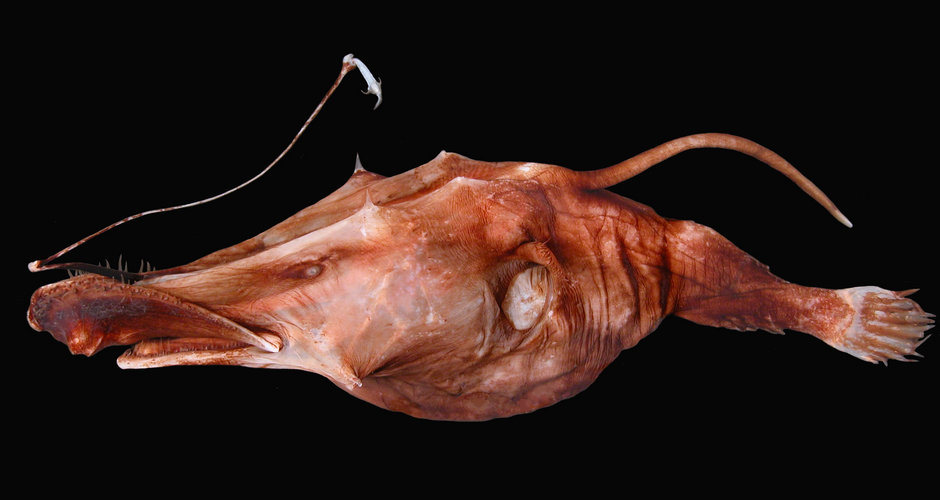
When you live in the darkness of the abyss, finding a partner is hard and keeping a partner is even harder. Deep-sea anglerfish, one of the iconic ambassador species of the deep ocean, have found a novel solution to this problem–dwarf males are sexual parasites that latch onto the body of the much larger female anglerfish and then physically fuse to their partner, becoming permanently attached to the point where they share a circulatory and digestive system.
Parasitic dwarf males are uncommon, but not unheard of, throughout the animal kingdom. Osedax, the deep sea bone eating worm, also maintains a harem of dwarf males in a specialized chamber in their trunk. But few species, and no other vertebrates, go to quite the extremes of the anglerfish. And with good reason.
Vertebrate immune systems have a long shared history. The Major Histocompatibility Complex (MHC) is a suite of genes shared among all gnathostomes–the taxonomic group that contains all jawed vertebrates, from fish to fishermen. It creates the proteins which provide the foundation for the adaptive immune system, the core complex which allows bodies to tell self from no-self, detect pathogens, and reject non-self invaders. Suppressing the MHC seriously inhibits a vertebrate’s ability to fight off infection.
Incidentally, not all deep-sea anglerfish have parasitic dwarf males, and the species most often presented as a type specimen in the popular press, the humpback anglerfish Melanocetus johnsonii, is one of several that do not have permanently attached parasitic dwarf males. M. johnsonii males are free-swimming throughout their life, they’re just small and clingy.
Read More “How anglerfish hack their immune system to hang on to a mate” »
Denial Incorporated. Over the weekend, the Administration announced the appointment of David Legates, an anti-science activist embedded in the climate denial industry. Legates will answer directly to acting NOAA administrator Neil Jacobs. Expect to see Legates making the media rounds downplaying the impact of climate change on the occurrence of more frequent and powerful tropical … Read More “The climate denial industry in full swing, 5 storms rage across the Atlantic, and Orcas seek vengeance – What’s up with the Oceans this week?” »
Frisky business for Great White Sharks. For only the second time since western scientists began studying the ocean, Great White Shark mating has been documented in the wild. Shark sex is infrequently observed in the wild, and this fisherman’s observations can provide invaluable insight in the lives and loves of this iconic species. The Ocean … Read More “Great Whites get down to business, the Ocean Cleanup flounders, and a livestock carrier goes down – What’s up with the Ocean this week?” »
This article originally appeared in the June/July 2020 issue of the Deep-sea Mining Observer. It is reprinted here with permission. For the latest news and analysis about the development of the deep-sea mining industry, subscribe to DSM Observer here: http://dsmobserver.com/subscribe/

For over 50 years, deep-ocean explorers have been able to claim that more people have walked on the moon than have dived to the deepest point on the Earth. Only two men descended into Challenger Deep in the 20th century–Don Walsh and Jacques Piccard–they were joined in the early 2010s by director James Cameron. Earlier this year, Victor Vescovo became the fourth to reach the bottom of Challenger Deep and, over the course of several subsequent dives this summer, the ranks of those who’ve reached the deepest ocean has swelled.
Astronaut, oceanographer, and former NOAA Administrator Kathy Sullivan and explorer and mountaineer Vanessa O’Brien became the first and second woman to dive to the bottom of Challenge Deep aboard the privately owned HOV Limiting Factor, piloted by Vescovo and his team.
Read More “New dives to Challenger Deep raise old questions about privatization and exploration” »
The disaster continues in Mauritius. With the cleanup and salvage well underway, Mauritius has begun assessing the broader impacts of the disastrous bulk carrier wreck. Fishermen have reported seeing 30 to 30 dead dolphins floating in a lagoon near the wreckage including mothers and calfs. Dead whales, as well as sick and injured whales, are … Read More “Dead dolphins wash up in Mauritius, mining for cobalt on the bottom of the sea, and Norwegian whaling – What’s up with the Ocean this week?” »
August 26, 2020 Don’t take the bait. Baiting fish for the sake of tourists has always engendered a fair bit of criticism. New research out of the Cook Islands demonstrates that frequent baiting at popular snorkeling sites alters fish behavior and causes harm to the reef ecosystem. Just don’t do it. More trouble in Mauritius. … Read More “Taking the bait, chopping up tankers, the calamari comeback, and some #scicomm advice– What’s up with the Ocean this week?” »