
Skip to content

Southern Fried Science

Over 15 years of ocean science and conservation online

  • Home
  • About SFS
  • Authors
  • Support SFS

Recent Posts

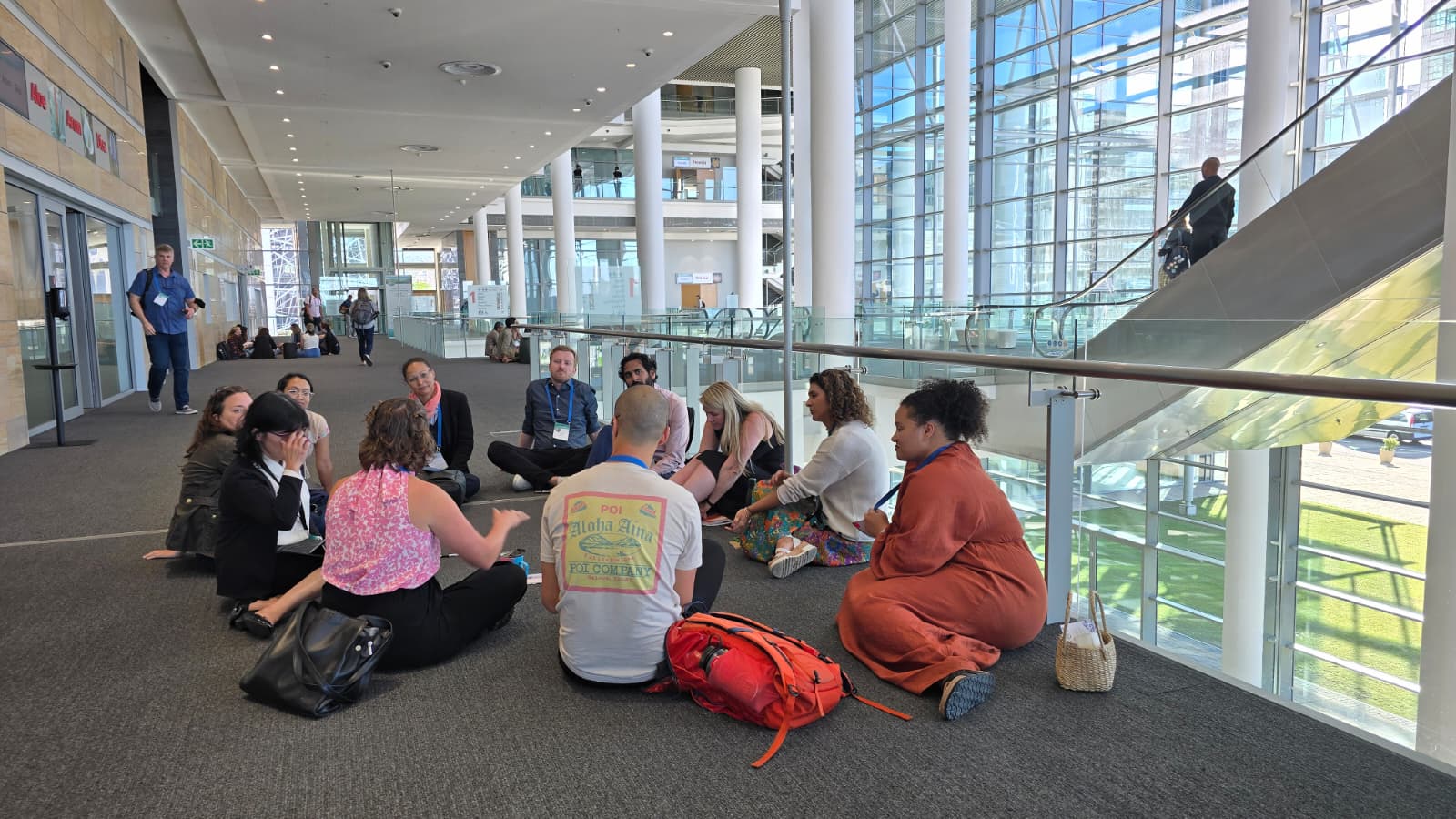
We Asked IMCC7 Attendees What Ocean Conservation Needs. Here’s What They Said.
November 5, 2026
Researching Historical Erasure on Public Lands
July 31, 2026
5 things I learned helping to reassess the global conservation status of every species of tuna and billfish
September 15, 2026
Key takeaways from my Convention on Migratory Species report on fish aggregating devices in the Mediterranean Sea
September 3, 2026
Jabberwocks and Snallygasters: teaching environmental education with monsters, mayhem, and dice.
August 31, 2026
The conservation impacts of recreational fishing
August 25, 2026

Come to the geek side of #scicomm: Marine science education by Dungeons & Dragons

Posted on February 18, 2020February 18, 2020 By Chris Parsons
Uncategorized

A couple of years ago, several of the people organizing the International Marine Conservation Congress let slip in their planning discussions that they played Dungeons and Dragons (D&D). There are many of us of a certain age that remember fondly playing in our youth, some of us have kids who are now getting of an age where we can, in turn, teach them how to play, and some were drawn in by the surge in Youtube and podcast shows like the hugely popular “Critical Role” where literally millions of people turn in to watch a bunch of nerds play Dungeons and Dragons … and have fun.

This led to the idea of playing a game at the conference. After more discussion, perhaps helped by a few drinks, the idea was spawned that perhaps we could make this game marine-themed and educational? Maybe even play this game in front of an audience at the conference? Perhaps even record it and share it online…?!

Read More “Come to the geek side of #scicomm: Marine science education by Dungeons & Dragons” »

A decade of failures in Science Communication.

Posted on February 12, 2020February 18, 2020 By Andrew Thaler 4 Comments on A decade of failures in Science Communication.
Blogging

Eleven years is a long life for a science blog. Southern Fried Science was born in 2008, when the main writers were all graduate students. Over the last decade the online landscape has changed. Science Communication changed with it, adapting and evolving to meet an ever-shifting ecosystem. Looking back on the last decade and thinking about the next, it’s becoming easier to see where we went wrong. It’s not quite as easy to determine what we need to correct the course.

This is not a scientific assessment, this is my own personal observations from the last decade of running Southern Fried Science, from teaching Social Media for Environmental Communications for the last 7 years, from working with Upwell, one of the most dynamic and visionary ocean NGOs ever conceived, from helping build and launch multiple online platforms, dozens of novel programs, and hundreds of outreach campaigns, and from spending a lot of time since November 2016 reflecting on what we’ve done wrong.

That Hideous Deficit

Do we really need another 200 words on how bad the deficit model is and why it needs to die?

Apparently, yes.

The basic premise: that science perception and policy is shaped by an information deficit and that if we just make good science education content and spread it, we can combat the spread of misinformation, people will learn, and everything will get better.

It doesn’t work. It never worked. And it ignores the reality that misinformation is manufactured for political and financial gain, with tremendous incentives and, often, far better funding than science outreach campaigns. But beyond that, multiple studies have shown that, when confronted with information that challenges their fundamental world view, people don’t throw out their worldview, they reject the science, creating a more entrenched and intractable audience.

Read More “A decade of failures in Science Communication.” »

Probing the submerged caves of Bermuda with Trident

Posted on January 28, 2020January 28, 2020 By Andrew Thaler
Science
Dr. Blanco-Bercial pilots the Trident ROV in one of Bermuda’s submerged caves.

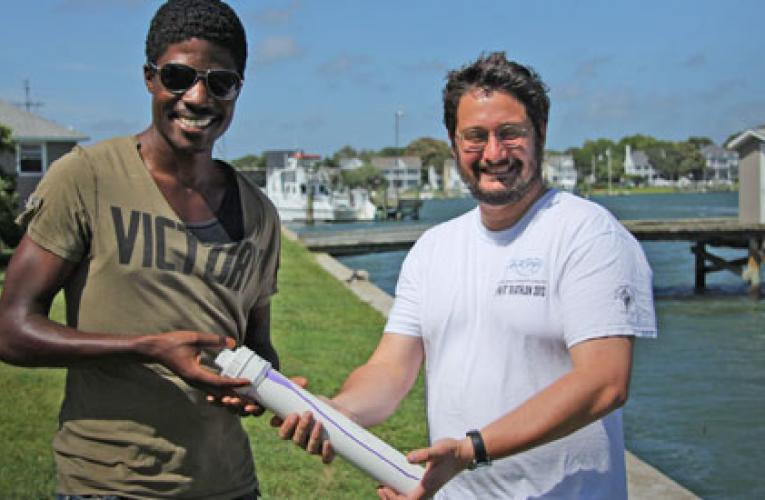
Conservation research in submarine caves is among the clearest and most compelling use-cases for a small observation-class ROV like Trident, which is why, last week, we delivered the very first ROV for Good Sofar Ocean Trident to Dr. Leocadio Blanco-Bercial at the Bermuda Institute of Ocean Sciences to study the hidden biodiversity in Bermuda’s Anchialine Caves.

Dr. Blanco-Bercial is a marine biologist who studies the diversity and evolution in invertebrates, especially those in marine cave ecosystems. Bermuda is home to a network of anchialine caves (caves connected to the sea through underwater passageways) which are home to a diverse array of rare and ancient arthropod lineages, many of which are unique to Bermuda. These species are under threat from land development and other human activities.

“From the science standpoint,” says Dr.  Blanco-Bercial, “the Trident will give us independence from specialized divers availability, and will simplify the logistics associated with the sampling process – the Trident is easy to carry even by a single person – and sampling attachments and other gear is easily transportable by another colleague.”

Read More “Probing the submerged caves of Bermuda with Trident” »

Fun Science FRIEDay – The Emperor of all Maladies

Posted on January 24, 2020January 24, 2020 By Kersey Sturdivant
Uncategorized

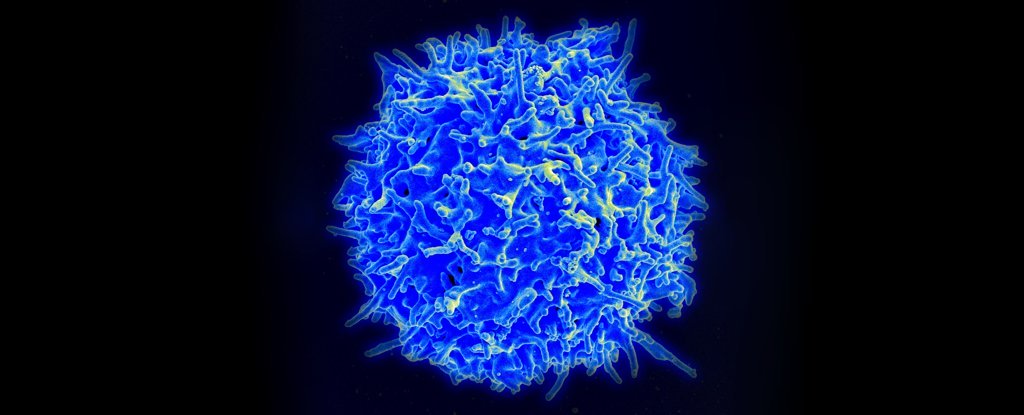
The Emperor of all Maladies is how Siddhartha Mukherjee, an Indian-born American physician and oncologist, aptly described cancer. Cancer, this scourge of mankind going back as far as 4,600 years ago when it was identified by the Egyptian physician Imhotep (the first in recorded history). Cancer takes one of the most successful traits of complex eukaryotes, cell division, and weaponizes it in unchecked cellular growth; some even consider cancer to be a more evolved form of cell division. This ailment has plagued humanity, and baffled physicians for centuries as they attempt to tackle the seemingly impossible, discover a cure for cancer.

Scanning electron micrograph of a human T cell. (NIAID/Flickr/CC BY 2.0)

Read More “Fun Science FRIEDay – The Emperor of all Maladies” »

What the hell is the DC Metro’s “climate change will increase shark bites” ad talking about? An investigation

Posted on January 14, 2020January 14, 2020 By David Shiffman
Blogging, Climate change

Ever since I moved to Washington, DC last summer, I’ve been fascinated by an ad campaign for the DC Metro. The premise of the campaign is simple: taking public transit reduces your carbon footprint compared with driving yourself. It highlights various negative consequences of climate change, and points out how riding the Metro can help fight them.

Many of these ads highlight well-known consequences of climate change:

Photos by David Shiffman

Others highlight less well-known consequences of climate change, but are still on solid scientific ground:

Photo via DC Metro twitter account

But one ad in particular has been perplexing me for months:

Read More “What the hell is the DC Metro’s “climate change will increase shark bites” ad talking about? An investigation” »

We want to give you an ROV!

Posted on January 13, 2020January 13, 2020 By Andrew Thaler 1 Comment on We want to give you an ROV!
Open Science, Science

If you have access to a small, observation-class remotely operated vehicle to explore the ocean, where would you go? Would you use it to discover something new about marine ecosystems? Would you give students the opportunity to journey beneath the waves and learn about their local waterways? Would you hunt for lost lobster traps, track … Read More “We want to give you an ROV!” »

The next generation of low-cost, open-source oceanographic instruments is here! Meet the OpenCTD rev 2!

Posted on January 7, 2020January 7, 2020 By Andrew Thaler 1 Comment on The next generation of low-cost, open-source oceanographic instruments is here! Meet the OpenCTD rev 2!
Oceanography for Everyone, Open Science, Science
Four generations of OpenCTD. Left to Right: Prototype 2, which went through sea trials in Lake Superior, rev 1, rev 1 in the smaller form factor (this one was deployed in Alaska), and OpenCTD rev 2.

In 2013, Kersey Sturdivant and I embarked upon a quixotic quest to create an open-source CTD — the core tool of all oceanographic research that measures the baseline parameters of salinity, temperature, and depth. We weren’t engineers; neither of us had any formal training in electronics or sensing. And, full confession, we weren’t (and still aren’t) even oceanographers! What we were were post-doc marine ecologists working with tight budgets who saw a desperate need among our peers and colleagues for low-cost alternatives to insurmountably expensive equipment. And we had ties to the growing Maker and DIY electronics movements: Kersey through his work developing Wormcam and me through my involvement with OpenROV. 

We had no idea what we were getting ourselves into. 

The very first OpenCTD prototype.

Seven years and five iterations later, we are releasing the long anticipated OpenCTD rev 2 as well as the comprehensive Construction and Operation Manual! OpenCTD rev 2 builds on over half a decade of iteration and testing, consultation with oceanographers, engineers, developers, and makers around the world, extensive coastal and sea trials, and a series of workshops designed to test and validate the assembly process. 

Read More “The next generation of low-cost, open-source oceanographic instruments is here! Meet the OpenCTD rev 2!” »

Shark Week 2019 reviews and thoughts

Posted on December 24, 2019December 24, 2019 By David Shiffman
Popular Culture, Reviews and Interviews, Science

I wasn’t able to watch live this year, but I DVR-ed all 18 specials and watched them eventually! Here are my reviews, ratings, and thoughts. I did not watch the feature-length movie, which they claim is the first fictional entertainment content they’ve ever produced… causing me to stare in megalodon. Overall, this was not a strong year for science, facts, or diversity (of either sharks or shark researchers).

As a reminder, I grade on the following aspects of a show: is there actual science or natural history educational content / is there made up nonsense, are actual credentialed experts with relevant expertise featured or are they self-proclaimed “shark experts” who say wrong nonsense all the time, what species are featured (with bonus points for species we rarely or never see), and do they feature diverse experts or just the same white men (reminder: my field is more than 50% women)? It’s not a perfect rubric, but it’s better than this actual system for ranking shark news introduced this year in “sharks gone wild 2:”

Rankings appear in no particular order, if you care about the order the shows actually aired in please see this Discovery press release.

Read More “Shark Week 2019 reviews and thoughts” »

10 sharks that mattered in the 2010’s

Posted on December 19, 2019December 19, 2019 By David Shiffman
Blogging, Popular Culture, Science, Uncategorized

Just when you thought it was safe to read another decade-in-review listicle…

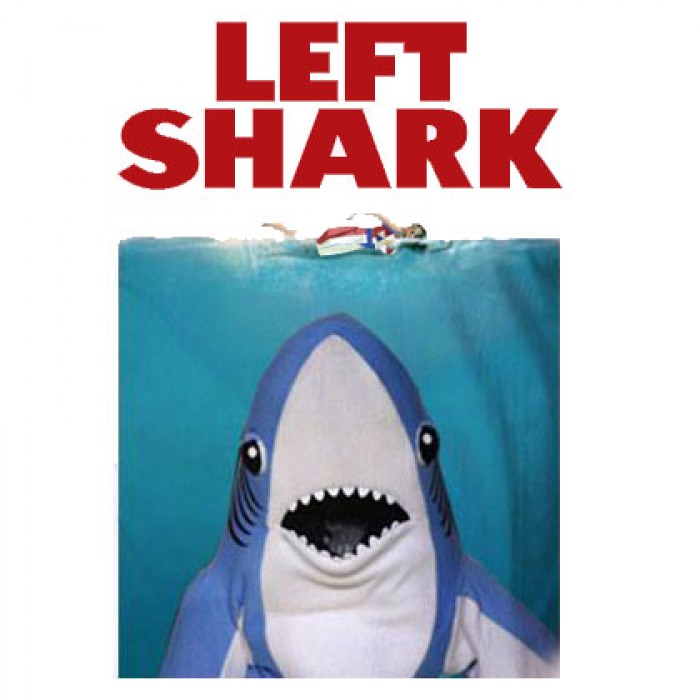
You can buy this on a tshirt

As the 2010’s come to an end, it’s a time to reflect on the often-problematic decade that was as we plan for a hopeful future. I am a sucker for year-in-review and decade-in-review listicles, and was devastated to learn that no one had yet written a decade-in-review listicle for sharks! Please enjoy my official, scientific list of the most important science, conservation, and pop culture sharks from the past decade.

Read More “10 sharks that mattered in the 2010’s” »

SciComm Infuses Science with Soul

Posted on November 26, 2019November 25, 2019 By Michelle Jewell
Blogging

Every scientist I work with spends most of the day communicating, whether that’s preparing grants, manuscripts, theses, outreach talks, emails to colleagues/students… the list goes on.  However, most of these outlets share fairly strict formatting rules. Grants comes with pages of guidelines. Talks have defined who I am, what I did, found, next, thank you slide.  While this sterile approach is arguably fundamental to science’s critical tenant of replication, it makes for terrible communication.

Read More “SciComm Infuses Science with Soul” »

Posts pagination

Previous 1 … 32 33 34 … 277 Next

Popular Posts

Getting a sense of porpoiseJanuary 20, 2009Andrew Thaler
This is the worst academic presentation in the world ... tributeApril 23, 2015Chris Parsons
That's not a blobfish: Deep Sea Social Media is Flooded by AI SlopThat's not a blobfish: Deep Sea Social Media is Flooded by AI SlopDecember 19, 2025Andrew Thaler
Have we found the city of Atlantis?Have we found the city of Atlantis?September 1, 2026Chris Parsons
What Ocean Ramsey does is not shark science or conservation: some brief thoughts on "the Shark Whisperer" documentaryWhat Ocean Ramsey does is not shark science or conservation: some brief thoughts on "the Shark Whisperer" documentaryJuly 2, 2025David Shiffman
The 45 most influential female ecologists alive today according to twitterThe 45 most influential female ecologists alive today according to twitterFebruary 10, 2014Guest Writer
Ethical Debate: Killing sharks for science?Ethical Debate: Killing sharks for science?June 1, 2010David Shiffman
Our favorite sea monsters – Ningen (#4)Our favorite sea monsters – Ningen (#4)September 7, 2010Andrew Thaler
What is a Sand Shark?What is a Sand Shark?November 12, 2017Chuck Bangley
No, harassing a shark for fun is not ethically equivalent to scientific research that helps conserve a speciesNo, harassing a shark for fun is not ethically equivalent to scientific research that helps conserve a speciesMarch 26, 2014David Shiffman

squishy

Subscribe to our RSS Feed for updates whenever new articles are published.

We recommend Feedly for RSS management. It's like Google Reader, except it still exists.

Southern Fried Science

  • Home
  • About SFS
  • Authors
  • Support SFS


If you enjoy Southern Fried Science, consider contributing to our Patreon campaign.

Copyright © 2026 Southern Fried Science.

Theme: Oceanly Premium by ScriptsTown