
Skip to content

Southern Fried Science

Over 15 years of ocean science and conservation online

  • Home
  • About SFS
  • Authors
  • Support SFS
Latest News
  • Norway and Cook Islands put their deep-sea mining plans on pause

Recent Posts

Join Me at Upwell: A Wave of Ocean Justice — Our Fourth Year!
March 24, 2026
How close did the world’s first deep-sea mining come to the dredging the world’s largest cold-water coral reef?
March 17, 2026
Here are some ocean conservation technologies that I’m excited about
February 19, 2026
Walking Backwards Into the Future: Applying Indigenous Knowledge to Deep Sea Mining
February 5, 2026
The Urgency Does Not Exist: My statement on Deep-sea Mining to the Subcommittee on Energy and Mineral Resources
January 24, 2026
Bipartisan Concern Expressed Over Deep Sea Mining at Congressional Hearing
January 23, 2026

Orca protection and vanishing Arctic lakes: Thursday Afternoon Dredging, December 20th, 2018

Posted on December 20, 2018December 20, 2018 By David Shiffman
Uncategorized

Cuttings (short and sweet): Follow YouTube science communicator Kurtis Baute on twitter! Ottawa designates two new areas as critical habitat for killer whales in B.C. waters. CHEK news. Spoils (long reads and deep dives): Arctic lakes are vanishing by the hundreds. By Chelsea Harvey, for Scientific American. Even fish get the bends. By Anna Saleh, … Read More “Orca protection and vanishing Arctic lakes: Thursday Afternoon Dredging, December 20th, 2018” »

To tweet to whom – a tweeting guide for marine scientists

Posted on December 18, 2018December 19, 2018 By Chris Parsons
Uncategorized

“Logic is a tweeting bird” – Spock, Star Trek

Social media can be a great tool for spreading and disseminating published science. Potentially it can reach a wide audience and for free !

Most platforms allow you to insert links to direct readers to the original paper or publication. If you are working in an area that is relevant to conservation or policy, social media can be a great way of getting papers to the right audience that may need that information (Parsons et al., 2014). Moreover, there is now increasing data that using social media can increase download and citation rates of scientific papers, which in turn is good for the careers of scientists in an academic setting.

Read More “To tweet to whom – a tweeting guide for marine scientists” »

Amazing fish eyes, the real cost of halibut, and protecting local species: Thursday Afternoon Dredging, December 13, 2018

Posted on December 13, 2018December 13, 2018 By David Shiffman
Uncategorized

Cuttings (short and sweet): Follow UBC’s wildlife conservation economics lab on twitter!  The Deep-Sea Fish with the Telescopic Tubular Eyes. By Craig McClain, for Deep Sea News.  How to take action to help endangered species near you. A Revelator News Podcast by John Platt.  Spoils (long reads and deep dives): Why does halibut cost so … Read More “Amazing fish eyes, the real cost of halibut, and protecting local species: Thursday Afternoon Dredging, December 13, 2018” »

Florida releases draft land-based shark fishing regulations

Posted on December 11, 2018December 13, 2018 By David Shiffman 2 Comments on Florida releases draft land-based shark fishing regulations
Uncategorized

After months of expert and public consultation, the Florida Fish and Wildlife Conservation Commission has announced the draft text of new regulations that will govern land-based shark fishing. It’s mostly very good news that directly addresses most of our concerns! 

A review of the problem
Land-based anglers in Florida (those who fish from beaches, docks, and piers) catch large numbers of threatened, protected species, handling them in needlessly cruel ways that likely result in mortality or permanent injury. Anglers are aware that what they’re doing causes harm to certain species and violates some existing regulations. Hammerhead sharks in particular are extremely physiologically vulnerable and need to be released much faster than they are currently being released or else they will very likely die. 

(Learn more: see my paper on this subject, my blog post summarizing that paper, an open letter calling for action, an op-ed I wrote about this, a review of the existing rules and how they’re regularly violated, and a years-old blog post describing one problematic incident with land-based shark fishing)

Read More “Florida releases draft land-based shark fishing regulations” »

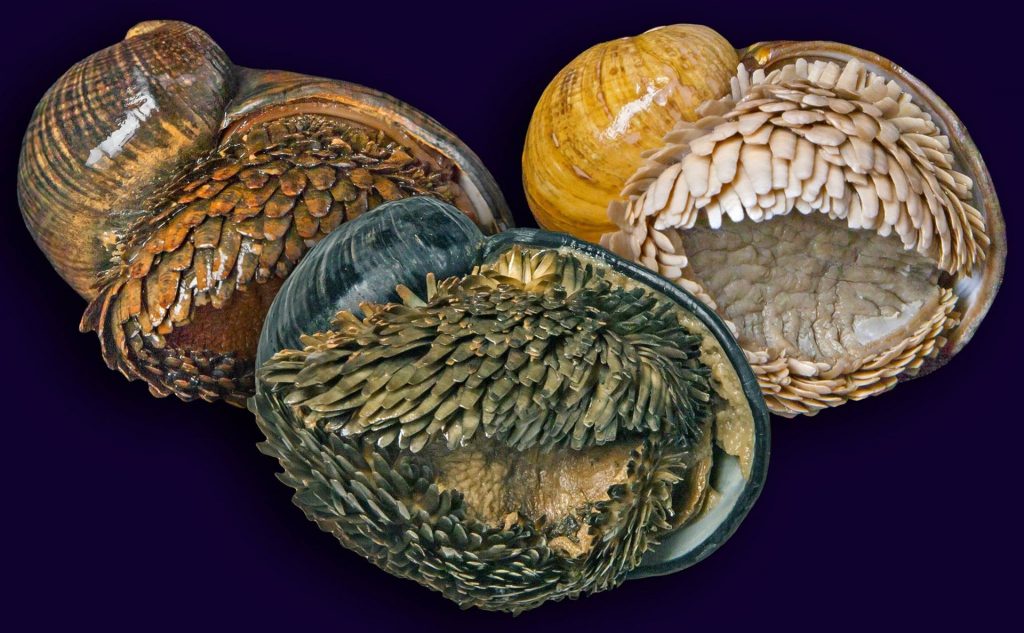
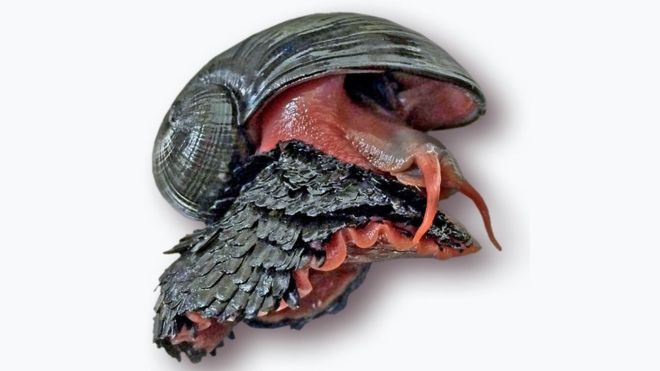
Snacking at vents, snorting eels, eating too much plastic, charming snails, and more! Monday Morning Salvage: December 10, 2018

Posted on December 10, 2018December 9, 2018 By Andrew Thaler
Weekly Salvage

Foghorn (A Call to Action!)

  • Trump moves toward offshore oil testing in Atlantic and while almost every elected representative up and down the Atlantic seaboard is opposed to allowing offshore oil exploration in our waters, Andy Harris, who represents the Maryland eastern shore from his home in Cockeysville, far from any fisheries (not a lot of crabs on Loch Raven, FYI), still thinks it would be a grand idea to trash Maryland’s coastal economy. 
  • Residents of MD 1, call your representative and remind him that he actually represents someone.

Flotsam (what we’re obsessed with right now)

  • Start with some optimism: 5 Awe-Inspiring Ocean Discoveries of 2018. 

Read More “Snacking at vents, snorting eels, eating too much plastic, charming snails, and more! Monday Morning Salvage: December 10, 2018” »

Dive bombing birds, octopus intelligence, and a red tide update: Thursday Afternoon Dredging, December 6, 2018

Posted on December 6, 2018 By David Shiffman
Uncategorized

Cuttings (short and sweet): Follow Joe Cunningham, a marine engineer who was just elected to Congress, on twitter! The dive bombing birds of Newfoundland. By Craig McClain, for Deep Sea News How much does it cost to save a species? Less than you think! By Erik Vance, for the last word on nothing. Spoils (long … Read More “Dive bombing birds, octopus intelligence, and a red tide update: Thursday Afternoon Dredging, December 6, 2018” »

5000 dives under the sea, plastic nomming fungi, scanning Belize’s Blue Hole, the thawing Northwest Passage, and more! Monday Morning Salvage: December 3, 2018.

Posted on December 3, 2018 By Andrew Thaler
Weekly Salvage

Foghorn (A Call to Action!)

  • With ice melting in Canada’s Northwest Passage, the area will soon be a new route for international shipping. Follow Life Under the Ice on OpenExplorer!

Flotsam (what we’re obsessed with right now)

  • Legendary submarine pilot Erika Bergman is exploring Belize’s Blue Hole using state-of-the-art SONAR scanning tools and ROVs. A couple floppy-haired dudes are going too.
  • DSV Alvin made its 5000th dive. Way to go, little submarine!
  • A boon to ocean conservation? Certain fungi can degrade marine plastics.
  • I missed this over the summer, but Nash was an incredible guide and touring ancient Chamorro caves with him was the highlight of my time in Guam. He will be missed by many: Traditional seafarer Ignacio ‘Nash’ Camacho dies.

Ignacio R. "Nash" Camacho, a Traditions About Seafaring Islands member, and codesigner of the Chamoru Sakman outrigger replica canoe "Tasi," talks about his creation during a ceremony at the Guam Museum on June 29, 2017.
Ignacio R. “Nash” Camacho, a Traditions About Seafaring Islands member, and codesigner of the Chamoru Sakman outrigger replica canoe “Tasi,” talks about his creation during a ceremony at the Guam Museum on June 29, 2017.

Read More “5000 dives under the sea, plastic nomming fungi, scanning Belize’s Blue Hole, the thawing Northwest Passage, and more! Monday Morning Salvage: December 3, 2018.” »

Chesapeake Requiem, the Black Friday for Climate Change, whale earwax, killing the GRE, and more! Monday Morning Salvage: November 26, 2018

Posted on November 26, 2018 By Andrew Thaler
Weekly Salvage

Foghorn (A Call to Action!)

  • Friend of the blog and submarine legend Erika Bergman is leading an expedition to Belize’s Blue Hole! Follow along as she maps this unique ocean feature: Belize Blue Hole 2018. Some dudes are tagging along, too.

Flotsam (what we’re obsessed with right now)

  • The Fourth National Climate Assessment is out and it is grim.

Climate change affects the natural, built, and social systems we rely on individually and through their connections to one another. These interconnected systems are increasingly vulnerable to cascading impacts that are often difficult to predict, threatening essential services within and beyond the Nation’s borders.

  • Meanwhile: The Trump Administration’s Attempt to Bury a New Climate Report on Black Friday Totally Backfired.
  • Government Climate Report Lays Out How Screwed We Are If We Don’t Act Now.

The Gam (conversations from the ocean-podcasting world)

  • Speak Up for the Blue on art and the ocean.

Read More “Chesapeake Requiem, the Black Friday for Climate Change, whale earwax, killing the GRE, and more! Monday Morning Salvage: November 26, 2018” »

LarvaBots, turning the tide on captive dolphins, horror fish from the deep sea, ARA San Juan found, and more! Monday Morning Salvage: November 19, 2018.

Posted on November 19, 2018 By Andrew Thaler
Weekly Salvage

Foghorn (A Call to Action!)

  • Congratulations to Dr. Hal Holmes of Conservation X Labs for earning a Moore Foundation Inventor Fellowship for his DNA Barcode Project.

Flotsam (what we’re obsessed with right now)

  • Reef RangerBot becomes ‘LarvalBot’ to spread coral babies.

LarvalBot gently squirts the coral larvae onto damaged reef areas. Credit: QUT Media

  • Turn of the tide: Seeing dolphins differently by National Aquarium Director John Racanelli.

Read More “LarvaBots, turning the tide on captive dolphins, horror fish from the deep sea, ARA San Juan found, and more! Monday Morning Salvage: November 19, 2018.” »

Fun Science FRIEDay – Gut Enzyme Turns Blood Into Type O

Posted on November 16, 2018November 16, 2018 By Kersey Sturdivant
Uncategorized

The process of blood transfusions, started in the late 19th century and perfected in the early 20th century, were a big advancement in modern medicine and the treatment of human health. Part of the improvements in this procedure was the discovery of the various blood types in humans, and how that affects how the immune system responds to and “accepts” blood transfusions. Recently, researchers from the University of British Columbia may have found a reliable way to use a bacterial enzyme from the human gut to convert any type of blood into type O – which is compatible with nearly everyone.

Animation of red blood cells (Photo credit: meghanmecrazy)

Read More “Fun Science FRIEDay – Gut Enzyme Turns Blood Into Type O” »

Posts pagination

Previous 1 … 35 36 37 … 271 Next

Popular Posts

What Ocean Ramsey does is not shark science or conservation: some brief thoughts on "the Shark Whisperer" documentaryWhat Ocean Ramsey does is not shark science or conservation: some brief thoughts on "the Shark Whisperer" documentaryJuly 2, 2025David Shiffman
That's not a blobfish: Deep Sea Social Media is Flooded by AI SlopThat's not a blobfish: Deep Sea Social Media is Flooded by AI SlopDecember 19, 2025Andrew Thaler
Shark of Darkness: Wrath of Submarine is a fake documentaryShark of Darkness: Wrath of Submarine is a fake documentaryAugust 10, 2014Michelle Jewell
Join Me at Upwell: A Wave of Ocean Justice — Our Fourth Year!Join Me at Upwell: A Wave of Ocean Justice — Our Fourth Year!March 24, 2026Angelo Villagomez
What is a Sand Shark?What is a Sand Shark?November 12, 2017Chuck Bangley
Urea and Shark OsmoregulationUrea and Shark OsmoregulationNovember 15, 2010David Shiffman
I turned my woodshop into a personal solar farm.I turned my woodshop into a personal solar farm.June 21, 2021Andrew Thaler
We Need a "Starfleet" for the OceansMarch 30, 2026Chris Parsons
A quick and dirty guide to making custom feeds on BlueskyA quick and dirty guide to making custom feeds on BlueskyFebruary 7, 2024Andrew Thaler
Quick Tips for Graduate Student Life - Write a Book ReviewJanuary 23, 2014Andrew Thaler

squishy

Subscribe to our RSS Feed for updates whenever new articles are published.

We recommend Feedly for RSS management. It's like Google Reader, except it still exists.

Southern Fried Science

  • Home
  • About SFS
  • Authors
  • Support SFS


If you enjoy Southern Fried Science, consider contributing to our Patreon campaign.

Copyright © 2026 Southern Fried Science.

Theme: Oceanly Premium by ScriptsTown