
Cuttings (short and sweet): Follow wildlife illustrator Marc Dando on twitter! The rise of fishing apps. By the Fisheries Blog. Misled penguins swim to fishing grounds that no longer have food. By Katie Peek, for Scientific American Spoils (long reads and deep dives): A pet crayfish is cloning itself and spreading around the world. By Sarah … Read More “Insect-eating salmon and cloned crayfish: Thursday Afternoon Dredging, February 8th, 2018” »
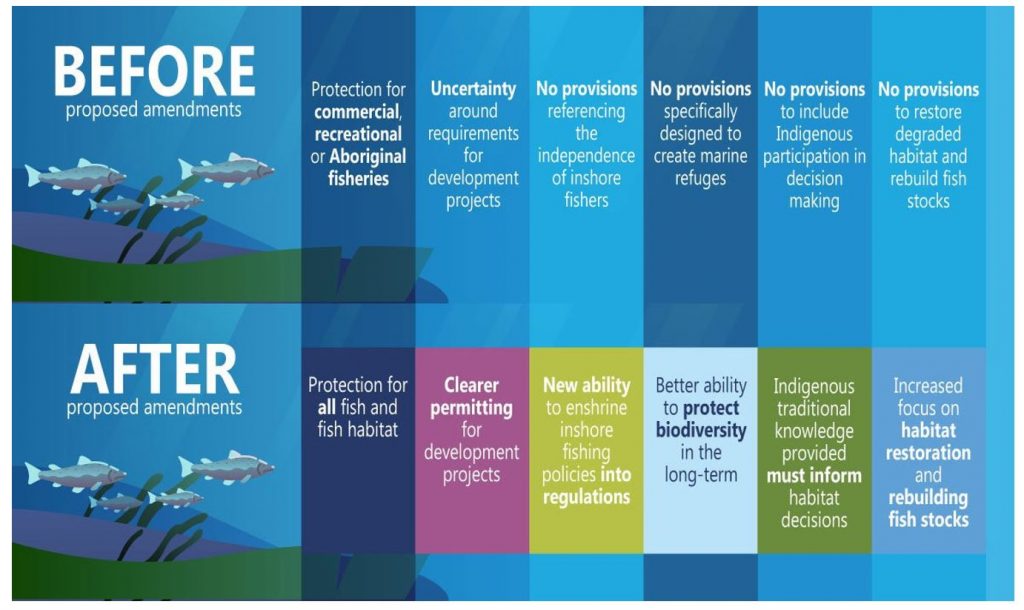
Canada proposed revisions to the Fisheries Act. Here’s how science and conservation experts reacted.
Yesterday, the government of Canada announced some proposed amendments to the national Fisheries Act. The full text of the proposal can be viewed here. So far, it’s gone through the First Reading in the House of Commons (for my non-Canadian readers, here is what that means). I reached out to fisheries and conservation policy experts across Canada to ask what they think of these proposed changes.


Flotsam (what we’re obsessed with right now)
- This little video is a master class in natural history: Foraging on a beach in Wales.
Cuttings (short and sweet): Follow Skye Augustine, a marine biologist studying traditional indigenous fisheries management practices, on twitter! A plate of lies: seafood mislabeling. By Meghan Fox, for the Fisheries Blog. 2017 was the hottest year yet for the world’s oceans. By Sarah Gibbens, for National Geographic. Helping sound out of water: new materials could help … Read More “Texting about ichthyology and climate change’s effects on indigenous culture: Thursday Afternoon Dredging, February 1st, 2018” »
US President Donald Trump said “I believe in clean air. I believe in crystal clear beautiful water.”
Image via gify.com
However, in last night’s State of the Union Address he declared his support for promoting coal-based energy* and he gave public notice of his intentions to curtail the environmental impact assessment process and environmental regulation for construction and road-building. This would be the latest in a series of executive actions that are removing or hindering environmental protection including, amongst others:
Welcome to Dear Shark Man, an advice column inspired by a ridiculous e-mail I received. You can send your questions to me via twitter (@WhySharksMatter) or e-mail (WhySharksMatter at gmail).
Dear Shark Man,
What are your thoughts on elasmobranchs in the pet and aquarium trade? Is this a serious conservation issue?
Sincerely,
Nonchalant in New Zealand
Read More “Dear Shark Man, is the aquarium trade a major shark conservation issue?” »

Fog Horn (A Call to Action)
- Good morning. The time is now 2 minutes to mid-night. Doomsday Has Never Been Closer. Good luck.
Despite the fact that we live in extremely dangerous times, the scientists in charge of the clock said there is hope. The clock has been wound backwards before, in the wake of the Cold War or during times when nuclear superpowers expressed interest in not mutually assuring destruction.
The scientists argue that civil society should turn the screws on government to reduce carbon emissions and push for even more ambitious climate action than what the Paris Agreement calls for. That sounds like a more fruitful plan than huddling in a bunker.
Flotsam (what we’re obsessed with right now)
- Some technology is pretty good, though: Cracking down on poaching with 3D-printed fake turtle eggs
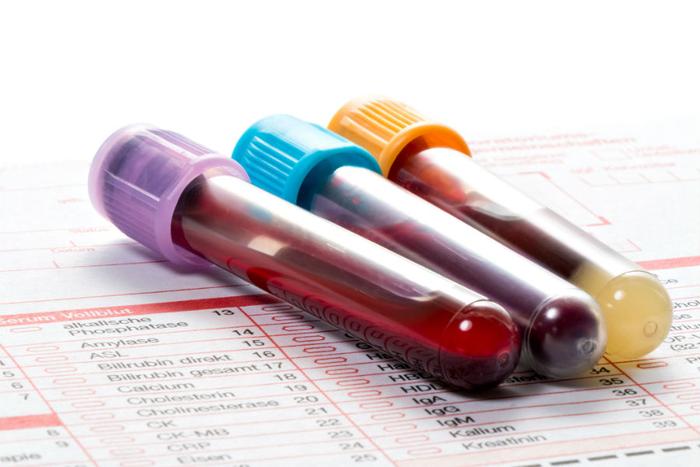
Cancer is a tricky disease. It comes in many varieties and can pop-up anywhere in the body seemingly at random. The somewhat cryptic nature of this disease can make diagnosis difficult; this can be frustrating because most cancers are treatable if diagnosed early. Thats what makes this most recent breakthrough all the more exciting; a method to detect cancer through a single blood test!
The blood test is called CancerSEEK and its speculated that it would cost less than 500 USD, which is comparable to or lower than other screening tests. CancerSEEK, is a single blood test that was shown to detect 8 types of common cancer (ovary, liver, stomach, pancreas, esophagus, colorectum, lung, and breast) and helps identify the location of the cancer.
Cuttings (short and sweet): Follow Kelsey James, a graduate student studying the age and growth of batoid fishes, on twitter! Ancient maps show islands that don’t really exist. By Greg Miller, for National Geographic. Global registry of invasive species is a milestone for conservation. By Jonathan Watts, for the Guardian. Want to buy a tshirt, mug, … Read More “Imaginary islands, lobster pain, porgs and puffins: Thursday Afternoon Dredging, January 25th, 2018” »

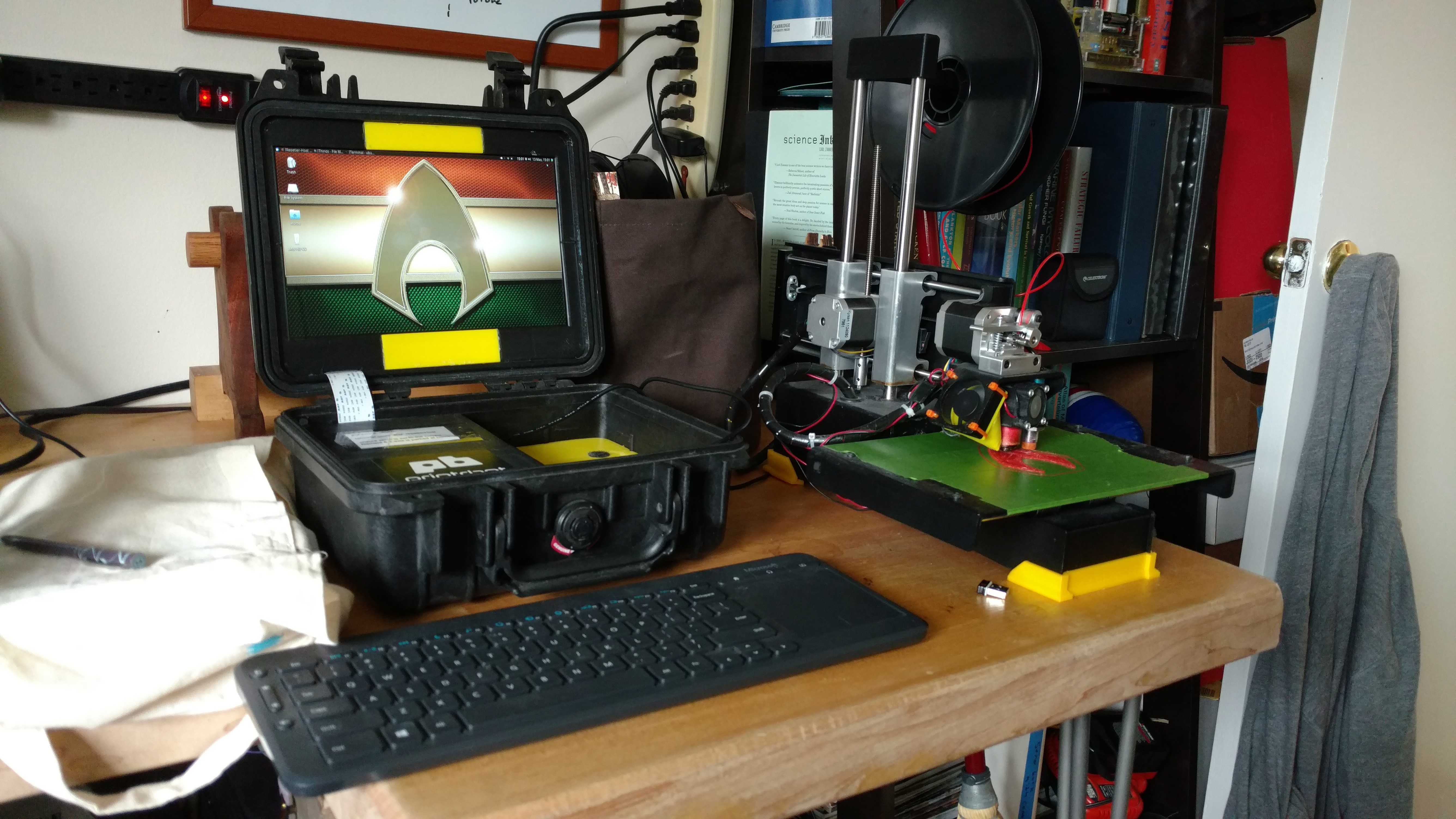
If you’re like me, you’ve probably been enjoying watching David Shiffman and Craig McClain take their first steps into 3D printing. For a small subset of people, small consumer 3D printers can be an incredibly useful tool, for a larger subset, 3D printing has fantastic teaching applications, but for most enthusiasts, it’s a fun hobby. Fortunately, the 3D printing hype train has slowed down in the last few years and it is now much easier to separate the wheat from the chaff and drill down into the applications where 3D printing really shines.
3D printers are fairly inexpensive now. You can get a pretty okay 3D printer like the Monoprice Mini (which we used at various hack-a-thons and maker events) for around $220 USD on Amazon. I’ve worked a bit with that particular printer and it’s good. It won’t blow you away but it will do everything you’d expect a solid 3D printer to do. My in house machine is a Printrbot Simple Metal, which has since been replaced by the Simple Pro. It’s not the cheapest one out there, but it’s an absolute beast, taking all the abuse I can throw at it. It’s even been to sea.