

Skip to content

Southern Fried Science

Over 15 years of ocean science and conservation online

  • Home
  • About SFS
  • Authors
  • Support SFS

Recent Posts

The next OpenCTD is here!
June 22, 2026
humpback whale in Antarctica
The evolution of the International Whaling Commission – from  whaling quotas to whale conservation
June 10, 2026
Isn’t ironic, don’t you think: dismantling the Ocean Observatories Initiative on World Oceans Day
June 9, 2026
“Why Sustainable Seafood Matters” is now available for preorder! Here’s what it’s about, and why I decided to write it.
June 8, 2026
Here’s how to join my IMCC8 symposium, “Ocean Science Communication: What’s New and What’s Next?”
April 22, 2026
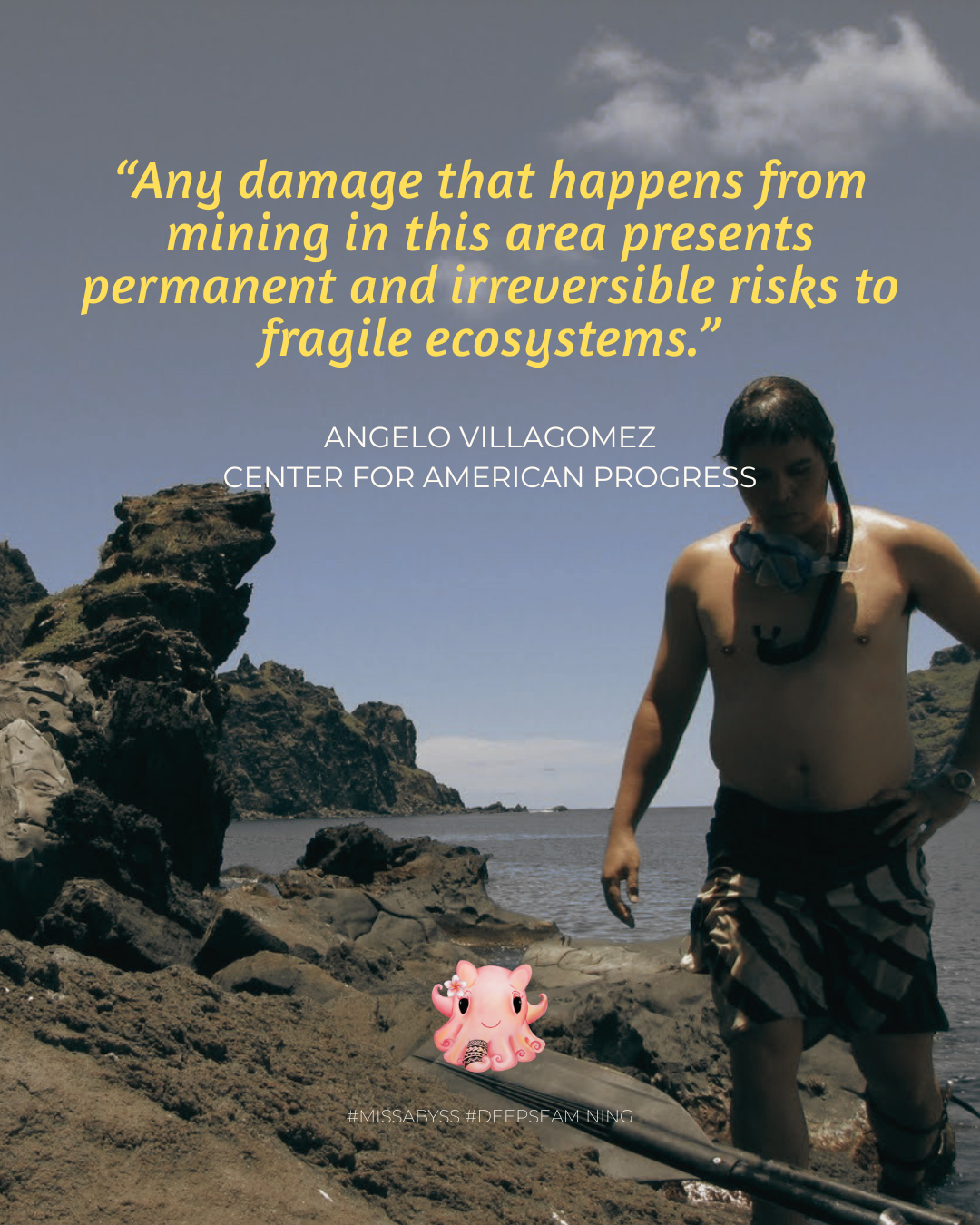
Deep Sea Mining Symposium Announcement
April 21, 2026

Seagrass restoration, seabirds, and sea turducken! Thursday Afternoon Dredging: November 2, 2017

Posted on November 2, 2017November 2, 2017 By David Shiffman
Uncategorized

Cuttings (short and sweet): 

  • Watch this skate seen on a SCUBA dive in Scotland! Video by Catherine Hollingdale

    Video by Catherine Hollingdale
  • Follow fish parasitologist Isaure de Buron on twitter!
  • Judge halts Hawaii aquarium fishing until environmental review. By the AP.
  • There are more fish in the sea, because the Magnusson-Stevens Act is working. By George Leonard, for the Ocean Conservancy blog.

Read More “Seagrass restoration, seabirds, and sea turducken! Thursday Afternoon Dredging: November 2, 2017” »

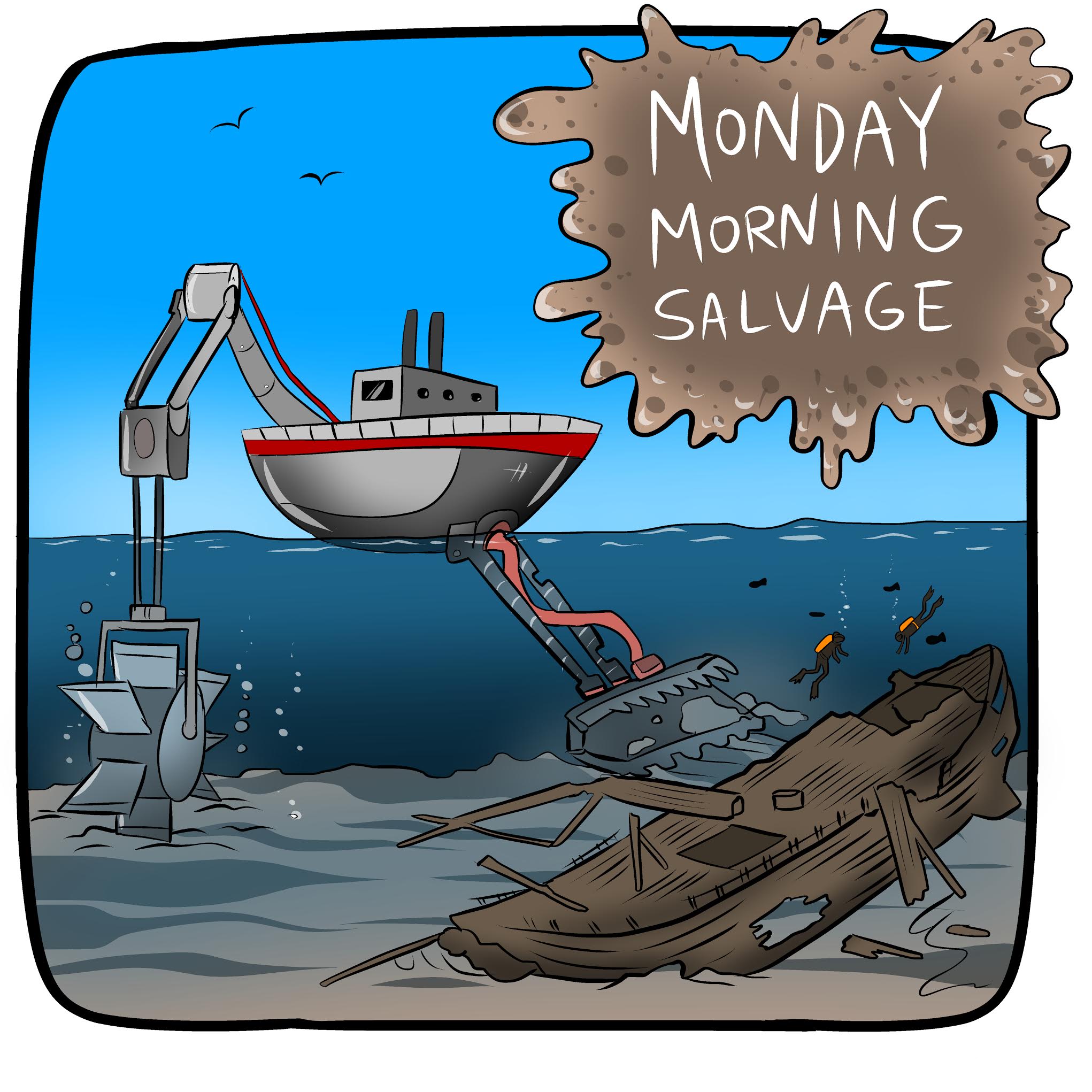
A new Gulf oil spill, opposition to deep-sea mining, DIY drop cameras, and more! Massive Monday Morning Salvage: October 30, 2017

Posted on October 30, 2017October 29, 2017 By Andrew Thaler
Weekly Salvage

I’ve been away for 2 weeks, so it’s a super-massive edition of the Monday Morning Salvage!

Fog Horn (A Call to Action)

  • There’s still an unimaginable amount of work to do in Dominica and across the Caribbean. Support the Rebuild Dominica Hurricane Relief fund or any of the other funds from our list: How to help our island colleagues in the wake of total devastation.

Flotsam (what we’re obsessed with right now)

  • This is such a cool story: A Trail of Rocks Traces Historical Steamship Routes. We can track old steamship routes from rocks scraped out of the furnaces and tossed overboard.
  • Former Papua New Guinea Attorney General attacks deep sea mining project. They always pick pictures for these articles that don’t show how much life is right around the vents.

Sampling SMS under the sea Photo: Nautilus Minerals

  • Whose ecological footprint is bigger: Medics, economists, or environmentalists? Spoilers: conservationists still have an impact, but they sure ain’t number 1.

Jetsam (what we’re enjoying from around the web)

  • There’s a fresh oil spill in the Gulf of Mexico, and it’s pretty darn huge:
    • Coast Guard Responding to 300,000 Gallon Crude Oil Spill in Gulf of Mexico.
    • Gulf of Mexico Oil Spill May Be Biggest Since 2010.
    • New Estimate Doubles the Size of Last Week’s Oil Spill in the Gulf of Mexico.
  • Some fun from Deep Sea News: When real-life marine biologist and mom goes to sea, she takes the octonauts with her.

  • This is fine: Report on U.S. Marine Sanctuary Oil Drilling Sent to White House, Not Released to Public. This is totally fine: Trump Administration Proposes Largest Oil and Gas Lease Sale in U.S. History.
  • Alaska’s Oyster Farmers Are Filling an Acidification-Driven Void. The state’s oyster farming industry is gaining ground as growers elsewhere struggle. From Hakai Magazine, which is great.
  • Nature is one of the most under-appreciated tools for reigning in carbon. From Anthropocene, which is fast becoming my favorite environmental print magazine. Sorry, Orion.
  • Thousands of penguin chicks starve in Antarctica.

Hey, Andrew, how about you give us at least *some* good news today? Ok, fine.

Read More “A new Gulf oil spill, opposition to deep-sea mining, DIY drop cameras, and more! Massive Monday Morning Salvage: October 30, 2017” »

Reducing seabird bycatch, rescuing vaquita, and cod comebacks: Thursday Afternoon Dredging: October 26, 2017

Posted on October 26, 2017 By David Shiffman
Uncategorized

Cuttings (short and sweet): 

  • Watch aquarists at the PPG Aquarium at the Pittsburgh zoo target train a zebra shark so it comes when it’s called

    Video by PennLive.com
  • Follow PNG Sharks and Rays, a twitter account associated with a project studying “one of the last frontiers of marine biodiversity research,” on twitter.
  • 5 things you should know about the Marine Mammal Protection Act. By Katie Hogge, for the Ocean Conservancy blog.
  • First vaquita “rescued” in effort to save the species. By John Cannon, for MongaBay.

Read More “Reducing seabird bycatch, rescuing vaquita, and cod comebacks: Thursday Afternoon Dredging: October 26, 2017” »

The importance of being Aquaman, or how to save the Atlantean from his briny fate

Posted on October 26, 2017 By Andrew Thaler
Popular Culture

This is an update and repost of our follow-up article on the science of Aquaman, revised and expanded. 


Aquaman has an unpleasant lunch. From New 52 Aquaman #1
Aquaman has an unpleasant lunch. From New 52 Aquaman #1 DC Comics.

Yesterday, I challenged you to consider how the greatest hero in the DC Universe would fair if forced to survive in the real world. The result was a hypothermic, brain-dead lump of jerky with brittle bones, forced to suffer through constant screams of agony even as he consumes sea life at a rate that would impress Galactus. In short, the ocean is a rough place, even for Aquaman.

But this is Southern Fried Science, and we’re not here to trash the greatest comic book hero of all time without offering some solutions, too. I went back to my comic books and my textbooks to assemble an Aquaman with a suite of evolutionary adaptations that would allow a largely humanoid organism to rule the waves, trident triumphantly raised.

Essential assumptions

Many people commented that Aquaman is not human, he is Atlantean, and thus is not bound by human limitations. This is wrong on at least two counts. First, in most iterations, Aquaman is half-human, which means that Atlanteans must be similar enough to humans, both physiologically and evolutionarily, to produce a viable hybrid. While there may be some minor differences between us and the children of Atlantis, functionally speaking, we’re the same. Second, these are not issues that plague only humans. Whales get the bends, amphibians freeze to death, fish need to regulate their internal osmolality. These are the problems inherent in being alive in the ocean, Atlantean or otherwise.

Read More “The importance of being Aquaman, or how to save the Atlantean from his briny fate” »

The horrifying physiological and psychological consequences of being Aquaman

Posted on October 25, 2017 By Andrew Thaler
Popular Culture

This is an update and repost of our seminal article on the science of Aquaman, revised and expanded. 


Aquaman. DC Comics.
Aquaman. DC Comics. A rational response to seal poaching is to lob a polar bear at the aggressors.

Aquaman may not be everybody’s favorite superhero, but since his creation in 1941, he has been among DC’s most enduring icons. During the Golden Age of comics, he held his own against Superman, Batman, and Wonder Woman. Silver Age Aquaman was a founding member and eventually leader of the Justice League. His powers, tied to the ocean, forced writers to create a compelling, complex hero with explicit limitations. In the early days, when Superman’s strength was practically infinite, and Batman’s brilliance was unmatched, Aquaman had to become more than just a superhero, he had to be a person.

If Superman existed to show us how high the human spirit could fly, and Batman to show us the darkness within even our most noble, Aquaman is here to show us the world that triumphs in our absence. The ocean is not ours, and no matter how great our technology, we will never master it as we have mastered land. Aquaman has. Through this lonely ocean wanderer, we can experience a world that we can never truly command. In many ways, Aquaman was stronger than the Man of Steel and darker than the Dark Knight. He knew loneliness that the orphan and the alien exile never could.

Even though Aquaman had to fight harder, endure the jokes of other, less interesting heroes, and find relevance in an ecosystem hostile to the humans that had to empathize with him, Aquaman was never forced to confront the truly horrifying consequences of life in the ocean.

The penetrating cold

Aquaman is, for all intents and purposes, a marine mammal. With the exception of a healthy mane in later incarnations, he is effectively hairless. As a human, we would expect his internal body temperature to hover around 99°F, or about 37°C. Even at its warmest points, the surface temperature of the ocean around the equator is only about 80°F/27°C. At the poles, ocean temperature can actually drop a few degrees below freezing. In the deep sea, ambient temperature levels out around 2 to 4°C. The ocean is cold, and water is a much better thermal conductor than air. Warm blooded species have evolved many different systems to manage these gradients, including countercurrent heat exchangers, insulating fur, and heavy layers of blubber. This is what a marine mammal that can handle cold waters look like:

Elephant Seal. NSF, photo by Mike Usher

Aquaman is not just a human, he is an atypically uninsulated human. If the man has more than 2% body fat, I’d be shocked. In contrast, warm-water bottlenose dolphins have at least 18 to 20% body fat. Anyone who SCUBA dives knows that, even with a 12 millimeter neoprene wet suit, after a few hours in 80°F water, you get cold. Aquaman, lacking any visible insulation, should have slipped into hypothermia sometime early in More Fun Comics #73. He is built for the beach rather than the frigid deep.

Jason Momoa is not a man blessed with an over-abundance of “bioprene”.

Read More “The horrifying physiological and psychological consequences of being Aquaman” »

Applications now open for the 2018 YPRF diversity in elasmobranch science scholarship

Posted on October 24, 2017 By David Shiffman
Uncategorized

The American Elasmobranch Society is the world’s oldest and largest professional association of shark and ray scientists

The American Elasmobranch Society, the world’s oldest and largest professional society focusing on the scientific study and management of sharks and their relatives, is now welcoming applications for the 2nd year of our Young Professional Recruitment Fund diversity initiative. Awardees will be given one year of Society membership, in addition to specialized professional development training, mentorship, and networking opportunities specific to their needs as scientists and professionals from developing nations or historically underrepresented minority groups. 

Read More “Applications now open for the 2018 YPRF diversity in elasmobranch science scholarship” »

Fun Science FRIEDay – Life After Death

Posted on October 20, 2017October 20, 2017 By Kersey Sturdivant
Uncategorized

That ominous specter of death. The one certainty in life that we are all careening towards. But how much do we really understand about death? Medically death is defined as the moment the heart stops beating and cuts off blood to the brain. Within seconds after heart failure the brain’s cerebral cortex — the “thinking part” of the brain — slows down instantly and flatlines (meaning no brainwaves are visible on an electric monitor). This initiates a chain reaction of cellular processes that eventually results in the death of brain cells; as a result the brain’s functions also stop and can no longer keep the body alive. The big question is after the heart stops beating, and both heart and brain activity flatlines, how quickly does cognition or awareness fade? A relatively recent study  suggests that consciousness continues even after death.

(Photo credit: Getty)

Read More “Fun Science FRIEDay – Life After Death” »

Long live sharks and rays!

Posted on October 9, 2017 By Guest Writer
Science

Alastair Harry is a fisheries science practitioner based in Perth, Australia. He assists in implementing ecosystem based fisheries management to support the sustainable use of wild-capture fish resources. He is a generalist and works across multiple areas including stock assessment, bycatch, and threatened species. He also holds an adjunct position at James Cook University and has a specific interest in the conservation and sustainable management of sharks and rays. 

In August I published a review paper entitled Evidence for systemic age underestimation in shark and ray ageing studies. In it I suggest that many sharks and rays live considerably longer than is currently recognised. This increased life expectancy isn’t due to medical advancements or a more nutritious diet (or even better fisheries management), but rather the result of ageing error.

Read More “Long live sharks and rays!” »

Lessons from Puerto Rico, mutant starfish, pictures of ships, and more! Monday Morning Salvage: October 9, 2017.

Posted on October 9, 2017 By Andrew Thaler
Weekly Salvage

Flotsam (what we’re obsessed with right now)

  • A fish scientist’s 10 tips for surviving a hurricane: Lessons learned from Puerto Rico from our friends at the Fisheries Blog.
  • Commentary: For Hurricane-Hit Puerto Rico, an Insider’s Guide to Disaster Management by gCaptain.

The Military Sealift Command hospital ship USNS Comfort (T-AH 20) arrives in San Juan, Puerto Rico, Oct. 3, 2017. U.S. Navy Photo

Read More “Lessons from Puerto Rico, mutant starfish, pictures of ships, and more! Monday Morning Salvage: October 9, 2017.” »

Documentation is the beating heart of open-science hardware: Help make ours better!

Posted on October 6, 2017 By Andrew Thaler
Oceanography for Everyone

The OpenCTD and Oceanography for Everyone has been a five year journey from inception to first field-ready model and we’re just getting started. Building a community-driven project like this requires not just expertise (that we didn’t have when we started), passion, resources, it requires documentation. Extensive, detailed, thorough documentation. Documentation is what sets an open-science … Read More “Documentation is the beating heart of open-science hardware: Help make ours better!” »

Posts pagination

Previous 1 … 54 55 56 … 273 Next

Popular Posts

What Ocean Ramsey does is not shark science or conservation: some brief thoughts on "the Shark Whisperer" documentaryWhat Ocean Ramsey does is not shark science or conservation: some brief thoughts on "the Shark Whisperer" documentaryJuly 2, 2025David Shiffman
What is a Sand Shark?What is a Sand Shark?November 12, 2017Chuck Bangley
The next OpenCTD is here!The next OpenCTD is here!June 22, 2026Andrew Thaler
Undermining the Law of the Sea. Some additional thoughts following my OpEd in the Hill.Undermining the Law of the Sea. Some additional thoughts following my OpEd in the Hill.June 22, 2026Andrew Thaler
Tagging Bull Sharks in the Neuse RiverTagging Bull Sharks in the Neuse RiverAugust 4, 2011Guest Writer
The story of the pride flag made from NASA imagery: Bluesky's most-liked imageThe story of the pride flag made from NASA imagery: Bluesky's most-liked imageSeptember 27, 2024David Shiffman
That's not a blobfish: Deep Sea Social Media is Flooded by AI SlopThat's not a blobfish: Deep Sea Social Media is Flooded by AI SlopDecember 19, 2025Andrew Thaler
Rice’s whale and the curious case of the disappearing species.Rice’s whale and the curious case of the disappearing species.June 25, 2026Southern Fried Science
Our favorite sea monsters – Ningen (#4)Our favorite sea monsters – Ningen (#4)September 7, 2010Andrew Thaler
Shark of Darkness: Wrath of Submarine is a fake documentaryShark of Darkness: Wrath of Submarine is a fake documentaryAugust 10, 2014Michelle Jewell

squishy

Subscribe to our RSS Feed for updates whenever new articles are published.

We recommend Feedly for RSS management. It's like Google Reader, except it still exists.

Southern Fried Science

  • Home
  • About SFS
  • Authors
  • Support SFS


If you enjoy Southern Fried Science, consider contributing to our Patreon campaign.

Copyright © 2026 Southern Fried Science.

Theme: Oceanly Premium by ScriptsTown