

Skip to content

Southern Fried Science

Over 15 years of ocean science and conservation online

  • Home
  • About SFS
  • Authors
  • Support SFS

Recent Posts

We Asked IMCC7 Attendees What Ocean Conservation Needs. Here’s What They Said.
November 5, 2026
Researching Historical Erasure on Public Lands
July 31, 2026
5 things I learned helping to reassess the global conservation status of every species of tuna and billfish
September 15, 2026
Key takeaways from my Convention on Migratory Species report on fish aggregating devices in the Mediterranean Sea
September 3, 2026
Jabberwocks and Snallygasters: teaching environmental education with monsters, mayhem, and dice.
August 31, 2026
The conservation impacts of recreational fishing
August 25, 2026

Japan becomes the first nation to mine a deep-sea hydrothermal vent

Posted on September 27, 2017 By Andrew Thaler 1 Comment on Japan becomes the first nation to mine a deep-sea hydrothermal vent
Uncategorized

Sixteen hundred meters deep, off the coast of Okinawa, a new kind of mining just cut it’s teeth.

Earlier today, the Japan Times reported that a mining tool has successfully extracted zinc and other metals from a hydrothermal vent on the seafloor. There’s not much to go on yet. We don’t know if these were active or dormant vents (though dormant doesn’t mean biologically dead). We don’t know the specific location of the experimental mine site. And we don’t know the footprint of the ore prospect. But we do know that Japan has identified at least 6 potential mining sites within its exclusive economic zone and that plans are moving forward for a commercial mining venture in mid-2020. I’ve only found one report in English and from the look of things, there’s only a press release circulating right now, but I’m certain we’ll be hearing much more about this in the coming weeks.
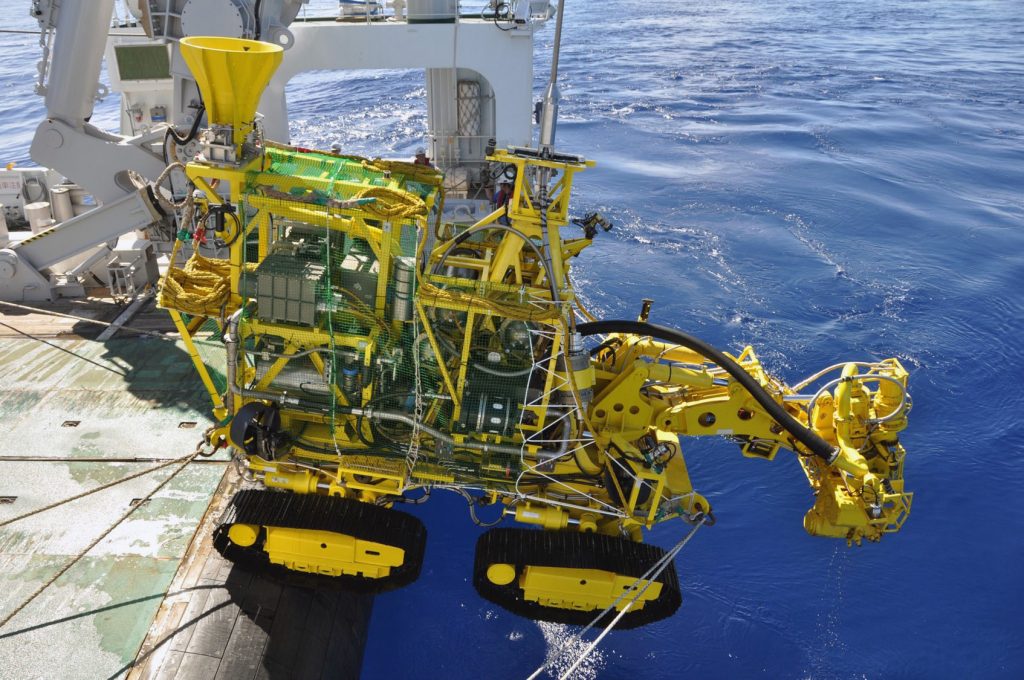
Japan Agency for Natural resources and Energy

We’re still watching to see what Nautilus Minerals does at Solwara 1 and how manganese nodule mining proposals in the Clarion Clipperton fracture zone are progressing but Japan’s mining efforts present a sea change in how to anticipate future deep-sea mining efforts. Private commercial ventures are dependent on the whims of the global commodities market and subject to national and international regulation. National efforts are driven by the need for resource independence. I was aware of Japan’s efforts, but didn’t realize that they were as close as they are to being ready for production.

For the last 10 years, we’ve been saying that deep-sea mining of hydrothermal vents is imminent. Well, it’s here.

Read More “Japan becomes the first nation to mine a deep-sea hydrothermal vent” »
How to help our island colleagues in the wake of total devastation.

Posted on September 27, 2017September 27, 2017 By Andrew Thaler 1 Comment on How to help our island colleagues in the wake of total devastation.
Blogging

After three brutal hurricanes, the islands of the Caribbean are hurting. It can be hard, in the wake of catastrophe, to know where your donations can be best spent. We’ve contacted several of our colleagues on the ground to find out who’s doing the work and which aid organizations and groups need help now. Puerto … Read More “How to help our island colleagues in the wake of total devastation.” »

The many, many ways I screwed up my first science crowdfunding campaign.

Posted on September 26, 2017October 1, 2017 By Andrew Thaler
Blogging

Four generations of field hardened OpenCTDs.

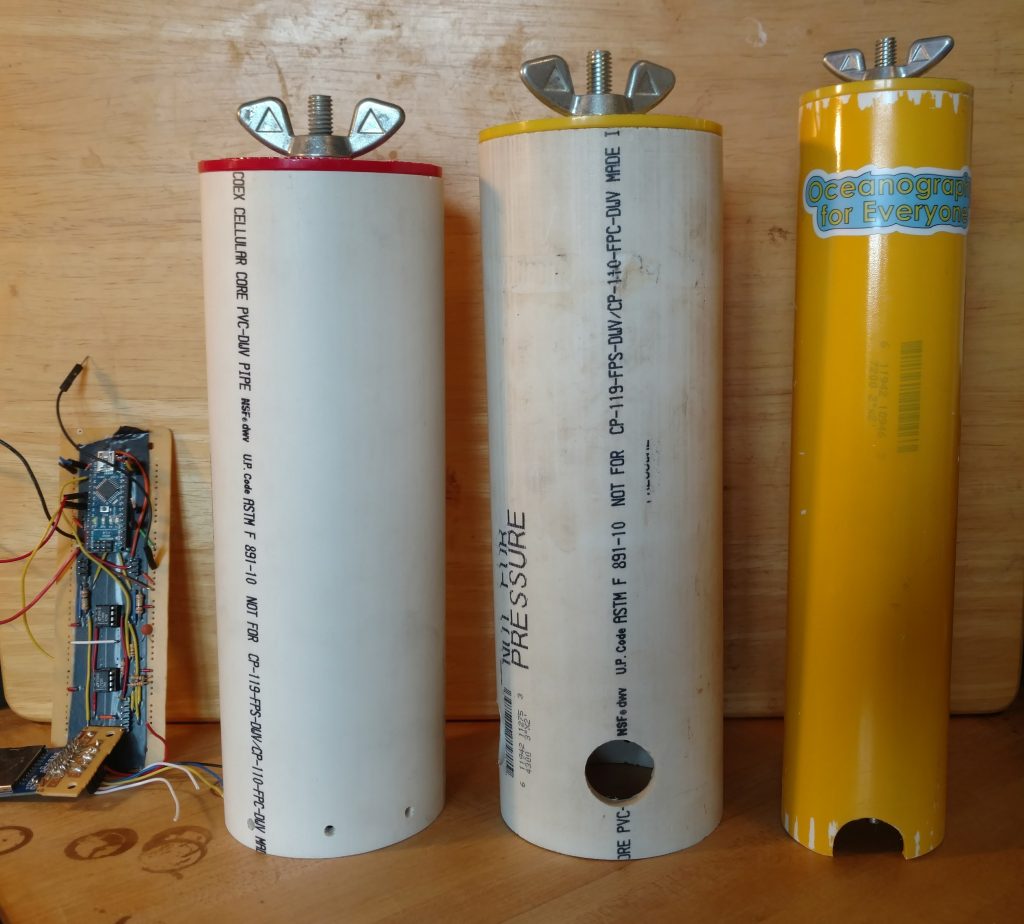
It’s been over five years since Kersey Sturdivant and I launched Oceanography for Everyone – The OpenCTD, my first attempt at crowdfunding science. Over the years, that initial effort has grown into Oceanography for Everyone, a community of researchers, educators, and citizen scientists, and has created new open-source tools for open-source, open-science hardware. The OpenCTD is the finest oceanographic instrument that you can build in your own home for less than $300.

The crowdfunding campaign was a total disaster.

Since then, I’ve written several articles on how scientists can launch and managed crowdfunding campaigns:

  • Can Crowdfunding Fill the Science Funding Gap?
  • Setting Up Your Crowdfunding Campaign
  • Managing a Successful Crowdfunding Campaign

…but I’ve never written explicitly about what we did wrong during that campaign and how it impacted our success. Now that the final reward from that campaign has been delivered (yes, five years later, talk about the eternally delayed crowdfunding campaign), it’s the right moment to look back and think about how everything went so wrong.

I went with lesser-known platforms. We launched the OpenCTD on RocketHub. At the time, RocketHub was hosting the #SciFund Challenge, a campaign to encourage scientists to launch science crowdfunding campaigns. Both the #SciFundChallenge and RocketHub were relatively small players in the nascent crowdfunding world. RocketHub doesn’t even appear to do crowdfunding anymore, they’ve pivoted to a “social network for entrepreneurs”. The old OpenCTD campaign page is long deprecated. #SciFund Challenge’s website hasn’t been updated in almost half a year.

Here’s the thing with crowdfunding, and especially crowdfunding in the early days: There are two dominant communities that you can rely on. There’s the community of people who want to support what you’re doing and there’s the community of people enamored with the idea of crowdfunding. Being a crowdfunding “investor” is a hobby in and of itself and many of the biggest donors are people who support dozens of different campaigns. So the larger and more popular the platform, the more crowdfunding enthusiasts you’ll attract. Heck, since backing the very first OpenROV, I’ve backed 23 other projects on Kickstarter, most recently Public Lab’s Balloon Mapping kits.

By going with RocketHub, I committed our campaign to a smaller potential audience. Considering Kickstarter was garnering huge press at the time, this was a near-fatal mistake.

Read More “The many, many ways I screwed up my first science crowdfunding campaign.” »

Jellyfish sleep, shark-sucking bots, mole crab parasites, and more! Monday Morning Salvage: September 25, 2017

Posted on September 25, 2017September 25, 2017 By Andrew Thaler
Weekly Salvage

Fog Horn (A Call to Action)

  • The fight for our Marine National Monuments isn’t over. We now know of the contents of Zincke’s monument review memo, and it is not good. The DOI wants to see commercial fishing return to the Pacific Remote Islands and Rose Atoll Marine National Monuments. Longline fishing in these regions has historically been conducted by foreign fishing fleets which have been documented using slave labor. Many ecologists believe that maintaining these protected zones serve as a refuge that boost populations of many important commercial fish and improve the overall health of the fishery. Any change to monuments created under the Antiquities Act must be approved by congress. You’ve got a lot of reason to call you representatives this week, so why not add “I opposed the reintroduction of ecologically and economically destructive commercial fishing to the Pacific Remote Islands and Rose Atoll Marine National Monument.” to your script?

Flotsam (what we’re obsessed with right now)

  • Jellyfish sleep. Mind. Blown.
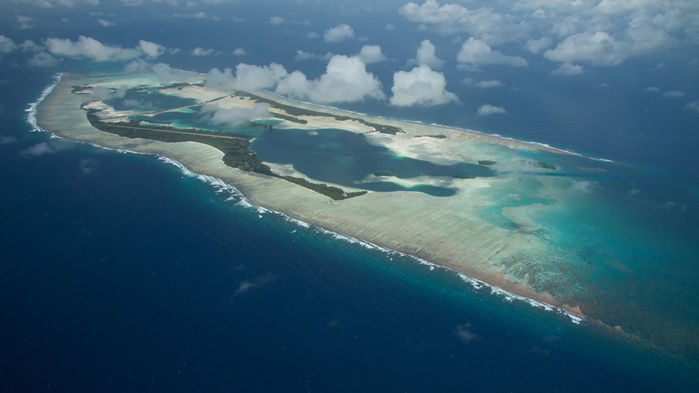
  • Our Pacific Monuments are also extremely important scientific sites. Commercial fishing could jeopardize decades of research efforts in the remote Pacific. Scientists pan proposal to open pristine Pacific islands to fishing.

Palmyra Atoll. Erik Oberg/Island Conservation/Flickr

Read More “Jellyfish sleep, shark-sucking bots, mole crab parasites, and more! Monday Morning Salvage: September 25, 2017” »

A shark for all floods, Crowdfunding scams, old fish, bold fish, and more! Monday Morning Salvage: September 18, 2017

Posted on September 18, 2017September 18, 2017 By Andrew Thaler
Weekly Salvage

Fog Horn (A Call to Action)

  • The fight for our Marine National Monuments isn’t over. We finally know *some* of the contents of Zincke’s monument review memo, and it’s not great. The DOI wants to see commercial fishing return to the Pacific Remote Islands and Rose Atoll Marine National Monuments. Longline fishing in these regions has historically been conducted by foreign fishing fleets which have been documented using slave labor. Many ecologists believe that maintaining these protected zones serve as a refuge that boost populations of many important commercial fish and improve the overall health of the fishery.
  • Here’s the good news: Any change to monuments created under the Antiquities Act must be approved by congress. You’ve got a lot of reason to call you representatives this week, so why not add “I opposed the reintroduction of ecologically and economically destructive commercial fishing to the Pacific Remote Islands and Rose Atoll Marine National Monument.” to your script?

Flotsam (what we’re obsessed with right now)

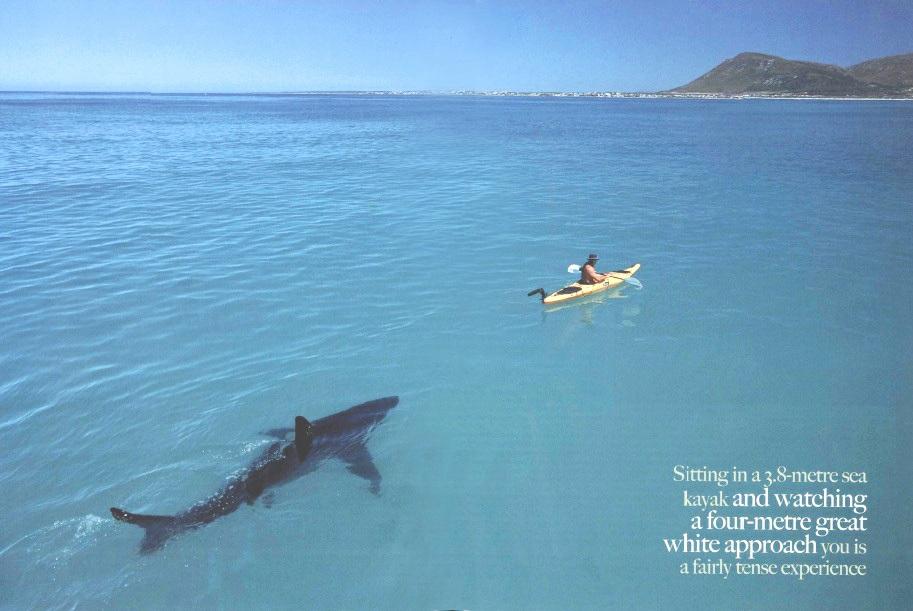
  • Hero Shark, the shark who shows up to every flood, ostensibly to save us all from our own hubris, has a long a fascinating history. “Shark in flooded street” wasn’t even the first time that photo was used for fake news.

Photo by Thomas P. Peschak.

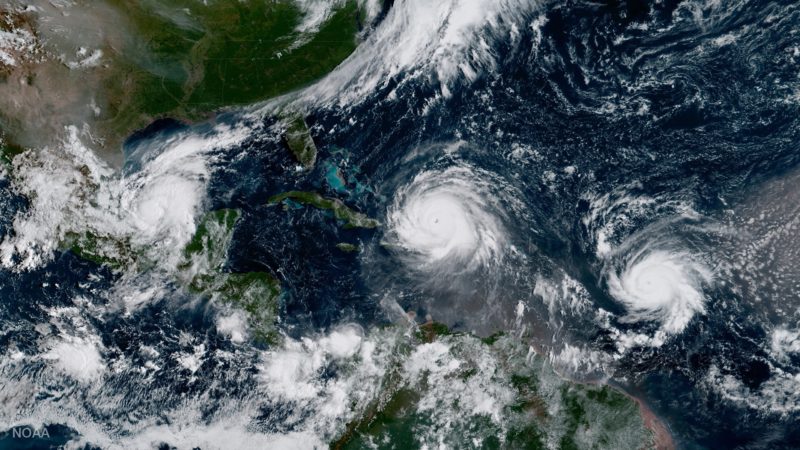
  • NOAA’s New Weather Satellite Captured Stunning Images of Hurricanes Harvey and Irma. These are amazing and terrifying.

GOES-16.

  • Rick MacPherson and I made a bot that generates random ocean conservation solutions from a massive archive of policy jargon. Follow @OceanCon_Bot. It is good.

Read More “A shark for all floods, Crowdfunding scams, old fish, bold fish, and more! Monday Morning Salvage: September 18, 2017” »

Fun Science FRIEDay – Au Revoir Cassini

Posted on September 15, 2017September 15, 2017 By Kersey Sturdivant
Uncategorized

Roughly 20 years ago the Cassini orbiter launched from Cape Canaveral for a seven year journey to the ringed planet Saturn. Towing with it was the Huygens probe, built and maintained by the European Space agency. On its journey to Saturn the orbiter flew by Venus through the asteroid belt, past Jupiter with its giant red eye, before finally arriving at Saturn. After spending countless years investigating Saturn and its moons, today is the culmination of that journey as Cassini begins its death orbit down into Saturn.

Photo Credit: NASA/JPL-Caltech

Cassini was a triumph of science and engineering, sending back amazing views and increasing the state of knowledge in astronomy. Cassini discovered two previously unknown moons orbiting Saturn (bringing Saturn’s total known moon count to 60), discovered ice plumes from Enceladus (another Saturn moon) via magnetometer, and detached and sent the Huygens probe  down to the surface of Titan (Saturn’s largest moon). The landing of Huygens on Titan is the first and only landing on the surface of a world in the outer solar system.

Cassini orbiter sees Earth from Saturn (Photo Credit: NASA/JPL-Caltech)

Read More “Fun Science FRIEDay – Au Revoir Cassini” »

A new kind of robot to save the ocean!

Posted on September 15, 2017 By Andrew Thaler
Uncategorized

It’s the Ocean Conservation Bot! @OceanCon_Bot creates new an novel ocean conservation solutions by drawing from a vast and deep archive of randomly generate ocean jargon. @OceanCon_Bot is currently capable of generating 3.2 quadrillion potential ocean conservation solutions. @OceanCon_Bot is incapable of determining whether a solution is good, bad, gibberish, or really, really gibberish. @OceanCon_Bot … Read More “A new kind of robot to save the ocean!” »

Lions, Whales, and the Web: Transforming Moment Inertia into Conservation Action

Posted on September 14, 2017 By Andrew Thaler
Uncategorized

I have a new paper out today with an incredible team of co-authors: Naomi Rose, Mel Cosentino, and Andrew Wright.

Thaler and friends (2017) Lions, Whales, and the Web: Transforming Moment Inertia into Conservation Action. DOI: 10.3389/fmars.2017.00292.

In it, we look at three case-studies of online and offline reactions to the deaths of specific, charismatic animals, and discuss how preparation, planning, and tactical thinking can be used to promote effective conservation messaging in the wake of these haphazard events. We talk about how outrage, empathy, and curiosity play a role in the global conversation and how to effectively mobilize this attention into conservation action.

Conservation activism following moment inertia is a balancing act between strategic planning and a quick, tactical response. When the catalyst is moral outrage, it is important to allow people to be angry, rather than to try and curb such responses. In these circumstances, it is possible to leverage predictable moral signaling into tangible conservation gains.

Regardless of the emotional reaction—outrage, curiosity, or empathy—the general guidelines for conservationists leveraging moment inertia are the same. First, planning for pseudorandom events is essential to produce meaningful outcomes. Second, understanding the limitations of campaigning on an inertial moment will help establish and achieve concrete, realistic goals. Third, the call to action must be informed by the local context, address local cultural values, and be delivered by those who can connect with the public. Finally, it is critical to maintain a factual basis while acknowledging the emotions involved.

With foresight, a focus on concrete goals, and an understanding of the strengths and limitations inherent in moment inertia, these events can be harnessed to help achieve lasting conservation successes.

Thaler and friends (2017)

What is Moment Inertia: Moment Inertia is a phenomenon that arises from focus of attention around a single, clarifying event, or moment, which propagates, undirected, through media unless acted upon by outside forces.

Read More “Lions, Whales, and the Web: Transforming Moment Inertia into Conservation Action” »

Thursday Afternoon Dredging: September 14th, 2017

Posted on September 14, 2017September 13, 2017 By David Shiffman
Uncategorized

Cuttings (short and sweet): 

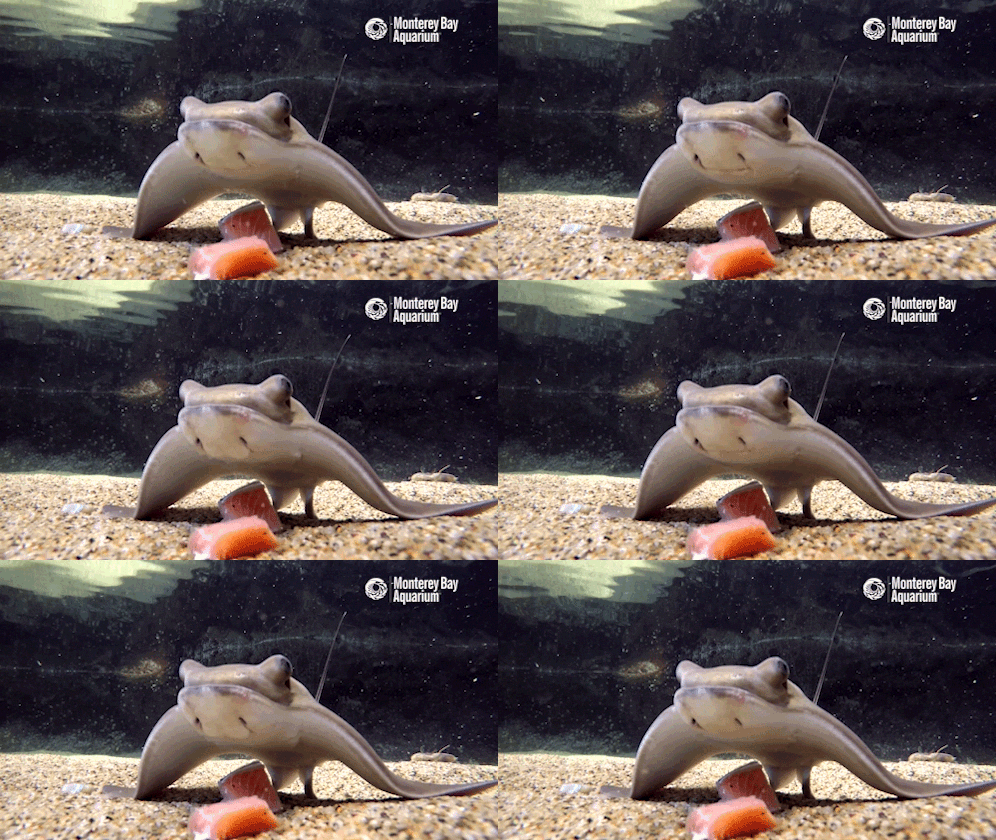
  • Watch this bat ray at the Monterey Bay Aquarium
  • Follow Marie Auger-Méthé, an Arctic ecologist, on twitter!
  • How sea creatures change color. From Nature Research Highlights.
  • Global fingerprints of sea level rise revealed by satellites. By Rachael Lallensack for Nature News.


Read More “Thursday Afternoon Dredging: September 14th, 2017” »

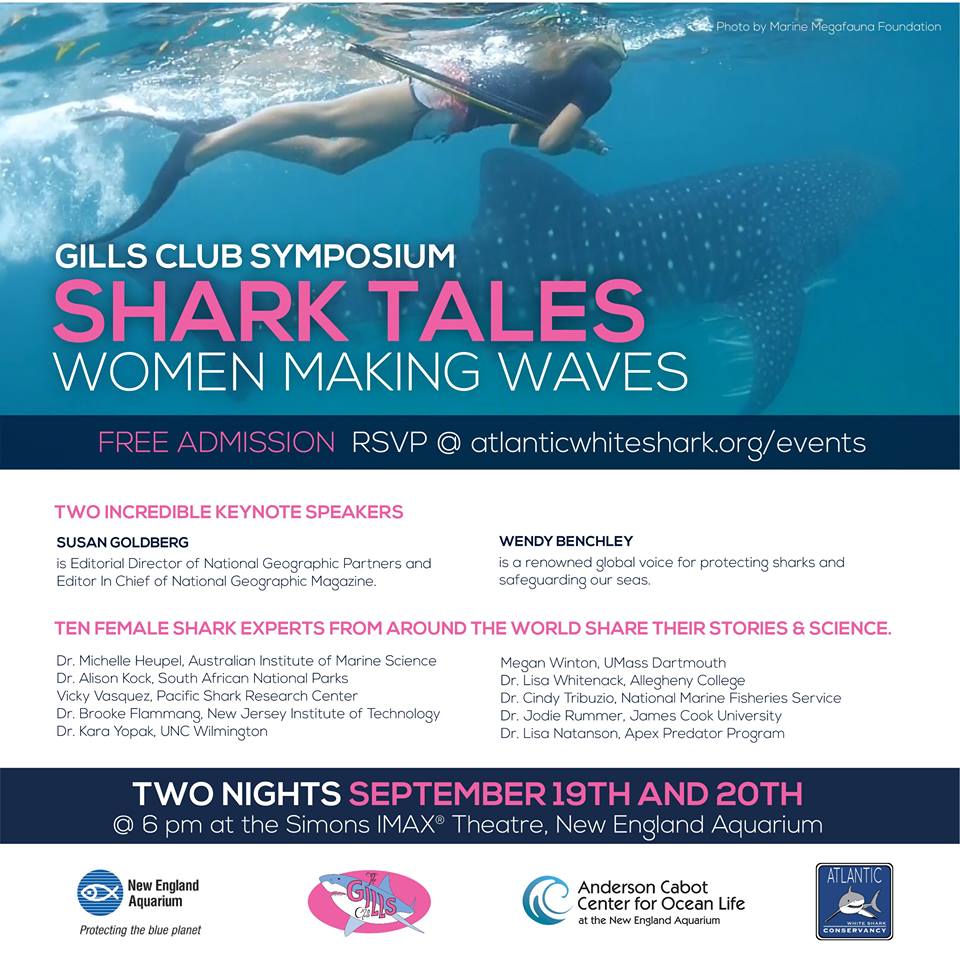
Gills Club Shark Tales: An online and in-person sharkstravaganza 19-20 September at NEAQ!

Posted on September 13, 2017September 20, 2017 By Michelle Jewell 2 Comments on Gills Club Shark Tales: An online and in-person sharkstravaganza 19-20 September at NEAQ!
Gills Club Shark Tales: An online and in-person sharkstravaganza 19-20 September at NEAQ!
Education, Uncategorized

Note:  This post has been updated on 18 September 2017.  

Friends, Researchers, Countrywomen, lend me your ears!

The Atlantic White Shark Conservancy and New England Aquarium are hosting a completely free two-day event, 19-20 September, featuring an amazing line-up of shark scientists and enthusiasts, including:

Keynote Speakers:

Susan Goldberg – Editor in Chief of National Geographic Magazine

Wendy Benchley – Renowned global voice for shark protection and co-founder of the prestigious Peter Benchley Ocean Awards.

Gills Club Science Team Speakers:
Dr. Michelle Heupel – Australian Institute of Marine Science
Dr. Alison Kock – South African National Parks

Read More “Gills Club Shark Tales: An online and in-person sharkstravaganza 19-20 September at NEAQ!” »

Posts pagination

Previous 1 … 59 60 61 … 277 Next

Popular Posts

Getting a sense of porpoiseJanuary 20, 2009Andrew Thaler
This is the worst academic presentation in the world ... tributeApril 23, 2015Chris Parsons
That's not a blobfish: Deep Sea Social Media is Flooded by AI SlopThat's not a blobfish: Deep Sea Social Media is Flooded by AI SlopDecember 19, 2025Andrew Thaler
Have we found the city of Atlantis?Have we found the city of Atlantis?September 1, 2026Chris Parsons
What Ocean Ramsey does is not shark science or conservation: some brief thoughts on "the Shark Whisperer" documentaryWhat Ocean Ramsey does is not shark science or conservation: some brief thoughts on "the Shark Whisperer" documentaryJuly 2, 2025David Shiffman
The 45 most influential female ecologists alive today according to twitterThe 45 most influential female ecologists alive today according to twitterFebruary 10, 2014Guest Writer
Ethical Debate: Killing sharks for science?Ethical Debate: Killing sharks for science?June 1, 2010David Shiffman
Our favorite sea monsters – Ningen (#4)Our favorite sea monsters – Ningen (#4)September 7, 2010Andrew Thaler
What is a Sand Shark?What is a Sand Shark?November 12, 2017Chuck Bangley
No, harassing a shark for fun is not ethically equivalent to scientific research that helps conserve a speciesNo, harassing a shark for fun is not ethically equivalent to scientific research that helps conserve a speciesMarch 26, 2014David Shiffman

squishy

Subscribe to our RSS Feed for updates whenever new articles are published.

We recommend Feedly for RSS management. It's like Google Reader, except it still exists.

Southern Fried Science

  • Home
  • About SFS
  • Authors
  • Support SFS


If you enjoy Southern Fried Science, consider contributing to our Patreon campaign.

Copyright © 2026 Southern Fried Science.

Theme: Oceanly Premium by ScriptsTown