

Skip to content

Southern Fried Science

Over 15 years of ocean science and conservation online

  • Home
  • About SFS
  • Authors
  • Support SFS
Latest News
  • Norway and Cook Islands put their deep-sea mining plans on pause

Recent Posts

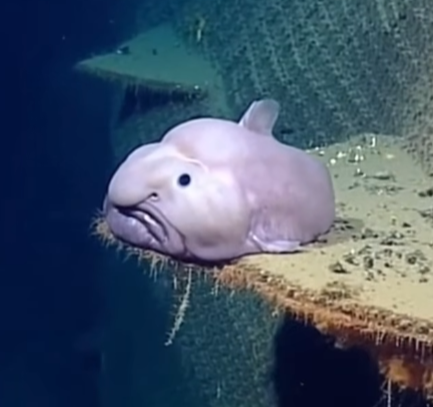
That’s not a blobfish: Deep Sea Social Media is Flooded by AI Slop
December 19, 2025
What we know we don’t know: impacts of deep-sea mining on whales, dolphins, sharks, turtles, and other migratory species.
November 20, 2025
Norway and Cook Islands put their deep-sea mining plans on pause.
December 3, 2025
Beyoncé is Right: History Can’t Be Erased
October 23, 2025
Teaching with D&D: My favorite source books for running a great Dungeons & Dragons campaign.
September 23, 2025
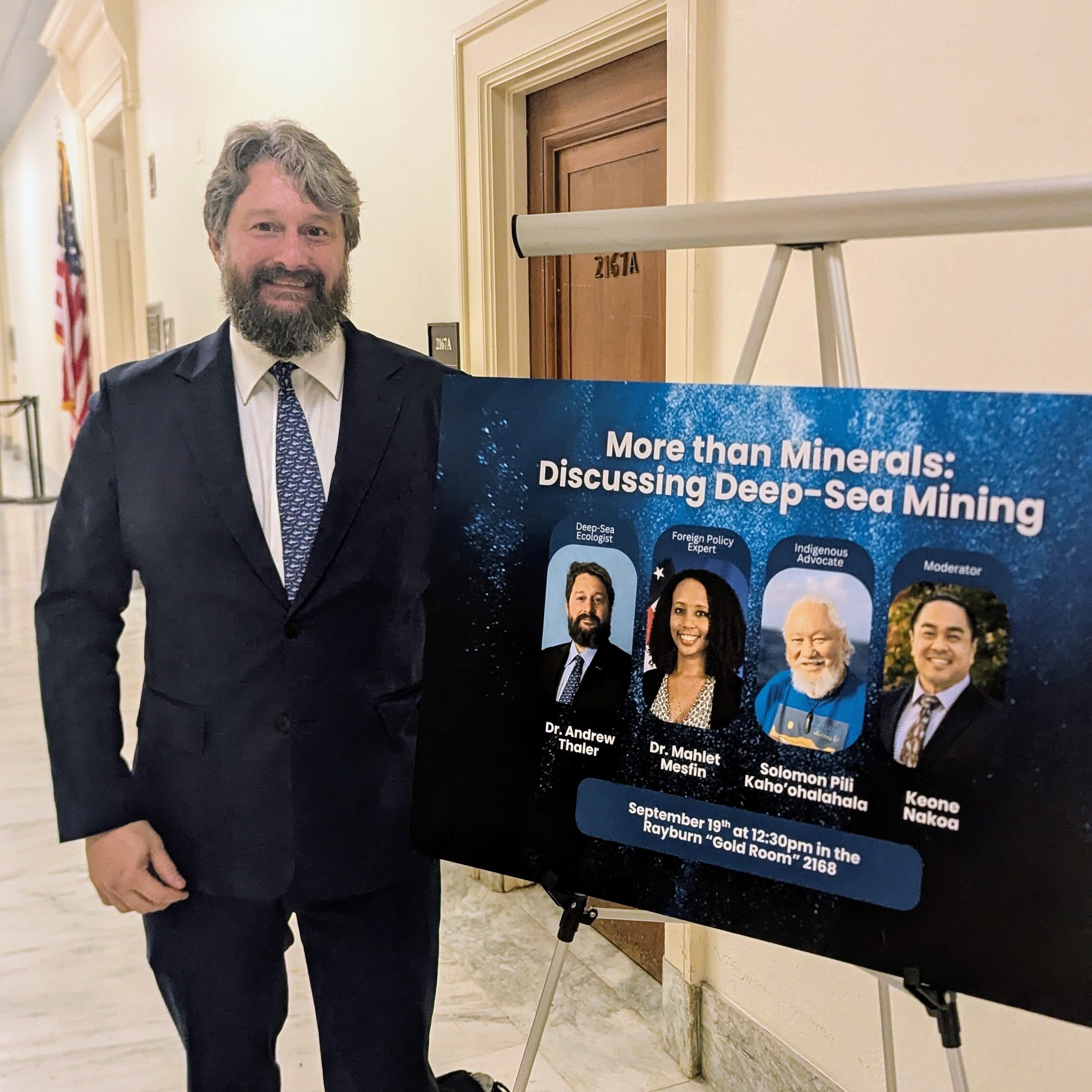
9 Quick Questions About Deep-Sea Mining from My Congressional Briefing
September 22, 2025

Rumors of the lesser electric ray’s demise have been greatly exaggerated

Posted on February 23, 2017February 23, 2017 By David Shiffman
Science, Uncategorized

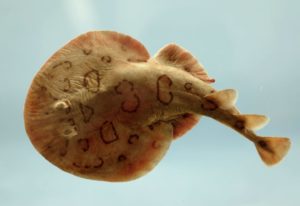
A lesser electric ray. Photo credit: Brandi Noble, NOAA Fisheries Service

The lesser electric ray, a small sand-dwelling ray that lives from North Carolina to Brazil, has been considered one of the most endangered marine fish on Earth. A 2005 paper reported that 98% of these rays had been wiped out, a decline attributed to shrimp trawling bycatch. This paper resulted in these animals getting classified as IUCN Red List “Critically Endangered,” the highest risk category for any species that is still found in the wild.

A new paper published today in the journal Endangered Species Research shows that these rays are in much better shape than previously believed. “There is no evidence of a decline in the relative abundance of lesser electric rays,” said Dr. John Carlson, a NOAA Fisheries Service Research Biologist and lead author of the new paper.

Read More “Rumors of the lesser electric ray’s demise have been greatly exaggerated” »
Thursday Afternoon Dredging: February 23rd, 2017

Posted on February 23, 2017February 23, 2017 By David Shiffman
Uncategorized

Cuttings (short and sweet):

Logo by Ethan Kocak

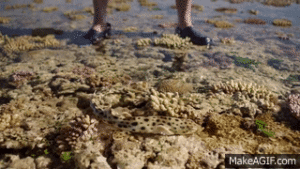
  • Watch this shark walk across a reef during low tide, from the BBC Shark special!
  • Follow the JCU Seagrass Ecology Lab on twitter!
  • Bring out your dead: donation of fish carcasses helps the community. By Henry Hershey, for the Fisheries Blog

Read More “Thursday Afternoon Dredging: February 23rd, 2017” »

Monday Morning Salvage: February 20, 2017

Posted on February 20, 2017 By Andrew Thaler 1 Comment on Monday Morning Salvage: February 20, 2017
Weekly Salvage

For all our US-based Readers: Happy President’s Day! For everyone else, this is the reason none of you USian colleagues are answering e-mails. Unless they are, in which case, *grumble grumble grumble* *something about work-life balance*

Flotsam (what we’re obsessed with right now)

  • The ocean is full of garbage and even the deepest trenches aren’t safe. Here’s an interview I did with KSPN Saipan where I talked about the garbage the precedes us everywhere we go.
  • Also: Banned chemicals persist in deep ocean. This seems important.

Read More “Monday Morning Salvage: February 20, 2017” »

Thursday Afternoon Dredging: February 16th, 2017

Posted on February 16, 2017February 16, 2017 By David Shiffman
Uncategorized

Cuttings (short and sweet):

Logo by Ethan Kocak

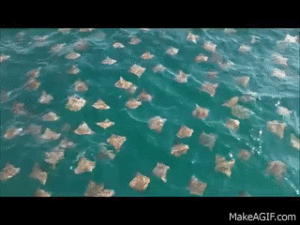
  • Watch cownose rays migrate past Destin, Florida, filmed by a parasailer

  • Follow Abby Lawson, a Ph.D. candidate researching alligators, on twitter!
  • Debunking myths about ocean garbage patches. From the NOAA restoration blog
  • What does BREXIT mean for UK fishing rights? By Daniel Boffey, for the Guardian

Read More “Thursday Afternoon Dredging: February 16th, 2017” »

R1 research universities – is a biased, flawed ranking system crippling academia?

Posted on February 16, 2017February 20, 2017 By Chris Parsons
Academic life

If you are at a university that has graduate students, you have probably heard about whether your university is an R1 or R2 or R-whatever research institution. Universities tout their position in this ranking system, awarded by the Carnegie Foundation, to denote how “prestigious” they are in terms of research. From 1994, the ranking used to be given according to how much federal research funding they were awarded.

Source: clipart panda

Because of this, all the ranking told you was how much federal money a particular university received. This system is incredibly flawed. For example, if you have faculty more dedicated to writing grants and less dedicated to teaching, mentoring graduate students, publishing articles or doing other activities that are supposed to be the mainstay of academia, then certainly you will get more money. However, this will be at the expense of teaching, mentoring, publishing, etc.

Read More “R1 research universities – is a biased, flawed ranking system crippling academia?” »

Monday Morning Salvage: February 13, 2017

Posted on February 13, 2017 By Andrew Thaler
Weekly Salvage

Bringing you the best of marine science and conservation from the last week.

Flotsam (what we’re obsessed with right now)

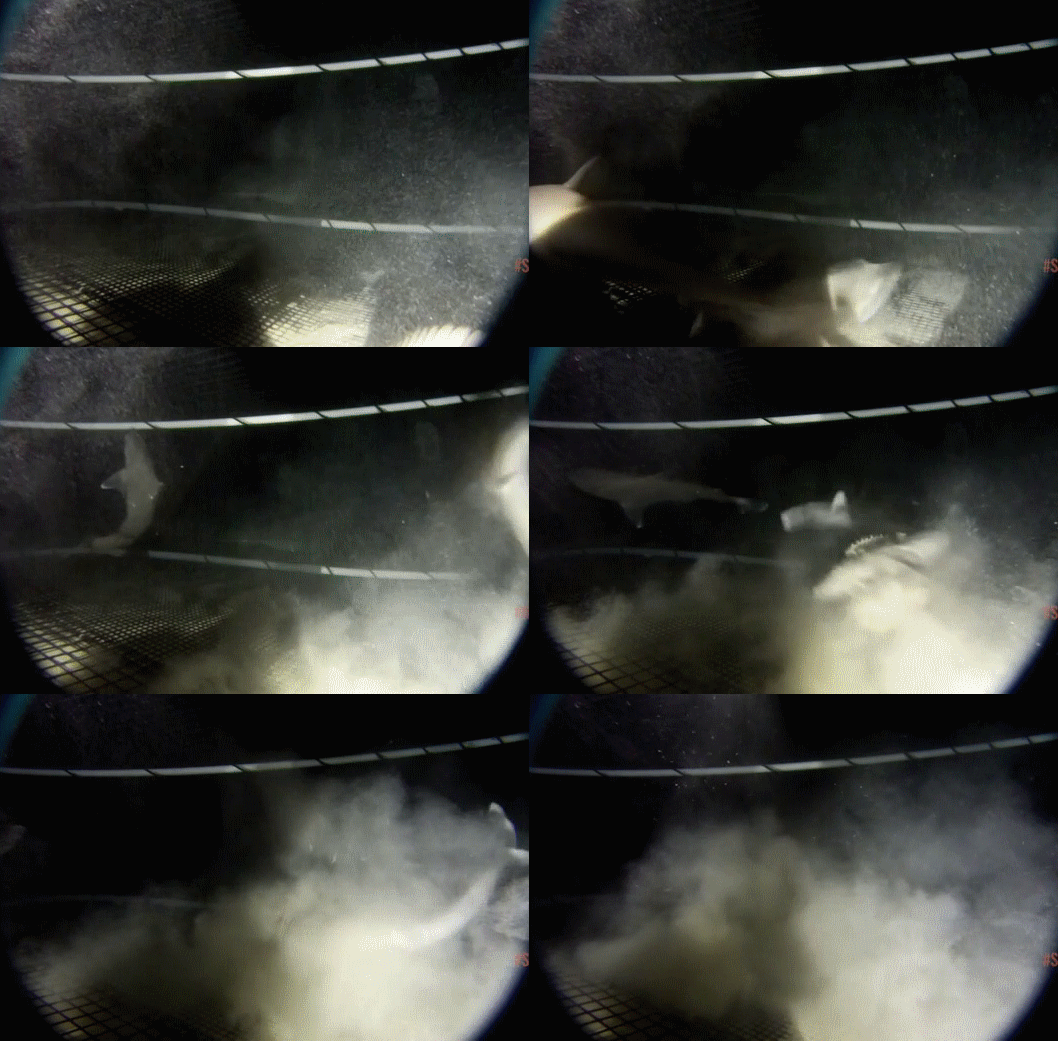
  • This giant isopod just wrecking a shark.

  • More.

Jetsam (what we’re enjoying from around the web)

Read More “Monday Morning Salvage: February 13, 2017” »

Thursday Afternoon Dredging: February 9th, 2017

Posted on February 9, 2017 By David Shiffman
Uncategorized

Cuttings (short and sweet):

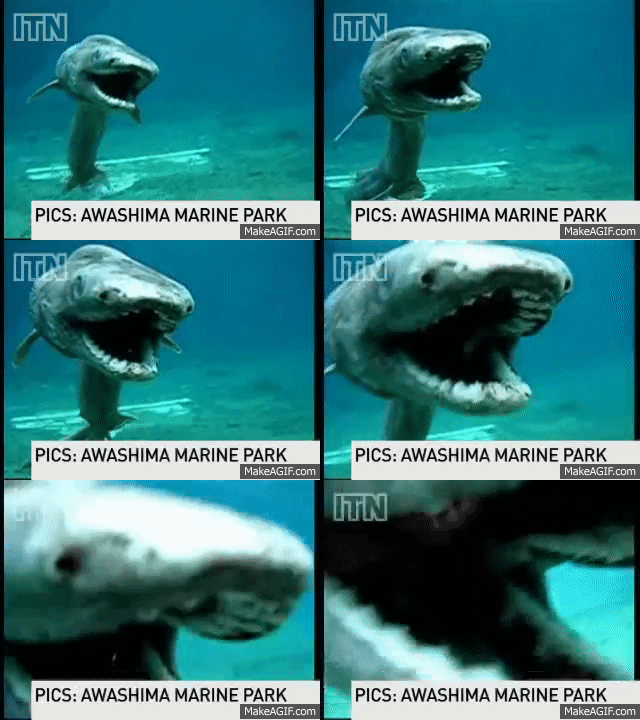
  • Watch this frilled shark swim in unusually shallow water off Japan
  • Follow Dr. Rae Wynn-Grant, an AMNH conservation researcher, on twitter!
  • Last call for vaquita, the panda of the sea. WWF reports that there are just 30 vaquita left in the wild, down from 60 last year.

Read More “Thursday Afternoon Dredging: February 9th, 2017” »

Conserving Chicago’s Lungfish Legacy

Posted on February 8, 2017February 8, 2017 By Solomon David
Conservation, Science

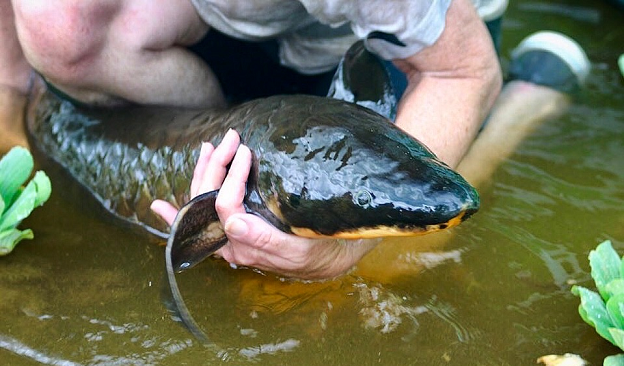
Adult Australian Lungfish, part of a captive breeding program in Queensland, Australia.
Credit: Gordon Hides (used with permission)

On Sunday, February 5, 2017, Granddad the Australian Lungfish, the oldest fish in any aquarium or zoo, was euthanized due to health complications. Although his exact age is unknown, he arrived at Shedd Aquarium in Chicago as an adult in 1933. Australian Lungfish (Neoceratodus forsteri) take over a decade to mature, so we can estimate he was over 90 years old when he passed.

The Australian Lungfish is a unique species, considered a “living fossil”, resembling its ancestors whose lineage dates back over 380 million years. The Australian Lungfish genus (Neoceratodus) itself has been around for about 100 million years. When first described, they were believed to be amphibians; one look at their elongate body and flipper-like fins, and you can imagine the classification conundrum. The fish even possesses a primitive lung, allowing it to breathe air in low-oxygen environments (although they usually breathe with their gills).

Read More “Conserving Chicago’s Lungfish Legacy” »

A Reading List for Environmental Resistance

Posted on February 7, 2017 By Andrew Thaler 1 Comment on A Reading List for Environmental Resistance
Blogging

We have entered a challenging new era for conservation and the environmental movement. Some of us feel as if we are hanging from the edge of a cliff. Others are preparing for the battles ahead. And many of us are still reeling from the whirlwind of changes taking place seemingly overnight.

We can’t tell you how to feel or how to act. We can’t really offer any comfort either, at least none that feels sincere. What we can provide are resources culled from a lifetime working in conservation science to provide, if not a map, than at least a scattered set of guideposts to remind us of where we’ve been and direct us to where we need to be going.

Over the last few weeks, I’ve been collecting and curating a reading list for the conservation professionals, managers, and activists. I’ve culled from a diverse groups of writers to both focus and expand my vision of what conservation could become in the coming years.

This is, of course, not a comprehensive list of writings, but rather those which I have turned to, or turned back to, in the last few months, for inspiration and understanding. Some of them may seem a little out of place, but they have all offered guidance and insight as we move forward into this brave new world.

Read More “A Reading List for Environmental Resistance” »

Monday Morning Salvage: February 6, 2017

Posted on February 6, 2017 By Andrew Thaler
Uncategorized

Bringing you the best of marine science and conservation from the last week.

Flotsam (what we’re obsessed with right now)

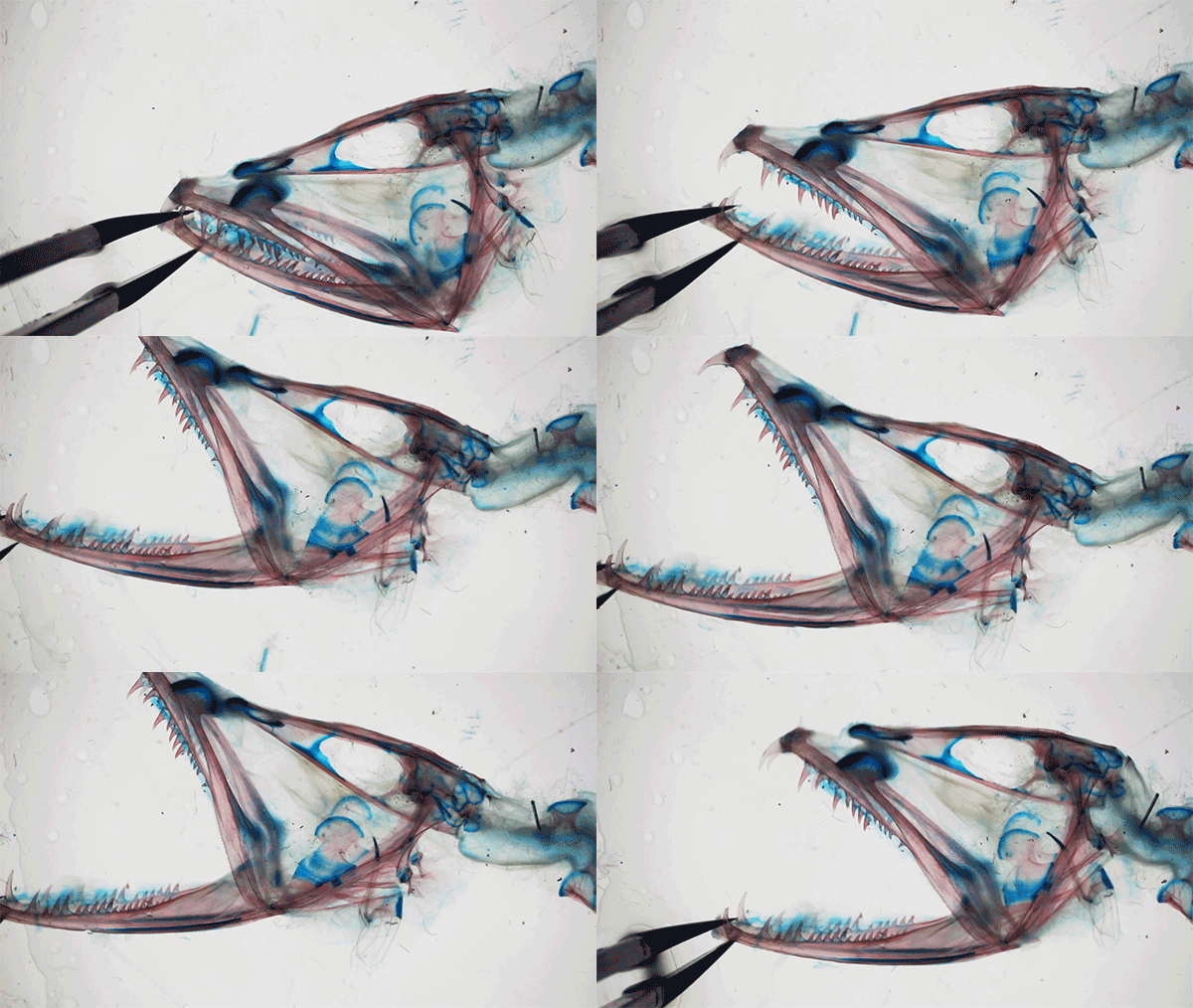
  • The ridiculous, extensible jaw and neck joint of a Barbeled Dragonfish.

  • Deep-Sea Fishes That Are Built to Eat Big.

Jetsam (what we’re enjoying from around the web)

Read More “Monday Morning Salvage: February 6, 2017” »

Posts pagination

Previous 1 … 61 62 63 … 269 Next

Popular Posts

What Ocean Ramsey does is not shark science or conservation: some brief thoughts on "the Shark Whisperer" documentaryWhat Ocean Ramsey does is not shark science or conservation: some brief thoughts on "the Shark Whisperer" documentaryJuly 2, 2025David Shiffman
I can serve on your graduate thesis committee. Here’s what you can expect of me, and what I expect in return.I can serve on your graduate thesis committee. Here’s what you can expect of me, and what I expect in return.October 16, 2025David Shiffman
That's not a blobfish: Deep Sea Social Media is Flooded by AI SlopThat's not a blobfish: Deep Sea Social Media is Flooded by AI SlopDecember 19, 2025Andrew Thaler
The story of the pride flag made from NASA imagery: Bluesky's most-liked imageThe story of the pride flag made from NASA imagery: Bluesky's most-liked imageSeptember 27, 2024David Shiffman
What can the funniest shark memes on the internetz teach us about ocean science and conservation?What can the funniest shark memes on the internetz teach us about ocean science and conservation?November 8, 2013David Shiffman
Shark of Darkness: Wrath of Submarine is a fake documentaryShark of Darkness: Wrath of Submarine is a fake documentaryAugust 10, 2014Michelle Jewell
The Trouble with Teacup PigsThe Trouble with Teacup PigsOctober 14, 2012Andrew Thaler
I turned my woodshop into a personal solar farm.I turned my woodshop into a personal solar farm.June 21, 2021Andrew Thaler
Norway and Cook Islands put their deep-sea mining plans on pause.Norway and Cook Islands put their deep-sea mining plans on pause.December 3, 2025Andrew Thaler
Nodules, Lost Mines, and Dark Oxygen: A new documentary on deep-sea mining asks important questions about the future of the industry.Nodules, Lost Mines, and Dark Oxygen: A new documentary on deep-sea mining asks important questions about the future of the industry.July 24, 2025Andrew Thaler

squishy

Subscribe to our RSS Feed for updates whenever new articles are published.

We recommend Feedly for RSS management. It's like Google Reader, except it still exists.

Southern Fried Science

  • Home
  • About SFS
  • Authors
  • Support SFS


If you enjoy Southern Fried Science, consider contributing to our Patreon campaign.

Copyright © 2025 Southern Fried Science.

Theme: Oceanly Premium by ScriptsTown