
Skip to content

Southern Fried Science

Over 15 years of ocean science and conservation online

  • Home
  • About SFS
  • Authors
  • Support SFS

Recent Posts

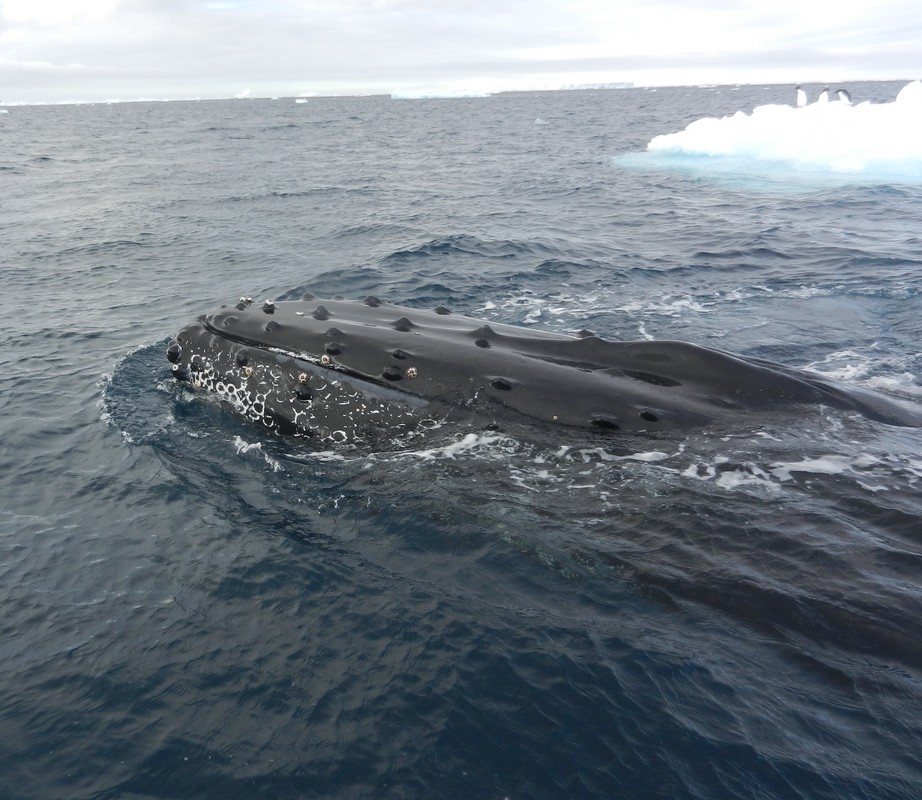
humpback whale in Antarctica
The evolution of the International Whaling Commission – from  whaling quotas to whale conservation
June 10, 2026
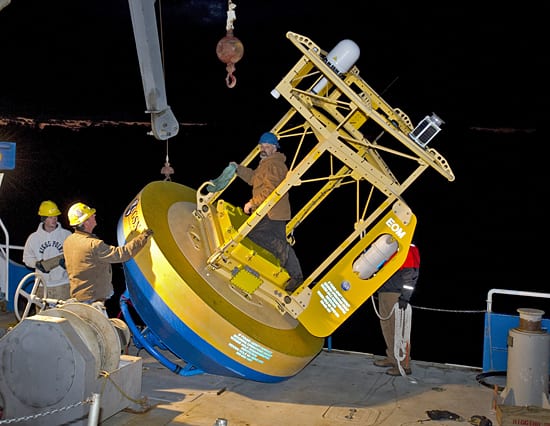
Isn’t ironic, don’t you think: dismantling the Ocean Observatories Initiative on World Oceans Day
June 9, 2026
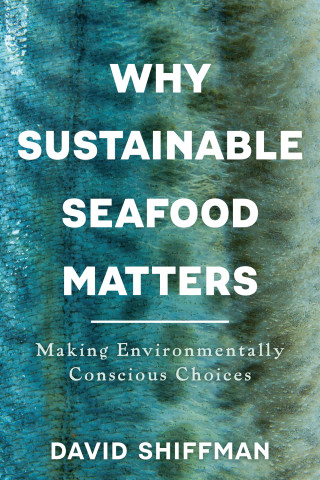
“Why Sustainable Seafood Matters” is now available for preorder! Here’s what it’s about, and why I decided to write it.
June 8, 2026
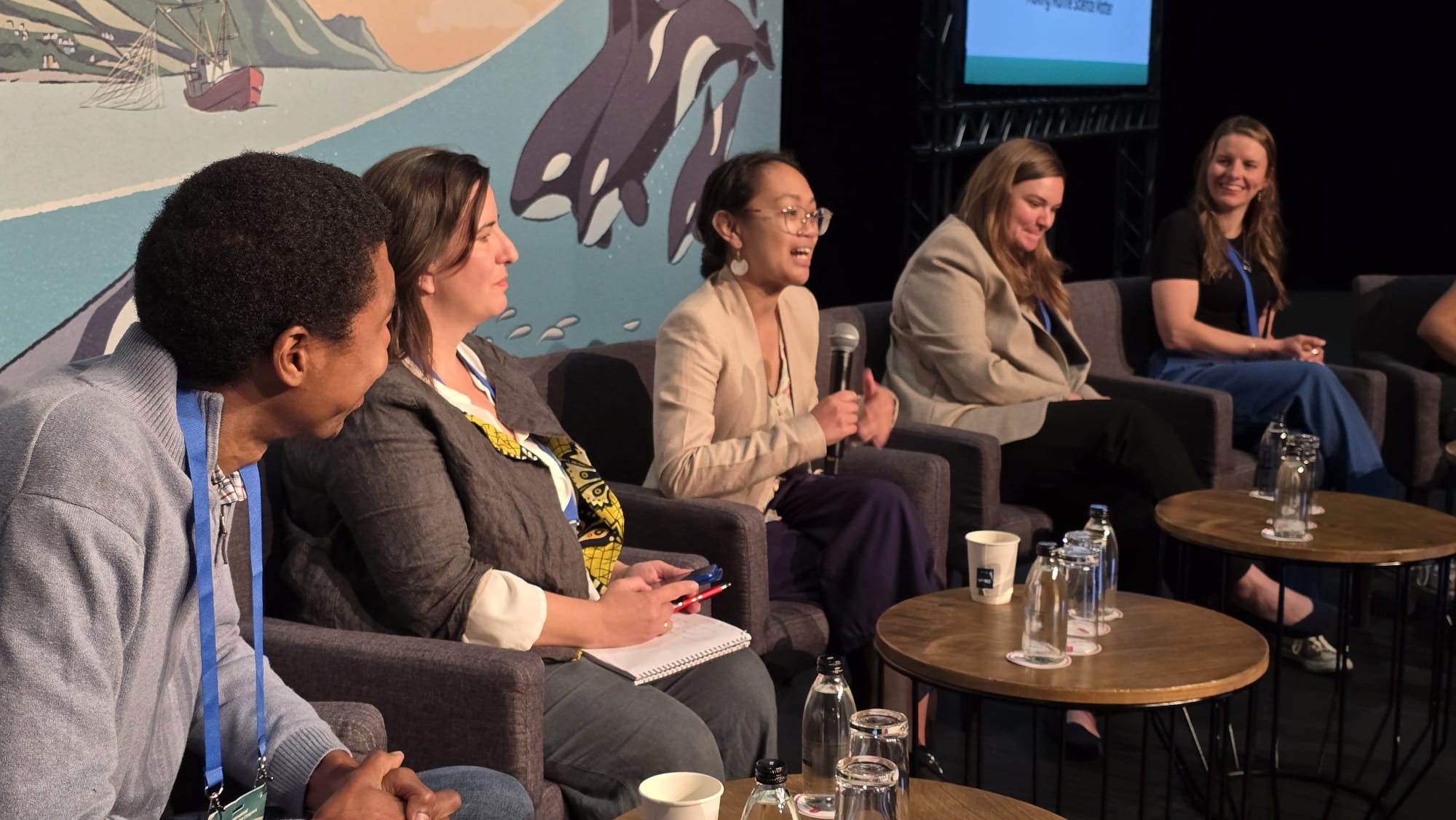
Here’s how to join my IMCC8 symposium, “Ocean Science Communication: What’s New and What’s Next?”
April 22, 2026
Deep Sea Mining Symposium Announcement
April 21, 2026
Join Me at Upwell: A Wave of Ocean Justice — Our Fourth Year!
March 24, 2026

Shark Thrillers as Old as Time – The Tales We Told before Jaws

Posted on June 28, 2016June 28, 2016 By Guest Writer
Science

unnamedMareike Dornhege is currently finishing up her PhD on shark fisheries in Japan. She is based in Tokyo at Sophia University and after seeing no sharks many times were there should be sharks on reefs all around the world she wanted to dig deeper and find out when we lost them, why and where. She is trying to reconstruct baselines by looking at the history of sharks and humans, talking to old fishermen and of course modern data as well. And she really loves going on that shark-feeding dive about 90 minutes south of Tokyo!
The latest shark thriller The Shallows just hit theaters—coincidentally with Shark Week around the corner – and is latest in a long line of shark thrillers. In the grand, yet predictable fashion of movies like Deep Blue Sea, The Reef or Open Water, it fuels our fear of the sleek ocean predators that was first awakened by the mother of all shark movies, Jaws, in 1975. Or, was it? It is only since the Jaws theme that got stuck in our heads, even if we are just paddling around in a swimming pool at dusk, and images of dangling legs under water, that we got so irrationally scared and obsessed with the well-designed teeth of these fish after all, right?

Actually no. During my research on the history of shark and men I came across some hair-raising anecdotes of monster sharks from the Caribbean and man-hunting mantas that are just a bit older. A few centuries that is. This fishermen’s yarn must be the pre-digital equivalent of this youtube video of a megalodon shark caught on tape, real mermaids, and dragon footage. Let’s look at what they say and then at what the real science behind these stories is.

Read More “Shark Thrillers as Old as Time – The Tales We Told before Jaws” »
Sink Your Teeth into Elasmobranch Science: A Primer on Shark Teeth

Posted on June 27, 2016June 27, 2016 By Guest Writer
Science

Josh Moyer PIctureA member of the American Society of Ichthyologists and Herpetologists (ASIH) and the American Elasmobranch Society (AES), Joshua Moyer is an ichthyologist specializing in the evolution, biodiversity, and morphology of sharks and their relatives. Joshua has co-authored multiple scientific articles about shark teeth and routinely lectures in courses on marine biology, vertebrate biology, and evolution. He earned his Masters of Science in Ecology and Evolutionary Biology at Cornell University and is an instructor in the massively open online course (MOOC) in shark biology offered by Cornell and the University of Queensland through edX.org. Follow him on twitter! 

What is a shark without its teeth? For that matter, what is any animal without the ability to process and ingest its food? So important are teeth to the way many jawed vertebrates survive, that you can tell a great deal about an animal just by looking at its teeth, or in some cases, lack thereof. Sharks are no different. By asking a series of questions, you can look at shark teeth and begin to piece together a more complete picture of the shark whose teeth you’re studying.

Read More “Sink Your Teeth into Elasmobranch Science: A Primer on Shark Teeth” »

Open source. Open science. Open Ocean. Oceanography for Everyone and the OpenCTD

Posted on June 24, 2016June 24, 2016 By Andrew Thaler 2 Comments on Open source. Open science. Open Ocean. Oceanography for Everyone and the OpenCTD
Oceanography for Everyone

Nearly four years ago, Kersey Sturdivant and I launched a bold, ambitious, and, frankly, naive crowdfunding initiative to build the first low-cost, open-source CTD, a core scientific instrument that measures salinity, temperature, and depth in a water column. It was a dream born from the frustration of declining science funding, the expense of scientific equipment, … Read More “Open source. Open science. Open Ocean. Oceanography for Everyone and the OpenCTD” »

Help crowdfund shark research: will the weasel shark disappear before we know it?

Posted on June 24, 2016June 24, 2016 By Guest Writer
Science

Manuel_Dureuil_BWManuel Dureuil is a Ph.D. candidate whose research focuses on the conservation ecology of sharks. He did both, his Bachelor and Master thesis, in the field of shark conservation at the University of Marburg and Kiel in Germany. His main interest are spatial ecology and data-limited assessment approaches to form a scientific basis for a more comprehensive protection of sharks. A species with particular focus of his research is the Atlantic weasel shark, which is only found in West Africa. Sharks in this area are among the least researched yet most threatened by illegal and unregulated fishing. The weasel shark fulfills all criteria to be considered data-limited: there is no population assessment, no information on its spatial ecology and almost no information on its biology. Manuel is raising funds till the 9th of July as part of The Experiment’s Sharks Grant Challenge, to start a weasel shark project in Cabo Verde, West Africa. Using the weasel shark as an umbrella species the researchers also hope to create awareness for sharks in this region in general, on a national and international level.

The remote island nation of Cabo Verde holds one of the last remaining hotspots for sharks in the entire North Atlantic Ocean and therefore could offer some degree of protection from the ongoing decline in shark populations. This is particularly important for locally endemic species which only occur in this area, such as the Atlantic weasel shark. We know almost nothing about this species and accordingly it is listed as ‘data deficient’ on the IUCN Red List. However, the little we know suggest that this shark is vulnerable to overfishing, making the protection of important habitats (such as nursery grounds) crucial for healthy populations and preventing extinction.

Read More “Help crowdfund shark research: will the weasel shark disappear before we know it?” »

Help crowdfund shark research: Jaws, lost sharks, and the legacy of Peter Benchley

Posted on June 22, 2016June 22, 2016 By Guest Writer
Science

1-Head shot for bio_Dave SFS Article pic_Photo by DA EbertDavid Ebert has been researching sharks and their relatives (the rays, skates, and ghost sharks) around the world for more than three decades focusing his research on the biology, ecology and systematics of this enigmatic fish group. His current research efforts are focused on finding, documenting, and bring awareness to the world’s “lost sharks”. If you would like to learn more please see our crowd funding project “Looking for Lost Sharks: An Exploration of Discovery through the Western Indian Ocean” and consider making a donation. The more we raise, the more sharks we can name and the more schools we will be able to reach.

Jaws, the mere mention of the movie conjures up images of a large triangular fin cutting through the water, beneath it a large fearsome-looking toothy shark swimming with a sense of authority, a purpose. One of the movie’s trailers at the time hyped the fact that this was a mindless eating machine!

I recall seeing the movie Jaws in the theater for the first time during my high school days in the summer of 1975.  It was the first big summer blockbuster film, it was something new to audiences, and certainly new to me. Prior to the film’s release people generally did not anticipate such great summertime entertainment from movies like Jaws and subsequently Star Wars (released in 1977).  These were fun movies to see with your friends and spend an afternoon or evening afterwards talking about certain scenes or dialog from the movie, “You’re gonna need a bigger boat”; remember this was back in the pre-iPhone, Facebook, Twitter, social media era when kids actually spent time together talking with each other, without the aid of electronic devices and no texting!

The movie as an ancillary and an unintended consequence brought a lot of attention to sharks, both good and not so good. Shark attacks that were of minimal media attention became big news stories, catching big sharks became a sport and shark diving became popular; all of this after the movie’s release. A few high profile shark attacks, one in particular in Monterey that made international news, only further fueled the public’s fascination and fear of sharks. Just going into the water suddenly became an adventure, with the prospects (however unlikely) that one may see a shark. It certainly put the public’s awareness of sharks in their conscience.

Read More “Help crowdfund shark research: Jaws, lost sharks, and the legacy of Peter Benchley” »

Reflections on the Boundary of Science and Policy

Posted on June 20, 2016June 20, 2016 By Bluegrass Blue Crab 2 Comments on Reflections on the Boundary of Science and Policy
Conservation

People have dedicated their careers and spilled much ink on bettering relations across the science – policy divide. In recent years, whole institutions have sprung up in order to better communicate and work across this boundary, the kind of institution formally called a boundary organization. In short, the people who work at such places must know the language and culture of both sides, be able to navigate around the sensitivities of each, and serve as a trusted person in moving a conversation along. These people are often called “honest brokers” because of the importance of the trust they must gain and hold. As someone who’s now working on the boundary for a number of years in the marine conservation world, I have some reflections of how exactly that role is not so simple. Hopefully my top 10 reflections will be helpful in building the next generation of boundary spanners.

Read More “Reflections on the Boundary of Science and Policy” »

Life in the Ithilien ranger service

Posted on June 19, 2016June 19, 2016 By Chris Parsons
Uncategorized

People call them the “Dead Marshes”, but that couldn’t be further from the truth. The marshes are in fact incredibly biodiverse and productive. Admittedly that productivity has a lot to do with the slow decomposition of the corpses of men and elves, but they are productive nonetheless. The marsh vegetation also plays an important part in detoxifying the ecosystem. There is a slight problem with the level of mithril contamination in the marshes, but there are several marsh plants that sequester this trace element.

 Illithien ranger2

The marshes are also important sinks for carbon. Climate change is increasingly a concern in Middle Earth, what with the dramatic rise in dragon-related emissions and the felling and burning of Fangorn Forest, not to mention the carbon dioxide plume from Mount Doom.

Read More “Life in the Ithilien ranger service” »

Did monster hunters find a 120 meter long giant squid on google maps?

Posted on June 17, 2016June 19, 2016 By Andrew Thaler 5 Comments on Did monster hunters find a 120 meter long giant squid on google maps?
Uncategorized

No. No they did not. I awoke this morning to a delightful flood of emails in my inbox pointing to this article: Has a KRAKEN been spotted on Google Earth? Monster hunters claim to have found 120m long giant squid-like creature. In short, while exploring the area around Deception Island on Google Earth, some well-known anomaly hunters … Read More “Did monster hunters find a 120 meter long giant squid on google maps?” »

#JacquesWeek 2016 Official Schedule

Posted on June 16, 2016July 2, 2016 By Andrew Thaler
Education

“The sea, once it casts its spell, holds one in its net of wonder forever.”

Jacques Yves Cousteau

Summer is here, and with it comes the perennial ocean explosion that is Shark Week. Last year, in response to Shark Week burn out (heck, David and I even published a paper on it) and being tired of becoming the saltiest of wet blankets during a week where people are excited about the oceans, we launched #JacquesWeek! #JacquesWeek is an online alternative the Shark Week. We sourced and screened Jacques Cousteau documentaries from the early years all the way through his later works and provide context and discussion from an array of marine scientists and explorers.

#JacquesWeek is back!

From June 26 to July 1, we’ll feature classic Cousteau films, hold Twitter discussions, and host a few hangouts with experts to discuss these films and help put them into context. As with last year, we will try to provide as many free options as possible (due to some very complex issues surrounding copyright, the Cousteau estate, a production company that no longer exists, and some fascinating interpersonal politics, many of Cousteau’s earlier films are de facto public domain) but we will also be drawing from his later series: The Jacques Cousteau Odyssey, Jacques Cousteau Pacific Explorations and Jacques Cousteau River Explorations which you will have to track down on DVD (but don’t worry, alternate suggestions are also provided)

Are you ready for adventure?

Read More “#JacquesWeek 2016 Official Schedule” »

Help crowdfund shark research: bycatch reduction with the loopy leader

Posted on June 15, 2016June 15, 2016 By Guest Writer
Science

GlennDr. Glenn R. Parsons is a 30 year veteran in the battle against University Administrators, bean-counting bureaucrats, and disinterested students (i.e. he is a Professor at Ole Miss). In his spare time he conducts research work on fish physiology and ecology and has published many papers on shark biology, primarily Gulf of Mexico species. He is author of the seminal book on sharks of the Gulf of Mexico entitled “Sharks, Skates and Rays of the Gulf of Mexico” and a popular novel entitled “Cherokee Summer” that could have been on the New York Times best seller list (if only it was better written and was backed by a high-powered agent like John Grisham’s). He received his PhD from the University of South Florida, School of Marine Science, MS from the University of South Alabama and BS from the University of Alabama. He was a DISL Marine Research Fellow, a Gulf Research Council Research Fellow, and a winner of a World Wildlife Fund, Smartgear Competition (for his bycatch research).

Folks, The world has witnessed an unparalleled decline in sharks that began about 30 years ago and has continued to the present. While the explanations for this decline are varied, scientists are in agreement that “bycatch” during fishing is one of the problems. Bycatch is the un-intended capture of non-target species during fishing. For example, commercial fishing for tuna and swordfish results in the capture of many sharks. The World Wildlife Fund estimates that 50,000,000 sharks are taken as bycatch during commercial fishing. Unfortunately, many of these sharks do not survive the stress of capture (a topic that my lab has researched for many years). Fishers do not want these sharks (they are dangerous to handle and they damage fishing gear) and they would welcome new developments that would reduce or eliminate shark capture.

Read More “Help crowdfund shark research: bycatch reduction with the loopy leader” »

Posts pagination

Previous 1 … 74 75 76 … 273 Next

Popular Posts

The story of the pride flag made from NASA imagery: Bluesky's most-liked imageThe story of the pride flag made from NASA imagery: Bluesky's most-liked imageSeptember 27, 2024David Shiffman
"Why Sustainable Seafood Matters" is now available for preorder! Here's what it's about, and why I decided to write it."Why Sustainable Seafood Matters" is now available for preorder! Here's what it's about, and why I decided to write it.June 8, 2026David Shiffman
Tackling the least important debate in deep-sea mining: the desultory hyphenTackling the least important debate in deep-sea mining: the desultory hyphenJune 8, 2026Andrew Thaler
The evolution of the International Whaling Commission – from  whaling quotas to whale conservationThe evolution of the International Whaling Commission – from  whaling quotas to whale conservationJune 10, 2026Chris Parsons
What Ocean Ramsey does is not shark science or conservation: some brief thoughts on "the Shark Whisperer" documentaryWhat Ocean Ramsey does is not shark science or conservation: some brief thoughts on "the Shark Whisperer" documentaryJuly 2, 2025David Shiffman
Deep-sea Mining, Domestic Cats, Star Trek, and Ocean Exploration: Andrew's mid-year podcast round-up.Deep-sea Mining, Domestic Cats, Star Trek, and Ocean Exploration: Andrew's mid-year podcast round-up.June 6, 2026Andrew Thaler
Shark of Darkness: Wrath of Submarine is a fake documentaryShark of Darkness: Wrath of Submarine is a fake documentaryAugust 10, 2014Michelle Jewell
Isn’t ironic, don’t you think: dismantling the Ocean Observatories Initiative on World Oceans DayIsn’t ironic, don’t you think: dismantling the Ocean Observatories Initiative on World Oceans DayJune 9, 2026Southern Fried Science
What is a Sand Shark?What is a Sand Shark?November 12, 2017Chuck Bangley
That's not a blobfish: Deep Sea Social Media is Flooded by AI SlopThat's not a blobfish: Deep Sea Social Media is Flooded by AI SlopDecember 19, 2025Andrew Thaler

squishy

Subscribe to our RSS Feed for updates whenever new articles are published.

We recommend Feedly for RSS management. It's like Google Reader, except it still exists.

Southern Fried Science

  • Home
  • About SFS
  • Authors
  • Support SFS


If you enjoy Southern Fried Science, consider contributing to our Patreon campaign.

Copyright © 2026 Southern Fried Science.

Theme: Oceanly Premium by ScriptsTown