

Skip to content

Southern Fried Science

Over 15 years of ocean science and conservation online

  • Home
  • About SFS
  • Authors
  • Support SFS

Recent Posts

Here’s how to join my IMCC8 symposium, “Ocean Science Communication: What’s New and What’s Next?”
April 22, 2026
Deep Sea Mining Symposium Announcement
April 21, 2026
Join Me at Upwell: A Wave of Ocean Justice — Our Fourth Year!
March 24, 2026
How close did the world’s first deep-sea mining come to the dredging the world’s largest cold-water coral reef?
March 17, 2026
Here are some ocean conservation technologies that I’m excited about
February 19, 2026
Walking Backwards Into the Future: Applying Indigenous Knowledge to Deep Sea Mining
February 5, 2026

If you could only follow five people on Twitter, who would they be?

Posted on May 27, 2015 By Andrew Thaler
Blogging

Every few years, I published a Field Guide to Ocean Science and Conservation on Twitter. Rather than a comprehensive list of the best ocean twitter accounts (a list that would stretch out over more than 500 accounts as of last count), these guides are designed to point readers towards central nodes in the online conversation, from which they could then build upon by following and engaging in conversation. Instead of being a “best of”, the field guides are all about connectivity and how to build it.

I was just beginning to prepare this year’s guide a few weeks ago, when David Lang at OpenROV caught me with an even more challenging question: If you could only follow 5 people on twitter, who would they be? Again, not the “best”, or the funniest, or whatever metric you use to decide who to follow but the five that, if I were absolutely forced to cut my following list down to, would capture the widest breadth depth of the twitter conversations I care about: the most effective community builders, the central-est nodes, the people whose insight is most valuable and who curate and disseminate the most important content. After talking for a while about who the list would include, I was surprised to discover that the majority were people who I followed, but only ever interacted with rarely, if at all.

Read More “If you could only follow five people on Twitter, who would they be?” »

Ready, set, speak!  Tips for effectively communicating your science with public audiences

Posted on May 18, 2015 By Guest Writer
Uncategorized

About the author – Dr. Allison Coffin is Assistant Professor of Neuroscience at Washington State University Vancouver studying acoustic communication and hearing loss. Over the past 10 years she’s taught communication workshops to a variety of scientific and professional audiences and was the Audience Choice winner at the 2014 U.S. FameLab Finals, a science communication competition hosted by NASA and National Geographic.  She runs the science communication website communicatalyst.com and am a long-time member (junkie?) of Toastmasters International.

Why communicate your science?

You’re a scientist doing important and interesting work in conservation biology, right? You probably publish your research in reputable journals and give departmental seminars, but these reach a limited (and self-selected!) audience. Do you want your research to have a broader impact?  Head the call of recent editorials by Chris Parsons and Andrew Wright, and learn to advocate for your science – get out and communicate!

Between online forums, public scientific discussions such as Science Cafés, and interactions with the 24-hr media cycle, there are more venues than ever for us to communicate our science to lay audiences. However, being willing to communicate isn’t enough. To quote a recent JCom article by van der Wurff and colleagues, “Scientists…supposedly aim for a serious and scientific style in which complex matters are unraveled and accurately explained, remaining uncertainties acknowledged, and ideas not too quickly taken for granted.” Does this sound familiar?  For many scientists, our natural inclination (or perhaps, our training) makes it difficult to step out of this “information transfer” mode to connect with our audience.  At its heart, communication is about connection.  How can scientists connect with lay audiences, so that our message is both heard and received? This article is for all scientists who want to speak to the public, advocate for their science, and build their skills so that they can connect effectively.

Know your audience

Read More “Ready, set, speak!  Tips for effectively communicating your science with public audiences” »

Dusky Sharks: Whale Killers

Posted on May 17, 2015 By Chuck Bangley 3 Comments on Dusky Sharks: Whale Killers
Uncategorized

It’s generally thought that baleen whales are too large to be successfully attacked by most marine predators.  Orcas are typically considered the only real predatory threat to large whales, and even they have to use teamwork to take down a young whale.  Large sharks, which also sit near the top of the marine food web, are known to scavenge on whale carcasses as a nutritious and blubbery supplement to their usual diet of fishes and smaller marine mammals.  However, evidence has been found that white sharks actually take a proactive approach to increasing the whale carcass supply by attacking live northern right whale calves.  Now researchers in South Africa directly observed dusky sharks actively teaming up to bring down a humpback whale calf.

Read More “Dusky Sharks: Whale Killers” »

Fun Science FRIEDay – “A cold-water fish with a warm heart!”

Posted on May 15, 2015 By Kersey Sturdivant
Uncategorized

OPAH, OPAH, OPAH!

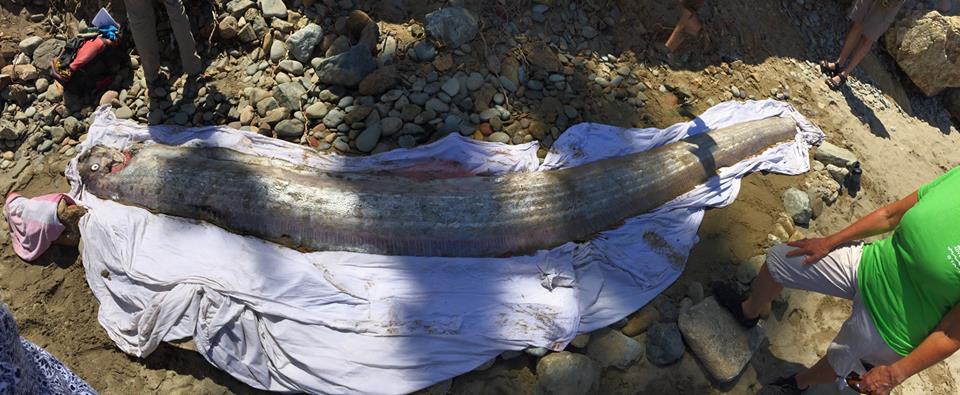
Recently scientists at NOAA’s South West Fisheries Science Center made a stunning discovery, the worlds first known warm-blooded fish, the moonfish, opah  (Lampris guttatus). Until this recent discovery all fish were considered cold-blooded ectotherms – allowing their body temperature to fluctuate with the change in ambient ocean temperature. However, opah’s are different, in that these largely solitary fish regulate their internal body temperature above the ambient temperature of their environment like mammals and birds (other warm-blooded animals).

Opah off the coast of southern California. (Photo credit: Ralph Pace Photography)

Read More “Fun Science FRIEDay – “A cold-water fish with a warm heart!”” »

We built a beer-delivering underwater robot and sent it out to sea. You can probably guess what happened next.

Posted on May 13, 2015 By Andrew Thaler
Uncategorized

Did Wyoming really just outlaw citizen science?

Posted on May 11, 2015May 11, 2015 By Bluegrass Blue Crab 15 Comments on Did Wyoming really just outlaw citizen science?
Uncategorized

I first heard about the new Wyoming law #SF0012 through the Slate article summarizing it as a criminalization of citizen science. There’s a real danger that it could be interpreted and implemented that way, but let’s try and give Wyoming the benefit of the doubt for a minute. The text of the law only requires that scientists (citizen or otherwise) acquire written or verbal permission from landowners for collecting data on their land. It goes on to define what “data” means, including photographs in a fairly wide definition, and “collecting” as taking data with the intention of turning it over to a state or federal agency. It also defines trespassing and outlines the consequences for those who fail to receive permission. In short: the data collector could go to jail and their data will not be admissible in legal or policy proceedings.

At the core, the law re-hashes a fairly common definition of trespassing. The key part of the law that’s new is that the data won’t be admissible in court and the act of turning them over to federal or state agencies will make you an outlaw. Part of me thinks that data collectors, including citizen science groups, should be asking permission to go on someone’s land. This is both to keep ethics at the forefront of our scientific endeavors and for the personal safety of scientists (ranchers are known to carry shotguns, after all).

Read More “Did Wyoming really just outlaw citizen science?” »

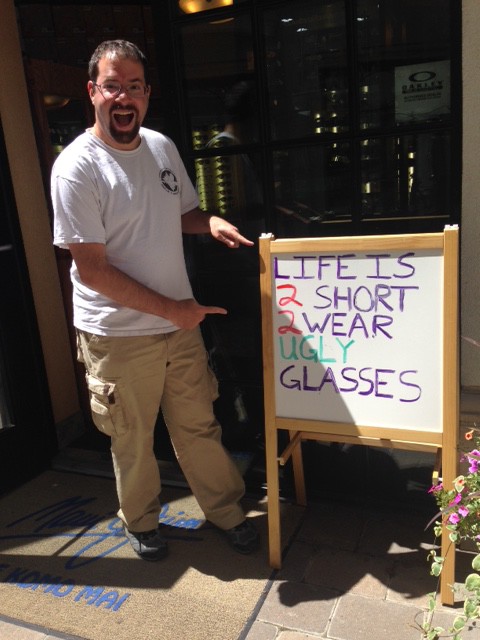
A huge thank you to all who helped make “Buy David Shiffman less ugly sunglasses” a success

Posted on May 6, 2015 By Andrew Thaler
Blogging

Last month we crowdfunded an initiative to buy everyone’s favorite shark conservation superstar a new, less ugly pair of sunglasses. We blew our initial goal out of the water, raising nearly $2500 from almost 100 people. Amazing! Rewards are going out over the next few weeks (I’m mailing all the big teeth today. The smaller … Read More “A huge thank you to all who helped make “Buy David Shiffman less ugly sunglasses” a success” »

A poster to remember

Posted on May 2, 2015 By Chris Parsons 1 Comment on A poster to remember
Science

Today I was at an undergraduate research event with our best and brightest presenting their research via posters – great science, but often dreadful posters.

Posters can be a great medium for getting your science over to an audience. They have the benefit that if you can draw people into your poster you can have a lot more intimate face to face discussion with your peers. But first you have to draw them in…

Increasingly poster sessions in conference are becoming large sprawling events, and your poster is going to have to compete for attention with hundreds if not thousands of other posters, with your audience having little time to browse, they may be distracted by friends and colleagues, they may be tired as poster sessions are often at the end of a long day of presentations, and possibly (probably) slightly to moderately drunk. Here are some simple tips for making a good poster that has impact.

Read More “A poster to remember” »

Happy Fun Science FRIEDay – Glass Frogs

Posted on May 1, 2015April 17, 2015 By Kersey Sturdivant
Uncategorized

Raise your hand if you realized there were frogs so translucent you could see their innards? Ok if you actually raised your hand while reading this, kudos, but put it down now. Glass frogs are tiny green organisms whos organs are visible from their underside given the translucent nature of their bellies. There were 148 … Read More “Happy Fun Science FRIEDay – Glass Frogs” »

Advice About Applying to Graduate School

Posted on April 29, 2015April 29, 2015 By Kersey Sturdivant
Uncategorized

In 2013 a colleague and I were commissioned by Cambridge University Press to write a book about applying to graduate school in the sciences. A large part of the approach was to source knowledge from others with experience in this process (both from admissions offices and former applicants), and to use that information to drive … Read More “Advice About Applying to Graduate School” »

Posts pagination

Previous 1 … 91 92 93 … 272 Next

Popular Posts

Playing God - How the ESA "God Squad" just voted for the extinction of a uniquely American whalePlaying God - How the ESA "God Squad" just voted for the extinction of a uniquely American whaleApril 9, 2026Southern Fried Science
The story of the pride flag made from NASA imagery: Bluesky's most-liked imageThe story of the pride flag made from NASA imagery: Bluesky's most-liked imageSeptember 27, 2024David Shiffman
What Ocean Ramsey does is not shark science or conservation: some brief thoughts on "the Shark Whisperer" documentaryWhat Ocean Ramsey does is not shark science or conservation: some brief thoughts on "the Shark Whisperer" documentaryJuly 2, 2025David Shiffman
Here's how to join my IMCC8 symposium, "Ocean Science Communication: What's New and What's Next?"Here's how to join my IMCC8 symposium, "Ocean Science Communication: What's New and What's Next?"April 22, 2026David Shiffman
Our favorite sea monsters – Ningen (#4)Our favorite sea monsters – Ningen (#4)September 7, 2010Andrew Thaler
Shark of Darkness: Wrath of Submarine is a fake documentaryShark of Darkness: Wrath of Submarine is a fake documentaryAugust 10, 2014Michelle Jewell
Join Me at Upwell: A Wave of Ocean Justice — Our Fourth Year!Join Me at Upwell: A Wave of Ocean Justice — Our Fourth Year!March 24, 2026Angelo Villagomez
On the clarity of animals: the art and science of clearing and stainingOn the clarity of animals: the art and science of clearing and stainingDecember 17, 2013Guest Writer
That's not a blobfish: Deep Sea Social Media is Flooded by AI SlopThat's not a blobfish: Deep Sea Social Media is Flooded by AI SlopDecember 19, 2025Andrew Thaler
What can the funniest shark memes on the internetz teach us about ocean science and conservation?What can the funniest shark memes on the internetz teach us about ocean science and conservation?November 8, 2013David Shiffman

squishy

Subscribe to our RSS Feed for updates whenever new articles are published.

We recommend Feedly for RSS management. It's like Google Reader, except it still exists.

Southern Fried Science

  • Home
  • About SFS
  • Authors
  • Support SFS


If you enjoy Southern Fried Science, consider contributing to our Patreon campaign.

Copyright © 2026 Southern Fried Science.

Theme: Oceanly Premium by ScriptsTown