


Skip to content

Southern Fried Science

Over 15 years of ocean science and conservation online

  • Home
  • About SFS
  • Authors
  • Support SFS

Recent Posts

We Asked IMCC7 Attendees What Ocean Conservation Needs. Here’s What They Said.
November 5, 2026
Researching Historical Erasure on Public Lands
July 31, 2026
5 things I learned helping to reassess the global conservation status of every species of tuna and billfish
September 15, 2026
Key takeaways from my Convention on Migratory Species report on fish aggregating devices in the Mediterranean Sea
September 3, 2026
Jabberwocks and Snallygasters: teaching environmental education with monsters, mayhem, and dice.
August 31, 2026
The conservation impacts of recreational fishing
August 25, 2026

Robots Versus Aliens – Anticipatory conservation in technology-drive initiatives

Posted on September 30, 2015September 29, 2015 By Andrew Thaler
Conservation, Science

This week, I and a team of marine ecologist, explorers, and ocean technologists published Robots as vectors for marine invasions: best practices for minimizing transmission of invasive species via observation-class ROVs. This paper, conceived and largely produced during the ROV2PNG Marine Science Short Course in Papua New Guinea, represent the current best practices for minimizing or eliminating the spread of invasive species via portable, low-cost underwater robots.
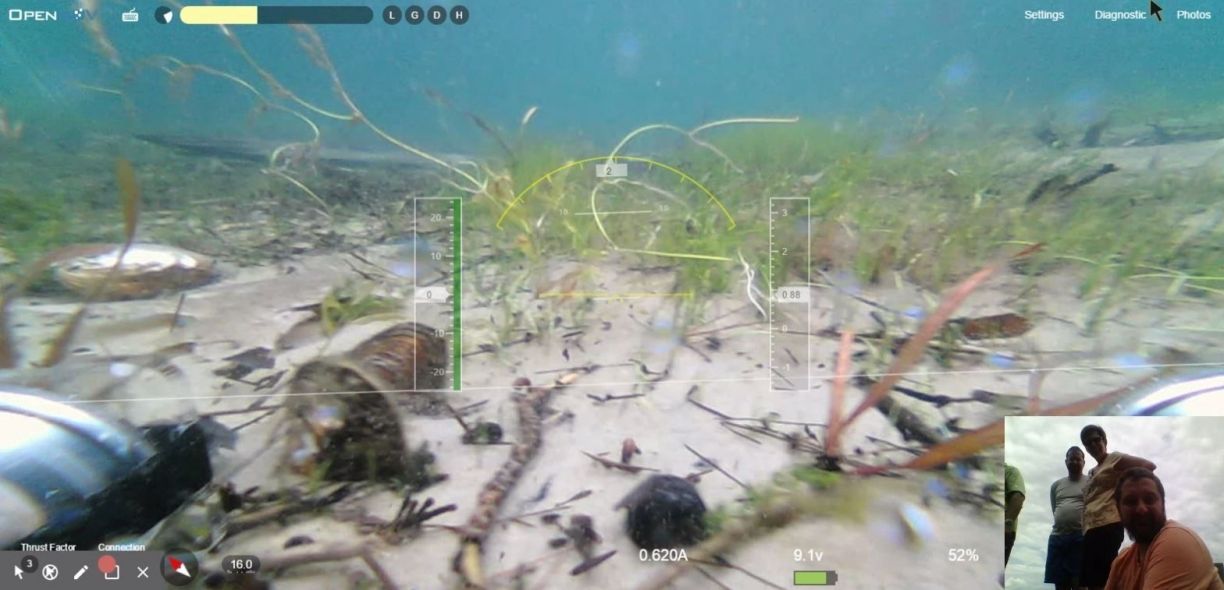
Zebra mussels observed via OpenROV. Photo by author.

Species invasion, particularly in the ocean, is a huge problem. Invasive species are ruthlessly good at out-competing native fauna. Without any natural predators, they can flourish, causing massive, irreparable damage to marine ecosystems. As scientists, explorers, and conservationist, we have to be proactive in ensuring that our actions don’t negatively impact the ecosystems we’re trying to save. Our guidelines are simple, but effective, and, most importantly, easy to follow.

  1. Educate yourself about species invasions generally and specifically about current issues in the area you’re working.
  2. Inspect your gear.
  3. Soak your gear in freshwater between dives.
  4. Soak your gear in weak bleach between expeditions.
  5. Avoid moving your equipment between geographic regions, when possible.

Technology can be a powerful tool in the aid of conservation. Around the world, people are using low-cost robotics to count elephants, detect poachers, protect tortoises, even seek-and-destroy invasive sea stars. As I discuss over at Motherboard, these robots are a transformative component of 21st century marine science and conservation, they fundamentally reshape the way we interact with the ocean. And with the explosive success of the latest OpenROV launch, there are about to be a lot more robots in the water. This is a good thing. The more eyes we have in the sea, the more people that actively contribute to ocean exploration, the more people with access to the tools necessary to explore, study, and understand our oceans and how they are changing, the better off we will all be.

Read More “Robots Versus Aliens – Anticipatory conservation in technology-drive initiatives” »
Polar bear feast on seabird eggs is reason we can’t have nice things

Posted on September 29, 2015 By Michelle Jewell
Conservation

Several images circulate on the internet that capture the plight of rapid Arctic climate change, a phenomenon known as Arctic amplification.  This image, for me, is the most alarming:

Read More “Polar bear feast on seabird eggs is reason we can’t have nice things” »

Keeping your robot invasions under control.

Posted on September 28, 2015 By Andrew Thaler
Conservation, Education, Science

It’s been a big week for papers here at Southern Fried Science. This morning, Amy, myself, William (of Bomai Cruz fame), and Dominik and Erika of OpenROV published our guidelines on minimizing the potential for microROVs to act as invasive species vectors in Tropical Conservation Science. The abstract: Remotely operated vehicles (ROVs) present a potential risk … Read More “Keeping your robot invasions under control.” »

Combating fake science in popular media – six months later

Posted on September 28, 2015October 6, 2015 By Andrew Thaler
Uncategorized

As noted earlier, David and my paper on twitter, social media, Shark Week, and fake documentaries came out last week. Since scientific publishing has a “long tail” — the time between when we actually wrote the paper and when it was published, in this case, was almost 9 months — we thought it might be … Read More “Combating fake science in popular media – six months later” »

Congressional Republicans hold Ocean Science Hostage Over Failed Anti-health Care Bill

Posted on September 25, 2015September 25, 2015 By Andrew Thaler 1 Comment on Congressional Republicans hold Ocean Science Hostage Over Failed Anti-health Care Bill
Conservation

All summer and into the fall, Congressional Republicans have been attempting to pass a bill to defund Planned Parenthood, an organization that provides critical health care needs to women across the country. After the latest bill failed, Majority Leader Mitch McConnell promised to put forth a “clean bill” that would avoid an October government shutdown. With news breaking today that Speaker John Boehner will quit his post at the end of October and fresh predictions the the shutdown is now unlikely, you might think that this recent quixotic quest has foundered, at least for the moment.

You would be wrong.

S.764 is originally An Act to reauthorize and amend the National Sea Grant College Program Act, and for other purposes. This was the bill that authorized funding for the National SeaGrant program, one of the flagship marine science, conservation, and fisheries agencies in the United States. Funding for Sea Grant is a truly bipartisan issue. Both sides see the value in continuing this support for ocean issues. How bipartisan? In an era of increasingly schismatic politics, the SeaGrant reauthorization bill passed the senate with unanimous support. 

If you wanted to read S.764 today, however, you would be met with this:

Resolved, That the bill from the Senate (S. 764) entitled “An Act to reauthorize and amend the National Sea Grant College Program Act, and for other purposes.”, do pass with the following Amendment: This Act may be cited as the “Defund Planned Parenthood Act of 2015”

source

Read More “Congressional Republicans hold Ocean Science Hostage Over Failed Anti-health Care Bill” »

Fish tales: Combating fake science in popular media

Posted on September 23, 2015September 22, 2015 By Andrew Thaler
Uncategorized

Yesterday, after months of waiting, David and my magnum opus on our efforts to stem the tide of fake documentaries was, at last, made available online: Fish tales: Combating fake science in popular media. What role should scientist play in correcting bad science, fake science, and pseudoscience presented in popular media? Here, we present a case … Read More “Fish tales: Combating fake science in popular media” »

Are you suffering from FOBLAB?

Posted on September 22, 2015 By Michelle Jewell
Uncategorized

Warning: The following blog post contains some language that is NSWF. 

You are sat at a table of professionals within your field and they are discussing a topic you are very experienced with.  The group keeps mentioning common beginner errors that you could easily correct, but you don’t.  You sit quietly and sip your coffee.

Read More “Are you suffering from FOBLAB?” »

A Natural History of the Starwhale

Posted on September 21, 2015September 20, 2015 By Andrew Thaler 1 Comment on A Natural History of the Starwhale
Popular Culture, Science

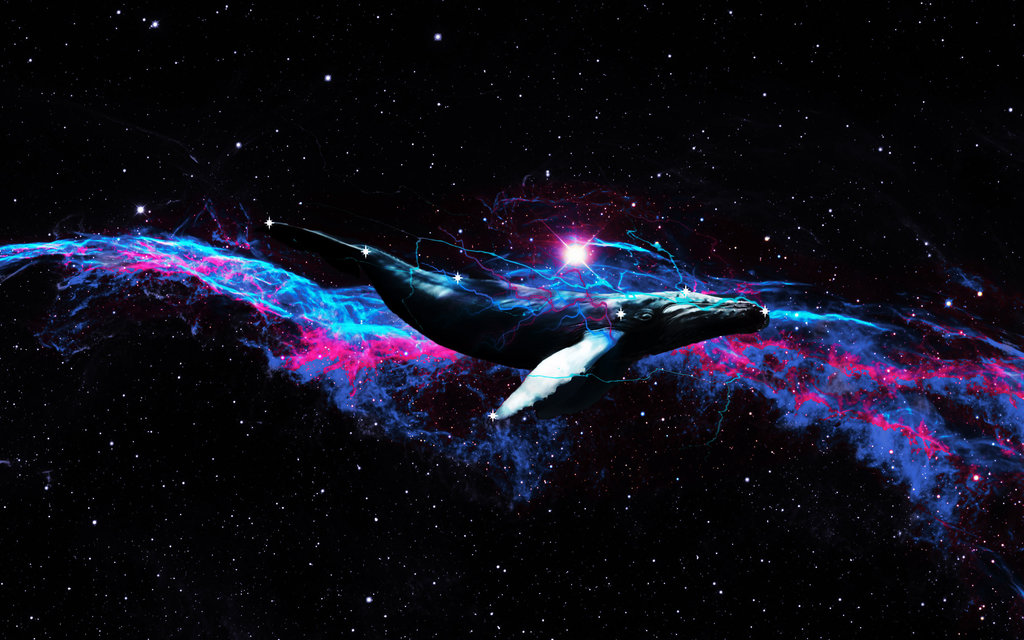
space_whale_by_ovitan-d8cc9en
Space Whale, by OvitaN – http://ovitan.deviantart.com/art/Space-Whale-504456863

Whales, those magnificent leviathans of the deep, have an uncanny knack for ending up in space. Science fiction is flooded with stories of starwhales–sometimes entirely new creatures that happen to resemble terran cetaceans in either behavior or appearance, sometimes evolved leviathans from our own world, and occasionally hapless, confused, ordinary whales. This is no fluke. Space is big, whales are big, so why shouldn’t there be whales in space?

Science fiction loves its tropes, and particularly loves comparing space to the golden age of maritime exploration, to the point where starships sometimes have sails. And then, of course, there’s The Narrative. You know, the one where a captain is consumed by obsession and revenge to hunt some semi-mythical mcguffin. If you’re going to do Moby-Dick-in-Space, you better have a starwhale. SciFi loves the Moby Schtick.

Starship UK, from Doctor Who.

So what is a starwhale, and why is it different from other giant space creatures like the exogorth of Empire Strikes Back? Like terran whales, star whales are intelligent creatures that often exhibit some form of emotion. Unlike other space monsters, they often act with a purpose that goes beyond “eat space people, wreck ship”. Nowhere is this more clearly highlighted than in the Doctor Who episode The Beast Below, in which the Doctor encounters the last living starwhale, now supporting the remnants of the British Empire on its back. In the story, the whale endures tremendous suffering in order to protect ‘the children’, and chooses to stay even after being freed from its captors.

Giant whales providing the backbone for mysterious islands traces its roots back to the ancient Greeks, at least in the Western canon. Aspidochelon was a sea monster said to resemble either a turtle or a whale, with a craggy back the carried sandy beaches and sometimes even trees and jungles. Sailors who wandered ashore would find their ships crushed as they were pulled down into the deep. Later incarnations of the whale-as-island made explicit its connection to Satan, the ultimate deceiver. And, of course, Herman Melville makes explicit the modern civilization rests on the back, or, more accurately, the oil, of the whale.

Interestingly, starwhales are, at worst chaotic neutral, but more often lawful good. Their connection to the devil abandoned back on Earth.

The Star Trek universe is resplendent with starwhales, from numerous Enterprises have encountered numerous starwhales, from benign travelers passing through to confused infants looking to the ship for survival, to aggressive bulls threatened by incursion into their territory. Bull sperm whales were documented by early Earth whalers as solitary, especially aggressive male whales, some of which had tasted the bite of many harpoons and continued to charge. It was a bull sperm whale the sunk the Essex, the inspiration for Moby Dick.

Read More “A Natural History of the Starwhale” »

Got grants? New small grants for marine conservation launched by SCB Marine

Posted on September 17, 2015 By Chris Parsons
Conservation

The Society for Conservation Biology Marine Section (SCB Marine) has just  initiated their Conservation Small Grants Program (CSGP) to fund worthy conservation projects around the globe. The grants will vary from $500-$700 and priority is being given to individuals from developing countries and those working in developing countries, where projects a small amount of money could make a big difference. … Read More “Got grants? New small grants for marine conservation launched by SCB Marine” »

Applications now open for the Elasmobranch Society’s new diversity in marine science initiative

Posted on September 16, 2015September 16, 2015 By David Shiffman
Science

The American Elasmobranch Society is the world's oldest and largest professional association of shark and ray scientists
The American Elasmobranch Society is the world’s oldest and largest professional association of shark and ray scientists

The American Elasmobranch Society, the world’s oldest and largest professional society focusing on the scientific study and management of sharks and their relatives, is now welcoming applications for the Young Professional Recruitment Fund, our new diversity initiative. Awardees will be given one year of Society membership, in addition to specialized professional development training, mentorship, and networking opportunities specific to their needs as international or historically underrepresented minority scientists and professionals.

To be eligible for the Young Professional Recruitment Fund, applicants must fill out the application below and demonstrate that they:

Read More “Applications now open for the Elasmobranch Society’s new diversity in marine science initiative” »

Posts pagination

Previous 1 … 91 92 93 … 277 Next

Popular Posts

Getting a sense of porpoiseJanuary 20, 2009Andrew Thaler
This is the worst academic presentation in the world ... tributeApril 23, 2015Chris Parsons
That's not a blobfish: Deep Sea Social Media is Flooded by AI SlopThat's not a blobfish: Deep Sea Social Media is Flooded by AI SlopDecember 19, 2025Andrew Thaler
Shark of Darkness: Wrath of Submarine is a fake documentaryShark of Darkness: Wrath of Submarine is a fake documentaryAugust 10, 2014Michelle Jewell
Have we found the city of Atlantis?Have we found the city of Atlantis?September 1, 2026Chris Parsons
What Ocean Ramsey does is not shark science or conservation: some brief thoughts on "the Shark Whisperer" documentaryWhat Ocean Ramsey does is not shark science or conservation: some brief thoughts on "the Shark Whisperer" documentaryJuly 2, 2025David Shiffman
The 45 most influential female ecologists alive today according to twitterThe 45 most influential female ecologists alive today according to twitterFebruary 10, 2014Guest Writer
Ethical Debate: Killing sharks for science?Ethical Debate: Killing sharks for science?June 1, 2010David Shiffman
Our favorite sea monsters – The Kraken (#1)Our favorite sea monsters – The Kraken (#1)September 10, 2010Andrew Thaler
Soon may the explainer come: Everything you’ve always wanted to know about sea shanties but were afraid to askSoon may the explainer come: Everything you’ve always wanted to know about sea shanties but were afraid to askNovember 22, 2022David Shiffman

squishy

Subscribe to our RSS Feed for updates whenever new articles are published.

We recommend Feedly for RSS management. It's like Google Reader, except it still exists.

Southern Fried Science

  • Home
  • About SFS
  • Authors
  • Support SFS


If you enjoy Southern Fried Science, consider contributing to our Patreon campaign.

Copyright © 2026 Southern Fried Science.

Theme: Oceanly Premium by ScriptsTown