Skip to content

Southern Fried Science

Over 15 years of ocean science and conservation online

  • Home
  • About SFS
  • Authors
  • Support SFS

Tag: deep-sea mining

A new Gulf oil spill, opposition to deep-sea mining, DIY drop cameras, and more! Massive Monday Morning Salvage: October 30, 2017

Posted on October 30, 2017October 29, 2017 By Andrew Thaler
Weekly Salvage

I’ve been away for 2 weeks, so it’s a super-massive edition of the Monday Morning Salvage!

Fog Horn (A Call to Action)

  • There’s still an unimaginable amount of work to do in Dominica and across the Caribbean. Support the Rebuild Dominica Hurricane Relief fund or any of the other funds from our list: How to help our island colleagues in the wake of total devastation.

Flotsam (what we’re obsessed with right now)

  • This is such a cool story: A Trail of Rocks Traces Historical Steamship Routes. We can track old steamship routes from rocks scraped out of the furnaces and tossed overboard.
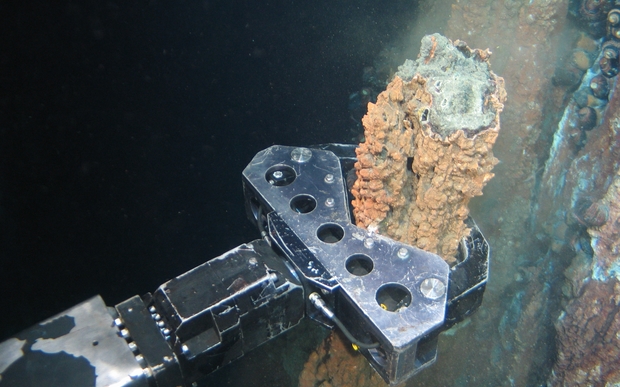
  • Former Papua New Guinea Attorney General attacks deep sea mining project. They always pick pictures for these articles that don’t show how much life is right around the vents.
Sampling SMS under the sea Photo: Nautilus Minerals
  • Whose ecological footprint is bigger: Medics, economists, or environmentalists? Spoilers: conservationists still have an impact, but they sure ain’t number 1.

Jetsam (what we’re enjoying from around the web)

  • There’s a fresh oil spill in the Gulf of Mexico, and it’s pretty darn huge:
    • Coast Guard Responding to 300,000 Gallon Crude Oil Spill in Gulf of Mexico.
    • Gulf of Mexico Oil Spill May Be Biggest Since 2010.
    • New Estimate Doubles the Size of Last Week’s Oil Spill in the Gulf of Mexico.
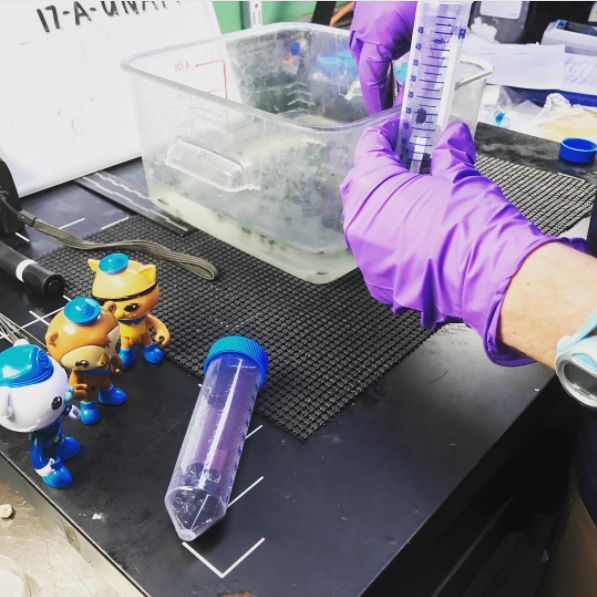
  • Some fun from Deep Sea News: When real-life marine biologist and mom goes to sea, she takes the octonauts with her.

  • This is fine: Report on U.S. Marine Sanctuary Oil Drilling Sent to White House, Not Released to Public. This is totally fine: Trump Administration Proposes Largest Oil and Gas Lease Sale in U.S. History.
  • Alaska’s Oyster Farmers Are Filling an Acidification-Driven Void. The state’s oyster farming industry is gaining ground as growers elsewhere struggle. From Hakai Magazine, which is great.
  • Nature is one of the most under-appreciated tools for reigning in carbon. From Anthropocene, which is fast becoming my favorite environmental print magazine. Sorry, Orion.
  • Thousands of penguin chicks starve in Antarctica.

Hey, Andrew, how about you give us at least *some* good news today? Ok, fine.

Read More “A new Gulf oil spill, opposition to deep-sea mining, DIY drop cameras, and more! Massive Monday Morning Salvage: October 30, 2017” »

The horrifying physiological and psychological consequences of being Aquaman

Posted on October 25, 2017 By Andrew Thaler
Popular Culture

This is an update and repost of our seminal article on the science of Aquaman, revised and expanded. 


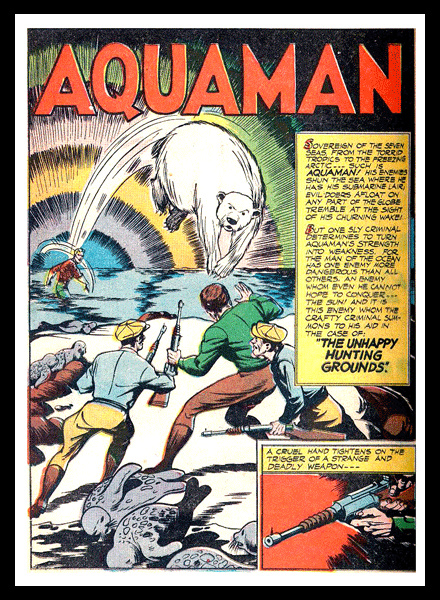
Aquaman. DC Comics.
Aquaman. DC Comics. A rational response to seal poaching is to lob a polar bear at the aggressors.

Aquaman may not be everybody’s favorite superhero, but since his creation in 1941, he has been among DC’s most enduring icons. During the Golden Age of comics, he held his own against Superman, Batman, and Wonder Woman. Silver Age Aquaman was a founding member and eventually leader of the Justice League. His powers, tied to the ocean, forced writers to create a compelling, complex hero with explicit limitations. In the early days, when Superman’s strength was practically infinite, and Batman’s brilliance was unmatched, Aquaman had to become more than just a superhero, he had to be a person.

If Superman existed to show us how high the human spirit could fly, and Batman to show us the darkness within even our most noble, Aquaman is here to show us the world that triumphs in our absence. The ocean is not ours, and no matter how great our technology, we will never master it as we have mastered land. Aquaman has. Through this lonely ocean wanderer, we can experience a world that we can never truly command. In many ways, Aquaman was stronger than the Man of Steel and darker than the Dark Knight. He knew loneliness that the orphan and the alien exile never could.

Even though Aquaman had to fight harder, endure the jokes of other, less interesting heroes, and find relevance in an ecosystem hostile to the humans that had to empathize with him, Aquaman was never forced to confront the truly horrifying consequences of life in the ocean.

The penetrating cold

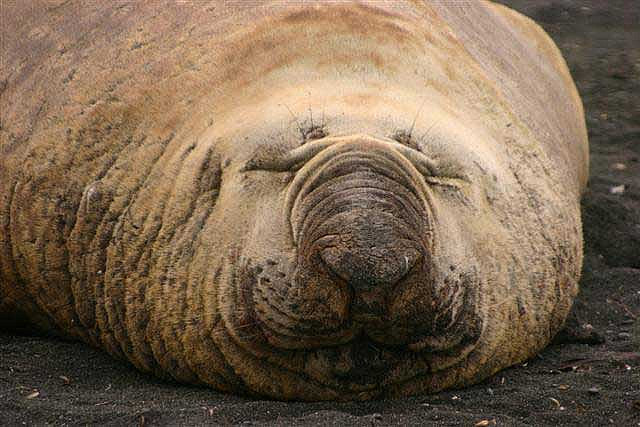
Aquaman is, for all intents and purposes, a marine mammal. With the exception of a healthy mane in later incarnations, he is effectively hairless. As a human, we would expect his internal body temperature to hover around 99°F, or about 37°C. Even at its warmest points, the surface temperature of the ocean around the equator is only about 80°F/27°C. At the poles, ocean temperature can actually drop a few degrees below freezing. In the deep sea, ambient temperature levels out around 2 to 4°C. The ocean is cold, and water is a much better thermal conductor than air. Warm blooded species have evolved many different systems to manage these gradients, including countercurrent heat exchangers, insulating fur, and heavy layers of blubber. This is what a marine mammal that can handle cold waters look like:

Elephant Seal. NSF, photo by Mike Usher

Aquaman is not just a human, he is an atypically uninsulated human. If the man has more than 2% body fat, I’d be shocked. In contrast, warm-water bottlenose dolphins have at least 18 to 20% body fat. Anyone who SCUBA dives knows that, even with a 12 millimeter neoprene wet suit, after a few hours in 80°F water, you get cold. Aquaman, lacking any visible insulation, should have slipped into hypothermia sometime early in More Fun Comics #73. He is built for the beach rather than the frigid deep.

Jason Momoa is not a man blessed with an over-abundance of “bioprene”.

Read More “The horrifying physiological and psychological consequences of being Aquaman” »

Lessons from Puerto Rico, mutant starfish, pictures of ships, and more! Monday Morning Salvage: October 9, 2017.

Posted on October 9, 2017 By Andrew Thaler
Weekly Salvage

Flotsam (what we’re obsessed with right now)

  • A fish scientist’s 10 tips for surviving a hurricane: Lessons learned from Puerto Rico from our friends at the Fisheries Blog.
  • Commentary: For Hurricane-Hit Puerto Rico, an Insider’s Guide to Disaster Management by gCaptain.
The Military Sealift Command hospital ship USNS Comfort (T-AH 20) arrives in San Juan, Puerto Rico, Oct. 3, 2017. U.S. Navy Photo

Read More “Lessons from Puerto Rico, mutant starfish, pictures of ships, and more! Monday Morning Salvage: October 9, 2017.” »

Deep-sea mining, octopus cities, a world without ozone, and more! Monday Morning Salvage: October 2, 2017

Posted on October 2, 2017October 1, 2017 By Andrew Thaler
Weekly Salvage

Fog Horn (A Call to Action)

  • Islands and nations across the Caribbean are hurting from multiple hurricanes. We’ve curated a short list of various charities and fundraisers for each island: How to help our island colleagues in the wake of total devastation.

Flotsam (what we’re obsessed with right now)

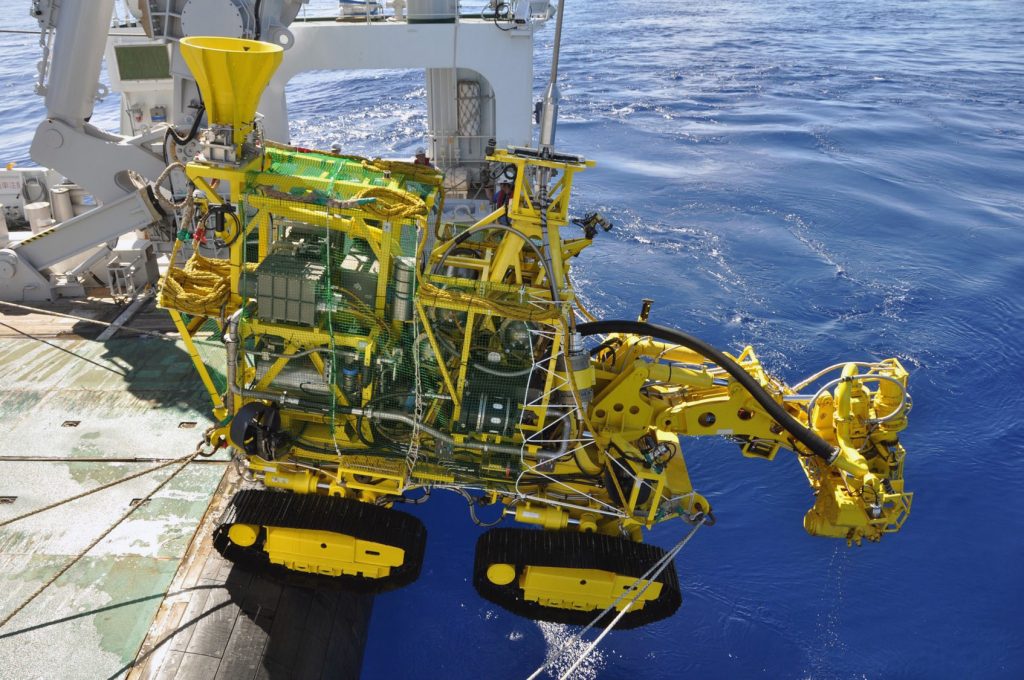
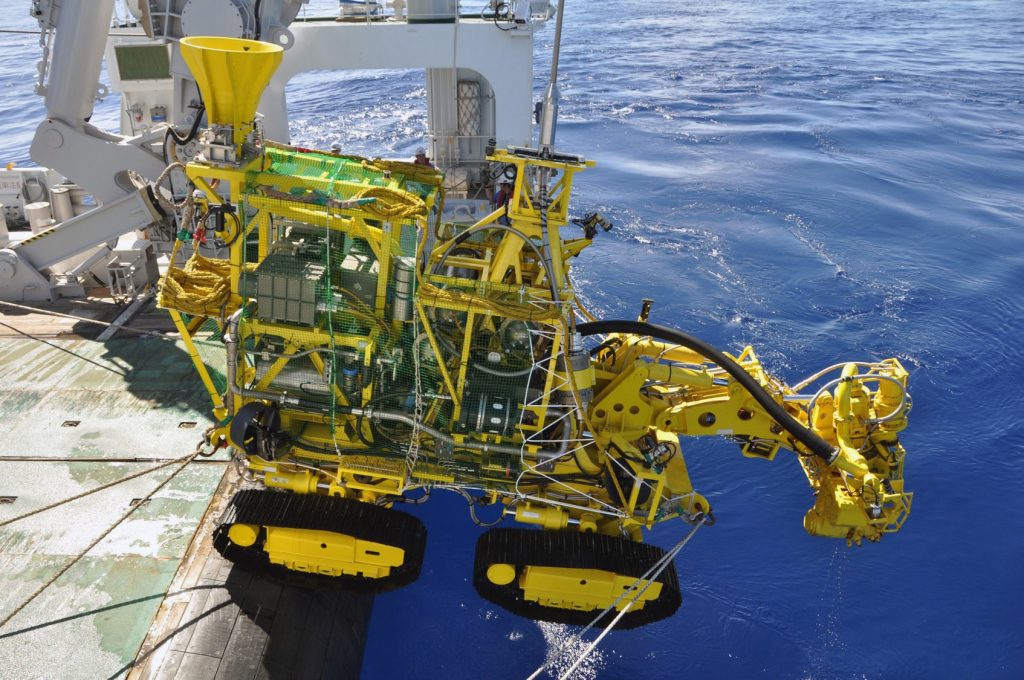
  • The race to the bottom begins! Japan successfully undertakes large-scale deep-sea mineral extraction and Japan becomes the first nation to mine a deep-sea hydrothermal vent.
The first successful mining tool.
  • Scientists spent a month terrifying guppies to prove that fish have personalities. Worth it just for the headline.

Read More “Deep-sea mining, octopus cities, a world without ozone, and more! Monday Morning Salvage: October 2, 2017” »

Japan becomes the first nation to mine a deep-sea hydrothermal vent

Posted on September 27, 2017 By Andrew Thaler 1 Comment on Japan becomes the first nation to mine a deep-sea hydrothermal vent
Uncategorized

Sixteen hundred meters deep, off the coast of Okinawa, a new kind of mining just cut it’s teeth.

Earlier today, the Japan Times reported that a mining tool has successfully extracted zinc and other metals from a hydrothermal vent on the seafloor. There’s not much to go on yet. We don’t know if these were active or dormant vents (though dormant doesn’t mean biologically dead). We don’t know the specific location of the experimental mine site. And we don’t know the footprint of the ore prospect. But we do know that Japan has identified at least 6 potential mining sites within its exclusive economic zone and that plans are moving forward for a commercial mining venture in mid-2020. I’ve only found one report in English and from the look of things, there’s only a press release circulating right now, but I’m certain we’ll be hearing much more about this in the coming weeks.

Japan Agency for Natural resources and Energy

We’re still watching to see what Nautilus Minerals does at Solwara 1 and how manganese nodule mining proposals in the Clarion Clipperton fracture zone are progressing but Japan’s mining efforts present a sea change in how to anticipate future deep-sea mining efforts. Private commercial ventures are dependent on the whims of the global commodities market and subject to national and international regulation. National efforts are driven by the need for resource independence. I was aware of Japan’s efforts, but didn’t realize that they were as close as they are to being ready for production.

For the last 10 years, we’ve been saying that deep-sea mining of hydrothermal vents is imminent. Well, it’s here.

Read More “Japan becomes the first nation to mine a deep-sea hydrothermal vent” »

Hurricane Irma, the Manatee Sheriff, climate change, and more! Monday Morning Salvage: September 11, 2017

Posted on September 11, 2017 By Andrew Thaler
Weekly Salvage

Fog Horn (A Call to Action)

  • One week left! The OpenCTD and Oceanography for Everyone has been selected as a finalist in National Geographic’s Chasing Genius Challenge! Please help me win the People’s Choice award by voting for the OpenCTD. Visit http://www.natgeochasinggenius.com/video/776, create or sign into your Chasing Genius account, and click the yellow star to vote on my video. You can vote once per day until September 15.
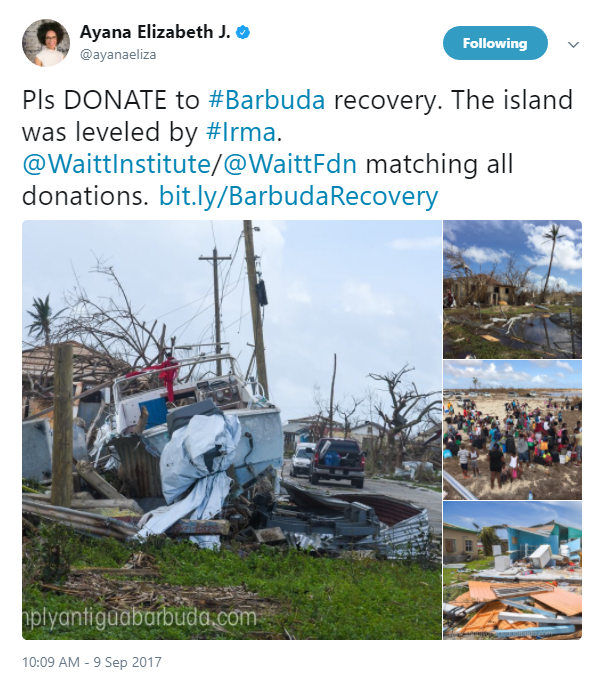
  • “Everyone is homeless. We can’t help each other because everyone needs help.” Ayana Johnson is working to raise funds (and the Waitt Foundation is matching donations, to help the people of Barbuda, where almost every structure on the island was leveled.

Flotsam (what we’re obsessed with right now)

  • Yes, I would like to pet a giant isopod, thank you.
  • We have a new expedition planned to the Commonwealth of the Northern Mariana Islands. Join us: Marine Ecology and Underwater Robotics in the Commonwealth of the Northern Mariana Islands.
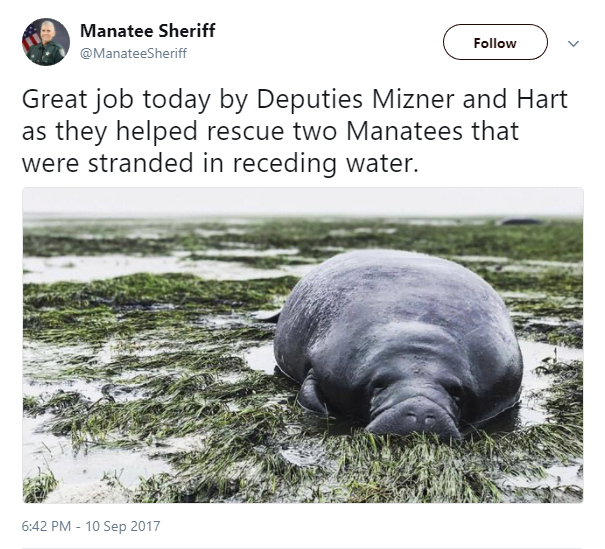
  • The Manatee Sheriff sends Manatee officers to rescue stranded manatees in Manatee County. 

Read More “Hurricane Irma, the Manatee Sheriff, climate change, and more! Monday Morning Salvage: September 11, 2017” »

Protecting the ocean means lots of rigorous, mundane science.

Posted on August 21, 2017 By Andrew Thaler
Science
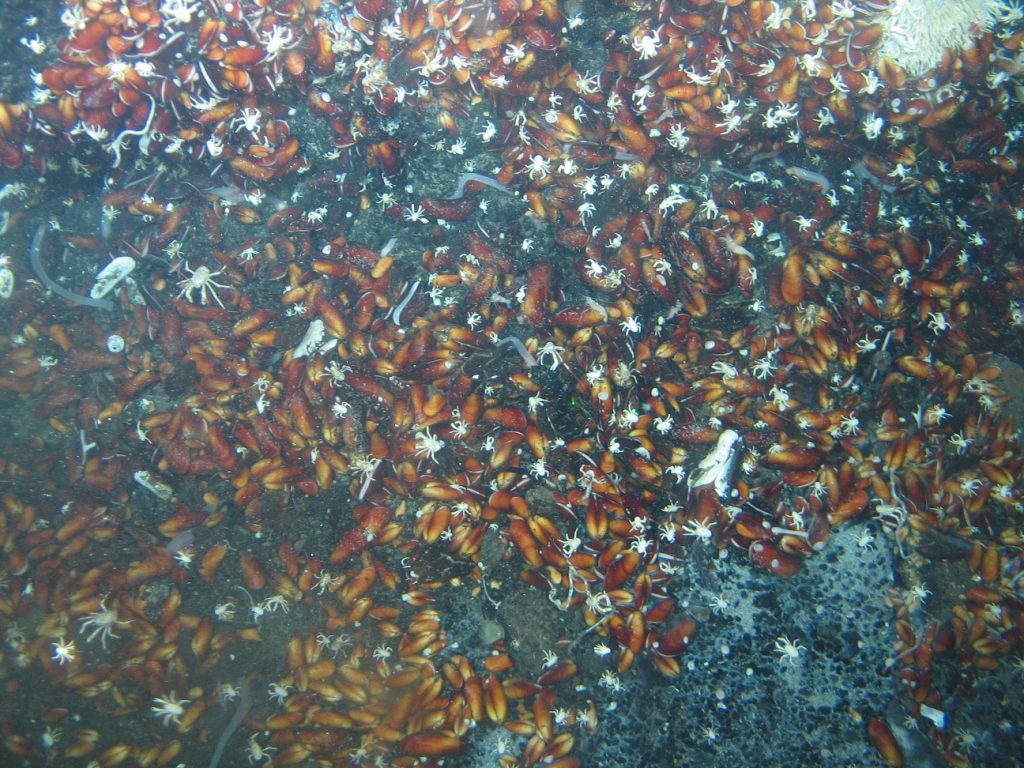
Bathymodiolus manusensis. Photo courtesy Nautilus Minerals.

I have a new paper out today: Population structure of Bathymodiolus manusensis, a deep-sea hydrothermal vent-dependent mussel from Manus Basin, Papua New Guinea.

We sampled two sites in Papua New Guinea where these deep-sea mussels aggregate and looked at their genes to determine if there was any population structure across this relatively small spatial scale (~40 km). We found one homogeneous population. We also looked at representatives from other ocean basins and determined that mussel populations within Manus Basin are younger than those in neighboring basins. This is a pattern we’ve observed in several other studies as well.

This is not, by any stretch, a ground-breaking, paradigm-shifting study. But studies like this, baseline, foundation-building studies, are absolutely essential for conservation biology.

Read More “Protecting the ocean means lots of rigorous, mundane science.” »

Unflappable Mola Molas, a Cousteau biopic, sharkcats, and more! Monday Morning Salvage: August 21, 2017

Posted on August 21, 2017August 21, 2017 By Andrew Thaler
Weekly Salvage

Fog Horn (A Call to Action)

  • Gratuitous self-plug alert! There’s still a few chance left to get your own Unflappable Mola Mola sticker, but they’re going fast. For this and the rest of the Jaunty Ocean Critter series, subscribe to my Patreon campaign and help keep Southern Fried Science and Oceanography for Everyone running!

Flotsam (what we’re obsessed with right now)

  • Happy Eclipse Day! If you’ve ever wondered what happens in the sea during an eclipse, Rebecca Helm at Deep Sea News has you covered!
  • This is an utterly amazing video of Blue Whale feeding behavior. Kudos to Slate, who went with the headline “Krill Joy“.
  • “Thirty years ago, I discovered a new world. I wanted to conquer it when I should have protected it. It’s not too late.” An uncompromising Jacques Cousteau biopic starring Lambert Wilson? Yes, please!

Jetsam (what we’re enjoying from around the web)

Read More “Unflappable Mola Molas, a Cousteau biopic, sharkcats, and more! Monday Morning Salvage: August 21, 2017” »

One-eyed sea eagles, deep reefs, crispy jellyfish, and more! Monday Morning Salvage: August 7, 2017.

Posted on August 7, 2017 By Andrew Thaler
Weekly Salvage

Fog Horn (A Call to Action)

  • One week left! The deadline for comments on Marine National Monuments and National Marine Sanctuaries has been extended due to overwhelming responses. You now have until August 14, 2017 to leave a comment. Scientists, researchers, explorers, and conservationists with particular ties to the Mariana Trench Marine National Monument can sign on the this letter co-authored by me, James Cameron, and numerous researchers who’s worked has benefited from the Mariana Trench.
  • Chasing Genius: Andrew has applied for a National Geographic Chasing Genius Award to fund more development for the OpenCTD and Oceangraphy for Everyone. Please share and like the video over at NatGeo!

Flotsam (what we’re obsessed with right now)

  • A Maine Lobsterman catching a one-eyed bald eagle struggling to swim has got to be a metaphor for something, right?

Read More “One-eyed sea eagles, deep reefs, crispy jellyfish, and more! Monday Morning Salvage: August 7, 2017.” »

Save our Marine Monuments, replace confederates with ocean animals, worlds of plastic, and more! Monday Morning Salvage: July 31, 2017

Posted on July 31, 2017July 30, 2017 By Andrew Thaler
Weekly Salvage

Fog Horn (A Call to Action)

  • The deadline for comments on Marine National Monuments and National Marine Sanctuaries has been extended due to overwhelming responses. You now have until August 14, 2017 to leave a comment.
  • Scientists, researchers, explorers, and conservationists with particular ties to the Mariana Trench Marine National Monument can sign on the this letter co-authored by me, James Cameron, and numerous researchers who’s worked has benefited from the Mariana Trench.

Flotsam (what we’re obsessed with right now)

  • A new generation of robots is set to explore marine mysteries around the world. 5 Ways Underwater Drones Are Helping Citizens Save the Ocean. And check out this very short Wired piece on OpenROV Trident!
  • Earlier this week, Snooty, the world’s oldest living captive manatee died tragically. Now residents of Manatee County want to replace a Confederate statue with a statue of their beloved manatee. How can you say no to this face?
Snooty. Photo via @GWR
  • Personally, I am 100% behind replacing all Confederate statues with beloved ocean animals. H/T Aaron Mannes.

Read More “Save our Marine Monuments, replace confederates with ocean animals, worlds of plastic, and more! Monday Morning Salvage: July 31, 2017” »

Posts pagination

Previous 1 … 12 13 14 … 16 Next

Popular Posts

Shark scientists want their research to help save threatened species, but don’t know how. Our new paper can help.Shark scientists want their research to help save threatened species, but don’t know how. Our new paper can help.December 1, 2025David Shiffman
Norway and Cook Islands put their deep-sea mining plans on pause.Norway and Cook Islands put their deep-sea mining plans on pause.December 3, 2025Andrew Thaler
What Ocean Ramsey does is not shark science or conservation: some brief thoughts on "the Shark Whisperer" documentaryWhat Ocean Ramsey does is not shark science or conservation: some brief thoughts on "the Shark Whisperer" documentaryJuly 2, 2025David Shiffman
What we know we don't know: impacts of deep-sea mining on whales, dolphins, sharks, turtles, and other migratory species.What we know we don't know: impacts of deep-sea mining on whales, dolphins, sharks, turtles, and other migratory species.November 20, 2025Andrew Thaler
2025: My year in writing, public speaking, and media interviews2025: My year in writing, public speaking, and media interviewsDecember 3, 2025David Shiffman
The Trouble with Teacup PigsThe Trouble with Teacup PigsOctober 14, 2012Andrew Thaler
Urea and Shark OsmoregulationUrea and Shark OsmoregulationNovember 15, 2010David Shiffman
How tiny satellites are tracking marine wildlifeDecember 1, 2025Andrew Thaler
Shark of Darkness: Wrath of Submarine is a fake documentaryShark of Darkness: Wrath of Submarine is a fake documentaryAugust 10, 2014Michelle Jewell
Build a dirt cheap, tough-as-nails field computer in a Pelican caseBuild a dirt cheap, tough-as-nails field computer in a Pelican caseJuly 21, 2015Andrew Thaler
Subscribe to our RSS Feed for updates whenever new articles are published.

We recommend Feedly for RSS management. It's like Google Reader, except it still exists.

Southern Fried Science

  • Home
  • About SFS
  • Authors
  • Support SFS


If you enjoy Southern Fried Science, consider contributing to our Patreon campaign.

Copyright © 2025 Southern Fried Science.

Theme: Oceanly Premium by ScriptsTown