Skip to content

Southern Fried Science

Over 15 years of ocean science and conservation online

  • Home
  • About SFS
  • Authors
  • Support SFS

Tag: parasites

The Last of Us zombie fungus has nothing on the brain-eating, sex-changing, Sacculina barnacle.

Posted on January 23, 2023January 24, 2023 By Andrew Thaler
The Last of Us zombie fungus has nothing on the brain-eating, sex-changing, Sacculina barnacle.
Science

In the Last of Us, the most gruesome live-action adaptation of a video game about people being turned into fungus since 1993’s Super Mario Bros, a mutated species of Cordyceps destroys society by converting humans into mindless, sporulating mushroom people.

Cordyceps, a fungus that most commonly parasitizes ants, is real. It really does hijack its host’s nervous system, alter its behavior, and turn it into a spore-producing zombie. The outcome is strangely beautiful.

Though the current darling of gritty, realistic, science-based zombie fiction, Cordyceps is such a lightweight in the world of brain-breaking parasites that tech bros brew it into their adaptogenic coffee.

If you want to meet a truly unsettling zombie-making parasite, allow me to introduce you to Sacculina.

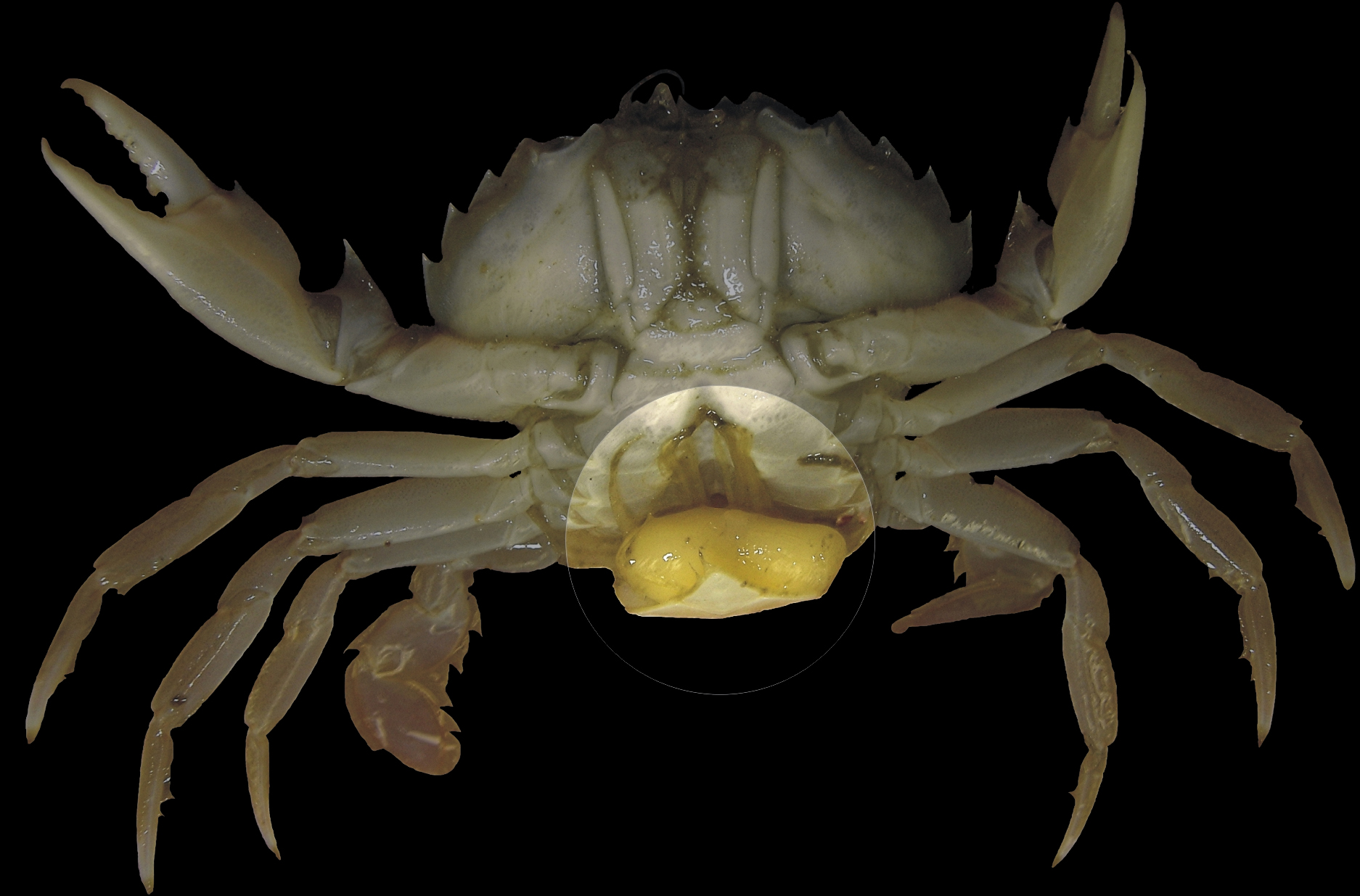
Sacculina is a genus of barnacle that parasitizes crabs. While most parasitic barnacles are perfectly happy growing on the carapace of a crab, Sacculina takes this partnership to the extreme.

Female Sacculina larvae drift through the ocean, until they encounter a crab. The larva then settles on the crab and searches for a joint in the crab’s carapace. Once it finds a gap in the arthropod’s armor, it transforms into a kentrogon, a specialized phase of the barnacle life cycle that possess a stylet–an organic syringe-like structure–which allows Sacculina to inject itself into the crab, and not much else. At this point, the hard shell attached to the crab’s carapace falls off and the barnacle continues to grown within its host.

It gets so much weirder from here.
Read More “The Last of Us zombie fungus has nothing on the brain-eating, sex-changing, Sacculina barnacle.” »

Frisky Anglerfish, Persistent Aquatic Living Sensors, Make for the Planet Borneo, Sea Cucumber Mafia, and more! Monday Morning Salvage: March 26, 2018

Posted on March 26, 2018March 25, 2018 By Andrew Thaler
Weekly Salvage

Foghorn (A Call to Action!)

  • Sign up for Make for the Planet Borneo and help push forward the next generation of conservation technology!
  • Announcing the Con X Tech Prize for Hacking Extinction! Apply for funding to create a working hardware prototype and win up to $20,000 in awards.

Flotsam (what we’re obsessed with right now)

  • This is a totally ordinary, not at all alarming, call for government bidders on a contract to build “new systems that employ natural or engineered marine organisms as sensor elements to amplify signals related to the presence, movement, and classification of manned or unmanned underwater vehicles.” They even adorably call these Persistent Aquatic Living Sensors PALS. Normal!
  • Here’s a video of anglerfish mating, because anglerfish are beauty.
  • This week in science and conservation slowly, awkwardly coming to terms with their racist history: For Decades, Our Coverage Was Racist. To Rise Above Our Past, We Must Acknowledge It and Environmentalism’s Racist History.
  • Scientists in Survival Mode: After a disastrous hurricane season, scientists in the storms’ pathways struggle to return to work.

The Levee (A featured project that emerged from Oceandotcomm)

  • Marine lab has ‘front row seat’ to Louisiana coastal loss.

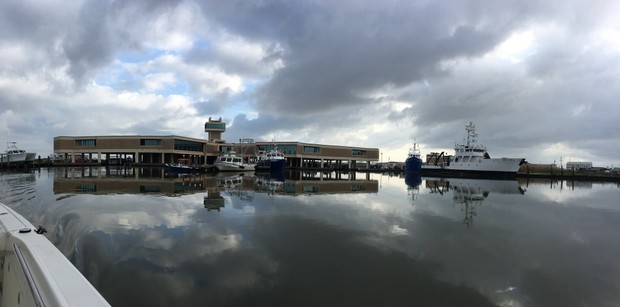
LUMCON by boat
Photo by Melissa Miller

Read More “Frisky Anglerfish, Persistent Aquatic Living Sensors, Make for the Planet Borneo, Sea Cucumber Mafia, and more! Monday Morning Salvage: March 26, 2018” »

Parasitic mussel babies and big whale brains: Thursday Afternoon Dredging, November 30th, 2017

Posted on November 30, 2017November 30, 2017 By David Shiffman
Uncategorized

Cuttings (short and sweet): 

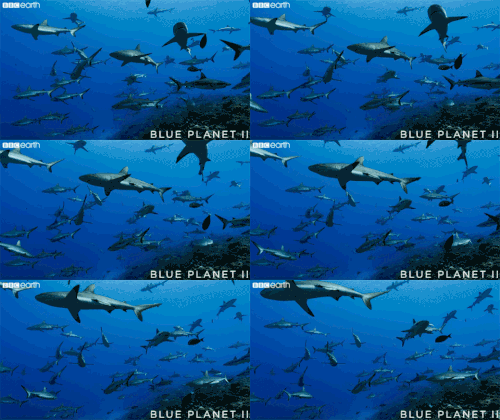
  • Watch this incredible footage from Blue Planet 2!
  • Follow Annmarie Fearing, a graduate student researching sawfish conservation, on twitter!
  • Lobster found with Pepsi logo fuels fears over ocean litter. By Ashifa Kassam, for the Guardian.

Read More “Parasitic mussel babies and big whale brains: Thursday Afternoon Dredging, November 30th, 2017” »

Ocean Noise, Parasite Extinction, and Jellyfish Blooms: Thursday Afternoon Dredging: November 9th, 2017

Posted on November 9, 2017 By David Shiffman
Uncategorized

Cuttings (short and sweet): 

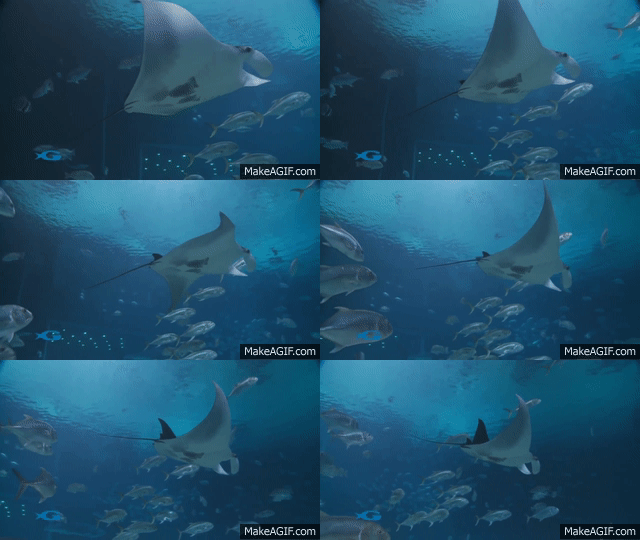
  • Watch this manta ray (or should I say mobula ray) at the Georgia Aquarium

    Video by Georgia Aquarium
  • Follow Serena Wong, a graduate student at SFU studying shark and ray respiratory physiology, on twitter!
  • 9 reasons you can’t help but love manatees. By Katie Hogge, for the Ocean Conservancy blog


Read More “Ocean Noise, Parasite Extinction, and Jellyfish Blooms: Thursday Afternoon Dredging: November 9th, 2017” »

Jellyfish sleep, shark-sucking bots, mole crab parasites, and more! Monday Morning Salvage: September 25, 2017

Posted on September 25, 2017September 25, 2017 By Andrew Thaler
Weekly Salvage

Fog Horn (A Call to Action)

  • The fight for our Marine National Monuments isn’t over. We now know of the contents of Zincke’s monument review memo, and it is not good. The DOI wants to see commercial fishing return to the Pacific Remote Islands and Rose Atoll Marine National Monuments. Longline fishing in these regions has historically been conducted by foreign fishing fleets which have been documented using slave labor. Many ecologists believe that maintaining these protected zones serve as a refuge that boost populations of many important commercial fish and improve the overall health of the fishery. Any change to monuments created under the Antiquities Act must be approved by congress. You’ve got a lot of reason to call you representatives this week, so why not add “I opposed the reintroduction of ecologically and economically destructive commercial fishing to the Pacific Remote Islands and Rose Atoll Marine National Monument.” to your script?

Flotsam (what we’re obsessed with right now)

  • Jellyfish sleep. Mind. Blown.
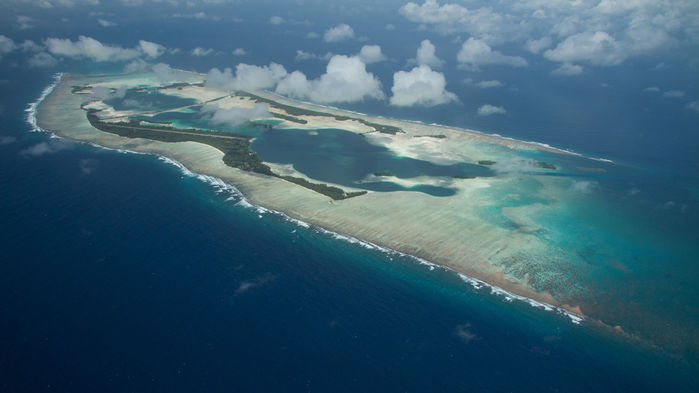
  • Our Pacific Monuments are also extremely important scientific sites. Commercial fishing could jeopardize decades of research efforts in the remote Pacific. Scientists pan proposal to open pristine Pacific islands to fishing.

Palmyra Atoll. Erik Oberg/Island Conservation/Flickr

Read More “Jellyfish sleep, shark-sucking bots, mole crab parasites, and more! Monday Morning Salvage: September 25, 2017” »

A shark for all floods, Crowdfunding scams, old fish, bold fish, and more! Monday Morning Salvage: September 18, 2017

Posted on September 18, 2017September 18, 2017 By Andrew Thaler
Weekly Salvage

Fog Horn (A Call to Action)

  • The fight for our Marine National Monuments isn’t over. We finally know *some* of the contents of Zincke’s monument review memo, and it’s not great. The DOI wants to see commercial fishing return to the Pacific Remote Islands and Rose Atoll Marine National Monuments. Longline fishing in these regions has historically been conducted by foreign fishing fleets which have been documented using slave labor. Many ecologists believe that maintaining these protected zones serve as a refuge that boost populations of many important commercial fish and improve the overall health of the fishery.
  • Here’s the good news: Any change to monuments created under the Antiquities Act must be approved by congress. You’ve got a lot of reason to call you representatives this week, so why not add “I opposed the reintroduction of ecologically and economically destructive commercial fishing to the Pacific Remote Islands and Rose Atoll Marine National Monument.” to your script?

Flotsam (what we’re obsessed with right now)

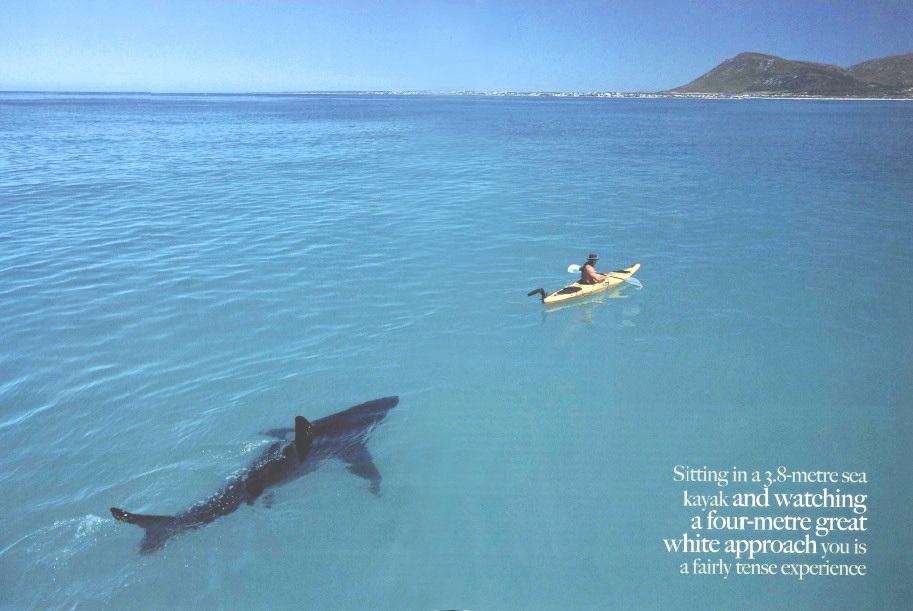
  • Hero Shark, the shark who shows up to every flood, ostensibly to save us all from our own hubris, has a long a fascinating history. “Shark in flooded street” wasn’t even the first time that photo was used for fake news.

Photo by Thomas P. Peschak.

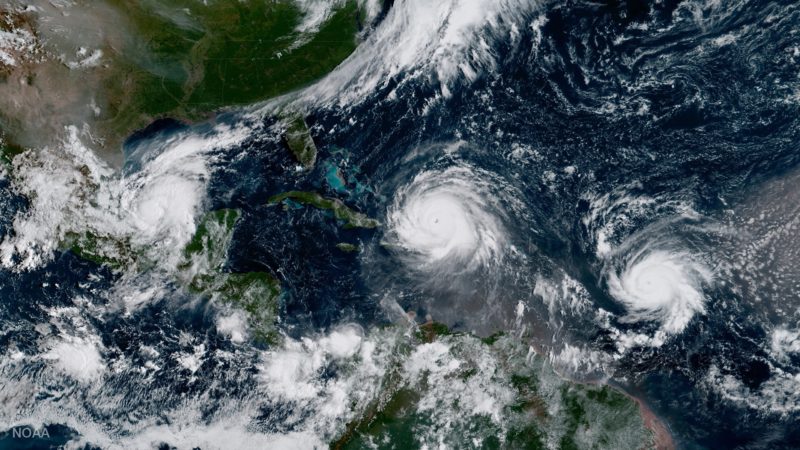
  • NOAA’s New Weather Satellite Captured Stunning Images of Hurricanes Harvey and Irma. These are amazing and terrifying.

GOES-16.

  • Rick MacPherson and I made a bot that generates random ocean conservation solutions from a massive archive of policy jargon. Follow @OceanCon_Bot. It is good.

Read More “A shark for all floods, Crowdfunding scams, old fish, bold fish, and more! Monday Morning Salvage: September 18, 2017” »

The Sex Lives of Spoonworms: 10 marine animals with parasitic, dwarf, and otherwise reduced males

Posted on May 31, 2013September 19, 2013 By Andrew Thaler 8 Comments on The Sex Lives of Spoonworms: 10 marine animals with parasitic, dwarf, and otherwise reduced males
Science

Earlier this week, Fox News commentator and all-around terrific guy* Erick Erickson, while discussing a recent Pew Study that revealed that women were the sole breadwinners in 40% of US households that contain children, had this to say:

“I’m so used to liberals telling conservatives that they’re anti-science. But liberals who defend this and say it is not a bad thing are very anti-science. When you look at biology—when you look at the natural world—the roles of a male and a female in society and in other animals, the male typically is the dominant role. The female, it’s not antithesis, or it’s not competing, it’s a complementary role.”

source

headshot-thalerSMALL

I’m not sure where Erickson got his science education from, but it’s pretty clear he should have spent a little more time shopping around on the free market, because he sure is wrong. How wrong? I managed to assemble this list of 10 marine species with dwarf, parasitic, or otherwise reduced males (including an entire female-only class) while waiting for my toast**. So have a seat and let me show you how much weirder and more wonderful the world is than Erickson’s Disney-esque misinterpretation of biology.

1. Anglerfish

The deep-sea Anglerfish is among the most common examples of parasitic males in the marine world. Anglerfish comprise a variety of taxa in the order Lophiiformes. Almost all (females) possess a specialized appendage that acts as a lure to attract unwary prey. Life in the deep sea is rough–even though it is the largest and most diverse ecosystem on Earth, biomass is fairly low–so finding a mate is a struggle for these slow swimming fishes. The solution: carry your partner with you.

Male anglerfish are tiny, often less than 5% the size of the female, but they possess powerful olfactory receptors, allowing them to seek out females. Once a mate is located, the male anglerfish latches on to her abdomen, fuses his circulatory system with hers, and is then slowly digested until there’s nothing left but a sac of gonads surrounded by basic life-supporting tissues. Female anglerfish are not monogamous, either. At any given time she could be covered by a half-dozen parasitic males. Kinky.

Read More “The Sex Lives of Spoonworms: 10 marine animals with parasitic, dwarf, and otherwise reduced males” »

#SciFund Returns – A Climate for Castrators?

Posted on May 9, 2012 By Andrew Thaler 2 Comments on #SciFund Returns – A Climate for Castrators?
Science

#SciFund, a month long initiative to raise funds for a variety of scientific research projects, is once again upon us. Project leaders post a project description and an appeal for funds, and members of the public are invited to make small donations to projects that they deem worthy. Donations come with rewards such as access to … Read More “#SciFund Returns – A Climate for Castrators?” »

Popular Posts

Shark scientists want their research to help save threatened species, but don’t know how. Our new paper can help.Shark scientists want their research to help save threatened species, but don’t know how. Our new paper can help.December 1, 2025David Shiffman
Norway and Cook Islands put their deep-sea mining plans on pause.Norway and Cook Islands put their deep-sea mining plans on pause.December 3, 2025Andrew Thaler
What Ocean Ramsey does is not shark science or conservation: some brief thoughts on "the Shark Whisperer" documentaryWhat Ocean Ramsey does is not shark science or conservation: some brief thoughts on "the Shark Whisperer" documentaryJuly 2, 2025David Shiffman
What we know we don't know: impacts of deep-sea mining on whales, dolphins, sharks, turtles, and other migratory species.What we know we don't know: impacts of deep-sea mining on whales, dolphins, sharks, turtles, and other migratory species.November 20, 2025Andrew Thaler
2025: My year in writing, public speaking, and media interviews2025: My year in writing, public speaking, and media interviewsDecember 3, 2025David Shiffman
The Trouble with Teacup PigsThe Trouble with Teacup PigsOctober 14, 2012Andrew Thaler
Urea and Shark OsmoregulationUrea and Shark OsmoregulationNovember 15, 2010David Shiffman
How tiny satellites are tracking marine wildlifeDecember 1, 2025Andrew Thaler
Shark of Darkness: Wrath of Submarine is a fake documentaryShark of Darkness: Wrath of Submarine is a fake documentaryAugust 10, 2014Michelle Jewell
Build a dirt cheap, tough-as-nails field computer in a Pelican caseBuild a dirt cheap, tough-as-nails field computer in a Pelican caseJuly 21, 2015Andrew Thaler
Subscribe to our RSS Feed for updates whenever new articles are published.

We recommend Feedly for RSS management. It's like Google Reader, except it still exists.

Southern Fried Science

  • Home
  • About SFS
  • Authors
  • Support SFS


If you enjoy Southern Fried Science, consider contributing to our Patreon campaign.

Copyright © 2025 Southern Fried Science.

Theme: Oceanly Premium by ScriptsTown