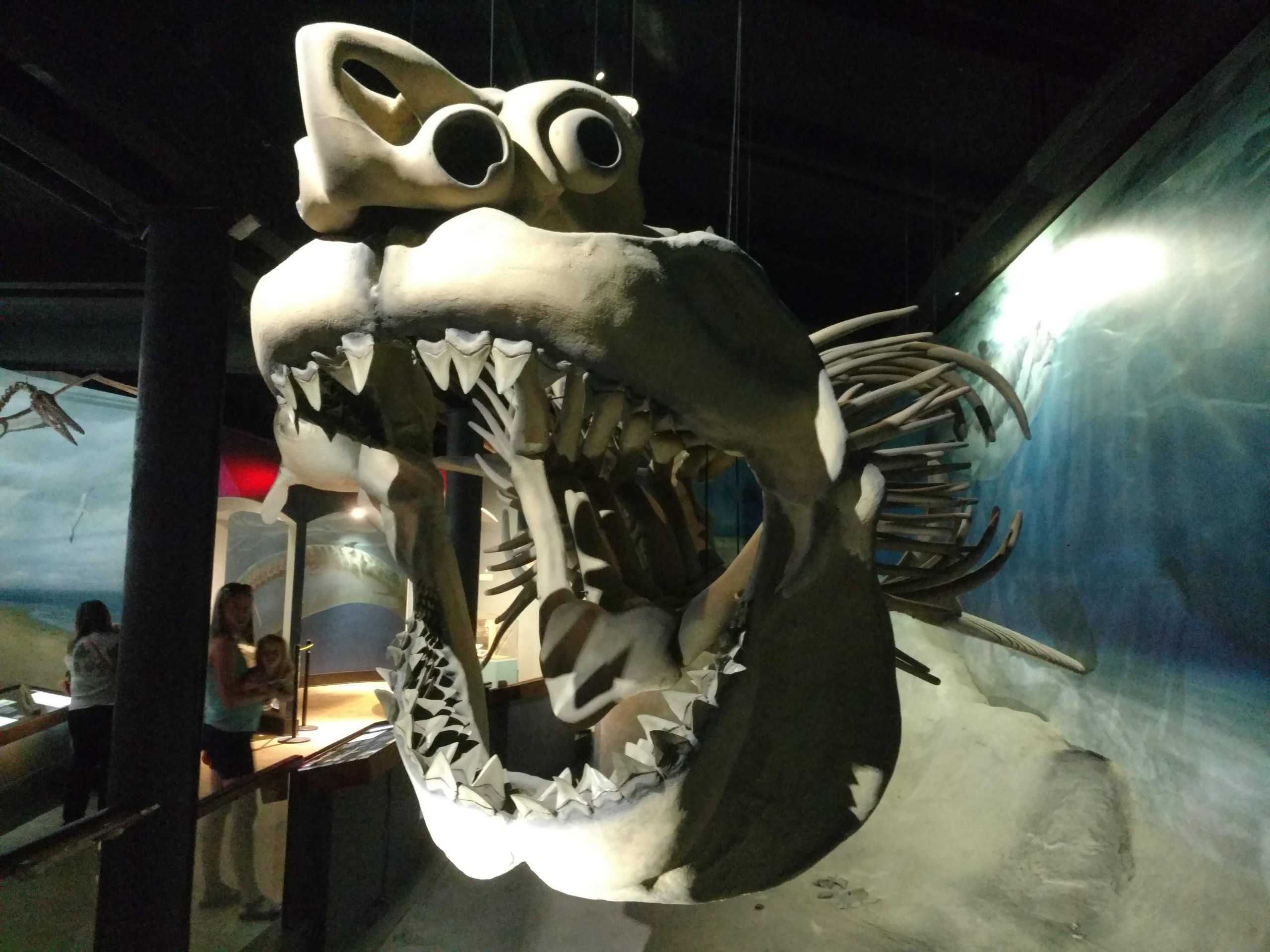
Twelve years ago, Discovery Channel aired a documentary so egregiously bad, so wildly dishonest, and so utterly contemptuous of its audience, that it set the entire Science Blogging Community alight. And then, a year later, they followed it up with another. This was a clarifying moment for science, and especially ocean science, blogging. We weren’t just the plucky little blogs trying to educate people about the ocean, we were now in active conflict with the presumptive juggernaut of educational media: Discovery Communications, the godfather of Shark Week and the largest producer of nature documentaries.
We certainly don’t need to rehash the Mermaid Debacle, or the reactions to Megalodon, Eaten Alive!, and, ultimately, all of Shark Week. You can find plenty of that in the search bar or you could just read one of the many peer-reviewed papers we published about it:
- Fish tales: Combating fake science in popular media
- Digital environmentalism: Tools and strategies for the evolving online ecosystem
- Lions, Whales, and the Web: Transforming Moment Inertia into Conservation Action
- Inaccurate and Biased Global Media Coverage Underlies Public Misunderstanding of Shark Conservation Threats and Solutions
We’ve spent over a decade combating fake science in popular media. Since our initial pushback against Mermaids: The Body Found and our ongoing campaign against the bogosity of Shark Week, I’ve heard from friends colleagues, and strangers who have appeared on or adjacent to these types of shows, all conveying the same underlying message: It’s so much worse than you can possibly imagine.
In a lot of ways, the popularity of Reality TV, and especially the documentary-style reality shows that purport to teach rather than just entertain, is a lot like the popularity of Professional Wrestling. The vast majority of viewers are aware that the storylines are fiction and the editing is selective, but that the events are largely real. Triple-H didn’t really kidnap Vince McMahon’s daughter and then take down McMahon in WWE Armageddon to become a WWE executive called The Game, but Paul Levesque is an incredibly talented athlete and actor who did actually marry McMahon’s daughter and part of the joy of watching professional wrestling is in the blurred line between physicality and theatrics.
Here’s the bad news, professional wrestling is significantly more real than reality TV. Even, and often especially, in the case of educational reality TV.
In the course of covering this over the last decade, I’ve talked to farmers who’ve had their livestock killed by the production team to create more drama, scientists who’ve had their words and credibility twisted to tell wild untruths, families who’ve had their homes condemned after those flashy repairs fail inspection, and many, many more. Those are the stories that haven’t made the news.
But those people knew what they signed up for?
The reality is that oftentimes, they don’t. Once you sign an NDA and release your rights (and I’ve seen some of those NDAs, they are very comprehensive), you don’t have any control over what the final show is. I’ve talked to folks who were told they were filming a lovely little show about raising a family on a small farm, only for it to air as a doomsday prepper-style off-grid survival show.
I’ve often advised colleagues who want to do public outreach on how to approach and work with production companies: retain your own legal team, have an agent who knows the business, and think very carefully about whether or not to sign away your rights for the promise of fame. You need to understand that once you get behind the camera, you no longer have any control over the final product.
I don’t believe that as a scientist whose goal is to create educational resources, you should ever sign away your rights to refute lies presented on shows that use your reputation for credibility.
I’m going to spend the next month digging into our ten year campaign against bad science reality TV, looking at what we did right, what we got wrong, and what we can learn about how the last decade has shaped the next decade of media.
But first, I need to come clean.
*cutaway to confessional*
My Reality TV Origin Story
I was on one of the earliest reality TV shows. Sort of. Almost.
MTV’s The Real World had been on the air for 5 years. The precursor to Survivor was just wrapping in Sweden. Advances in non-linear digital editing made it cheap to shoot a massive amount of film and cut everything together into whatever story you wanted to tell, later. Reality TV as a genre was beginning to emerge as an umbrella term for these kinds of shows.
It was the summer of 1997, and my family was informed that something exciting and groundbreaking was about to happen at summer camp. A production company was coming to the idyllic little campus in the foothills of Maine where I had spent the last summer climbing mountains and learning to sail. They were going to follow a few dozen campers around for the whole summer for a new show. Those kids would become the next kid sensations, fame and fortune would await them on the other side. And I was just the right demographic for Disney. 13-year-old Andrew could be one of the stars.
I was going to spend my summer on Bug Juice.
Even at 13, I knew that was going to be a hard ‘no’ from me. What the production team described as an incredible summer experience and a launchpad for future success sounded like my actual vision of hell.
I did not sign the release (more importantly at 13, my parents respected my choice and also did not sign anything).
I did, however, go to camp. As one of only a handful of campers who opted not to be associated with the production, we had a front row view of just how weird reality TV production is.
Reality TV hadn’t yet matured into what it is now, but looking back, I can see that the bones were already there. The cameras were ever-present, so much so that everyone, even those who weren’t the focus of the production, began to tune them out. They disappear in a very real sense. After a few weeks, you stop seeing them. The campers who were on film were frequently in tears, often on camera, as they were pushed to repeat activities for better shots (things as simple as pick-up soccer games would grind to a halt as they tried to recreate a goal at a better angle while we stood around watching), reveal their secret crushes in proto-confessionals (remember, these were 13-year-olds), and remain endlessly vigilant, aware that their every word and action could be broadcast to the entire country.
They didn’t seem happy.
I had a blast, though. I made sure to get into every shot I could, knowing the footage wouldn’t be usable if my face was visible. At one point, a cameraman hoofed his gear all the way up Katahdin at 4AM, only to discover as we summitted that this six-camper climb team had two kids on the no-film list.
In the months after camp, we fielded numerous calls from the production team asking for a sign off. By that point, it was a matter of pride. It doesn’t matter how many lawyers you have, you cannot out-stubborn a 13-year-old.
When the show finally did come out, it was a weirdly disjointed mess. Three decades later, I don’t remember the details, but I remember how much the show diverged from what actually happened at camp. The timeline was all cattywampus. Some of the kids that they followed didn’t even make it on the show. There were extremely uncomfortable relationship storylines (again, and I cannot emphasize this enough, these were 13-year-old children) that you could tell, even from watching, were forced.
If, for some very strange reason, you find yourself watching old episodes of Bug Juice and see a large, blurred-out camper, that’s me. I am the blur. I think I’m even in the title sequence, sitting blurrily in the back of a van.
Not unlike the eponymous Igloo cooler full of colored sugar water, the experience left a bad taste in my mouth.
*cut back to present day*
When examining these shows, it was always through the lens of my experience with Bug Juice, and the understanding that even the most innocuous, innocent looking reality shows were full of creeping horrors. There are ways to tell the story you want to tell, but in all cases, the editors are the master of your fate. They decide if you are the hero, the villain, the fool, or the savant. They make you look good. They make you look bad. They do not care about what that means for you.
Which brings us to the very first lesson learned. For many it is a lesson hard earned:
If you aren’t comfortable with the level of control you have over the final product, Do Not Sign The Release.
Southern Fried Science is free and ad-free. Southern Fried Science and the OpenCTD project are supported by funding from our Patreon Subscribers. If you value these resources, please consider contributing a few dollars to help keep the servers running and the coffee flowing. We have stickers.