Andrew is a post-doctoral researcher in North Carolina focused on population and conservation genetics in hydrothermal vent communities.


David is a graduate student in Florida. He studies the ecology and conservation of sharks.


Amy is a graduate student in North Carolina studying local ecological knowledge within small scale fisheries.


Chuck is a graduate student in North Carolina focusing on apex predators and how they interact with fisheries.


Lyndell is a graduate student in North Carolina, studying the feeding ecology of cownose rays.


Iris is a graduate student in Washington studying habitat use and feeding habits of juvenile Pacific salmon and herring in Puget Sound.


Michael is a graduate student in Maryland investigating the visual systems of mantis shrimp.


Archives

Arduino Project Log: Building the Sea Leveler Part 1 – Hardware

headshot-thalerSMALL

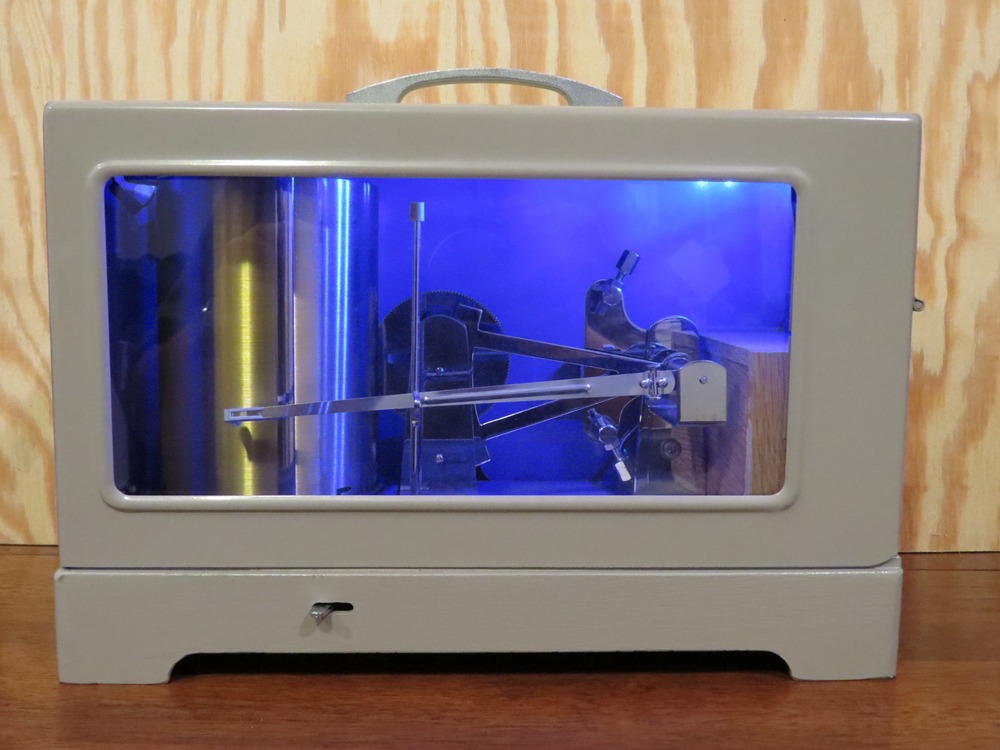
The Sea Leveler.

The Sea Leveler.

Two weeks ago, I announced my latest Hacking the Ocean project, an open-source, Arduino-powered water level meter that monitors the frequency of tweets containing the hashtag #sealevelrise. Since launch, the Sea Leveler has had some bugs and received some good press.  Now that I’ve had some time to monitor its performance and work the bugs out of its code, it is finally time for the promised “how to build the Sea Leveler” post.

This project was much more involved than my Arduino build and significantly more rewarding. The Sea Leveler was a challenge on multiple fronts, from learning to make the Arduino talk to twitter to physically modifying the water level meter. As I noted in my first project log, I have very little programming experience, and the major goal of this build was to level up my C++ skills. I’m very happy with the results, both technical and aesthetic.

For simplicity, I’m going to break this into two posts, one for hardware and one for software.

Continue reading Arduino Project Log: Building the Sea Leveler Part 1 — Hardware

Arduino Project Log: Getting Started with a Digital Compass

Andrew ThumbAs I mentioned during the last Blue Pints episode, this year I’m going to be attempting to build a low-cost open source CTD for basic oceanographic measurements. This is in addition to my ongoing work with the OpenROV. I have a pretty solid electronics background, but in order to accomplish this goal, I also need to learn how to program microcontrollers, something that I’ve never done before. For the next several months I’m going to tackle various small Arduino project to get comfortable with the fundamentals. I’ll be working out of Environmental Monitoring with Arduino: Building Simple Devices to Collect Data About the World Around Us and Arduino Projects to Save the World, both of which feature beginner to advanced projects based around environmental monitoring and data collection, as well as Programming Arduino Getting Started with Sketches for as a basic programming primer.

For my first project, I wanted to start with something that could eventually be implemented with the OpenROV–a magnetometer to provide compass headings while navigating the robot. As a first step, I wanted to learn how to program the Arduino board to calculate compass headings from a magnetometer and develop some sort of rough visual readout of that heading.

Continue reading Arduino Project Log: Getting Started with a Digital Compass