Skip to content

Southern Fried Science

Over 15 years of ocean science and conservation online

  • Home
  • About SFS
  • Authors
  • Support SFS

Author: Andrew Thaler

Marine science and conservation. Deep-sea ecology. Population genetics. Underwater robots. Open-source instrumentation. The deep sea is Earth's last great wilderness.

Ocean Outreach in an Evolving Online Ecosystem: Transforming the Narrative

Posted on August 10, 2016August 11, 2016 By Andrew Thaler
Blogging, Conservation

This is the transcript of the keynote I delivered at the Fourth International Marine Conservation Congress in St. John’s, Newfoundland. It has been lightly modified for flow.

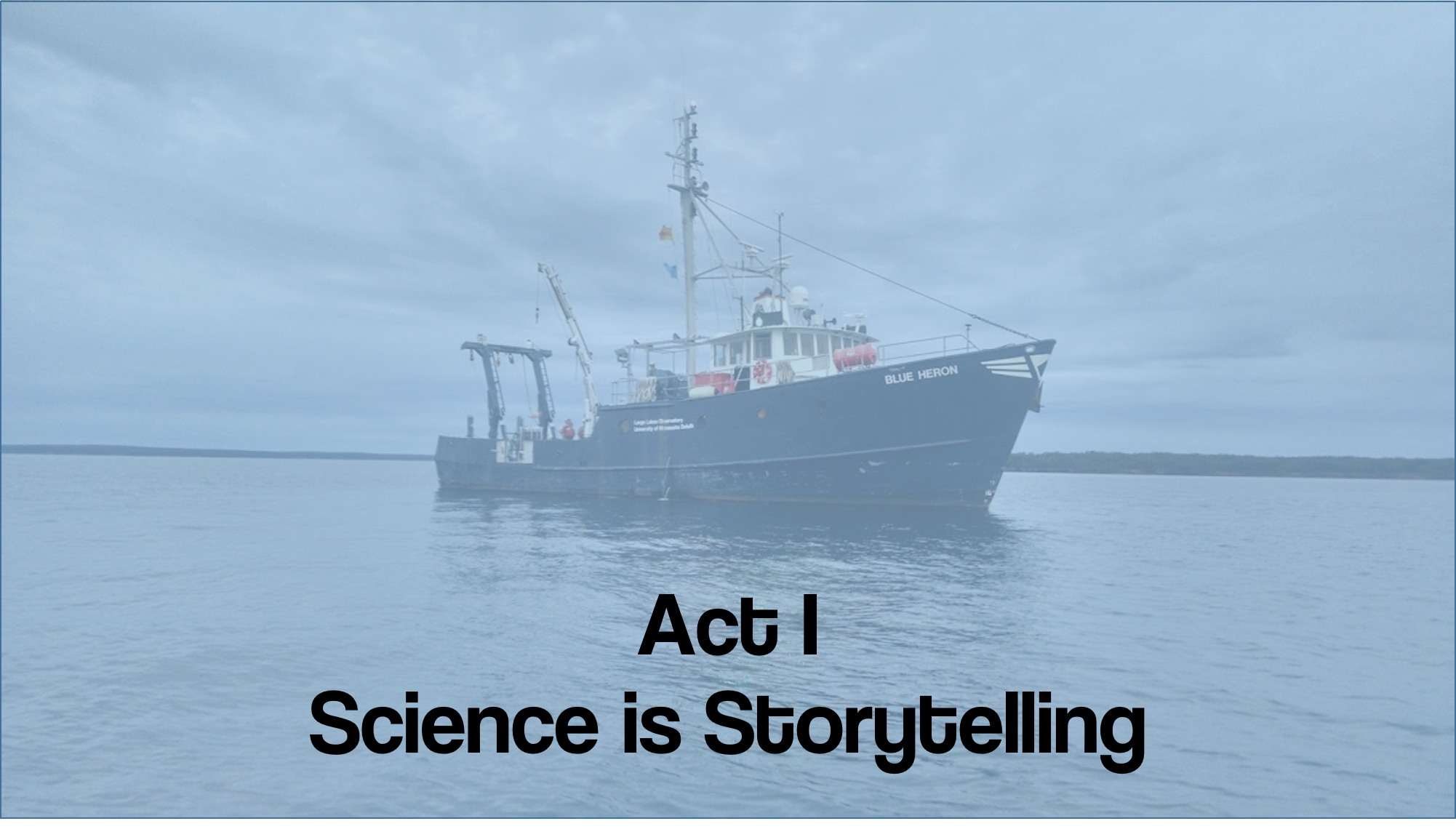
Read Act I: Science is Storytelling. 

Picture17

In Act I I discussed the underlying structure that frames narrative storytelling, but now I want to talk about how we can use the tools available to us on the internet to transform that narrative into something even more potent.

But before we can do that I have to tilt at some windmills.

Picture18

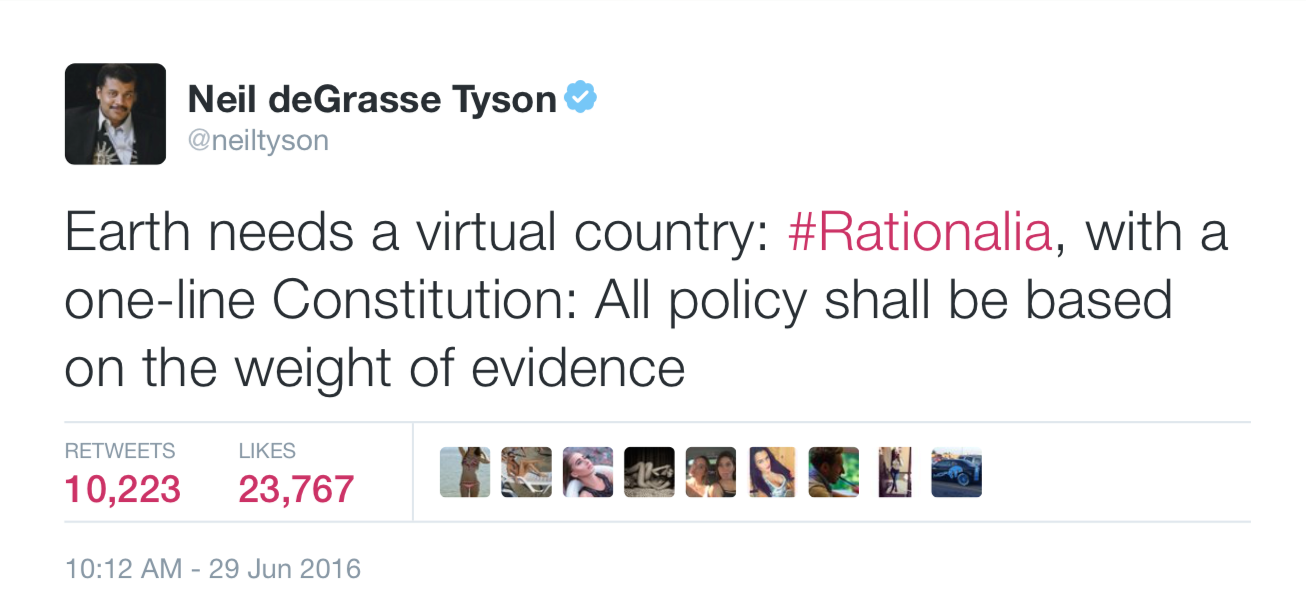
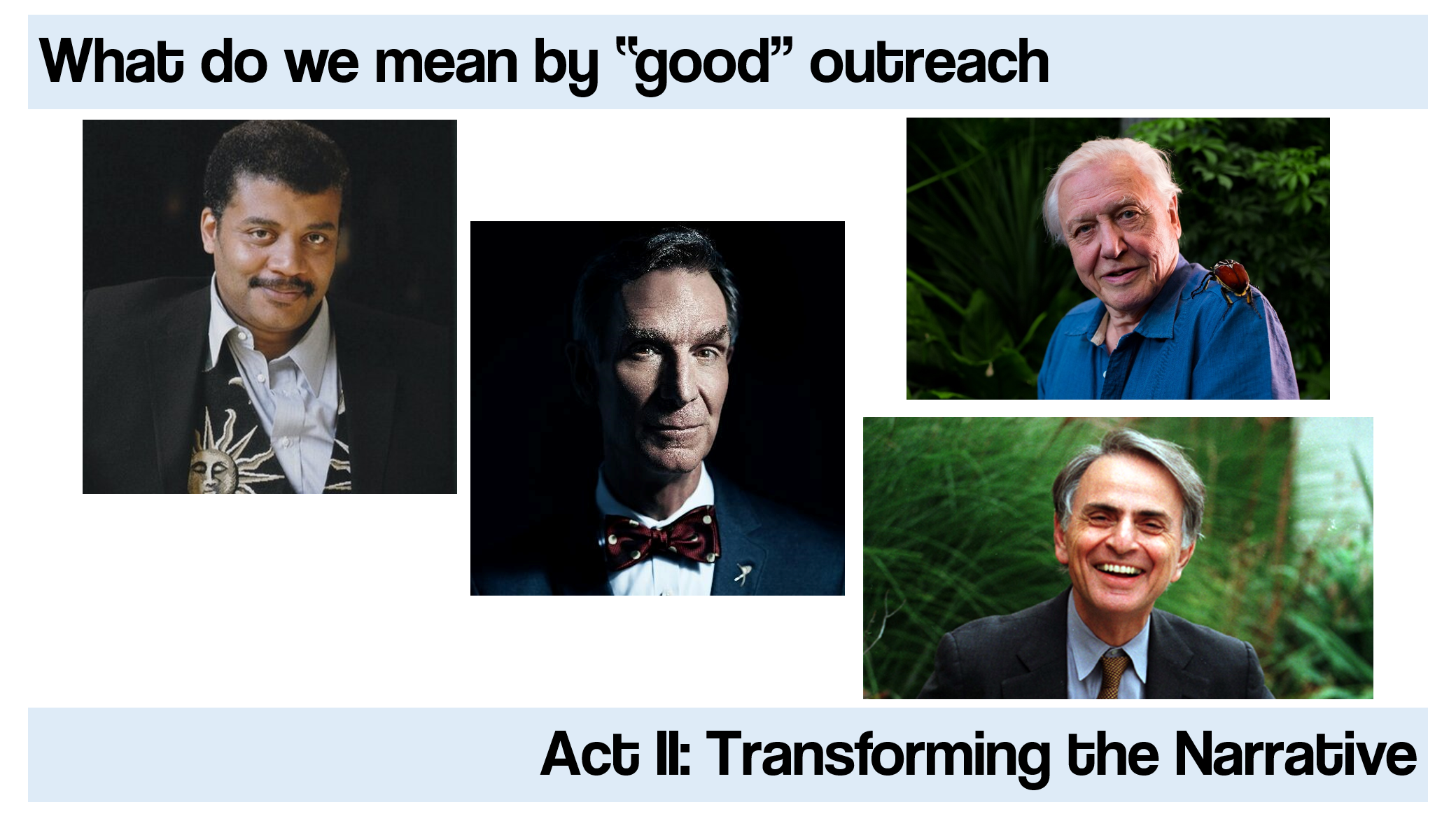
When we talk about good outreach, we often look to people like Neil deGrasse Tyson, like Bill Nye, like David Attenborough, and like Carl Sagan. These are the paragons of scientific outreach, the icons that we often hold up as examples for what constitutes good outreach. We talk about things like Cosmos, both Sagan’s and deGrasse Tyson’s, Bill Nye the Science Guy and his more recent work combating climate change, or David Attenborough and his astounding Nature Documentaries.

Read More “Ocean Outreach in an Evolving Online Ecosystem: Transforming the Narrative” »

Ocean Outreach in an Evolving Online Ecosystem: Science is Storytelling

Posted on August 9, 2016August 11, 2016 By Andrew Thaler 1 Comment on Ocean Outreach in an Evolving Online Ecosystem: Science is Storytelling
Blogging, Education

This is the transcript of the keynote I delivered at the Fourth International Marine Conservation Congress in St. John’s, Newfoundland. It has been lightly modified for flow. 

Picture2

Good morning and thank you all for coming, especially this early after a long week of conferencing. What I want to do today is talk a little bit about the history of online outreach, talk about how to build effective outreach campaigns, and look towards the future to think about how new technologies are shaping and reshaping the ways in which we think about public engagement with science and conservation.

Picture3So science is storytelling. Sometimes that story an adventure. Sometimes it’s a mystery. Sometimes it’s the dense and weighty exposition of Ulysses and sometimes it’s the absurdity of Finnegan’s Wake, but it is always a story.
Read More “Ocean Outreach in an Evolving Online Ecosystem: Science is Storytelling” »

Join us at the International Marine Conservation Congress!

Posted on July 27, 2016August 8, 2016 By Andrew Thaler
Uncategorized

A plurality of Southern Fried Science writers will be attending the 2016 International Marine Conservation Congress in St. John’s, Newfoundland. Expect updates to be infrequent here through early August. Follow along at the conference hashtag #IMCC4 or follow me, Amy, David, and Chris on twitter on this adventure.

An environmental educator’s field guide to Pokémon Go.

Posted on July 19, 2016 By Andrew Thaler 1 Comment on An environmental educator’s field guide to Pokémon Go.
Education

Pokémon Go is officially a thing.

In the last week, this game has outpaced even Google Maps in number of downloads. It has more daily active users than Twitter. Its user retention rate is astronomical. It is either a herald of the end of western capitalism or a huge boom for small businesses. People are going outside, exploring their neighborhoods, finding dead bodies, walking off cliffs, experiencing nature, getting robbed, making new friends, and getting shot at.

It is the best of tech. It is the worst of tech. Or maybe, it’s just tech, and people can interact with technology in as many ways as there are Pokémon to be found.

Last week, I wrote a brief introduction to this phenomenon, which I won’t rehash here.

But of course, the big question emerging within the sphere of environmental educators is “how can we capitalize on Pokémon Go to engage with the public on environmental issues?”

After spending more time with the app, and focusing on specific features that can facilitate environmental education, I have five suggestions. 

Read More “An environmental educator’s field guide to Pokémon Go.” »

#JacquesWeek Debrief: The Silent World

Posted on June 28, 2016 By Andrew Thaler
Uncategorized

Last night, as part of #JacquesWeek, we watched The Silent World. The Silent World was Cousteau’s first feature film, was released to wide critical acclaim in 1954, and quickly vanished in a puff of weird copyright shenanigans. Most USians, even die-hard Cousteau fans, have never seen the Silent World. It’s a tough watch. In order … Read More “#JacquesWeek Debrief: The Silent World” »

Open source. Open science. Open Ocean. Oceanography for Everyone and the OpenCTD

Posted on June 24, 2016June 24, 2016 By Andrew Thaler 2 Comments on Open source. Open science. Open Ocean. Oceanography for Everyone and the OpenCTD
Oceanography for Everyone

Nearly four years ago, Kersey Sturdivant and I launched a bold, ambitious, and, frankly, naive crowdfunding initiative to build the first low-cost, open-source CTD, a core scientific instrument that measures salinity, temperature, and depth in a water column. It was a dream born from the frustration of declining science funding, the expense of scientific equipment, … Read More “Open source. Open science. Open Ocean. Oceanography for Everyone and the OpenCTD” »

Did monster hunters find a 120 meter long giant squid on google maps?

Posted on June 17, 2016June 19, 2016 By Andrew Thaler 5 Comments on Did monster hunters find a 120 meter long giant squid on google maps?
Uncategorized

No. No they did not. I awoke this morning to a delightful flood of emails in my inbox pointing to this article: Has a KRAKEN been spotted on Google Earth? Monster hunters claim to have found 120m long giant squid-like creature. In short, while exploring the area around Deception Island on Google Earth, some well-known anomaly hunters … Read More “Did monster hunters find a 120 meter long giant squid on google maps?” »

#JacquesWeek 2016 Official Schedule

Posted on June 16, 2016July 2, 2016 By Andrew Thaler
Education

“The sea, once it casts its spell, holds one in its net of wonder forever.”

Jacques Yves Cousteau

Summer is here, and with it comes the perennial ocean explosion that is Shark Week. Last year, in response to Shark Week burn out (heck, David and I even published a paper on it) and being tired of becoming the saltiest of wet blankets during a week where people are excited about the oceans, we launched #JacquesWeek! #JacquesWeek is an online alternative the Shark Week. We sourced and screened Jacques Cousteau documentaries from the early years all the way through his later works and provide context and discussion from an array of marine scientists and explorers.

#JacquesWeek is back!

From June 26 to July 1, we’ll feature classic Cousteau films, hold Twitter discussions, and host a few hangouts with experts to discuss these films and help put them into context. As with last year, we will try to provide as many free options as possible (due to some very complex issues surrounding copyright, the Cousteau estate, a production company that no longer exists, and some fascinating interpersonal politics, many of Cousteau’s earlier films are de facto public domain) but we will also be drawing from his later series: The Jacques Cousteau Odyssey, Jacques Cousteau Pacific Explorations and Jacques Cousteau River Explorations which you will have to track down on DVD (but don’t worry, alternate suggestions are also provided)

Are you ready for adventure?

Read More “#JacquesWeek 2016 Official Schedule” »

Dive the Wreck of the Steamship Tahoe with OpenROV!

Posted on June 6, 2016 By Andrew Thaler
Education, Oceanography for Everyone

OpenROVOne-hundred-fifty meters hardly seems like anything at all.

Standing in the parking lot of OpenROV, I pace out 150 meters. The small sign, hanging against the wall of the battered warehouse, pointing visitors towards the entrance, is clear.

One-hundred fifty meters is less than half a lap around a standard running track. It’s the height of Old St. Paul’s Cathedral, the tallest building in the world, 700 years ago. The fastest man in the world could cover 150 meters in 14 seconds.

On land, 150 meters is barely noteworthy. Plunge into the sea and 150 meters is the wine dark deep. It is the edge of the photic zone, a world of eternal twilight. It is three times deeper than most SCUBA divers will ever venture. At 150 meters, the water pushes down with the weight of 16 atmospheres.

And, if you climb high into the Sierra Mountains and descend into the frigid alpine waters of Lake Tahoe, just off the coast of Glenbrook, Nevada, lying on a steep glacial slope at 150 meters depth is the wreck of the Steamship Tahoe.

Read More “Dive the Wreck of the Steamship Tahoe with OpenROV!” »

A precautionary approach to health, safety, and conservation while 3D printing in the home.

Posted on May 13, 2016February 15, 2018 By Andrew Thaler
Conservation, Education

3D printers are awesome.

A Printrbot in the home.

That sentiment really shouldn’t surprise anyone who follows this blog. From oceanographic equipment, to farm tools, to just things around the house, over the last year I’ve made 3D printing a standard part of my toolbox.

A conversation last week on Twitter got me thinking again about 3D printers, safety, and disposability. On one hand, by allowing us to fabricate intricate custom parts at home, 3D printers can help us reduce the amount of waste produced and allow us to extend the life of otherwise disposable items. On the other hand, 3D printers produce their own plastic waste, particularly if, like me, you develop a lot of new projects from scratch.

Read More “A precautionary approach to health, safety, and conservation while 3D printing in the home.” »

Posts pagination

Previous 1 … 41 42 43 … 149 Next

Popular Posts

What Ocean Ramsey does is not shark science or conservation: some brief thoughts on "the Shark Whisperer" documentaryWhat Ocean Ramsey does is not shark science or conservation: some brief thoughts on "the Shark Whisperer" documentaryJuly 2, 2025David Shiffman
What is a Sand Shark?What is a Sand Shark?November 12, 2017Chuck Bangley
Zombie ideas in conservation: trophy hunting and conservationZombie ideas in conservation: trophy hunting and conservationAugust 6, 2026Ali Gaster
Jumping the shark: New study reviews the breaching behavior of sharks and raysJumping the shark: New study reviews the breaching behavior of sharks and raysSeptember 19, 2024David Shiffman
Shark of Darkness: Wrath of Submarine is a fake documentaryShark of Darkness: Wrath of Submarine is a fake documentaryAugust 10, 2014Michelle Jewell
That's not a blobfish: Deep Sea Social Media is Flooded by AI SlopThat's not a blobfish: Deep Sea Social Media is Flooded by AI SlopDecember 19, 2025Andrew Thaler
Is Academic Publishing is breaking conservation science?Is Academic Publishing is breaking conservation science?August 10, 2026Chris Parsons
Please Help This Little Dumbo Octopus Travel Across AmericaPlease Help This Little Dumbo Octopus Travel Across AmericaAugust 3, 2026Angelo Villagomez
Considering writing a popular science book? Here's my adviceConsidering writing a popular science book? Here's my adviceJuly 7, 2025David Shiffman
Fun facts and FAQs about Megalodon, Maryland's new (and definitely extinct) official state sharkFun facts and FAQs about Megalodon, Maryland's new (and definitely extinct) official state sharkApril 15, 2026David Shiffman
Subscribe to our RSS Feed for updates whenever new articles are published.

We recommend Feedly for RSS management. It's like Google Reader, except it still exists.

Southern Fried Science

  • Home
  • About SFS
  • Authors
  • Support SFS


If you enjoy Southern Fried Science, consider contributing to our Patreon campaign.

Copyright © 2026 Southern Fried Science.

Theme: Oceanly Premium by ScriptsTown