Skip to content

Southern Fried Science

Over 15 years of ocean science and conservation online

  • Home
  • About SFS
  • Authors
  • Support SFS

Category: Blogging

Fun Science FRIEDay – Beauty Sleep

Posted on November 28, 2014November 27, 2014 By Kersey Sturdivant
Blogging, Uncategorized

Happy Fun Science FRIEDay!!!

It’s the Turkey Holiday, and aside from eating and socializing, I suspect quite a many of you have also been getting lots of sleep!

Despite how little of it some of us get during our normal routine, sleep is important… right? We know that sleep has tons of benefits for the body such as allowing our muscles and bones to repair themselves, and keeping our immune system healthy. Sleep is also important for our brains, allowing for memories to be consolidated and other important functions to be performed.
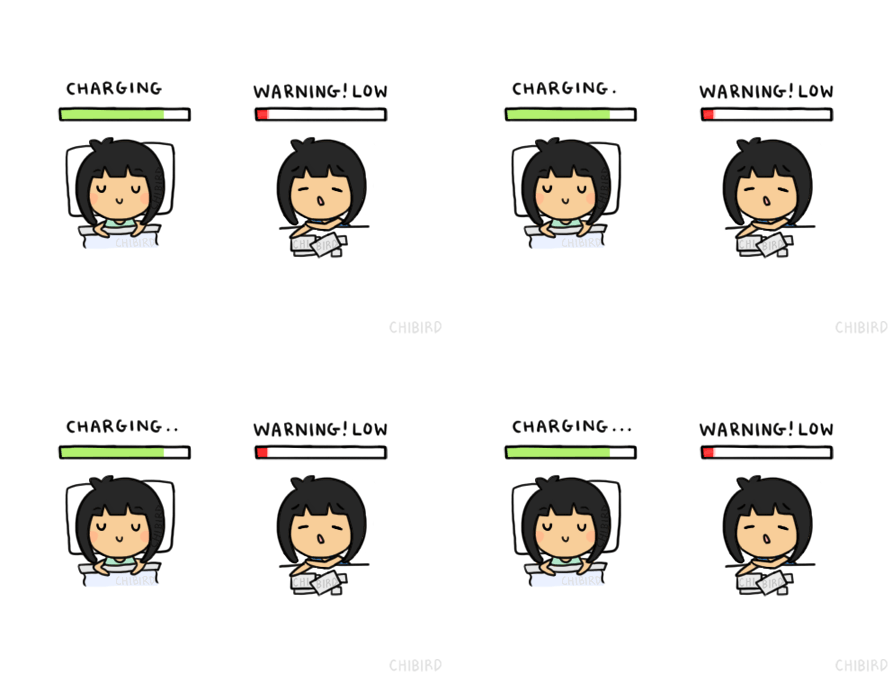
Sleeping is like recharging your batteries. ^u^  (Photo credit: Chibird, http://rebloggy.com/post/cute-sleep-animation/42472951026)
Sleeping is like recharging your batteries. ^u^
(Photo credit: Chibird, http://rebloggy.com/post/cute-sleep-animation/42472951026)

Read More “Fun Science FRIEDay – Beauty Sleep” »

Ocean things we’re thankful for, West Coast Edition

Posted on November 26, 2014 By Andrew Thaler
Blogging

As some of you know (especially if you follow us on OpenExplorer), Amy and I have once again made the vast, continent-spanning migration from the Pacific to Atlantic coast, this time settling down in rural Virginia. While we enjoyed our time out in the weirdly foggy, impossibly dry San Francisco Bay Area, we also learn that the southeast US is our ecological niche. Even so, we met hundreds of new and interesting people, got to play with some tremendous tech, and had a great time. So here are the top five San Francisco Bay Area ocean things we are thankful for.

1. Vallejo

Of all the cities that comprise the “Bay Area”, Vallejo, the smallest and furthest from the heart of San Francisco, feels the most maritime, by far. With a downtown only blocks from the waterfront, an expansive city park right at the edge, and an active ferry terminal for commuters, people with a nautical cut to their jib will feel right at home. Though smaller and more suburban than most Bay Area cities, it’s also a whole lot cheaper, with 2 bedroom houses renting for the cost of hot swapping* a futon in San Francisco.

Read More “Ocean things we’re thankful for, West Coast Edition” »

Fun Science FRIEDay – Death Star

Posted on November 21, 2014November 21, 2014 By Kersey Sturdivant
Blogging

Happy Fun Science FRIEDay!

While Ebola wreaks havoc on Homo sapiens in the terrestrial world, there has been an even more virulent disease causing the destruction of a marine animal, the sea star. Today we talk about this deadly condition impacting sea star populations and the recent discovery of just what is causing this affliction.


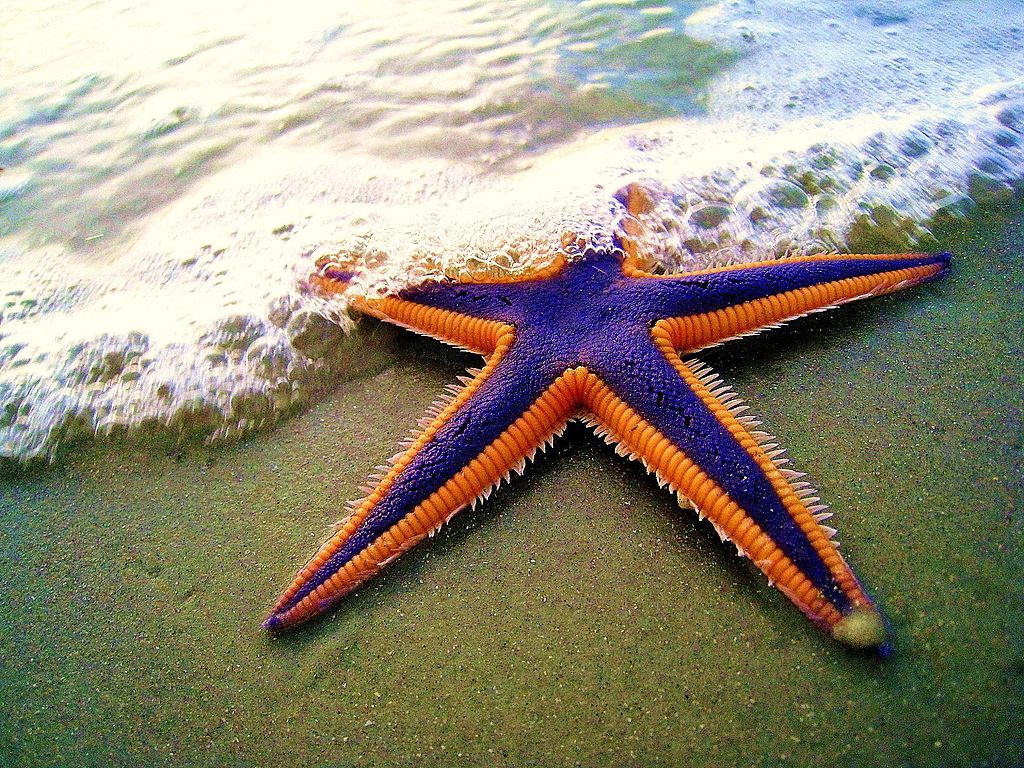
Royal starfish (Astropecten articulatus) on the beach. (Photo credit: TheMargue - http://www.fotopedia.com/items/flickr-2884079538)
Royal starfish (Astropecten articulatus) on the beach.
(Photo credit: TheMargue – http://www.fotopedia.com/items/flickr-2884079538)

Read More “Fun Science FRIEDay – Death Star” »

Agents of seal: stealthy seals use subsurface structures to sneak by sharks

Posted on November 18, 2014December 8, 2014 By Michelle Jewell 1 Comment on Agents of seal: stealthy seals use subsurface structures to sneak by sharks
Blogging, Science

michelleMichelle Jewell is a Zoologist specialized in predator/prey behaivour and the Scientific Communicator for EDNA Interactive.  She has spent the past 4 years studying the behaviour of white sharks and Cape fur seals at Geyser Rock, ‘Shark Alley’, South Africa.  

Predators are highly influential in ecosystems because of the many top-down effects they can have.  The most obvious and direct way predators influence an ecosystem is by eating and reducing the number of prey animals in the system, but another equally important way is the indirect influence they have on the behaviour of prey animals.

If you have avoided parking on a risky-looking street, taken a different route between classes to avoid a bully, or abandoned a forest hike because of snapping twigs in the distance, you have been indirectly affected by perceived ‘predators’.  In the wild, prey animals will also change their behaviour when they perceive that predators are around, and these altered behaviours often influence other species, ultimately shaping the ecosystem.

Read More “Agents of seal: stealthy seals use subsurface structures to sneak by sharks” »

Fun Science FRIEDay – The Origin of HIV

Posted on November 14, 2014November 25, 2014 By Kersey Sturdivant
Blogging, Science

Happy Fun Science FRIEDay


After a hiatus, I hope to get back to regularly writing these pieces. This week I was particular inspired to focus on an article I read about the discovery of the origins of the human immunodeficiency virus (HIV) and subsequently the origins of AIDS.

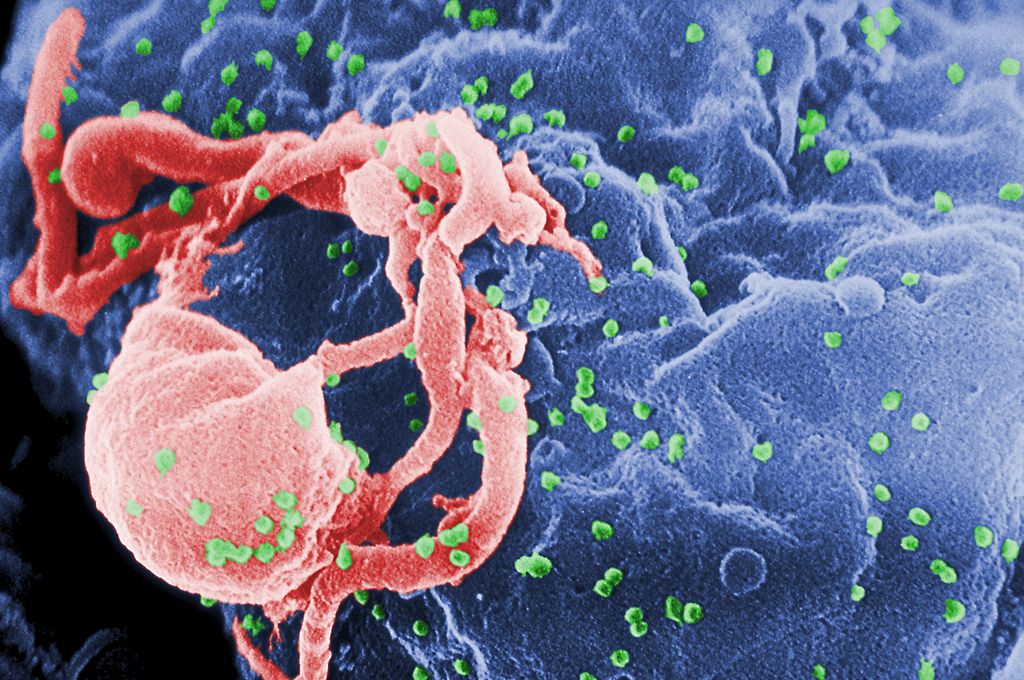
Scanning electron micrograph of HIV-1 (in green) budding from cultured lymphocyte. Multiple round bumps on cell surface represent sites of assembly and budding of virions. Photo Credit: Centers for Disease Control (CDC)
Scanning electron micrograph of HIV-1 (in green) budding from cultured lymphocyte. Multiple round bumps on cell surface represent sites of assembly and budding of virions.
Photo Credit: Centers for Disease Control (CDC)

AIDS burst onto the scene like a bat out of hell, wreaking havoc on an unsuspecting human population. First recognized in the early 1980s by the Centers for Disease Control and Prevention, better known as the CDC), AIDS went on to cause approximate 36 million deaths globally becoming one of the most devastating diseases in human history. But where did this affliction come from and what were the chain of events that led to the pandemic?

Read More “Fun Science FRIEDay – The Origin of HIV” »

A guide to following shark and ray conservation at this week’s Convention on Migratory Species meeting

Posted on November 4, 2014November 4, 2014 By David Shiffman
Blogging, Conservation

This week, the Convention on the Conservation of Migratory Species of Wild Animals (CMS) will have its 11th Conference of the Parties in Quito, Ecuador. While less well-known than the Convention on International Trade in Endangered Species (CITES,) CMS is another very important international wildlife conservation treaty. As the name suggests, it focuses on the conservation of species that migrate across national political borders. This meeting includes several  proposals for listing species of sharks and rays on the CMS Appendices. In fact, most of the proposals are for elasmobranchs this time.

CMS

How does CMS work?

Like CITES, CMS allows member states to propose listing of threatened species on different appendices, which have different levels of protection. Appendix I obligates strict protection of that species by member states, where appendix II encourages member states to cooperate in the management of that species through regional or global agreements.  Currently, basking sharks, great white sharks, and oceanic mantas are listed on appendix I, and whale sharks, makos, porbeagles, and northern hemisphere spiny dogfish are listed on Appendix II. There are also non-binding “memoranda of understanding,” such as the 2010 MOU on migratory sharks. As of May of this year, CMS has 120 parties. This paper by Holly Edwards is a good introduction to how it all works.

What exactly does listing do for a species?

The specific actions required to follow up on these listings are basically up to the CMS parties themselves, and the required actions are not particularly clear for Appendix II. Mako sharks were listed on CMS Appendix II in 2008, for example, and they don’t yet have internationally agreed-upon catch limits. Appendix I listings for basking sharks helped lead to European Union fishing prohibitions for these species, though.

Shark and ray conservation proposals

There are a series of shark and ray conservation proposals listed for the CMS 2014 conference of the parties. These include Appendix II listings for hammerhead sharks (great and scalloped), thresher sharks (all three species), and silky sharks, as well as listings on Appendix I and II for reef manta rays, all 9 species of mobula rays, and all species of sawfish. Project AWARE, Shark Advocates International, Defenders of Wildlife, Humane Society International, Shark Trust, and the International Fund for Animal Welfare have produced some fact sheets and the Pew Environment Group has summaries of each of these proposals except the sawfish ones. The shark and ray proposals are expected to be introduced and debated Thursday morning, but we will likely not know the outcome until next Monday.

How do I follow along?

The main meeting hashtag is #CMSCoP11 (Convention on Migratory Species 11th conference of the parties), but also check out #SharksWithoutBorders and #Time4Action .

Additionally, representatives from variety of environmental non-profits will be attending the conference of the parties and/or tweeting updates. Here is an incomplete list:

Read More “A guide to following shark and ray conservation at this week’s Convention on Migratory Species meeting” »

The greater good: animal welfare vs. conservation

Posted on October 29, 2014October 29, 2014 By Guest Writer 1 Comment on The greater good: animal welfare vs. conservation
Blogging, Conservation

wrightAndrew Wright is a British marine biologist that has been working on the science-policy boundary around the world for over a decade. His experiences have led him to champion a better communication of science to policy makers and the lay public. His research has included a population viability analysis for the vaquita, sperm whales bioacoustics and the impacts of noise on various marine mammals. Andrew is currently working on several projects, most relating to investigating either sleeping behaviour or chronic stress in wild cetaceans. He is also spearheading efforts to bring more marketing techniques into conservation outreach.

The ever-logical Spock once said “The needs of the many outweigh the needs of the few.” Then he didn’t. Then he did again. (Thanks J. J. Abrams.)

But I digress.

Regardless of which Spock you are listening to, the logic is still sound. For example, most people would agree that it is sometimes necessary to put a few people in harm’s way to protect the entire population of a nation. Likewise, a system that taxes a few of the world’s wealthiest to help out the masses is generally accepted as a good idea.

The logic also holds when it comes to helping endangered species survive and recover. Decision-makers essentially try to maximise the returns of their investments, making sure that the greatest number of animals are protected for the all-too-limited funds available to take on the task at hand.

Read More “The greater good: animal welfare vs. conservation” »

Save the National Ocean Sciences Bowl!

Posted on October 15, 2014October 20, 2014 By David Shiffman 2 Comments on Save the National Ocean Sciences Bowl!
Blogging

nosbThe National Ocean Sciences Bowl is a competition for high school students focused on marine biology, physics and chemistry . Through cooperation between researchers, teachers and community members, NOSB aims to educate students and their families about science and sustainable stewardship of ocean resources. Thousands of the smartest high school students in the United States from hundreds of schools participate each year. Thorough evaluations of the program’s results show that educators and parents who participate as coaches gain leadership and teaching skills,  students who compete further improve their knowledge of science, and everyone involved learns about why the ocean is important. By any measure, the National Ocean Sciences Bowl has been an unqualified success.

Unfortunately, as revealed in a Science News article this week, NOSB’s continued existence is threatened by budget cuts. Some of the regional bowls that provide contestants for the national competition have been cancelled, or are no longer held annually. Cuts are hitting those regional catering to geographic and demographic communities under-represented in the marine sciences particularly hard. “The NOSB is one of the ways we get students from rural Alaska involved in ocean science,” says Dr. Leslie Cornick, chair of the Environmental Sciences department at Alaska Pacific University. “It would be a real blow to the state for it to disappear.”

Many marine scientists credit NOSB with setting them on their current career path. “NOSB made me more passionate about chemistry, oceanography, and geology; whereas before I joined the team I believed biology would be the only science I could ever enjoy,” said Hannah Benton, a marine science major at the College of Charleston. “If we can’t provide these kinds of opportunities for students today then we risk losing future would-be scientists who haven’t yet realized their true passion.”

Read More “Save the National Ocean Sciences Bowl!” »

The next era of ocean exploration begins in Papua New Guinea

Posted on September 22, 2014September 22, 2014 By Andrew Thaler
Blogging, Science
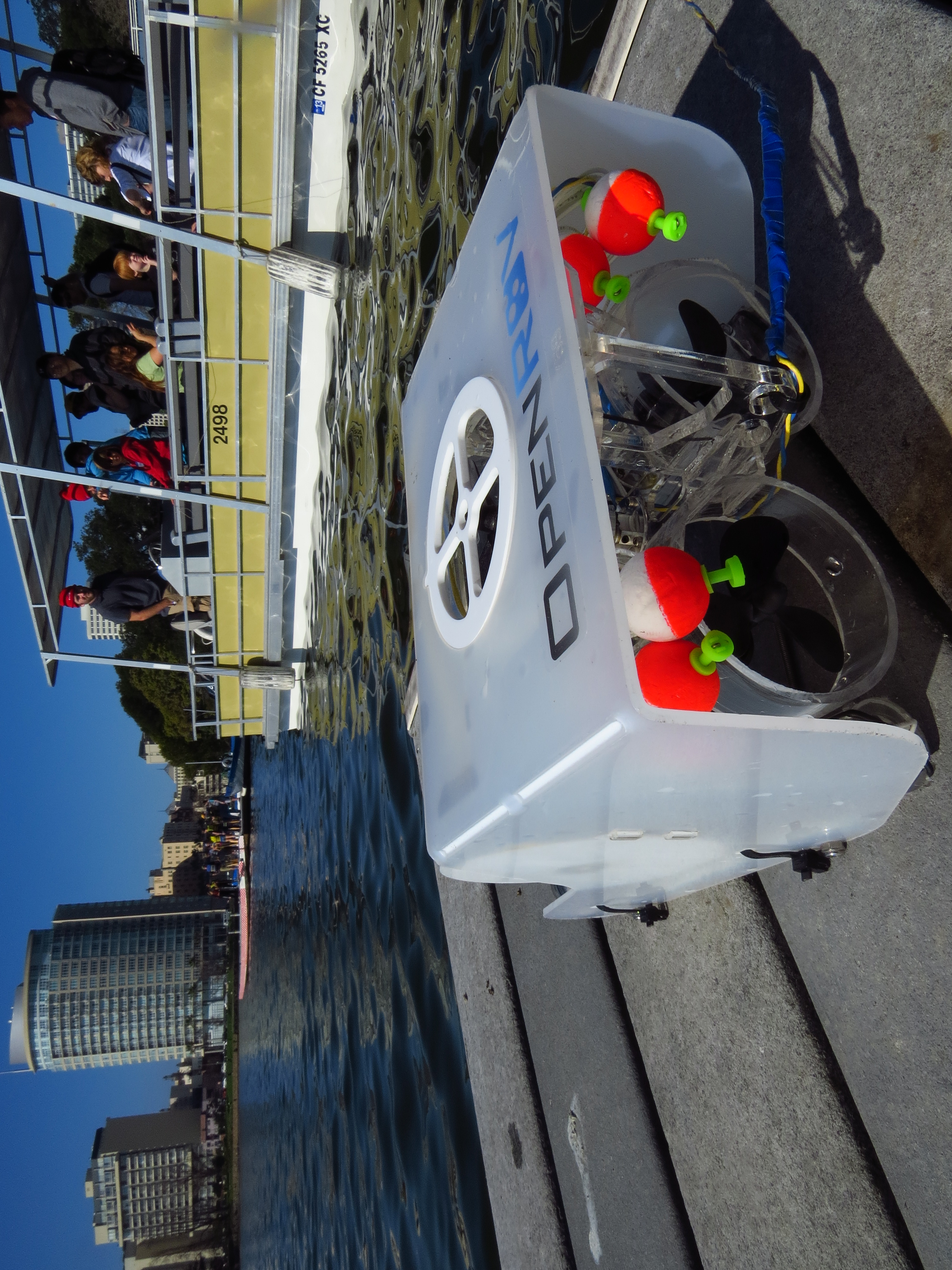
An OpenROV at Lake Merrit.
An OpenROV at Lake Merritt. Photo by author.

In 1946, Jacques Yves Cousteau and Émile Gagnan released the Aqualung, forever changing the way humans interact with the oceans. No longer tethered to the surface, entombed in thick, restrictive helmets, we could dive deeper, stay down longer, and explore the dark places snorkelers and free divers feared to fin. The Aqualung opened up the ocean to an entirely new cohort. Ocean exploration, once the domain of well-resourced scientists, career explorers, and the wealthy elite, was now within the reach of the global middle class.

Buoyed by the Aqualung, Marine Science exploded. Marine life could be studied alive and in situ. Behavior could be observed rather than inferred from the stressed and shredded samples of a trawl. The ranks of marine biologists, oceanographers, and explores swelled to numbers that began to gradually approach the relative significance of the ocean to the living world.

We’re just getting started.

Marine science is on the brink of the greatest sea change since JYC and Gagnan introduced the Aqualung to the world.

Read More “The next era of ocean exploration begins in Papua New Guinea” »

How you can help support Southern Fried Science

Posted on September 10, 2014 By Andrew Thaler
Blogging
Image courtesy of the Love Lab.

Earlier this summer, we switched funding models from an ad hoc Paypal-based donation system to Patreon, a crowdfunding style service for authors, musicians, writers, and, thanks to us, scientists. Thanks to our wonderful Patrons, Southern Fried Science is, for the first time in history, financially sustainable.

We’re still growing. As many of you witnessed during the last Shark Week, our servers are spinning at full capacity and our bandwidth is consistently maxed out. We need to upgrade to a bigger, dedicated server. That costs money.

Southern Fried Science is, and always will be, free and ad free. With the exception of the rare Amazon affiliate links that appears if we mention specific products, we don’t post ads. There are no awkward pitches for weight loss supplements; no pop-ups encouraging enticing you to check your car insurance; no dehumanizing images of Walmart shoppers. Just pure, safe, wholesome marine science and conservation.

Read More “How you can help support Southern Fried Science” »

Posts pagination

Previous 1 … 11 12 13 … 19 Next

Popular Posts

Shark scientists want their research to help save threatened species, but don’t know how. Our new paper can help.Shark scientists want their research to help save threatened species, but don’t know how. Our new paper can help.December 1, 2025David Shiffman
Norway and Cook Islands put their deep-sea mining plans on pause.Norway and Cook Islands put their deep-sea mining plans on pause.December 3, 2025Andrew Thaler
What Ocean Ramsey does is not shark science or conservation: some brief thoughts on "the Shark Whisperer" documentaryWhat Ocean Ramsey does is not shark science or conservation: some brief thoughts on "the Shark Whisperer" documentaryJuly 2, 2025David Shiffman
What we know we don't know: impacts of deep-sea mining on whales, dolphins, sharks, turtles, and other migratory species.What we know we don't know: impacts of deep-sea mining on whales, dolphins, sharks, turtles, and other migratory species.November 20, 2025Andrew Thaler
What is a Sand Shark?What is a Sand Shark?November 12, 2017Chuck Bangley
Mermaids: The New Evidence is a Fake DocumentaryMermaids: The New Evidence is a Fake DocumentaryMay 28, 2013Andrew Thaler
Alberta, Canada is the proud owner of the largest man-made pyramid on the planetAlberta, Canada is the proud owner of the largest man-made pyramid on the planetOctober 16, 2012Andrew Thaler
2025: My year in writing, public speaking, and media interviews2025: My year in writing, public speaking, and media interviewsDecember 3, 2025David Shiffman
Urea and Shark OsmoregulationUrea and Shark OsmoregulationNovember 15, 2010David Shiffman
What can the funniest shark memes on the internetz teach us about ocean science and conservation?What can the funniest shark memes on the internetz teach us about ocean science and conservation?November 8, 2013David Shiffman
Subscribe to our RSS Feed for updates whenever new articles are published.

We recommend Feedly for RSS management. It's like Google Reader, except it still exists.

Southern Fried Science

  • Home
  • About SFS
  • Authors
  • Support SFS


If you enjoy Southern Fried Science, consider contributing to our Patreon campaign.

Copyright © 2025 Southern Fried Science.

Theme: Oceanly Premium by ScriptsTown