Skip to content

Southern Fried Science

Over 15 years of ocean science and conservation online

  • Home
  • About SFS
  • Authors
  • Support SFS

Category: Science

Ocean Kickstarter of the Month: Whale Science Double Feature

Posted on February 10, 2016 By Andrew Thaler
Science

whale1Comprehensive Conservation of Southern Resident Killer Whales in the Modern Ocean

Southern Resident Killer Whales are endangered; only 85 remain. In today’s modern ocean they face many threats simultaneously. A holistic approach to addressing the cumulative impacts of all threats is needed. However, data are sparse, making it difficult to identify which threat(s) is causing the most harm. We are developing a new, comprehensive way to assess threats by having experts fill data gaps. With your help, we can pinpoint which protective actions will help Southern Residents recover.
blowWhale snot and blubber: Tools used to better understand basic physiology in free ranging cetaceans

Baseline indices for steroid hormone levels in humpback whales do not exist, and current monitoring techniques are invasive. Hormones can advise in management, and help in understanding climate change related population shifts. We want to test if whale snot is reliable in collecting sufficient data without disturbing them. By analyzing hormone levels in both blubber and snot, we can establish hormone level baselines from blubber, and see whether less invasive snot-collecting is just as telling.

We haven’t featured Experiment yet in this Ocean Kickstarter series. Experiment is a crowdfunding platform exclusively for scientific research. It helps practicing scientists connect with a community funding base. Because of its narrow focus, Experiment is a little bit different. There are no rewards, instead you get access to updates about the project as it progresses. There is an elevated focus on budget, and, because it’s more akin to a philanthropic donation, rather than an investment, there is often fund-matching from NGOs and larger foundations.

Since last month’s recommendation won’t launch for another 25 years, this month I’ve picked two excellent projects to support. 

Read More “Ocean Kickstarter of the Month: Whale Science Double Feature” »
What is it about mercury? Thinking about chemicals in the public discourse

Posted on February 9, 2016February 9, 2016 By Bluegrass Blue Crab 1 Comment on What is it about mercury? Thinking about chemicals in the public discourse
Education, Science

All of the revelations about the lead in the water system of Flint, Michigan have made residents and curious neighbors alike  wonder ‘haven’t we solved the lead problem’? There are thousands of well-established scientific studies; the sources and even many of the solutions are well-understood and frequently implemented. Not to say the problem’s gone, but we’ve wrapped are heads around it. So how is it possible that a new lead problem has surprisingly reared its ugly head? And more importantly, what does that mean for exposure to chemicals for which we’ve barely scratched the scientific surface?

The world of fisheries has its analog – mercury. We’ve all heard the recommendations for pregnant women and small children to avoid tilefish, swordfish, mackerel, and shark. We understand that it bioaccumulates in the food chain – and that as humans not exactly at the bottom, we’re susceptible. The dynamics of methylmercury (the poison variety) and elemental mercury are fairly well mapped out and we can identify areas of potential hazard where more methylmercury is likely to be naturally created. We’ve also stopped doing things like spraying mercury-based pesticides and covering our landscape and foodscape with the toxin. Kids have even stopped playing with ‘quicksilver’, it’s been removed from dental fillings and vaccines, and you should get rid of that mercury-based thermometer. Yet, if you scanned most people’s hair (the way we measure these things), there would be mercury present. And there’s still a host of ways they might have been exposed. But the better question is – if there’s still mercury in your body, what else is floating around in your system? And why do we focus on only the best-understood pathway of chemical exposure?

Modern Mercury Exposures

Read More “What is it about mercury? Thinking about chemicals in the public discourse” »

Fun Science FRIEDay – Bionic Eye

Posted on February 5, 2016February 9, 2016 By Kersey Sturdivant
Science, Uncategorized

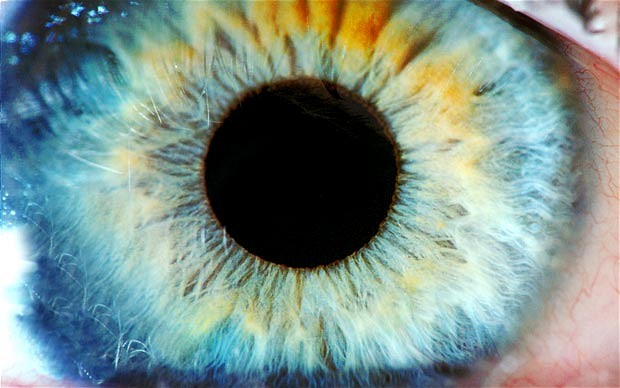
Every year modern medicine brings more and more surprises. It really does seem that the limitations of man’s achievements are solely limited to our creative ability to dream what is possible. This week we bring you the bionic eye. As part of an ongoing trial at Oxford’s John Radcliffe Hospital surgeons implanted a micro electric chip into a patients eye restoring part of her sight.

Human eye.
Human eye.

Read More “Fun Science FRIEDay – Bionic Eye” »

Fun Science FRIEDay – Theory of Relative… easiness??

Posted on November 20, 2015November 20, 2015 By Kersey Sturdivant
Science, Uncategorized

This week’s FSF is a bit different. Instead of talking about some relatively new discovery or research endeavor, we are going to focus on an old adage, the Theory of Relativity.  The Theory of Relativity is one of those concepts that is hugely important but very poorly understood outside of the physics community. Instead of … Read More “Fun Science FRIEDay – Theory of Relative… easiness??” »

The Extraterrestrial Ocean: Could OpenROV Trident explore the seas of Europa?

Posted on October 26, 2015October 26, 2015 By Andrew Thaler
Science
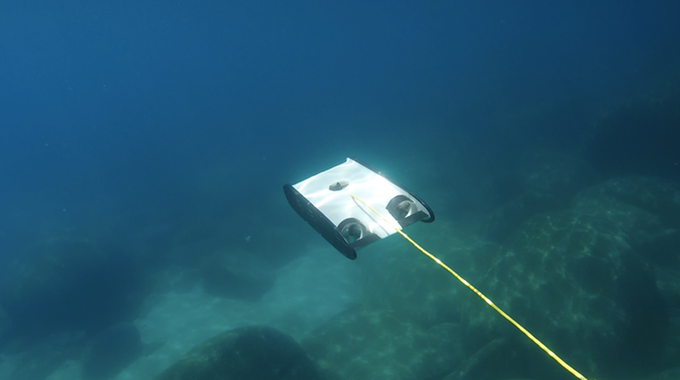
OpenROV Trident
OpenROV Trident

Our planet is an ocean, and it is almost entirely unexplored. OpenROV, and their new Trident underwater drone is one of many tools that will help change that by democratizing exploration, conservation, and ocean science. We are poised atop the crest of a wave that may change how humans interact with the ocean as profoundly as the invention of the aqualung.

Earth is not the only body in our solar system that hosts an ocean. As we (slowly) venture out into the stars, could OpenROV Trident dive in extraterrestrial seas?

Read More “The Extraterrestrial Ocean: Could OpenROV Trident explore the seas of Europa?” »

In the future all scientific research will be funded by Taco Bell …

Posted on October 15, 2015October 15, 2015 By Chris Parsons 1 Comment on In the future all scientific research will be funded by Taco Bell …
Science


At my university, we recently received a missive from the academic powers that be that faculty research productivity (and thus promotion, raises and tenure) will primarily be measured by the “amount of research funding (direct and indirect) received by the department and the college”.

I think this is a major problem and is a common one across universities.

It’s well known that some fields have lots of research funding available, while other fields don’t (for example). So effectively the above missive means that academic hiring and promotion decisions will not be done on a level playing field.

Read More “In the future all scientific research will be funded by Taco Bell …” »

Watch my Nerd Nite talk, “everything I needed to know in life I learned from a shark”

Posted on October 12, 2015October 12, 2015 By David Shiffman
Science

On Thursday, October 8th, I presented at Nerd Nite Miami. A YouTube link to view my talk, “everything I needed to know in life I learned from a shark,” can be found below. CAUTION: the talk contains some NSFW language.  httpv://www.youtube.com/watch?v=3D7XJreU-Ao&feature=youtu.be Thanks to Ta-Shana Taylor for filming my talk!

Ocean Kickstarter of the Month: Meet Norman the Nurse Shark

Posted on October 6, 2015October 6, 2015 By Andrew Thaler
Education, Science

In this book kids learn about sharks and the oceans as they travel with Norman on his adventure through the Bahamas.

Sharks4Kids First Book: Meet Norman the Nurse Shark

Sharks4Kids is an educational non-profit based in Florida that produces curricula and media designed to teach primary-school age kids about sharks and shark conservation. They also conduct Skype-in-lessons, classroom visits, field trips, and shark tagging camps. For their first Kickstarter campaign, they’re producing a book, targeted at elementary-school students.

Sharks matter, according to my co-author who uses the handle WhySharksMatter, and ocean outreach literature targeting younger students is often light on solid educational content. Online media is great, when available, but not everyone has reliable access to the internet. One of the campaign goals is to distribute this book to schools in the Bahamas, which is a major benefit to a region where persistent, high-bandwidth internet is not always a given.

Onward to the Ocean Kickstarter criteria!

1. Is it sound, reasonable, and informed by science? Sharks4Kids has a solid tract record producing entertaining and scientifically literate content that appeals to a younger audience. I have no doubt that Norman the Nurse Shark, though necessarily anthropomorphized, will provide fact-based, pseudoscience-free information about nurse sharks. 

Read More “Ocean Kickstarter of the Month: Meet Norman the Nurse Shark” »

Robots Versus Aliens – Anticipatory conservation in technology-drive initiatives

Posted on September 30, 2015September 29, 2015 By Andrew Thaler
Conservation, Science

This week, I and a team of marine ecologist, explorers, and ocean technologists published Robots as vectors for marine invasions: best practices for minimizing transmission of invasive species via observation-class ROVs. This paper, conceived and largely produced during the ROV2PNG Marine Science Short Course in Papua New Guinea, represent the current best practices for minimizing or eliminating the spread of invasive species via portable, low-cost underwater robots.

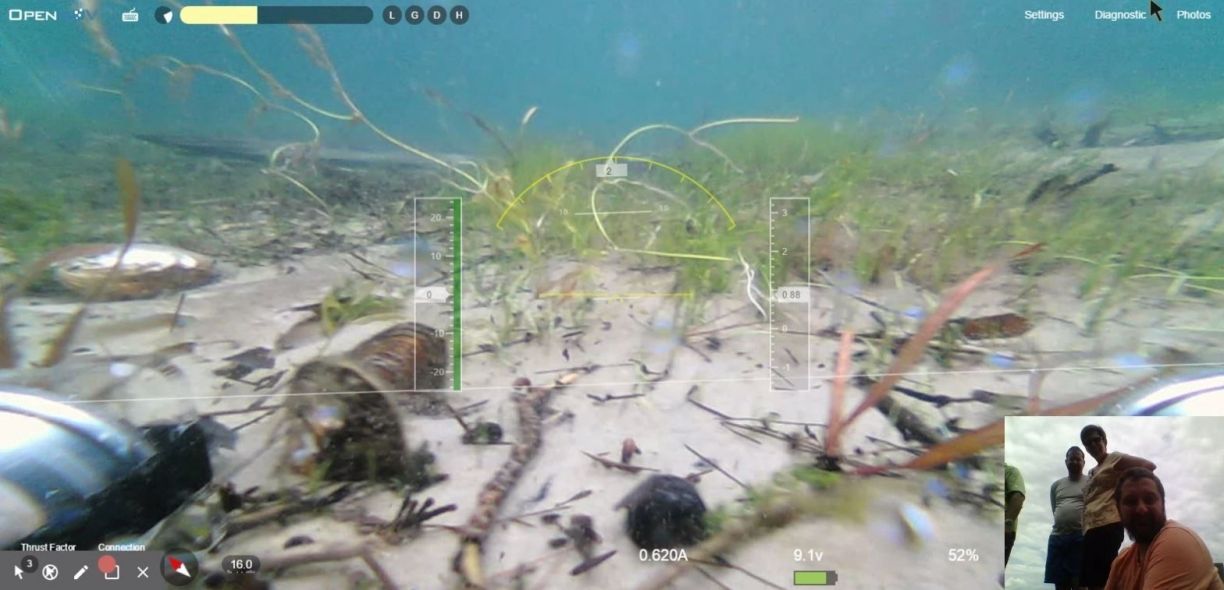
Zebra mussels observed via OpenROV. Photo by author.

Species invasion, particularly in the ocean, is a huge problem. Invasive species are ruthlessly good at out-competing native fauna. Without any natural predators, they can flourish, causing massive, irreparable damage to marine ecosystems. As scientists, explorers, and conservationist, we have to be proactive in ensuring that our actions don’t negatively impact the ecosystems we’re trying to save. Our guidelines are simple, but effective, and, most importantly, easy to follow.

  1. Educate yourself about species invasions generally and specifically about current issues in the area you’re working.
  2. Inspect your gear.
  3. Soak your gear in freshwater between dives.
  4. Soak your gear in weak bleach between expeditions.
  5. Avoid moving your equipment between geographic regions, when possible.

Technology can be a powerful tool in the aid of conservation. Around the world, people are using low-cost robotics to count elephants, detect poachers, protect tortoises, even seek-and-destroy invasive sea stars. As I discuss over at Motherboard, these robots are a transformative component of 21st century marine science and conservation, they fundamentally reshape the way we interact with the ocean. And with the explosive success of the latest OpenROV launch, there are about to be a lot more robots in the water. This is a good thing. The more eyes we have in the sea, the more people that actively contribute to ocean exploration, the more people with access to the tools necessary to explore, study, and understand our oceans and how they are changing, the better off we will all be.

Read More “Robots Versus Aliens – Anticipatory conservation in technology-drive initiatives” »

Keeping your robot invasions under control.

Posted on September 28, 2015 By Andrew Thaler
Conservation, Education, Science

It’s been a big week for papers here at Southern Fried Science. This morning, Amy, myself, William (of Bomai Cruz fame), and Dominik and Erika of OpenROV published our guidelines on minimizing the potential for microROVs to act as invasive species vectors in Tropical Conservation Science. The abstract: Remotely operated vehicles (ROVs) present a potential risk … Read More “Keeping your robot invasions under control.” »

Posts pagination

Previous 1 … 17 18 19 … 81 Next

Popular Posts

Reflections on science and my role in it, ten years since my Ph.D. defenseReflections on science and my role in it, ten years since my Ph.D. defenseApril 1, 2026David Shiffman
What Ocean Ramsey does is not shark science or conservation: some brief thoughts on "the Shark Whisperer" documentaryWhat Ocean Ramsey does is not shark science or conservation: some brief thoughts on "the Shark Whisperer" documentaryJuly 2, 2025David Shiffman
Shark Science Monday: How you can help WhySharksMatter tag sharks!Shark Science Monday: How you can help WhySharksMatter tag sharks!March 14, 2011David Shiffman
We Need a "Starfleet" for the OceansMarch 30, 2026Chris Parsons
Phantom science - how "AI slop" is making environmental policyPhantom science - how "AI slop" is making environmental policyMarch 30, 2026Chris Parsons
That's not a blobfish: Deep Sea Social Media is Flooded by AI SlopThat's not a blobfish: Deep Sea Social Media is Flooded by AI SlopDecember 19, 2025Andrew Thaler
The UN Decade of Ocean Science: A failure to launchApril 1, 2026Chris Parsons
Shark of Darkness: Wrath of Submarine is a fake documentaryShark of Darkness: Wrath of Submarine is a fake documentaryAugust 10, 2014Michelle Jewell
What is a Sand Shark?What is a Sand Shark?November 12, 2017Chuck Bangley
About Southern Fried ScienceOctober 27, 2013Administrator
Subscribe to our RSS Feed for updates whenever new articles are published.

We recommend Feedly for RSS management. It's like Google Reader, except it still exists.

Southern Fried Science

  • Home
  • About SFS
  • Authors
  • Support SFS


If you enjoy Southern Fried Science, consider contributing to our Patreon campaign.

Copyright © 2026 Southern Fried Science.

Theme: Oceanly Premium by ScriptsTown