Skip to content

Southern Fried Science

Over 15 years of ocean science and conservation online

  • Home
  • About SFS
  • Authors
  • Support SFS

Category: Science

Set research free with IGoR!

Posted on February 26, 2015February 26, 2015 By Guest Writer
Science

Dr. Mickey von Dassow is a biologist who studies how biomechanics affects development-environment interactions. He received his PhD in Integrative Biology at UC Berkeley, studying how fluid flow affects colonial marine animals. As a postdoc (U. of Pittsburgh), he studied the mechanics of tissue movements that shape amphibian embryos. Currently he is a guest research scientist at the Duke Marine Lab, and works primarily on sea urchin embryos.


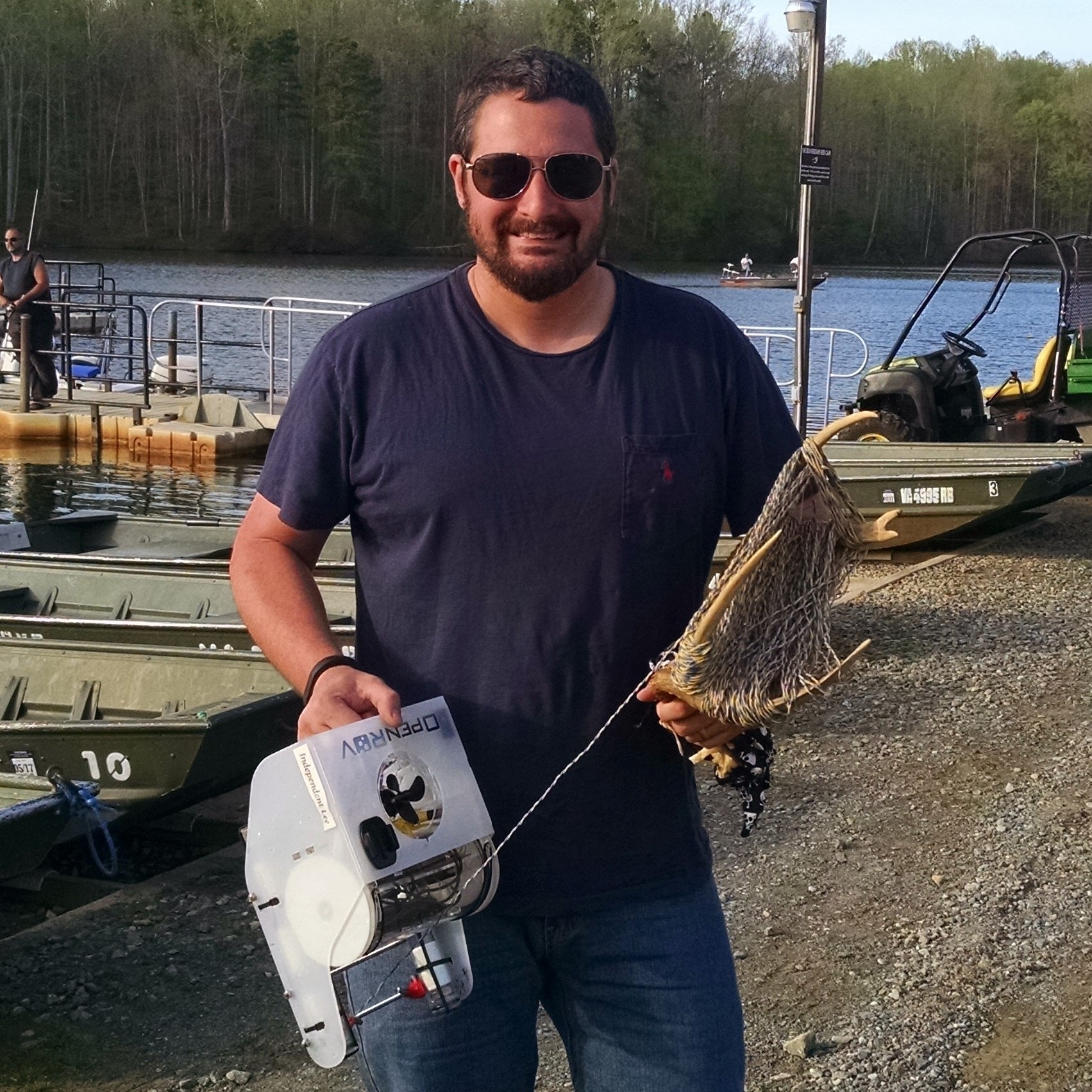
"IGoR! Fetch me a protocol!" Provided by Michelangelo Von Dassow.
“IGoR! Fetch me a protocol!” Provided by Michelangelo von Dassow.

Can everyone do scientific research? I hope to convince you the answer is “yes.” I’m trying to develop an online platform (http://IGoR.wikidot.com) to help amateur scientists and other science enthusiasts do their own scientific research, while at the same time helping experienced scientists tap into the skills and creativity of a broader community. I hope you’ll love the idea and want to help me spark IGoR to life*.

Currently, the vast majority of scientific research is done by professionals supported by big institutions, such as universities, government labs, or corporations. It’s difficult for even a trained and experienced scientist to find the resources and time to do research without this backing. There are pockets of science where amateurs frequently make substantial contributions (e.g. amateur astronomy and taxonomy). However, it wasn’t that long ago that the majority of science was done by people – such as Darwin and Wallace – who were outside academia. In fact, the great intellectual revolutions that created modern science were not started by trained scientists: there were no trained scientists at the time!

Read More “Set research free with IGoR!” »

Fun Science FRIEDay – Evolution, what’s it good for?

Posted on February 20, 2015February 19, 2015 By Kersey Sturdivant
Science, Uncategorized

It is widely accepted that the world around us is changing, and as a result the organisms that exist adapt with that change or are resigned to the fossil record. Evolution, it’s a fact of life… or is it? UCLA paleobiologist J. William Schopf, and colleagues,  have discovered an organism that has remained relatively unchanged over a 2.3 billion year period. Meh, who needs evolution? These bacteria were discovered in the muddy sediments of the deep sea and represent the greatest lack of evolution ever seen!

1871 editorial cartoon depicting Charles Darwin as an ape. (Photo credit: Unknown artist in 1871 from The Hornet newspaper - no longer in publication)
1871 editorial cartoon depicting Charles Darwin as an ape. (Photo credit: Unknown artist in 1871 from The Hornet newspaper – no longer in publication)

Read More “Fun Science FRIEDay – Evolution, what’s it good for?” »

Bioshock Oceanographic: How deep is Rapture?

Posted on February 11, 2015February 17, 2015 By Andrew Thaler 5 Comments on Bioshock Oceanographic: How deep is Rapture?
Popular Culture, Science

“To build a city at the bottom of the sea! Insanity. But where else could we be free from the clutching hand of the Parasites? Where else could we build an economy that they would not try to control, a society that they would not try to destroy? It was not impossible to build Rapture at the bottom of the sea. It was impossible to build it anywhere else.”

Andrew Ryan, Bioshock

Rapture, a city beneath the sea, the crowning achievement of Randian industrialist Andrew Ryan. This atmospheric world of technological wonder and urban decay serves as the setting for one of the greatest video games of all time, Bioshock. The player, finding themselves stranded at sea in a fiery plane crash, makes their way towards a lonely lighthouse, descends into the sunken, desolate city, and unlocks the mysteries surrounding the creation and destruction of a most unusual city.

Rapture. From Bioshock.

Though many questions are answered as the player journeys into the heart of Rapture, collecting audio diaries of its residents along the way, one question still eludes: How deep is Rapture and where, exactly, is it?

Read More “Bioshock Oceanographic: How deep is Rapture?” »

Happy Fun Science FRIEDay – Change you DNA… One Step at a Time!

Posted on January 31, 2015 By Kersey Sturdivant
Science

It’s around about this time of year when people begin to question their New Year’s resolutions to commit to better health. You know what I am talking about. Right after NYE the number of people at the gym swells to an unholy number of hopeful fitness do-gooders. Yet without fail, by the end of the month the gym population begins to stabilize back to its pre New Year’s resolution numbers. But maybe, just maybe, this article will convince you to stick with your commitment to better health, change your DNA regarding your approach to fitness, and keep on exercising! Because exercise, as a new study has found, does just that. Exercise changes the shape and functioning of our genes, an important step on the way to improved health and fitness!

Photo credit: precisionnutrition.com

Read More “Happy Fun Science FRIEDay – Change you DNA… One Step at a Time!” »

Fun Science FRIEDay – Darwin Says Survival of the… empathetic?!

Posted on January 23, 2015 By Kersey Sturdivant
Blogging, Science

Dacher Keltner, professor of psychology and founding faculty director of the Greater Good Science Center at UC Berkeley has been pushing an idea – Humans are built to be good, because it aids in human survival.

Photo credit:  ThinkGeek @ shirtoid.com
Photo credit: Berkeley Social Interaction Lab, UC Berkley

Read More “Fun Science FRIEDay – Darwin Says Survival of the… empathetic?!” »

Unhappy feet – why we need more than a day of penguin awareness

Posted on January 22, 2015February 13, 2015 By Chris Parsons 1 Comment on Unhappy feet – why we need more than a day of penguin awareness
Conservation, Science

A couple of days ago (20th January) was penguin awareness day1. But do we really need to be more aware of penguins?  Well, actually yes.

RSCN8435

 Photo by Chris Parsons

 We conducted a study a couple of years ago  (pdf also available) to look at public awareness of penguins (using university students as a sample) and found that nearly half (43%) of those questioned though that  penguins were protected under the US Endangered Species Act (ESA) and were thus listed as  “endangered.” At the time only one penguin was listed on the ESA (the Galapagos penguin, Spheniscus mendiculus). The IUCN currently classifies five species of penguin as “endangered” 2 and six as “vulnerable” 3. The biggest threat to penguins generally is, unsurprisingly, climate change. The chicks of Magellanic penguins (S. magellanicus) in Argentina have experienced increasing mortality because of increasing numbers and severity of storms, and will continue to experience mortality as these further increase, in addition to additional mortality  from increasing rainfall and temperatures. Changing patterns of sea ice cover are impacting Adelie penguin (Pygoscelis adeliae) foraging at Ross Island, Antarctica. In various locations in the Antarctic Penninsula in particular, Adelie colonies are expected to be impacted by warming temperatures and changes in sea ice with perhaps as many as 75% of colonies decreasing or declining. Although in some locales, melting ice has increased potential Adelie habitat.  Chinstrap colonies have been reported to be in decline as well, despite this being a more open water species, that was previously being thought of as potential benefactors from melting sea ice – penguin nest occupation on Deception Island declined by more than third between 2002/2003 and 2009/10. These chinstrap penguins are likely being impacted by declining krill stocks, as will their  Adelie penguin cousins, in addition to ice loss which so affects this latter species. Overall, across the Antarctic Pennisula, there has been a decline in both Adelie and chinstrap penguin numbers.

Read More “Unhappy feet – why we need more than a day of penguin awareness” »

Many scientists, conservationists and fishermen support our trophy fishing paper recommendations

Posted on January 21, 2015January 21, 2015 By David Shiffman
Science

Last month, a team of marine scientists (which included Andrew and I) published a paper pointing out that intentionally killing the largest and most fecund members of IUCN Red List Threatened species is not a good thing and could be easily stopped (by stopping record awards entirely for these species or moving to a catch and release model)

Our recommendations were not universally supported by scientists, and we received criticism from respected colleagues largely in the form of “this isn’t a particularly big problem, no serious people care about it.” There was also an official response from the IGFA to this effect, which we issued an official response to. Sure. It isn’t the biggest problem in the world, but it is a problem. And you’d be hard-pressed to find a conservation problem that’s easier to solve.

A petition created by the Blue Planet Society based on our recommendations has, as of this writing, surpassed 6,000 signatures from all over the world, including many from scientists, fisherman and professional conservation activists. The paper has also been widely discussed on social media

Presented here are some quotes from scientists, fishermen and conservationists supporting our recommendations. While this support does not inherently mean that the issues we raise are important, it certainly shows that lots of serious people care about it.

Read More “Many scientists, conservationists and fishermen support our trophy fishing paper recommendations” »

Sizing Sizing Ocean Giants: Patterns of #scicomm outreach in a marine megapaper

Posted on January 20, 2015February 9, 2021 By Andrew Thaler 2 Comments on Sizing Sizing Ocean Giants: Patterns of #scicomm outreach in a marine megapaper
Blogging, Conservation, Science

Last week, Craig McClain and many friends published Sizing Ocean Giants: patterns of intraspecific size variation in marine megafauna, a research paper that would better be described as a monograph. The response to the paper has been overwhelming.

Since it’s publication last Tuesday, Sizing Ocean Giants has been viewed almost 44,000 times by 38,000 people and downloaded 1200 times. If this seems like a lot for what is essentially a natural history monograph, you are correct. According to Altmetric, a service that measures the non-citation impact of scientific papers, Sizing Ocean Giants is the most discussed and shared article in the history of PeerJ. With a score of 546 (most papers average a score of 5, PeerJ papers average about 20), our paper has climbed into the 99th percentile of all articles ever tracked.

We’ve been covered in the Washington Post, Newsweek, National Geographic, and Scientific American, as well as numerous non-English media outlets from Mexico to Greece. Opa!  We’ve seen a small attention spike on twitter and tons of shares (almost 12,000) via Facebook.

So how do we account for the huge success of this massive paper?

Read More “Sizing Sizing Ocean Giants: Patterns of #scicomm outreach in a marine megapaper” »

Six things I learned about Giant Isopods while Sizing Ocean Giants

Posted on January 13, 2015January 13, 2015 By Andrew Thaler 4 Comments on Six things I learned about Giant Isopods while Sizing Ocean Giants
Science

Today, Craig McClain, along with a massive team of ocean scientists (including me!) published our monumental paper: Sizing ocean giants: patterns of intraspecific size variation in marine megafauna. This massive monograph investigates patterns of size among 25 ocean giants, the biggest, most massive members of their respective taxa. You can probably guess which species I had a hand in reviewing.

httpv://www.youtube.com/watch?v=xtk5t7sSb3s

Along the way, I learned quite a few cool things about the magnificent giants of the deep sea.

1. Giant deep-sea isopods are sexually dimorphic. 

Read More “Six things I learned about Giant Isopods while Sizing Ocean Giants” »

An open letter to new Discovery Channel President Rich Ross from a shark scientist

Posted on January 9, 2015January 9, 2015 By David Shiffman 1 Comment on An open letter to new Discovery Channel President Rich Ross from a shark scientist
Conservation, Popular Culture, Science

Dear Rich Ross, new President of the Discovery Channel,

I was excited to learn about your commitment to no longer show fake documentaries on the Discovery Channel. These shows have been incredibly damaging not only to Discovery’s goals of being the “number one non-fiction media company in the world” by”telling compelling and accurate stories,” but to public understanding of science and conservation. In recent years, the Discovery Channel has tried hard to actively muddle the fact that these documentaries were fake, including hiding vague disclaimers at the very end.  I’ve spoken to hundreds of schoolchildren about sharks, and every time someone asks me about megalodon or mermaids.  Viewers believed that they were real, and your channel actively bragged about the fact that people believed that they were real.

By claiming that megalodon isn’t extinct and mermaids are real but the government is covering this up, these shows resulted in scientists receiving threats and harassment,  and resulted in important government agencies getting so many angry phone calls that they had to issue public statements. Producers for some of these shows intentionally lied to scientists to convince them to appear onscreen, intentionally lied to journalists about the facts behind them,  and intentionally caused a real-life public panic. They actually showed a documentary about a legendary (read as “fake”)  shark called Hitler. In short, I will be glad to see Shark Week and the Discovery Channel return to your roots of fact-based programming.

However, while “we won’t actively lie to viewers anymore” is an important step that I applaud, Shark Week and other Discovery Communications programs have many other problems that should be addressed. Shark Week 2014’s “Zombie Sharks” glorified wildlife harassment for no reason, as the entire stated goal of the show was for a non-scientist with a history of wildlife harassment to try to answer a question that scientists have known the answer to for decades. This problem is not limited to Zombie Sharks, but pervades Discovery Communications shows.

Read More “An open letter to new Discovery Channel President Rich Ross from a shark scientist” »

Posts pagination

Previous 1 … 22 23 24 … 82 Next

Popular Posts

The story of the pride flag made from NASA imagery: Bluesky's most-liked imageThe story of the pride flag made from NASA imagery: Bluesky's most-liked imageSeptember 27, 2024David Shiffman
The evolution of the International Whaling Commission – from  whaling quotas to whale conservationThe evolution of the International Whaling Commission – from  whaling quotas to whale conservationJune 10, 2026Chris Parsons
Tackling the least important debate in deep-sea mining: the desultory hyphenTackling the least important debate in deep-sea mining: the desultory hyphenJune 8, 2026Andrew Thaler
What Ocean Ramsey does is not shark science or conservation: some brief thoughts on "the Shark Whisperer" documentaryWhat Ocean Ramsey does is not shark science or conservation: some brief thoughts on "the Shark Whisperer" documentaryJuly 2, 2025David Shiffman
"Why Sustainable Seafood Matters" is now available for preorder! Here's what it's about, and why I decided to write it."Why Sustainable Seafood Matters" is now available for preorder! Here's what it's about, and why I decided to write it.June 8, 2026David Shiffman
That's not a blobfish: Deep Sea Social Media is Flooded by AI SlopThat's not a blobfish: Deep Sea Social Media is Flooded by AI SlopDecember 19, 2025Andrew Thaler
Isn’t ironic, don’t you think: dismantling the Ocean Observatories Initiative on World Oceans DayIsn’t ironic, don’t you think: dismantling the Ocean Observatories Initiative on World Oceans DayJune 9, 2026Southern Fried Science
Shark of Darkness: Wrath of Submarine is a fake documentaryShark of Darkness: Wrath of Submarine is a fake documentaryAugust 10, 2014Michelle Jewell
What is a Sand Shark?What is a Sand Shark?November 12, 2017Chuck Bangley
Fun facts and FAQs about Megalodon, Maryland's new (and definitely extinct) official state sharkFun facts and FAQs about Megalodon, Maryland's new (and definitely extinct) official state sharkApril 15, 2026David Shiffman
Subscribe to our RSS Feed for updates whenever new articles are published.

We recommend Feedly for RSS management. It's like Google Reader, except it still exists.

Southern Fried Science

  • Home
  • About SFS
  • Authors
  • Support SFS


If you enjoy Southern Fried Science, consider contributing to our Patreon campaign.

Copyright © 2026 Southern Fried Science.

Theme: Oceanly Premium by ScriptsTown