Skip to content

Southern Fried Science

Over 15 years of ocean science and conservation online

  • Home
  • About SFS
  • Authors
  • Support SFS

Category: Science

No you’re not paranoid – there is a bias against publishing marine conservation papers

Posted on September 24, 2014September 27, 2014 By Chris Parsons 4 Comments on No you’re not paranoid – there is a bias against publishing marine conservation papers
Science

How many times have you submitted a marine conservation paper to a journal only to have it rejected because it is “too marine”, of “too narrow a focus” or “of limited interest to our readers”?  Despite the oceans making up 71% of Earth’s surface and 99% of the know biosphere, it sometimes seems that there’s a bias against marine articles in some of the leading ecology and conservation journals. Well you’d be right.

Kochin and Levin (2003, 2004) noted that marine conservation got short thrift in conservation journals. For example, on average marine papers comprise less than 11% of leading conservation biology journal papers, whereas 61% were terrestrial (Kochin and Levin, 2004). Marine content ranged from less than 3% in Conservation Ecology to 40% in Aquatic Conservation – even though oceans and sea ice make up 97% of the water on the planet, freshwater ecosystems still dominated the aquatic conservation literature even then.

Read More “No you’re not paranoid – there is a bias against publishing marine conservation papers” »

Watch the Sharks International 2014 Keynote Presentations!

Posted on September 23, 2014 By David Shiffman 2 Comments on Watch the Sharks International 2014 Keynote Presentations!
Science

logoIn June of 2014, almost 400 of the world’s top shark researchers gathered in Durban, South Africa for the 2nd Sharks International conference.  The four keynote presentations have just been put online.

Beyond Jaws: Rediscovering the “lost sharks” of South Africa

Dave Ebert, Moss Landing Marine Laboratory

daveBiography:Dave Ebert earned his Masters Degree at Moss Landing Marine Labs and his Ph.D. at Rhodes University, Grahamstown, South Africa.  He is currently the Program Director for the Pacific Shark Research Center, a research faculty member at Moss Landing Marine Laboratories, and an honorary research associate for the South African Institute for Aquatic Biodiversity and the California Academy of Sciences Department of Ichthyology.  He has been researching chondrichthyans around the world for nearly three decades, focusing his research on the biology, ecology and systematics of this enigmatic fish group.  He has authored 13 books, including a popular field guide to the sharks of the world and most recently he revised the Food and Agriculture Organization’s Catalogue of Sharks of the World.  He has published over 300 scientific papers and book chapters, and contributed approximately 100 IUCN Shark Specialist Group Red List species assessments.  Dave is regional co-Chair of the IUCN Northeast Pacific Regional Shark Specialist Group, Vice Chair for taxonomy, and a member of the American Elasmobranch Society and Oceania Chondrichthyan Society.  He has supervised more than 30 graduate students, and enjoys mentoring and helping develop aspiring marine biologists.


Read More “Watch the Sharks International 2014 Keynote Presentations!” »

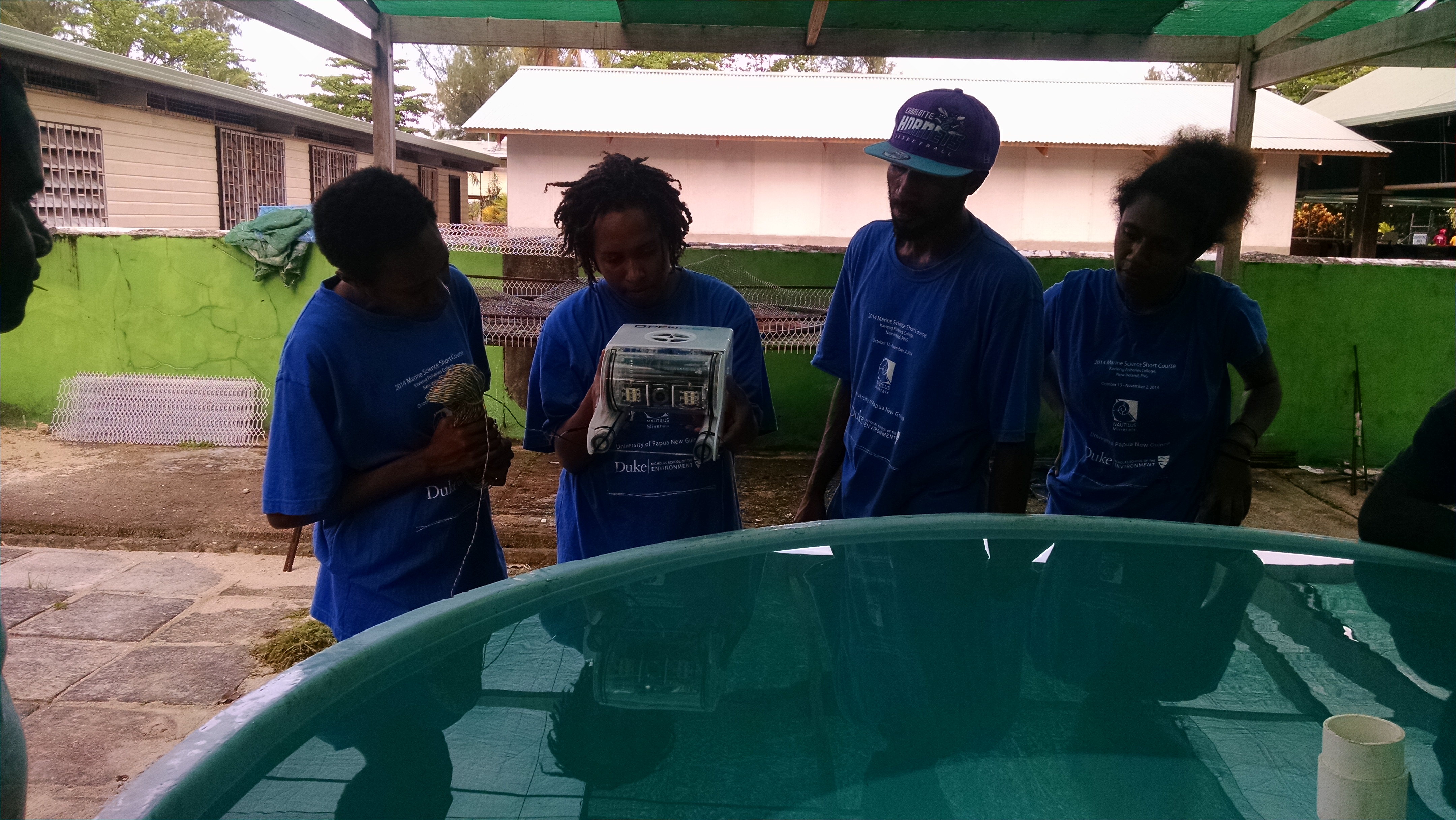
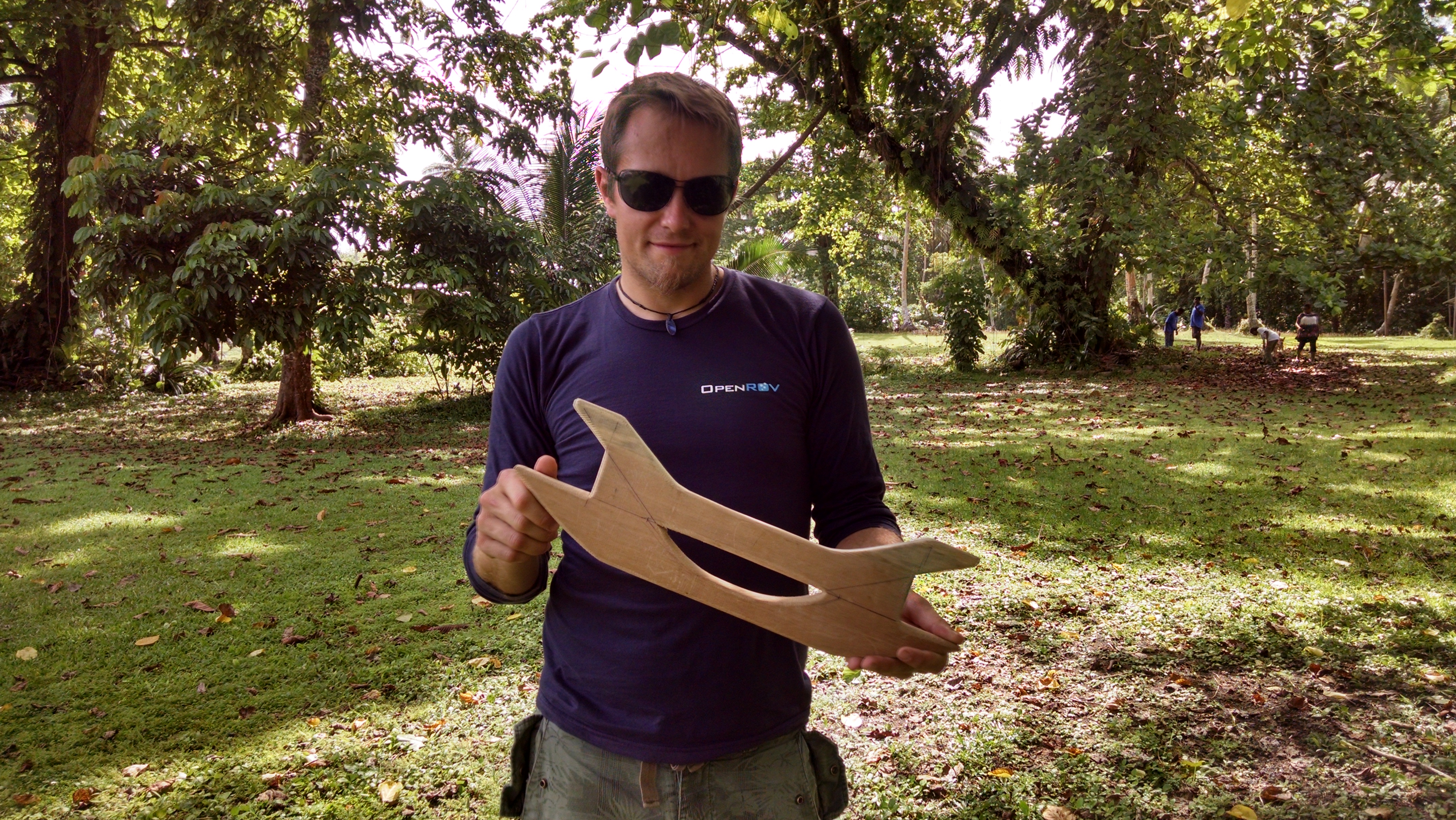
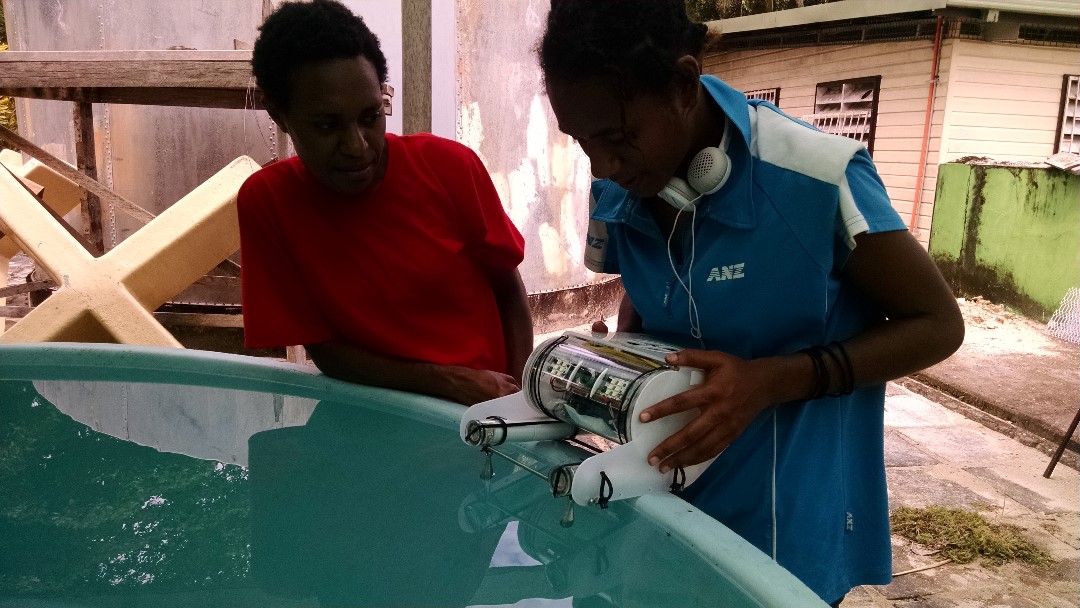
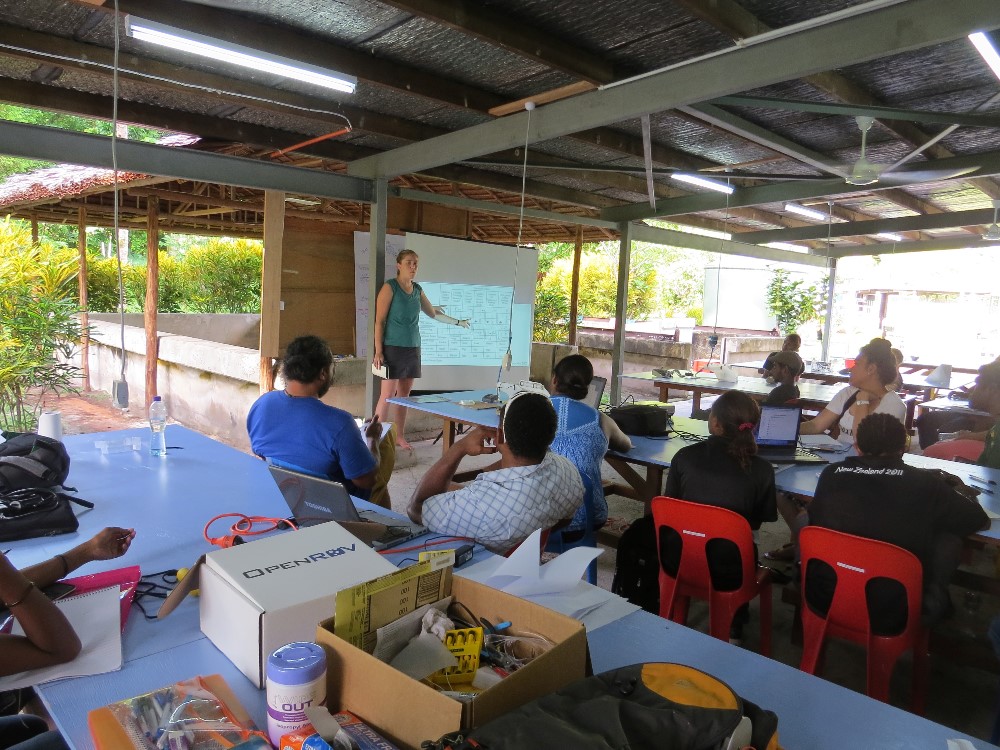
The next era of ocean exploration begins in Papua New Guinea

Posted on September 22, 2014September 22, 2014 By Andrew Thaler
Blogging, Science
An OpenROV at Lake Merrit.
An OpenROV at Lake Merritt. Photo by author.

In 1946, Jacques Yves Cousteau and Émile Gagnan released the Aqualung, forever changing the way humans interact with the oceans. No longer tethered to the surface, entombed in thick, restrictive helmets, we could dive deeper, stay down longer, and explore the dark places snorkelers and free divers feared to fin. The Aqualung opened up the ocean to an entirely new cohort. Ocean exploration, once the domain of well-resourced scientists, career explorers, and the wealthy elite, was now within the reach of the global middle class.

Buoyed by the Aqualung, Marine Science exploded. Marine life could be studied alive and in situ. Behavior could be observed rather than inferred from the stressed and shredded samples of a trawl. The ranks of marine biologists, oceanographers, and explores swelled to numbers that began to gradually approach the relative significance of the ocean to the living world.

We’re just getting started.

Marine science is on the brink of the greatest sea change since JYC and Gagnan introduced the Aqualung to the world.

Read More “The next era of ocean exploration begins in Papua New Guinea” »

Bigger than just conservation: The WWF Pacific Shark Heritage Program

Posted on September 17, 2014 By Guest Writer 2 Comments on Bigger than just conservation: The WWF Pacific Shark Heritage Program
Conservation, Science

IanIan Campbell has spent his entire career employed across the spectrum of fisheries science and policy, working as a marine surveyor, a fisheries observer and writing fisheries policy for the UK & European governments. He even spent several years as a commercial diver working on oil rigs and for the film industry. Ian is currently leading WWF’s global shark management work. You can follow him on twitter @IanFisheries , and follow the WWF campaign @WWF_sharks.

On September 2, in a back room on the campus of the Secretariat of the Pacific Regional Environment Programme (SPREP), on the small island of Samoa, we at the environment conservation non-government organisation, World Wide Fund for Nature WWF quietly launched our Pacific Shark Heritage Programme. This launch was incorporated into the bigger, much flashier United Nations meeting on Small Island Developing States (SIDS), where the United Nations Secretary General Ban Ki Moon spoke of partnerships, conservation of the oceans’ resources and responsible stewardship. There were meetings of Heads of State & UN officials, the World Bank and Ambassadors, with lots of “high-level statements” and “roadmaps for the future of the oceans” announced at champagne & canapé receptions. Yet, we believe, it was our unheralded meeting in the SPREP’s training centre (tea & coffee were provided), that could have the biggest impact on sharks (and rays, rays need love too) and Pacific Island culture.

There are two major components to WWF’s work in the Pacific. The first is to highlight how intrinsically linked sharks and rays are to the many diverse cultures of the Pacific Island nations. We have documented apocryphal tales, fable and legends that have been passed down from generation to generation over hundreds, if not thousands of years. Tales that have been told in villages and communities ever since people have inhabited these islands. And contained in these stories are some truly remarkable accounts of love, war, marriage advice and even a bit of shark taxonomy. Did you know, for example, that in the Cook Islands, a kindly shark gave Ina, the Fairy Voyager a lift across the ocean to be with her fiancé Tinarau, the God of the Ocean? Ina took with her coconuts to ensure she didn’t die of thirst, but no way of opening them (you always forget something, right?). Ina tried to break the coconut on the shark’s head, which resulted in the hammerhead getting its’ distinctive shape. So there’s a taxonomic question answered. It may be a fable, but it’s still as accurate as some recent Shark Week documentaries. On the beautiful island of Taveuni in Fiji, villagers and school children still speak of Dakuwaqa, the shark god, a ferocious warrior who actually protects the islanders. At the SIDS conference there are carvings and murals of Samoan shark legends everywhere, some selling for up to $40,000 (US). In Pacific Island countries, sharks are everywhere and everyone knows about sharks. At WWF, we know we need to keep this history alive.

Read More “Bigger than just conservation: The WWF Pacific Shark Heritage Program” »

Natural history needs more .gifs

Posted on September 15, 2014July 5, 2015 By Andrew Thaler 1 Comment on Natural history needs more .gifs
Science

There’s something glorious about .gifs, the short video clips that proliferate across the internet. Not quite as demanding of commitment as a full video, slightly more than a still image. These mighty little loops of endless wonder can express joy, surprise, or disdain far better than their static counterpart. They are an artform unique to the web.

Yet, somehow, the humble .gif has never garnered the same level of prestige as a carefully crafted photograph or a lovingly edited documentary. Heck, some science communicators think we should to away with .gifs completely. This is, of course, misguided.

Read More “Natural history needs more .gifs” »

Sharks aren’t always the top of the food chain

Posted on September 3, 2014 By David Shiffman 1 Comment on Sharks aren’t always the top of the food chain
Blogging, Science

Most people think of sharks as being apex predators, large, fearsome  hunters sitting right at the top of the ocean food chain.  Of course, that isn’t always the case. There are more than 500 known species of sharks, and they vary in size from the size of a pencil to the size of a school bus. In many cases, there’s a larger predator in their environment, which can lead to some surprising and amazing  interactions.

A crocodile ate a bull shark

Brutus, a famous crocodile in Australia, was recently photographed eating a juvenile bull shark. Southern Fried Science writer Sarah Keartes has the full story at EarthTouch.

Photo by Andrew Paice

Read More “Sharks aren’t always the top of the food chain” »

Great white shark movements at Geyser Rock

Posted on September 3, 2014December 8, 2014 By Michelle Jewell
Science

michelleMichelle Wcisel is a Zoologist specialized in predator/prey behaivour and the Scientific Communicator for EDNA Interactive.  She has spent the past 4 years studying the behaviour of white sharks and Cape fur seals at Geyser Rock, ‘Shark Alley’, South Africa.  


Animal movement is often shaped by natural barriers; a fish can’t leave the river it swims in, a tortoise is going to struggle to climb a cliff face, and a pangolin can’t swim across the sea.  These barriers come quite naturally to the animals, yet researchers have often struggled to account for these constraints in movement analysis, particularly when it comes to estimating home range (or ‘Utilization Distributions’, UDs).  Unfortunately, the few solutions that have attempted to account for barriers are often incredibly complicated without providing much improvement overall, so previous studies have been forced to simply ‘clip out’ the parts of the estimate that extend over these inconceivable areas (i.e. Heupel et al. 2004; Hammerschlag et al. 2012; Jewell et al. 2012).

Read More “Great white shark movements at Geyser Rock” »

Shark Week 2014: documentary reviews, tweets, and media coverage

Posted on August 26, 2014 By David Shiffman 3 Comments on Shark Week 2014: documentary reviews, tweets, and media coverage
Blogging, Popular Culture, Reviews and Interviews, Science

Another Shark Week has come and gone, and despite being out of the country at the time, I’ve managed to keep up my record of never having missed a single Shark Week documentary. I gotta tell you, though, some of them are really hard to watch. While there there is undoubtedly some great educational programming focusing on science, natural history and conservation, the Discovery Channel is doubling down on the troubling recent trend of blatantly lying to viewers with fake documentaries that use actor playing scientists and CGI video. In a time when public misunderstanding and distrust of science and scientists is already high, the Discovery Channel has decided to actively perpetuate misunderstanding and distrust of science and scientists. I’ve included my reviews (which originally were posted on my Facebook page after each show) of each of the documentaries below, along with a link to the Storify of my twitter reactions and links to some of the media coverage.

Upwell held another successful Sharkinar, bringing together scientists, conservationists, communicators and educators to talk about how “Team Ocean” can best take advantage of the increased public interest in sharks during Shark Week. Indeed, many members of Team Ocean were able to use the temporary increase in public interest in sharks to get important messages out to the media, and I’ve linked to and summarized some of the best examples below, but imagine how much more effective we could be if we didn’t have to first debunk the lies aired on a supposedly educational non-fiction television channel?

Read More “Shark Week 2014: documentary reviews, tweets, and media coverage” »

5 simple things you can do to improve U.S. shark and ray management

Posted on August 16, 2014 By Guest Writer
Science
Sonja Fordham President, Shark Advocates International
Sonja Fordham
President, Shark Advocates International

Sonja Fordham founded Shark Advocates International as a project of The Ocean Foundation in 2010 based on her two decades of shark conservation experience at  Ocean Conservancy.  She is Deputy Chair of the IUCN Shark Specialist Group and Conservation Committee Chair for the American Elasmobranch Society, has co-authored numerous publications on shark fisheries management, and serves on most of the U.S. federal and state government advisory panels relevant to sharks and rays.  Her awards include the U.S. Department of Commerce Environmental Hero Award, the Peter Benchley Shark Conservation Award, and the IUCN Harry Messel Award for Conservation Leadership.

Most Americans by now must know it’s Shark Week, but did you know that the Discovery Channel headquarters are mere steps from the headquarters of the National Marine Fisheries Service (NMFS), and that right now — and rather often — fishery managers in that NMFS building are soliciting comments on US shark fishing rules?

Photo by Sonja Fordham

Shark Week is winding down just as several key opportunities to help US sharks are being announced. Aside from controversy over some programming, other shows, the associated press coverage, and the veritable social media frenzy have sparked a lot of concern for sharks, and sent many Americans on a hunt for things that they can do to help. I welcome that interest and am taking the opportunity to make a plea for some unique, hand-crafted comments and personalized testimony about timely policies for several particularly deserving Atlantic shark and ray species.

Taking these actions won’t be quite as easy as pushing a button on an automatic petition, but I believe – because of the relatively low profile of these species and the increased influence of original comments – that they can truly make a difference. If heeded, your advice can lead not only to better conservation of US shark and ray species, but also to better examples for other countries to follow. Here goes (see the hyperlinks for more information and contact details):

Read More “5 simple things you can do to improve U.S. shark and ray management” »

Background information on our “trophy fishing for species threatened with extinction” paper

Posted on August 11, 2014September 4, 2014 By David Shiffman
Conservation, Science
A giant pangasius, one of the Endangered species of fish that is targeted by trophy fishermen. Photo by user GV_Fishing, WikiMedia Commons

Andrew and I (along with several co-authors) have a new paper out in the journal Marine Policy entitled “Trophy Fishing for Species Threatened with Extinction: A way Forward Based on a History of Conservation.” You can read the paper here, and view the official press release here (will be up soon) .

We believe that this is an important topic that does not get enough attention, and we wrote the paper to review the scope of the problem, propose an easily achievable solution, and facilitate a long overdue discussion. Although we intentionally wrote the paper to be accessible to anyone, this blog post serves to explain the concepts and issues in the paper even further.  We are happy to answer any questions people have about the paper, just ask them in the comments section below.

Read More “Background information on our “trophy fishing for species threatened with extinction” paper” »

Posts pagination

Previous 1 … 25 26 27 … 82 Next

Popular Posts

The story of the pride flag made from NASA imagery: Bluesky's most-liked imageThe story of the pride flag made from NASA imagery: Bluesky's most-liked imageSeptember 27, 2024David Shiffman
The evolution of the International Whaling Commission – from  whaling quotas to whale conservationThe evolution of the International Whaling Commission – from  whaling quotas to whale conservationJune 10, 2026Chris Parsons
That's not a blobfish: Deep Sea Social Media is Flooded by AI SlopThat's not a blobfish: Deep Sea Social Media is Flooded by AI SlopDecember 19, 2025Andrew Thaler
Tackling the least important debate in deep-sea mining: the desultory hyphenTackling the least important debate in deep-sea mining: the desultory hyphenJune 8, 2026Andrew Thaler
What Ocean Ramsey does is not shark science or conservation: some brief thoughts on "the Shark Whisperer" documentaryWhat Ocean Ramsey does is not shark science or conservation: some brief thoughts on "the Shark Whisperer" documentaryJuly 2, 2025David Shiffman
"Why Sustainable Seafood Matters" is now available for preorder! Here's what it's about, and why I decided to write it."Why Sustainable Seafood Matters" is now available for preorder! Here's what it's about, and why I decided to write it.June 8, 2026David Shiffman
Isn’t ironic, don’t you think: dismantling the Ocean Observatories Initiative on World Oceans DayIsn’t ironic, don’t you think: dismantling the Ocean Observatories Initiative on World Oceans DayJune 9, 2026Southern Fried Science
Shark of Darkness: Wrath of Submarine is a fake documentaryShark of Darkness: Wrath of Submarine is a fake documentaryAugust 10, 2014Michelle Jewell
What is a Sand Shark?What is a Sand Shark?November 12, 2017Chuck Bangley
Fun facts and FAQs about Megalodon, Maryland's new (and definitely extinct) official state sharkFun facts and FAQs about Megalodon, Maryland's new (and definitely extinct) official state sharkApril 15, 2026David Shiffman
Subscribe to our RSS Feed for updates whenever new articles are published.

We recommend Feedly for RSS management. It's like Google Reader, except it still exists.

Southern Fried Science

  • Home
  • About SFS
  • Authors
  • Support SFS


If you enjoy Southern Fried Science, consider contributing to our Patreon campaign.

Copyright © 2026 Southern Fried Science.

Theme: Oceanly Premium by ScriptsTown