Skip to content

Southern Fried Science

Over 15 years of ocean science and conservation online

  • Home
  • About SFS
  • Authors
  • Support SFS

Category: Science

5 simple things you can do to improve U.S. shark and ray management

Posted on August 16, 2014 By Guest Writer
Science
Sonja Fordham President, Shark Advocates International
Sonja Fordham
President, Shark Advocates International

Sonja Fordham founded Shark Advocates International as a project of The Ocean Foundation in 2010 based on her two decades of shark conservation experience at  Ocean Conservancy.  She is Deputy Chair of the IUCN Shark Specialist Group and Conservation Committee Chair for the American Elasmobranch Society, has co-authored numerous publications on shark fisheries management, and serves on most of the U.S. federal and state government advisory panels relevant to sharks and rays.  Her awards include the U.S. Department of Commerce Environmental Hero Award, the Peter Benchley Shark Conservation Award, and the IUCN Harry Messel Award for Conservation Leadership.

Most Americans by now must know it’s Shark Week, but did you know that the Discovery Channel headquarters are mere steps from the headquarters of the National Marine Fisheries Service (NMFS), and that right now — and rather often — fishery managers in that NMFS building are soliciting comments on US shark fishing rules?
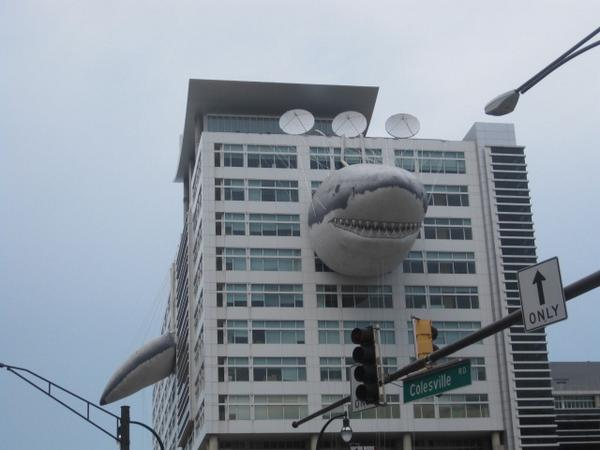
Photo by Sonja Fordham

Shark Week is winding down just as several key opportunities to help US sharks are being announced. Aside from controversy over some programming, other shows, the associated press coverage, and the veritable social media frenzy have sparked a lot of concern for sharks, and sent many Americans on a hunt for things that they can do to help. I welcome that interest and am taking the opportunity to make a plea for some unique, hand-crafted comments and personalized testimony about timely policies for several particularly deserving Atlantic shark and ray species.

Taking these actions won’t be quite as easy as pushing a button on an automatic petition, but I believe – because of the relatively low profile of these species and the increased influence of original comments – that they can truly make a difference. If heeded, your advice can lead not only to better conservation of US shark and ray species, but also to better examples for other countries to follow. Here goes (see the hyperlinks for more information and contact details):

Read More “5 simple things you can do to improve U.S. shark and ray management” »
Background information on our “trophy fishing for species threatened with extinction” paper

Posted on August 11, 2014September 4, 2014 By David Shiffman
Conservation, Science
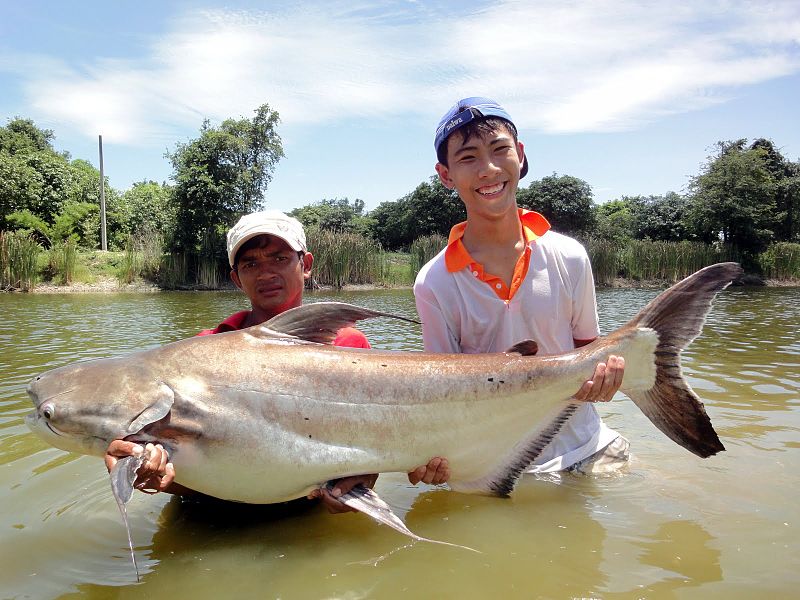
A giant pangasius, one of the Endangered species of fish that is targeted by trophy fishermen. Photo by user GV_Fishing, WikiMedia Commons

Andrew and I (along with several co-authors) have a new paper out in the journal Marine Policy entitled “Trophy Fishing for Species Threatened with Extinction: A way Forward Based on a History of Conservation.” You can read the paper here, and view the official press release here (will be up soon) .

We believe that this is an important topic that does not get enough attention, and we wrote the paper to review the scope of the problem, propose an easily achievable solution, and facilitate a long overdue discussion. Although we intentionally wrote the paper to be accessible to anyone, this blog post serves to explain the concepts and issues in the paper even further.  We are happy to answer any questions people have about the paper, just ask them in the comments section below.

Read More “Background information on our “trophy fishing for species threatened with extinction” paper” »

Shark of Darkness: Wrath of Submarine is a fake documentary

Posted on August 10, 2014March 18, 2015 By Michelle Jewell 119 Comments on Shark of Darkness: Wrath of Submarine is a fake documentary
Popular Culture, Science

Shark Week has done it again with their Shark of Darkness nonsense.  This show goes after everyone, from the whale watching industry, to shark cage diving, to South Africa as a country, and literally broke my heart to watch.

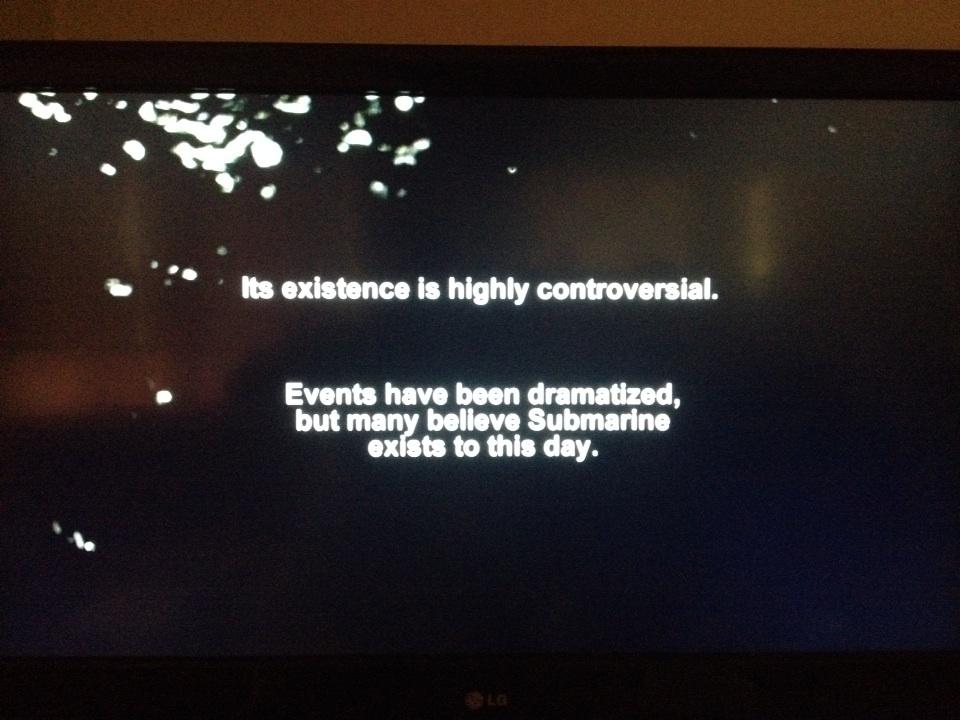
As always, a brief and vague disclaimer appears after all the credits have rolled.
As always, a brief and vague disclaimer appears during the show.

The fake-u-mentary is supposedly based in Hout Bay, but continually shows a map of Dyer Island and Geyser Rock and refers to Shark Alley that are all in Gansbaai, ~100km to the east.  So why would they say Hout Bay?  If you google “boat capsized in Hout Bay”, you will find that there was a boat which capsized outside of Hout Bay in 2012, killing 2 passengers onboard.  This boat was capsized by heavy swell in the middle of the day and had nothing to do with a shark, let alone a mythical one.  So I can only assume that Discovery Channel chose to include this very real tragedy in order to somehow legitimize their fake-u-mentary.  This is horribly insensitive.

Read More “Shark of Darkness: Wrath of Submarine is a fake documentary” »

Megalodon: the New Evidence is a fake documentary

Posted on August 7, 2014 By David Shiffman 3 Comments on Megalodon: the New Evidence is a fake documentary
Blogging, Popular Culture, Science

So was last year’s “Megalodon: the monster shark lives.”  Both Shark Week specials claim to show evidence that Carcharocles megalodon, the largest predatory shark that ever lived, is still alive. In both cases, the evidence is 100% completely and totally fake. A disclaimer from “the monster shark lives” Video evidence is CGI, images are photoshopped, and … Read More “Megalodon: the New Evidence is a fake documentary” »

The Dark Side of Academia

Posted on August 7, 2014September 2, 2014 By Chris Parsons
Blogging, Science

ParsonsDr. Chris Parsons has been involved in whale and dolphin research for over two decades and has been involved in research projects in every continent except Antarctica. Dr. Parsons is an Associate Professor at George Mason University as well as the undergraduate coordinator for their environmental science program. He’s a member of the scientific committee of the International Whaling Commission (IWC), has been involved in organizing the International Marine Conservation Congress (IMCC) (the world’s  largest academic marine conservation conference) and is currently the Conference Chair and a Governor of the Society for Conservation Biology. In addition, Dr. Parsons has published over 100 scientific papers and book chapters and has written a textbook on marine mammal biology & conservation.

Listen, my Sith apprentice, strong in knowledge you are but there are those who are stronger and more intelligent than you, but to persevere and gain in status, strong in the dark side you must become. In these times funding is limited, tenured positions are few, and competition is great. Graduate students are many, and many of these have ideas for new research and new hypotheses that pose a threat to the current order. The hierarchy must be maintained with us at the apex, and no competition must be allowed.  Nurturing, cooperation, and egalitarianism -those are the characteristics of the light side and the light side is weak, and progress on the light side is slow. So my Sith apprentice, here is my advice to you to progress and succeed, especially when there are those around you who are more innovative, knowledgeable and intelligent than you.

Read More “The Dark Side of Academia” »

Fun Science FRIEDay – One microbial trash is another’s microbial treasure!

Posted on August 1, 2014September 1, 2014 By Kersey Sturdivant 1 Comment on Fun Science FRIEDay – One microbial trash is another’s microbial treasure!
Science, Uncategorized

Happy FSF!

You know that old saying, the one that explains how something devalued by one person is of the utmost value to another.

Well this week we bring you an analogy of that quote in nature, and in the form of microbes.

Leishmaniasis… have you heard of it? If not, do not worry, I had not either before I began writing this piece, and subsequently almost gagged while googling “appropriate” photos to accompany this piece.  Leishmaniasis is a disease caused by the protozoan parasite Leishmana. The vector that spreads this wonderful treasure? Sand flies. If you are unfortunate enough to get this disease it can turn your skin into all manner of foul lookingness. See Exhibit A.

Exhibit A

Skin ulcer on the hand due to leishmaniasis. (Photo credit: CDC Dr. S. Martin)

Read More “Fun Science FRIEDay – One microbial trash is another’s microbial treasure!” »

Busting Ocean Myths: This anglerfish is not as kink as you think.

Posted on July 28, 2014August 4, 2014 By Andrew Thaler
Science

The claim: Deep-sea Anglerfish have parasitic dwarf males that fuse to their mates and become nothing more than wibbly gonads hanging off of the much larger female. 

Who said it: Well, pretty much everyone. This Oatmeal Comic, Ze Frank, me.

Status: Sometimes true, sometimes false.

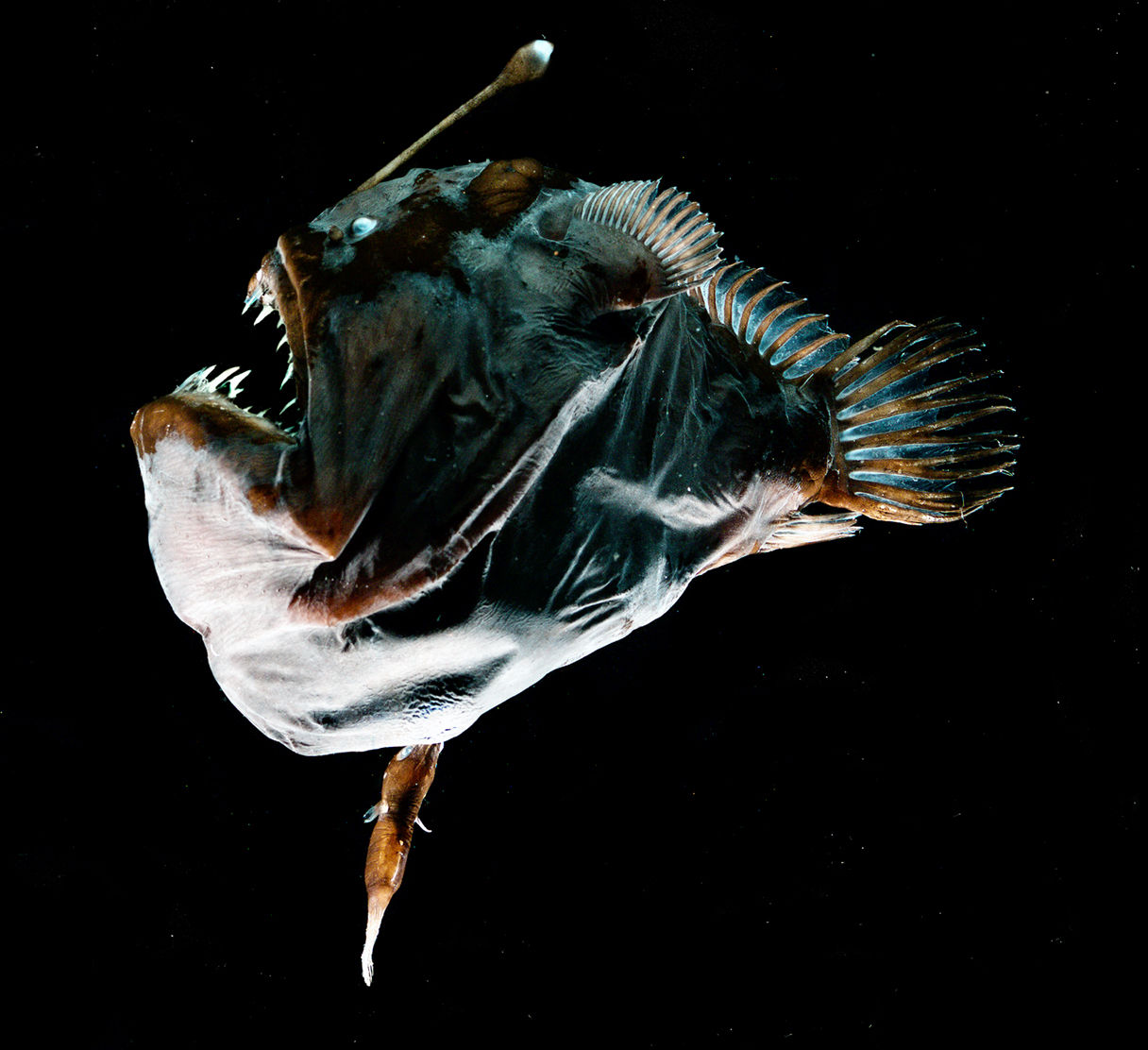
Melanocetus johnsonii. Photo by Edith Widder.

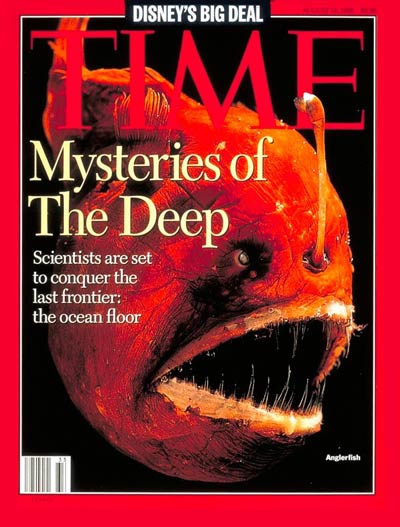
cover-Time-19950814-82066I’d like you to meet a very dear friend of mine. This is Melanocetus johnsonii, the humpback anglerfish. If you follow the deep sea at all, you’ve probably met this delightful creature. She was featured on the cover of time magazine, barely losing out to Newt Gingrich for 1995 Vertebrate of the Year. Since then, she has been a standard-bearer for the deep sea, an iconic species, immediately recognizable. Stories of her exploits abound, and no story is more compelling that the tale of the hapless male anglerfish, a parasitic dwarf that lives its entire adult life fused to the larger, more capable female angler fish.

There’s just one problem.

Melanocetus johnsonii, along with the four other anglerfish that make up genus Melanocetus, don’t have parasitic males. Males of this genus are still significantly smaller and lack lures, but they retain their free-swimming lifestyle into adulthood, occasionally biting into the side of a much larger female for a temporary coupling, where gametes and food are exchanged. This temporary coupling, in which no tissue fusion takes place, has been observed only three times: once during the filming of the BBC Blue Planet documentary; once off the coast of Japan; and once, confusingly between a male Melanocetus johnsonii and a completely different species, Centrophryne spinulosa. In none of these instances was the connection permanent, and no reduced males have even been found attached to a Melanocetus.

Read More “Busting Ocean Myths: This anglerfish is not as kink as you think.” »

Cascading planetary-wide ecosystem effects of the extirpation of apex predatory Krayt dragons on Tatooine

Posted on July 22, 2014 By David Shiffman
Blogging, Conservation, Popular Culture, Science

Author’s note: this post is part of the “Science of Tatooine” blog carnival. Though obviously about science fiction and not the real world, it includes real ecological theories,  and it uses some real peer-reviewed scientific papers as references. Whenever possible, I’ve linked to accessible copies of those papers and explainers of these ecological terms. Many of the same issues are associated with shark population declines. 

ABSTRACT

Predators play an important role in structuring ecosystems, with predator population declines being linked to a variety of negative ecological effects. Here, we present evidence that the planet Tatooine, famous throughout the Galaxy for being a desert planet, experienced desertification as a result of unintended changes in herbivore populations caused by the intentional large-scale killing of apex predators by offworld colonists. Fossil evidence and interviews showing traditional ecological knowledge suggest that once-abundant Krayt dragons were hunted to near extinction by early human colonists. As a result of the decline in predation, populations of large herbivorous banthas populations grew out of control and overgrazed the plants once found throughout Tatooine.

INTRODUCTION

Studies of numerous ecosystems have consistently shown the importance of intact populations predators to healthy ecosystems, with a recent review (Estes et al. 2011 “trophic downgrading of planet Earth”) noting that “the loss of apex consumers is arguably humankind’s most pervasive influence on the natural world.” Population declines of top predators can cause a trophic cascade, resulting in unintended consequences that ripple through a food chain. Sea otter population declines in the Pacific Northwest of the United States resulted in predation release of otter prey (sea urchins), and an overabundance of sea urchins destroyed entire kelp forest ecosystems by overgrazing (Estes et al. 1998 “killer whale predation on sea otters linking oceanic and nearshore systems.) Wolf population declines in Yellowstone National Park resulted in predation release of wolf prey (elk,) and an overabundance of elk destroyed aspen pine forests by overgrazing (Ripple et al. 2011 “trophic cascades among wolves, elk, and aspen on Yellowstone National Park’s northern range.”)  Ecosystem-wide effects stemming from the loss of predators has also been listed as the proximate cause of disease outbreaks (Pongsiri et al. 2009 “biodiversity loss affects global disease ecology,”), increasing destructive wildfires (Perrings et al. 1997 “biodiversity resilience and the control of ecological-economic systems: the case of fire-driven rangelands,”) and overall biodiversity loss (Paine 1969, “Pisaster-tegular interaction: prey patches, predator food preference, and intertidal community structure.”)

Though the planet Tatooine in the Tatoo system of the Outer Rim is known by researchers to have once been covered by oceans and lush vegetation, it is commonly known now as a desert planet (source). While it is famous in Republic circles primarily for being the home of Jedi Master Skywalker, Tatooine also has native sentient species, including Jawas and Tusken Raiders (the latter are derisively referred to by locals as “sand people” ).  Native non-sentient animals include banthas (large herbivores used as beasts of burden) and the now mostly extinct Krayt dragon (a large predatory species that fed on banthas).

Read More “Cascading planetary-wide ecosystem effects of the extirpation of apex predatory Krayt dragons on Tatooine” »

Beyond the Edge of the Plume: understanding environmental impacts of deep-sea mining

Posted on July 21, 2014July 21, 2014 By Andrew Thaler 1 Comment on Beyond the Edge of the Plume: understanding environmental impacts of deep-sea mining
Conservation, Science
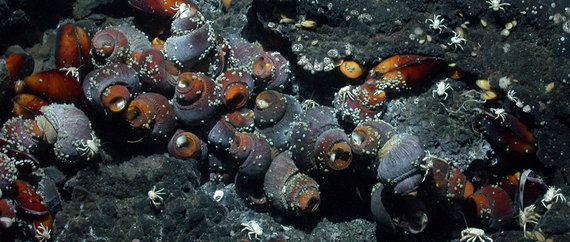
Ifremeria nautilei from the Manus Basin. Source: MARUM

The mining of deep-sea hydrothermal vents for gold, copper, and other precious metals, is imminent. Over the last seven years I’ve worked with industry, academia, and international regulatory agencies to help craft guidelines for conducting environmental impact studies and assess the connectivity and resilience of deep-sea ecosystems. Deep-sea mining, particularly at hydrothermal vents, is a complicated endeavor. As an ecologist and environmentalist, I’d like to see all deep-sea ecosystems receive extraordinary levels of protection. As a pragmatist and someone who recognizes that access to technology is a human right, I realize that demand for essential resources like copper, cobalt, and rare earth elements is only going to increase.

Mining a deep-sea hydrothermal vent presents a conundrum. Across the world, vents vary in their longevity and proximity to each other. A fast spreading center like those found in western Pacific back-arc basins, can have numerous, densely packed vents that persist for tens of years. In contrast, ultra-slow spreading centers, like the central Indian Ridge, may have a few, sparsely distributed vents that remain active for centuries. The sustainability of deep-sea mining is completely dependent on the type of vents being mined. Vents in slow spreading centers may never recover from any anthropogenic impact, while those in fast spreading centers could be extremely resilient to the disturbance caused by mining.

Read More “Beyond the Edge of the Plume: understanding environmental impacts of deep-sea mining” »

These things are related.

Posted on July 16, 2014July 16, 2014 By Andrew Thaler 3 Comments on These things are related.
Blogging, Science

Exhibit A. At Boing Boing, Maggie Koerth-Baker publishes an article talking about her disenchantment with Richard Feynman after learning that he was a gigantic womanizing creeper. Matthew Francis follows up with more information about Feyman’s inexcusable behavior. Armies of Feyman supporters rush to his defense, arguing that we should judge him as a product of his times or that he was a great physicist, so we should just ignore the fact that he was a misogynistic creep that, as a faculty member, pretended to be an undergraduate to pick up students. Janet Stemwedel has more.

Read More “These things are related.” »

Posts pagination

Previous 1 … 27 28 29 … 83 Next

Popular Posts

At least 74 practicing shark researchers: How a silly thing I said online raised thousands for conservationAt least 74 practicing shark researchers: How a silly thing I said online raised thousands for conservationFebruary 26, 2025David Shiffman
Why the new Trump order to shoot wolves is both illegal and a dreadful precedent for endangered speciesWhy the new Trump order to shoot wolves is both illegal and a dreadful precedent for endangered speciesSeptember 5, 2026Ali Gaster
Severely injured great white shark found, are scientists responsible?Severely injured great white shark found, are scientists responsible?March 29, 2011David Shiffman
5 things I learned helping to reassess the global conservation status of every species of tuna and billfish5 things I learned helping to reassess the global conservation status of every species of tuna and billfishSeptember 15, 2026David Shiffman
That's not a blobfish: Deep Sea Social Media is Flooded by AI SlopThat's not a blobfish: Deep Sea Social Media is Flooded by AI SlopDecember 19, 2025Andrew Thaler
Getting a sense of porpoiseJanuary 20, 2009Andrew Thaler
How to build a canoe from scratch on a graduate student stipendHow to build a canoe from scratch on a graduate student stipendApril 17, 2010Andrew Thaler
13 wrong things about sharks that conservation advocates should stop saying in 2013 (and what they should say instead)December 27, 2012David Shiffman
What is a Sand Shark?What is a Sand Shark?November 12, 2017Chuck Bangley
The Trump Administration’s latest attack on endangered speciesThe Trump Administration’s latest attack on endangered speciesSeptember 17, 2026Ali Gaster
Subscribe to our RSS Feed for updates whenever new articles are published.

We recommend Feedly for RSS management. It's like Google Reader, except it still exists.

Southern Fried Science

  • Home
  • About SFS
  • Authors
  • Support SFS


If you enjoy Southern Fried Science, consider contributing to our Patreon campaign.

Copyright © 2026 Southern Fried Science.

Theme: Oceanly Premium by ScriptsTown