Skip to content

Southern Fried Science

Over 15 years of ocean science and conservation online

  • Home
  • About SFS
  • Authors
  • Support SFS

Category: Science

Frequently asked questions about Rosie O’Donnell killing an endangered shark for fun

Posted on July 13, 2014July 13, 2014 By David Shiffman
Science

On Friday afternoon, Slate published an article I wrote about Rosie O’Donnell killing an endangered hammerhead shark. Since that time, there has been an active discussion about the article and the surrounding issues on twitter (follow me here) and Facebook (like my page here). Some of the same questions keep coming up, so I decided to gather these questions, and their answers, in one place.

1) Why are you writing an article about this instead of going to the police / isn’t this illegal?

Since January 1, 2012, it has been illegal to kill great, smooth or scalloped hammerhead sharks in Florida state waters. They must be “immediately released, free alive and unharmed.” Rosie killed this hammerhead before 2012, so it was not illegal at the time. I never said it was illegal.

2) If it wasn’t illegal, what’s the problem?

“Not illegal” is not synonymous with “there are no negative consequences to this action, and it is above reproach.” There are lots of things you can do that are legal but bad. There are some things that are illegal but are not bad. “Legal” and “ethically acceptable” are different thing. I do not think that it is ethically acceptable to kill an endangered species for fun and then yell at conservationists and scientists who criticize this action. Also, if the best you can say about an action is “it wasn’t technically against the law when I did it,” you may want to reconsider the ethics of your hobbies.

Read More “Frequently asked questions about Rosie O’Donnell killing an endangered shark for fun” »
Can the world’s luxury yacht owners help reduce ocean scientists’ biggest expense: ship time?

Posted on July 7, 2014 By David Shiffman 1 Comment on Can the world’s luxury yacht owners help reduce ocean scientists’ biggest expense: ship time?
Blogging, Science

The International SeaKeepers Society is offering yachts for marine science expeditions, free of charge.

Marine scientists perform research ranging in scope from global food security to threatened species conservation to climate change, research that is critical to a healthy environment. As with other scientific disciplines, however, funding cuts threaten the future of this research. A recent Joint Ocean Commission Imitative report gave the United States government a D minus on funding for ocean sciences, and one of the primary funding programs for ocean exploration has been proposed for termination.

Even as funding is reduced, costs associated with ocean science research are rising. In particular, the fuel costs for research vessels, of which there are fewer and fewer each year, are increasing. Ship time often costs tens of thousands of dollars each day. This huge expense is critical, as researchers have to get to their study area before they can begin to study it. The International SeaKeepers Society, a non-profit founded by a group of luxury yacht owners, wants to help reduce or eliminate this cost by hosting marine science expeditions on private yachts. “By providing scientists in need of a research platform at sea with the opportunity to work off a privately owned vessel at little to no cost, SeaKeepers helps remove one of the most costly aspects of data collection: access to the water,” says Brittany Stockman, Director of Programs and Policies for the International SeaKeepers Society.

Read More “Can the world’s luxury yacht owners help reduce ocean scientists’ biggest expense: ship time?” »

10 ways drones can save the ocean

Posted on June 27, 2014June 27, 2014 By Andrew Thaler 3 Comments on 10 ways drones can save the ocean
Conservation, Science

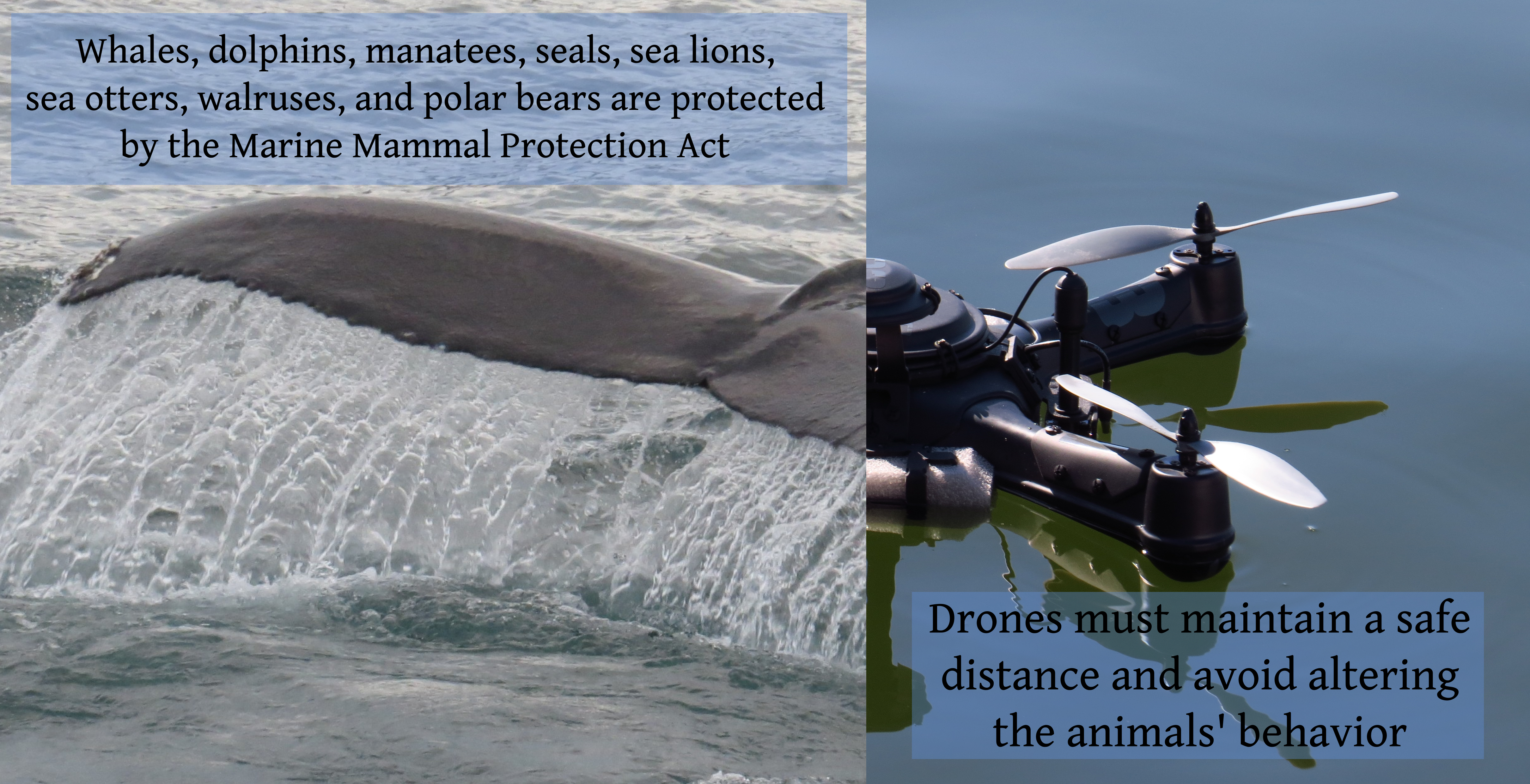
Over the last few months, I’ve been digging into the confusing tangle of laws that protect marine mammals and regulate the use of drones–small, semi-autonomous vehicles used by both researchers and hobbyists to observe whales and other marine mammals. You can check out the outcome of my findings over at Motherboard, where I just published Drones Would Revolutionize Oceanic Conservation, If They Weren’t Illegal. The quick and dirt summary is that there is no legal way to fly drones near whales, at the moment, but there are ways to do it responsibly while we work to catch regulations up with technology.

whaledrones

In working through these guidelines, I’ve spent a lot of time thinking about how we can use this new technology to aid ocean conservation. Below are my top 10 favorite ideas for using drones to save the ocean.

1. Monitor our coastlines for poaching and other illegal activities.

Read More “10 ways drones can save the ocean” »

The communist, feminist, utopian revolutionary who Kickstarted the first submarine

Posted on June 26, 2014June 26, 2014 By Andrew Thaler 4 Comments on The communist, feminist, utopian revolutionary who Kickstarted the first submarine
Science
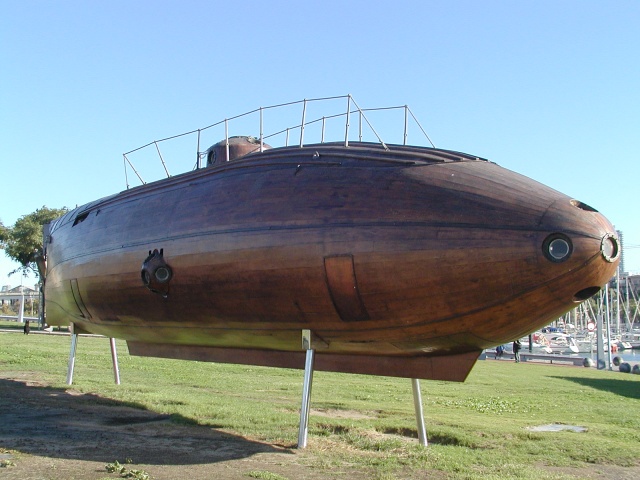
Ictineo II. Image by wikimedia user Cookie.

A curious vessel sits atop a few struts in the Barcelona harbor. Passing tourists could be forgiven if they thought the small, wooden craft was a prop from the golden age of film or a quiet monument to the work of Jules Verne. It is neither. This ship, built from olive wood and clad in copper, is perhaps the most remarkable seagoing vessel of its time. She is Ictíneo II, the first true submarine.

Narcís Monturiol i Estarriol was a Catalonian revolutionary, utopian iconoclast, and proto-feminist writer who argued that the government, rather than the church, should oversee marriage licenses. He founded several newspapers–which were often shut down after a few issues–including  La Madre de Familia “to defend women from the tyranny of men” and Spain’s first communist newspaper, La Fraternidad. 

Read More “The communist, feminist, utopian revolutionary who Kickstarted the first submarine” »

These clams are starting to bake in Bad Gas Episode 3

Posted on June 23, 2014 By Andrew Thaler
Science

Welcome back. In our third installment of Bad Gas, we’re finally beginning to see visible deterioration of the shells. It’s a short one for you to enjoy. httpv://youtu.be/MjGY2XUD_UE

Bad Gas Episode 2!

Posted on June 18, 2014June 18, 2014 By Andrew Thaler
Science

Watch it now! httpv://youtu.be/QXHV0c8juXQ

Bad Gas: a step-by-step guide to experimenting with Ocean Acidification in your kitchen

Posted on June 10, 2014June 10, 2014 By Andrew Thaler
Science

After over a month of planning, it’s finally time to unveil my new ocean acidification project: Bad Gas! Watch this video to learn how to turn a Soda Stream into a miniature ocean and explore the impact of ocean acidification.

httpv://youtu.be/KBJiUWcDGpM

As this experiment continues, it will develop into a series of lesson plans for science teachers to use in the classroom. If you’re following along or joining in with your own tiny ocean, leave a comment below and keep us updated on your progress.

Read More “Bad Gas: a step-by-step guide to experimenting with Ocean Acidification in your kitchen” »

Selected conference tweets from Sharks International #Sharks14

Posted on June 9, 2014June 9, 2014 By David Shiffman
Conservation, Science

I’ve just returned from the second Sharks International, a scientific conference for shark and ray researchers, which was held in South Africa. With nearly 300 researchers and conservationists from more than 38 countries in attendance, the conference was a fantastic learning and networking experience, and a huge success.

In addition to countless talks focusing on cool discoveries about amazing animals and important conservation issues from all over the world,  I don’t think I ate one meal at a table with fewer than 4 countries represented.   Our lab, the RJ Dunlap Marine Conservation Program at the University of Miami, gave 3 scientific  presentations, including my own, which was well-received and resulted in some fascinating discussions. The “social media for scientific outreach” workshop I gave had more than 50 people attend, resulting in a couple of dozen scientists newly joining twitter.

Speaking of twitter, more than 7,000 tweets (including re-tweets) were shared using the conference hashtag #Sharks14 ! Below are links to 8 Storify stories I made: 4 plenary sessions and 4 days of scientific presentations. * Scientists, if any of the tweets about your talk are incorrect, please alert me in the comments and I’ll edit or delete them immediately. *

Read More “Selected conference tweets from Sharks International #Sharks14” »

Nerds for Nature harnesses citizen scientists to monitor environmental change

Posted on May 26, 2014May 27, 2014 By Andrew Thaler
Conservation, Science

[Note, this is a press release for an ongoing project of which Amy and myself are involved.]

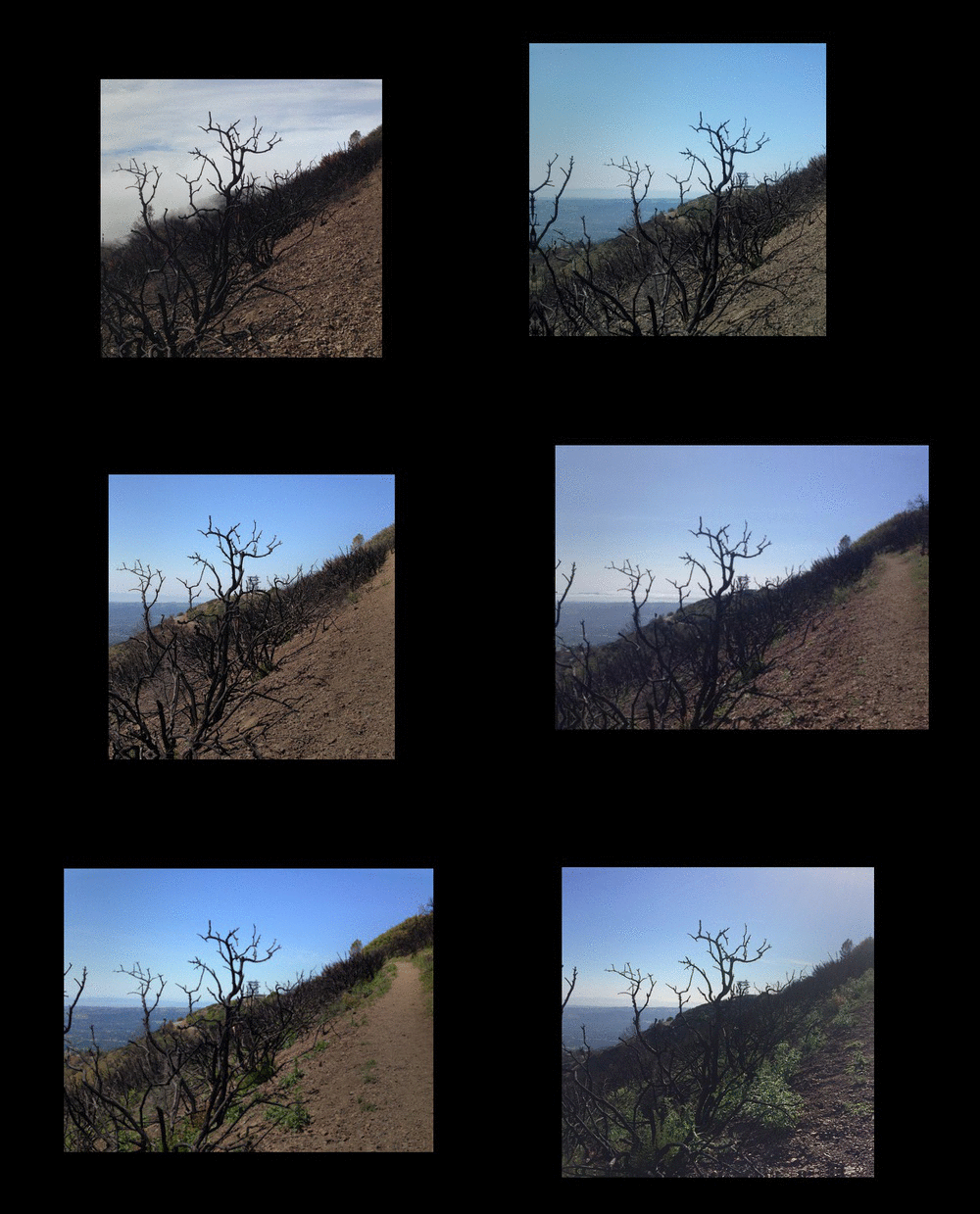
n4nMonday, May 26, 2014 — In September 2013, a large wildfire, ignited by careless target shooters, blazed across Mt. Diablo, leaving 3,100 acres of state park scorched. Wildfires are an important component of chaparral ecosystems, clearing the way for younger growth to take hold, but monitoring recovery after wildfires is an intensive prospect for over-committed park staff. Enter the Nerds for Nature and their change monitoring brackets.

Inspired by monitorchange.org (created by Sam Droege of the U.S. Geological Survey), Nerds for Nature combined low-tech angle brackets with high-tech smart phones to allow hikers to help monitor the ongoing fire recovery. Park visitors are invited to take pictures at predefined locations, aligning their phones against a simple angle bracket that ensures images will center on the same area. Photos are then uploaded to one of several social media services, where a program scrapes the publicly available images and compiles a time lapse video.

morganfire02

Read More “Nerds for Nature harnesses citizen scientists to monitor environmental change” »

Dawn take you all: Bilbo Baggins’ approach is better than “don’t feed the trolls”

Posted on May 21, 2014 By David Shiffman 4 Comments on Dawn take you all: Bilbo Baggins’ approach is better than “don’t feed the trolls”
Blogging, Science

“Dawn take you all, and be stone to you!”For just at that moment the light came over the hill, and there was a mighty twitter in the branches. William never spoke for he stood turned to stone as he stooped; and Bert and Tom were stuck like rocks as they looked at him. And there they stand to this day, all alone, unless the birds perch on them; for trolls, as you probably know, must be underground before dawn, or they go back to the stuff of the mountains they are made of, and never move again. – “The Hobbit,” J.R.R. Tolkien. (Yes, it really says twitter in this section of text. This is the only place in “The Hobbit” or any of the Lord of the Rings books where the word twitter appears.)

Trolls at the world premiere of "The Hobbit: An Unexpected Journey". Creative Commons license from Flickr user Kewl
Trolls at the world premiere of “The Hobbit: An Unexpected Journey”. Creative Commons license from Flickr user Kewl


Though I have largely enjoyed my experiences with online outreach, there are, to put it mildly, lots of unpleasant people on the internet. An extremist opinion and an anonymous forum for expressing it can be a recipe for some particularly nasty conversations. Some people seem to take pleasure in disrupting a conversation even when they have no particular stake in it, and these people are commonly referred to as “trolls.” There are various strategies for dealing with them (for example, here’s an explanation of this blog’s comment policy). In general, “don’t feed the trolls”  is a common piece of advice for those engaged in online discussions. “Don’t feed the trolls” means that if someone is behaving in an inflammatory manner, you should simply not respond. While it’s certainly true that many internet trolls enjoy a combative discussion and that engagement may give an extremist idea more exposure than it would otherwise receive, I’ve never liked the idea of “don’t feed the trolls.”

Read More “Dawn take you all: Bilbo Baggins’ approach is better than “don’t feed the trolls”” »

Posts pagination

Previous 1 … 28 29 30 … 83 Next

Popular Posts

At least 74 practicing shark researchers: How a silly thing I said online raised thousands for conservationAt least 74 practicing shark researchers: How a silly thing I said online raised thousands for conservationFebruary 26, 2025David Shiffman
Why the new Trump order to shoot wolves is both illegal and a dreadful precedent for endangered speciesWhy the new Trump order to shoot wolves is both illegal and a dreadful precedent for endangered speciesSeptember 5, 2026Ali Gaster
Severely injured great white shark found, are scientists responsible?Severely injured great white shark found, are scientists responsible?March 29, 2011David Shiffman
5 things I learned helping to reassess the global conservation status of every species of tuna and billfish5 things I learned helping to reassess the global conservation status of every species of tuna and billfishSeptember 15, 2026David Shiffman
That's not a blobfish: Deep Sea Social Media is Flooded by AI SlopThat's not a blobfish: Deep Sea Social Media is Flooded by AI SlopDecember 19, 2025Andrew Thaler
Getting a sense of porpoiseJanuary 20, 2009Andrew Thaler
How to build a canoe from scratch on a graduate student stipendHow to build a canoe from scratch on a graduate student stipendApril 17, 2010Andrew Thaler
13 wrong things about sharks that conservation advocates should stop saying in 2013 (and what they should say instead)December 27, 2012David Shiffman
What is a Sand Shark?What is a Sand Shark?November 12, 2017Chuck Bangley
The Trump Administration’s latest attack on endangered speciesThe Trump Administration’s latest attack on endangered speciesSeptember 17, 2026Ali Gaster
Subscribe to our RSS Feed for updates whenever new articles are published.

We recommend Feedly for RSS management. It's like Google Reader, except it still exists.

Southern Fried Science

  • Home
  • About SFS
  • Authors
  • Support SFS


If you enjoy Southern Fried Science, consider contributing to our Patreon campaign.

Copyright © 2026 Southern Fried Science.

Theme: Oceanly Premium by ScriptsTown