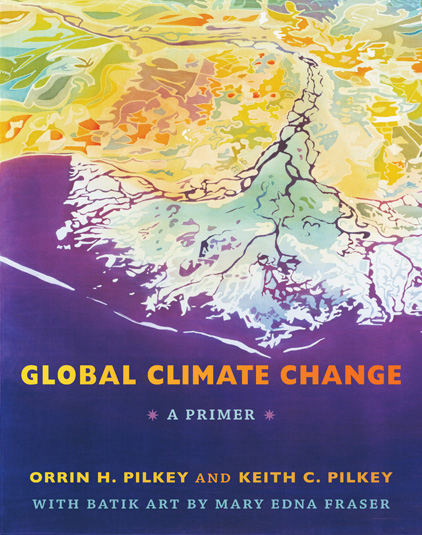
Sea level rise. Desertification. Ocean acidification. Climategate. Permafrost. Greenland ice sheet. Hockey stick. The language of global climate change can be overwhelming. Every year, as we learn more about the ways that human activity fundamentally alter global processes, the subject becomes even broader and more complicated. Fortunately, world renowned oceanographer Orrin Pilkey and his son, Keith Pilkey, have produced a comprehensive and readable primer on global climate change. The strength of Global Climate Change: A Primer can be broken into three sections – the content, the conflict, and the illustrations.
Category: Science

Bonnethead sharks have always occupied a special place in my heart (and in the photo of myself that I use for Southern Fried Science). These animals, a member of the hammerhead family, are some of the most abundant sharks along the coast of the Southeastern United States. While the IUCN Shark Specialist Group rates bonnetheads as “Least Concern”, the assessment noted that these sharks are subjected to heavy commercial and recreational fishing pressure.
Read More “World’s oldest known bonnethead shark captured in South Carolina!” »

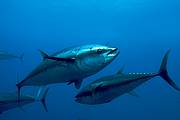
Bluefin tuna have become a posterchild for the marine conservation movement. A single bluefin can sell for tens or even hundreds of thousands of dollars, which results in heavy fishing pressure. Conservationists and fisheries scientists have tried for years to get the fishing quota reduced. They tried to get CITES protection for the bluefin. Citing both heavy fishing pressure and the fact that the oil spill occurred in bluefin spawning grounds in the Gulf, some recently tried to get these animals protected under the Endangered Species Act. To date, these efforts have fallen short, resulting in just a modest quota reduction at ICCAT. New research, however, shows just how important protecting this group of fishes is.
Read More “New research lists tuna species as threatened; will fisheries managers act?” »

The Largetooth Sawfish (Pristis perotteti) is about to become the second elasmobranch protected by the Endangered Species Act, a welcome step in the conservation of these animals. In addition to the slow growth, low number of offspring, and relatively late maturity which characterizes most elasmobranchs, another biological feature contributes to sawfish being “among the most endangered fishes in the world,” according to Shark Advocates International President Sonja Fordham. It’s hard to imagine a biological structure that can get more thoroughly entangled in fishing nets than the “saw” on their rostrum, and bycatch is one of the leading causes of population decline in this group of animals. Additionally, the saw used to be a part of the souvenir trade.
Check out my interview with Dr. Kiki Sanford on Dr. Kiki’s Science Hour. httpv://www.youtube.com/watch?v=Huf6ahIgShU And here’s a direct link for a high resolution version.

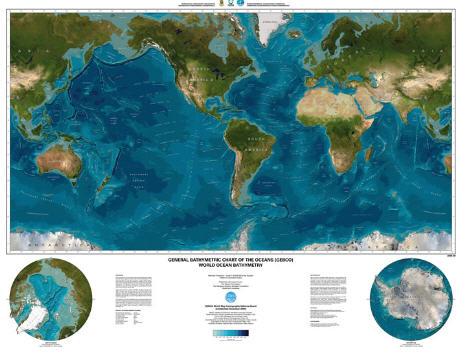
The deep benthos is simultaneously the largest and least explored ecosystem on the planet. Covering nearly 60% of the Earth’s surface, it supports an almost unimaginable reservoir of biodiversity, rivaling all terrestrial habitats combined. Its microbial and metabolic diversity have revolutionized our view of how life is sustained, not once, but twice (first with the discovery of chemoautotrophic organisms at hydrothermal vents, and again with the discovery of cognate communities at methane cold-seeps). In spite of these major discoveries, the deep benthos is essentially invisible. Only a select few will ever witness it first hand, while for the rest, it will remain a dark and unfathomable abyss.
This places the deep benthos in a precarious position. Human activities that influence the deep sea go unnoticed. Without a thorough understanding of its ecology, it is impossible to assess the damage caused by anthropogenic impacts. Although recent and ongoing studies have shed light on many species and communities, the deep benthos remains largely unexplored. Two studies, both released this week, reveal simultaneously how little we know about the deep benthos and how human impacts, even unintentional ones, could shape this ecosystem.
Read More “Rumors from the Abyss: visions of a future without deep sea conservation” »
This entertaining and informative video comes to us from physical oceanography graduate student Katie Smith. Hat Tip: Girls are Geeks
Megumi Shimizu is a second year PhD student at the Duke University Marine Lab. Since the news has so far only been reported in Japanese, we asked her to provide a short write-up of the discovery. The first scaly-foot gastropod, Crysomallon squamiferum, was found in the Indian Ocean ten years ago (Van Dover et al 2001), … Read More “New Scaly-Foot Gastropod found in Indian Ocean” »
Divya Karnad is a wildlife biologist in India focusing on marine issues. She began her career working with olive ridley sea turtles, studying hatchling responses to beach lighting and temperature-dependent sex determination. Lately, she has been focusing on marine fisheries issues on both coasts of India, including shark fishing and the fin trade. She met WhySharksMatter at the International Marine Conservation Congress, and agreed to write a guest post for Southern Fried Science.
A soupy end to Indian Sharks
Thomas and Arulsingh, fishermen who hail from Kanyakumari, hauled up their nets and fishing lines on a beach in southern India. The catch was special and I was privileged, as an outsider, to be invited to watch as this enormous fish was sliced, its fin, the most valuable part, handled with extreme care. The shark fin, I was told, would fetch a lot of money, despite the fact that it was not a hammerhead, which fetches the best price. Nevertheless, the fishermen revealed, there were several more where this one came from, and they could be caught easily using specialized hooks and lines. Altogether estimated to host about 70 species of shark, 18, including two species of hammerheads, spadenose, requiem and milk sharks, are often landed for fins or meat from Indian waters. Different parts of the Indian coast have different species compositions of sharks, with the northwest reporting large proportions of spadenose sharks, hammerheads along the south west coast, and requiem, hammerheads and milk sharks along the east coast. Sharks are usually brought to shore before finning and the flesh is consumed locally while the fins are exported to South-east Asian markets.
Read More “Shark Science Monday: The Sharks and Shark Fisheries of India” »
Earlier this week, several New York state beaches were closed due to shark sightings. Fox News’ Rick Leventhal, speaking as part of Bill Hemmer’s “America’s Newsroom” show, reported on this story, claiming that “some onlookers ID’ed them as thresher sharks, they’re estimated to be about 18 feet long”. A half-eaten seal also washed up on shore nearby.
To his credit, Mr. Leventhal attempted to play down fears about these animals, saying that “Let’s not forget that sharks live in the ocean…as long as there’s food, they’re likely to keep hanging around”. However, I was immediately skeptical of the claim that a group of 18 foot long thresher sharks were swimming slowly just a few yards offshore. A cursory review of the known biology and ecology of thresher sharks will explain my skepticism.
Read More “Were 18 foot long thresher sharks responsible for closing a New York beach?” »