Skip to content

Southern Fried Science

Over 15 years of ocean science and conservation online

  • Home
  • About SFS
  • Authors
  • Support SFS

Category: Uncategorized

Founder effects in a deep-sea invasive: Easter Limpets

Posted on January 1, 2016January 2, 2016 By Andrew Thaler
Uncategorized

On January 1, 2016, the Southern Fried Science central server began uploading blog posts apparently circa 2041. Due to a related corruption of the contemporary database, we are, at this time, unable to remove these Field Notes from the Future or prevent the uploading of additional posts. Please enjoy this glimpse into the ocean future while we attempt to rectify the situation.


Global Norming marches into the deep sea. We’ve been watching with concern the gradual shift towards the normalization of species distribution due to the widespread introduction of marine invasives. Thanks to a general lack human habitation on the seafloor, the deep sea has remained largely exempt from this phenomenon. It takes a lot of technanthropic migration to normalize an ecosystem.

In the past, scientists have observed small numbers of deep-sea species transported into new biogeographic regions on the backs of research submersibles and industrial equipment, hinting at the potential for deep-sea invasion. Thankfully proactive mitigation measures have mostly prevented large scale deep-sea invasions. Range expansion due to climate change is generally considered to be the greater threat to deep-sea ecosystem stability.

In a recent paper, Plough and friends (2040) identify a large-scale species invasion at hydrothermal vents in the Caribbean. Lepetodrilus johnsonii, a limpet species common at hydrothermal vents around the equatorial extent of the East Pacific Rise have established themselves at vent fields around the Mid-Cayman Spreading Center, just south of the Cayman Islands. As the Pacific and Caribbean are separated by continents, it is unlikely that this invasion happened without human assistance.

Using next-generation Yotta+ environmental holome sequencing, Plough and friends were able to trace the invasion to a relatively small founder population, at most 23 individuals, which we’re likely transported sometime in the last 6 years.

Read More “Founder effects in a deep-sea invasive: Easter Limpets” »

Meet the Elasmobranch Society diversity scholarship winners

Posted on December 30, 2015January 1, 2016 By David Shiffman
Uncategorized
The American Elasmobranch Society is the world's oldest and largest professional association of shark and ray scientists
The American Elasmobranch Society is the world’s oldest and largest professional association of shark and ray scientists

This summer, the American Elasmobranch Society announced a new diversity initiative.We were thrilled to receive over 100 applicants to our Young Professional Recruitment Fund! Of these:

  • 67% were female
  • 64% were not citizens of the United States, and citizens from 30 countries applied
  • 33% were from an ethnicity other than white/Caucasian, with a plurality (15%) of Hispanic/Latino descent
  • 26% are the first in their family to get a higher education

We were able to award the scholarship, which covers the cost of a one year Society membership in addition to providing specialized mentorship, networking, and professional development training, to 31 applicants!

Our awardees come from all over the world, and specialize (or are training to specialize) in a variety of research techniques. In the coming weeks, we will begin professional development, mentorship and networking discussions on the AES website forums and Facebook page. All members of the Society are welcome to participate in these discussions and training sessions (though some will be specific to the unique needs of underrepresented minorities in the sciences), and all are encouraged to welcome our new members and answer their questions when possible. Below, we’ve included a photo of each awardee as well as a section of their application essay.

Read More “Meet the Elasmobranch Society diversity scholarship winners” »

For science communication, hashtag games are a scientist’s secret weapon.

Posted on December 15, 2015 By Andrew Thaler
Uncategorized

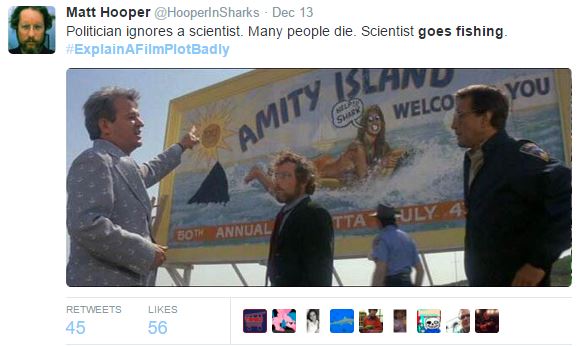
#ExplainAFilmPlotBadly, #StupidCommonNames, #LOTRyourResearch.

Hashtag games. A few times a week, these weird, funny, quirky wordplay challenges explode across twitter, driving the most serious, and sometimes even super-serious, tweeters to pause for a moment of levity and let you know what they think Jaws is really about.

jaws

Goofy, whimsical, and extremely silly, one might wonder why scientists and science communicators would want to jump into these games, potentially compromising the reputation they’ve built up as a Serious Scientist (TM), unswayed by such foolishness.

The answer is simple: Playing hashtag games makes you a better communicator of science.

Read More “For science communication, hashtag games are a scientist’s secret weapon.” »

Ocean Kickstarter of the Month: Let’s build another trash eating water wheel in Canton!

Posted on December 8, 2015December 8, 2015 By Andrew Thaler
Uncategorized

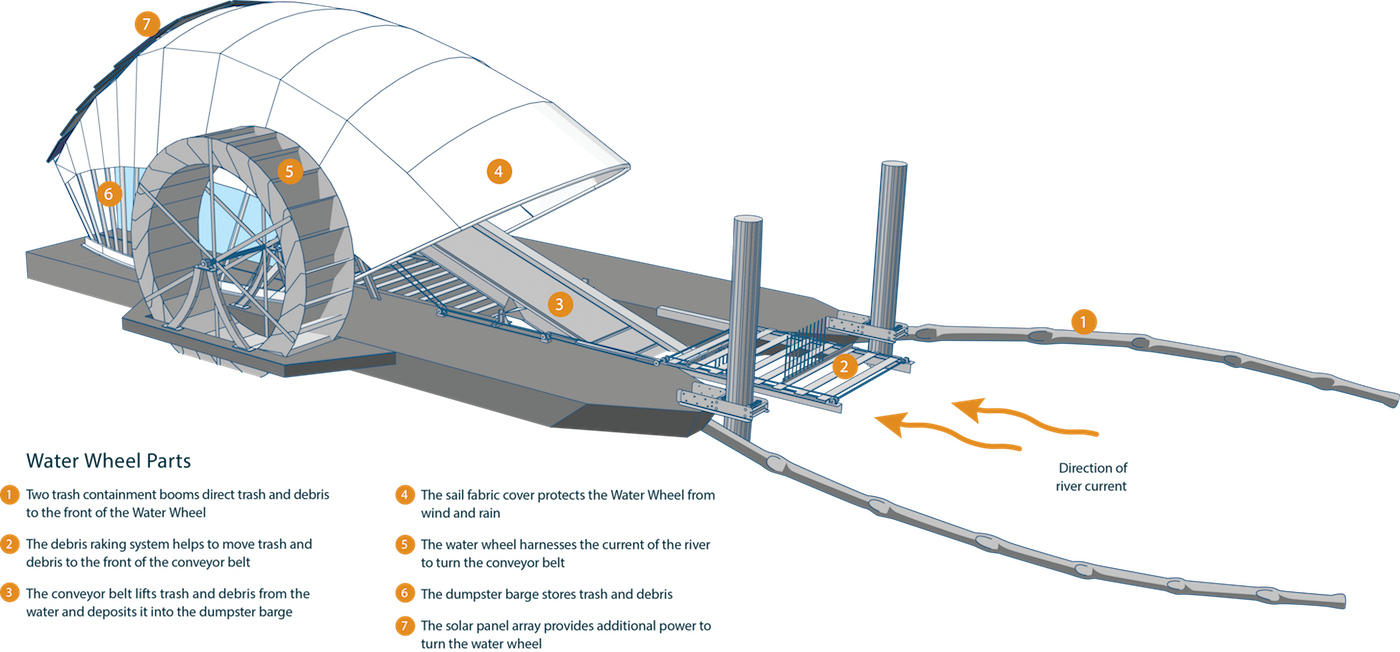
Help the Waterfront Partnership of Baltimore Build a new Water Wheel powered trash interceptor in Baltimore’s Canton neighborhood.

Help Fund the Canton Water Wheel.

I love the Baltimore Trashwheel. Let’s build another one.

healthyharbor_waterwheelsign1

In all seriousness, if you haven’t heard about the Baltimore Water Wheel, see my first article, or my 1-year recap at Hakai, or my most recent SFS post, or visit Mr. TrashWheel on Twitter. Of all the tech in all the world proposed to clean trash out of our oceans, these water wheels are the only large scale projects that have best tested and vetted against some serious garbage.

Read More “Ocean Kickstarter of the Month: Let’s build another trash eating water wheel in Canton!” »

So you’ve been asked to review a manuscript? – Tips for the novice reviewer

Posted on November 28, 2015 By Chris Parsons 5 Comments on So you’ve been asked to review a manuscript? – Tips for the novice reviewer
Uncategorized

Review a manuscript

Any scientist who is trying to publish relies upon the generosity of other scientists to peer-review their work. As any scientist will tell you, this has pros and cons – constructive advice can greatly improve a manuscript and fix flaws, but on the cons side every scientist has stories about the infamous “reviewer #3” who makes every scientist’s life hell at some time or other. As you start to build a name for yourself, you’ll be asked to review manuscripts, and you should! Reviewing manuscripts is an essential task for any academic and is an integral part of academic life – it is basically an obligation. But there is generally no class on “how to review manuscripts” despite it being a critical part of an academic’s job, and the reviewer has a huge responsibility: your review could potentially make, or seriously hamper, someone’s career. Moreover, doing a poor job reviewing could let bad, unscientific research get published, or even prevent important research getting accepted. To help navigate the minefield of reviewing, here are some tips and suggestions for the novice reviewer…

Read More “So you’ve been asked to review a manuscript? – Tips for the novice reviewer” »

Fun Science FRIEDay – Theory of Relative… easiness??

Posted on November 20, 2015November 20, 2015 By Kersey Sturdivant
Science, Uncategorized

This week’s FSF is a bit different. Instead of talking about some relatively new discovery or research endeavor, we are going to focus on an old adage, the Theory of Relativity.  The Theory of Relativity is one of those concepts that is hugely important but very poorly understood outside of the physics community. Instead of … Read More “Fun Science FRIEDay – Theory of Relative… easiness??” »

Fun Science FRIEDay – Virus be good!

Posted on November 6, 2015November 6, 2015 By Kersey Sturdivant
Uncategorized

“The era of the oncolytic virus is… here.” Stephen Russell, Cancer researcher and haematologist at the Mayo Clinic in Rochester, Minnessota

…. and let me be the first to welcome our new virus overlords!

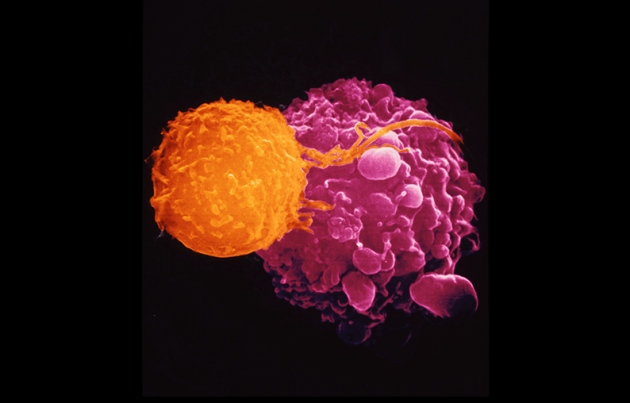
 Viral-based cancer therapy: T cells (orange) are recruited to attack malignant cells (purple). (Photo credit: Dr. Andrejs Liepins/SPL)
Viral-based cancer therapy: T cells (orange) are recruited to attack malignant cells (purple). (Photo credit: Dr. Andrejs Liepins/SPL)

Last week the US Food and Drug Administration (FDA) made a decision that received little fanfare, but has huge implications for modern medicine and how we approach cancer treatment in the US. That decision? The FDA granted their approval for a genetically engineered virus to be used to treat cancer. That virus was the herpesvirus called talimogene laherparepvec, and its use is for the treatment of melanoma lesions in the skin and lymph nodes. This huge decision makes it the first oncolytic virus to receive market approval and could pave the way for more oncolytic viruses to enter the “market.”

Read More “Fun Science FRIEDay – Virus be good!” »

How I decide whether or not to give an interview to a journalist

Posted on October 28, 2015October 28, 2015 By David Shiffman 16 Comments on How I decide whether or not to give an interview to a journalist
Uncategorized

I’m quite selective about what journalists/ publication I’ll agree to an interview with, as well as what topics I’ll agree to speak about. I turn down ten or so interviews for every one that I agree to give, though I will often recommend alternative experts for journalists to interview.

First and foremost, if I don’t have time, I won’t do a media interview. My primary job is to focus on my Ph.D. research so I can finish and graduate. If it means helping a friend or taking advantage of an amazing opportunity for exposure, I may be able to reshuffle around some time, but that’s only for exceptional circumstances. Similarly, I’ll generally only do interviews before or after work, while I’m in the car between campus and home, or during my lunch break, because my main job comes first.

Read More “How I decide whether or not to give an interview to a journalist” »

Contribute to science communication research, take the Southern Fried Science reader survey!

Posted on October 19, 2015 By David Shiffman
Uncategorized

We have partnered with Dr. Paige Brown Jarreau, a science communication researcher, to create a survey of Southern Fried Science readers. By participating, you’ll help contribute to scientific understanding of blogs and blog readership. You’ll also get some free science art from Paige’s photography, as well as chances to win a t-shirt and other prizes. … Read More “Contribute to science communication research, take the Southern Fried Science reader survey!” »

Fun Science FRIEDay – Dude, I’m Glowing!

Posted on October 2, 2015 By Kersey Sturdivant
Uncategorized

Happy Fun Science FRIEDay! After a brief hiatus, due to life, hoping this installment represents the regular…err, semi-regular, occurrence of FSF. So this hit the interwebs pretty big earlier this week, the first documented reptile to glow. That honor belongs to the Hawksbill a sea turtle, observed first by  David Gruber, of City University of … Read More “Fun Science FRIEDay – Dude, I’m Glowing!” »

Posts pagination

Previous 1 … 26 27 28 … 119 Next

Popular Posts

At least 74 practicing shark researchers: How a silly thing I said online raised thousands for conservationAt least 74 practicing shark researchers: How a silly thing I said online raised thousands for conservationFebruary 26, 2025David Shiffman
Why the new Trump order to shoot wolves is both illegal and a dreadful precedent for endangered speciesWhy the new Trump order to shoot wolves is both illegal and a dreadful precedent for endangered speciesSeptember 5, 2026Ali Gaster
The Trump Administration’s latest attack on endangered speciesThe Trump Administration’s latest attack on endangered speciesSeptember 17, 2026Ali Gaster
That's not a blobfish: Deep Sea Social Media is Flooded by AI SlopThat's not a blobfish: Deep Sea Social Media is Flooded by AI SlopDecember 19, 2025Andrew Thaler
How to build a canoe from scratch on a graduate student stipendHow to build a canoe from scratch on a graduate student stipendApril 17, 2010Andrew Thaler
What is a Sand Shark?What is a Sand Shark?November 12, 2017Chuck Bangley
5 things I learned helping to reassess the global conservation status of every species of tuna and billfish5 things I learned helping to reassess the global conservation status of every species of tuna and billfishSeptember 15, 2026David Shiffman
What Ocean Ramsey does is not shark science or conservation: some brief thoughts on "the Shark Whisperer" documentaryWhat Ocean Ramsey does is not shark science or conservation: some brief thoughts on "the Shark Whisperer" documentaryJuly 2, 2025David Shiffman
Shark of Darkness: Wrath of Submarine is a fake documentaryShark of Darkness: Wrath of Submarine is a fake documentaryAugust 10, 2014Michelle Jewell
When is a take not a take? Yet another attack on Endangered Species by the Trump AdministrationWhen is a take not a take? Yet another attack on Endangered Species by the Trump AdministrationSeptember 22, 2026Ali Gaster
Subscribe to our RSS Feed for updates whenever new articles are published.

We recommend Feedly for RSS management. It's like Google Reader, except it still exists.

Southern Fried Science

  • Home
  • About SFS
  • Authors
  • Support SFS


If you enjoy Southern Fried Science, consider contributing to our Patreon campaign.

Copyright © 2026 Southern Fried Science.

Theme: Oceanly Premium by ScriptsTown