
Skip to content

Southern Fried Science

Over 15 years of ocean science and conservation online

  • Home
  • About SFS
  • Authors
  • Support SFS

Recent Posts

humpback whale in Antarctica
The evolution of the International Whaling Commission – from  whaling quotas to whale conservation
June 10, 2026
Isn’t ironic, don’t you think: dismantling the Ocean Observatories Initiative on World Oceans Day
June 9, 2026
“Why Sustainable Seafood Matters” is now available for preorder! Here’s what it’s about, and why I decided to write it.
June 8, 2026
Here’s how to join my IMCC8 symposium, “Ocean Science Communication: What’s New and What’s Next?”
April 22, 2026
Deep Sea Mining Symposium Announcement
April 21, 2026
Join Me at Upwell: A Wave of Ocean Justice — Our Fourth Year!
March 24, 2026

Happy Fun Science Friday – Ice Cream!?

Posted on November 22, 2013November 22, 2013 By Kersey Sturdivant
Uncategorized

I scream, you scream, we all scream for ICE CREAM!!!!

Photo Credit: Sherbert Photography (from WikiCommons)

That’s right ladies and gentlemen, this FSF is about a childhood (or for some, adulthood) favorite, Ice Cream!

Some rather ingenious… or mad scientist-esque ice cream makers have invented a glow-in-the-dark ice cream flavor. That is correct, you heard right, glow-in-the-dark ice cream, welcome to reality! 🙂

Read More “Happy Fun Science Friday – Ice Cream!?” »

Check out Musingo, the music trivia app that helps save the ocean

Posted on November 21, 2013 By David Shiffman
Conservation

MusingoThis week saw the launch of Musingo, an interactive music trivia app for iOS. The developer, Good World Games, lets users make an impact in the real world through the game apps they play, and Musingo is no different.

Though the app is free, there are opportunities for in-game purchases of additional game tokens, as well as the opportunity to buy the songs you hear through iTunes. 50% of the profits from those in-game purchases are donated to my lab, the RJ Dunlap Marine Conservation Program, where they will be used to help support our many ongoing research projects.


GHOF-Musingo-ad05


Read More “Check out Musingo, the music trivia app that helps save the ocean” »

On being an ally and being called out on your privilege

Posted on November 19, 2013January 15, 2014 By Andrew Thaler 13 Comments on On being an ally and being called out on your privilege
Uncategorized

Privilege — within any given community, whether formal or ad hoc, social or professional, members will express varying levels of privilege. Some people will be playing the game on easy mode, others will be struggling with subtle and overtly oppressive societal and institutional structures. If you are a person of privilege who recognizes the reality of this imbalance and strives to make your community a more accessible and welcoming place to those who aren’t as privileged, you might identify yourself as an ally.

You are wrong.

Being an ally is not something you are, it’s something you do. “Ally” is not an identity, it is a set of behaviors that help acknowledge and promote underprivileged members of your community. But you have privileges that they do not and not all of your words and actions will fall under the banner of “being an ally”. Even if you consider yourself well-versed in your understanding of oppression and privilege, you will, eventually do or say something that reveals your privilege and is offensive, insensitive, or callous, if not outright cruel. The whole point of privilege is that it’s largely invisible to those who have it — including you. If you have colleagues that respect you, if people in the broader community value the work you do, if you are recognized as an important voice, people will call you out on your privilege.

How you respond to that criticism makes the difference between self-identifying as an ally, and actually being an ally.

Read More “On being an ally and being called out on your privilege” »

Stories from the Fleet: The Sea-Above

Posted on November 19, 2013November 19, 2013 By Andrew Thaler
Popular Culture

Fleet is a dystopian maritime adventure in which sea level rise and disease has driven the last survivors of the human race to sea. I’m releasing the story in serials — 3 chapters on the first Monday of each month — on Amazon. Loyal readers who can’t wait for the next installment can slate their thirst with a series of short stories set in the world of Fleet that will be published on Southern Fried Science every few weeks. Please enjoy the forth and final of these distractions, The Sea-Above, where we find out how one of my favorite side-characters survives the fire on Gallant and what happened to the sailors who journeyed into the sea-above.


Amberjack was trapped. There was only one way out of the hold and fire raged beyond the bulkheads. Remembering his training, he found a rag to cover his face and, creeping low, felt along the walls until he found a cool spot.

There were no cool spots.

The fire spread through the ship. It blazed on the decks above and the decks below. He was trapped like a chicken in Gill’s diesel stove.

No, he thought to himself, not diesel. Fizzle.

He laughed at his own joke, then choked as the smoke seeped through the sealed hatch. He was roasting! He coughed again. The smoke surrounded him, permeating the hold. His rag reeked of it. He tore it from his face in disgust. He coughed again and again. He couldn’t stop. He wanted to panic, knew he should panic, but he couldn’t. His head was light. His mind felt clear. He began to drift, backwards. The flames reminded him of his great-grandfather, a man who lived for over a century, and a story he would tell the young Amberjack; a story about other ships, their fleets, and the sailors who rode fire into the sky.

“Did you know, Jack, that not every ship sails on the sea?”

Read More “Stories from the Fleet: The Sea-Above” »

What’s turning dolphins in South Carolina into half dolphins?

Posted on November 15, 2013November 15, 2013 By David Shiffman 4 Comments on What’s turning dolphins in South Carolina into half dolphins?
Science

One of the many perks of spending lots of time on boats is that you get to overhear some pretty strange radio conversations. The strangest I ever heard took place in the summer of 2002 in the Gulf of Maine, when the captain of a fishing vessel was calling the Coast Guard to report that he was looking at half of a dolphin swimming around. I was shocked, but the Coast Guard radio operator had apparently heard of this, and replied, “No, sir, that’s a mola mola. It’s a fish, and it’s supposed to look like that.” Everyone on the bridge of the sailing vessel I was on laughed.

I hadn’t thought about the idea of “half of a dolphin” for more than 10 years… until last week, when I saw this photo of an animal which had washed up on Folly Beach, South Carolina, only a few miles from where I used to live (and swim). According to marine mammal expert Wayne McFee of NOAA’s National Centers for Coastal and Ocean Science, this is the second time in recent weeks that half a dolphin has washed up on the shores of South Carolina.  Although more than twice the average number of dolphins have stranded in South Carolina this year, seeing two bitten in half ” is an unusual occurrence,” he told me.

Read More “What’s turning dolphins in South Carolina into half dolphins?” »

Ships of the Fleet: the vessels that inspired the covers for Fleet

Posted on November 12, 2013November 14, 2013 By Andrew Thaler
Popular Culture

We’re approaching the home stretch. Fleet: Horizon, the conclusion to my ongoing science fiction serial novel, premiers on December 2. Each installment features a distinctive cover, featuring one of the ships in the Fleet. The ship on each cover is a real vessel, photographed during one of my many field expeditions. In honor of the completion of Fleet, here are the real stories behind the four vessels featured on the covers.

FleetCover1-REACHFleet: The Reach features the ship that inspired (loosely) NC-3502-WM. The actual vessel is an ocean tugboat that I encountered in Antigua, at the conclusion of JC82/83 — my research cruise to the Mid-Cayman Spreading Center and tag-along cruise to the seas around Montserrat. The noticeably aging vessel was living out its latter years as a pilot boat, delivering pilots to cruise ships and other large vessels so that they could navigate into Antigua’s port.

Maritime Pilots are an old and honored profession. Many ports are dangerous, with local hazards that shift, sometimes as often as the tide. Because of this, large vessel require a local mariner, someone who knows their waterways, to guide ships into port.

Read More “Ships of the Fleet: the vessels that inspired the covers for Fleet” »

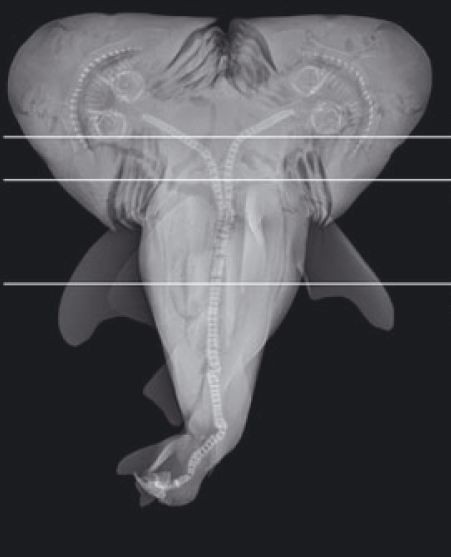
What does the new species of hammerhead mean for shark science and conservation?

Posted on November 11, 2013 By David Shiffman 3 Comments on What does the new species of hammerhead mean for shark science and conservation?
What does the new species of hammerhead mean for shark science and conservation?
Conservation, Science

In the year 2000, Dr. William Driggers, now of the National Marine Fisheries Service’s Southeast Fisheries Science Center in Mississippi, was sampling for sharks in South Carolina. Dr Driggers recalls that “at the time I was collecting samples from various species of sharks for life history studies and also collecting tissues for Dr. [Joseph] Quattro’s genetics work.” Dr. Quattro, a professor at the Marine Science Program and Department of Biological Sciences at the University of South Carolina, had been working on a project to characterize the population genetics of fish in South Carolina by “working my way down river systems to the coast,” he told me. “Even sturgeons were showing population differentiation, so I thought the next animal would be marine, but estuarine dependent – sharks.” Analysis of the samples Dr. Driggers collected led to a surprising result.

“I was asked “what are the chances that I would misidentify a ‘scalloped hammerhead’ and answered that there was no chance as they are very morphologically distinctive (looks like I was wrong),” Dr. Driggers told me. “I was then informed that genetic sequences indicated that some of the specimens I had labeled as ‘scalloped hammerhead’ were distinctly different from known S. lewini sequences. At Dr. Quattro’s request, I began bringing back whole specimens so they could be archived and morphometric analyses conducted. The first whole specimen that was vouchered and shown to be the new species was collected in Bulls Bay in July of 2001.”


In 2006,  Dr. Quattro and his team published a paper entitled “Genetic evidence of cryptic speciation within hammerhead sharks,” showing that there may be a previously-unknown species hiding within scalloped hammerheads. When genetic samples of scalloped hammerheads, great hammerheads, and bonnethead sharks were phylogenetically mapped, the team found an unexpected result. Dr. Quattro, told me that “while doing the population genetics of this animals, we found two divergent genetic lineages within what were morphologically scalloped hammerheads.  We gathered sequences and specimens from other known species and didn’t find a match – that’s what got us on the whole cryptic species [defined by Bickford et al. 2007 as “two or more distinct species erroneously classified and hidden under one species name”] thing.”

Read More “What does the new species of hammerhead mean for shark science and conservation?” »

Happy Fun Science Friday – Blinky, the 3-Eyed Crab

Posted on November 8, 2013November 10, 2013 By Kersey Sturdivant
Conservation

Blinky! The three-eyed crab from the Simpsons. Photo Credit: Matt Groening
Blinky! The three-eyed crab from the Simpsons.
Photo Credit: Matt Groening

Happy FSF everyone, this week we bring you Blinky! For the Simpsons aficionados amongst you, we are unfortunately not referring to the affable 3-Eyed fish, indicative of the radioactive influence of Springfield’s nuclear power plant.

No Blinky is a real-life, 3-eyed crab, discovered and documented by German researcher Gerhard Scholtz and colleagues while working in New Zealand’s Hoteo River. Scholtz and co stumbled upon this 3-eyed organism, and must have wonder during their cursory inspection if they had discovered a new species, one that was defying the principles of bilateral animals. However, upon closer anatomical inspection Scholtz realized that the mystery crab was not a 3-eyed wonder species, but conjoined twins of the already identified Amarinus lacustris crab species.

Read More “Happy Fun Science Friday – Blinky, the 3-Eyed Crab” »

What can the funniest shark memes on the internetz teach us about ocean science and conservation?

Posted on November 8, 2013November 11, 2013 By David Shiffman 4 Comments on What can the funniest shark memes on the internetz teach us about ocean science and conservation?
Conservation, Science

In recent years, some of my favorite ocean predators have started to show up in memes. As part of our tradition of using internet humor to educate our readers, I’ve selected the funniest shark memes on the internetz, and I’ve tried to explain what’s going on in the photos used for those memes. I’m happy to discuss these science and conservation issues in the comments if you have any questions, but my selection of what constitutes that funniest shark memes  is obviously correct and beyond dispute.

12) Ferocious planktivore is ferocious

4d7m1

Original image source: Flickr user Yohancha.
What’s going on? This shows a basking shark, the second largest shark in the world, with its mouth open wide. While this gaping maw may appear to be menacing, like whale sharks, the basking shark is a strict planktivore.

Read More “What can the funniest shark memes on the internetz teach us about ocean science and conservation?” »

Fish out of water: the necropsy of the beached oarfish

Posted on November 8, 2013November 8, 2013 By Guest Writer
Science

antonella_pretiAntonella Preti, graduated with a degree in Biology specializing in Marine Ecology from the University of Turin, Italy. She is currently attending a long distance Ph.D. program through the School of Biological Sciences of Aberdeen, Scotland.  She has been working for 15 years on the feeding ecology of large pelagic species (sharks, swordfish and cetaceans) caught in the California drift gill net fisheries at the Southwest Fisheries Science Center in La Jolla, California. She has co-authored numerous scientific publications and two books, Mako Sharks and Sharks of the Pacific Northwest.

When most people refer to a “once in a lifetime fish” they generally mean a big fish that they fought for a long time that will make an excellent trophy for their mantle or a story for their grandchildren.  When marine scientists talk about a “once in a lifetime fish,” we often mean a species that is so rarely seen that we feel lucky to have observed it, even after it has washed up on a beach somewhere.  This month we in Southern California have been lucky enough to have one such “once in a lifetime fish” appear twice in a span of a week, as two oarfish washed ashore local beaches.  The first, an 18-foot specimen was found on Catalina Island and the second, a 14-foot specimen (approximately 275 pounds), was found in Oceanside, CA.  I had the unique opportunity to assist in the necropsy of the second individual at Southwest Fisheries Science Center (SWFSC) in La Jolla, CA.  This was an interesting and exciting opportunity to learn more about a species about which little is known as it rarely encountered.

Read More “Fish out of water: the necropsy of the beached oarfish” »

Posts pagination

Previous 1 … 117 118 119 … 273 Next

Popular Posts

The story of the pride flag made from NASA imagery: Bluesky's most-liked imageThe story of the pride flag made from NASA imagery: Bluesky's most-liked imageSeptember 27, 2024David Shiffman
"Why Sustainable Seafood Matters" is now available for preorder! Here's what it's about, and why I decided to write it."Why Sustainable Seafood Matters" is now available for preorder! Here's what it's about, and why I decided to write it.June 8, 2026David Shiffman
Tackling the least important debate in deep-sea mining: the desultory hyphenTackling the least important debate in deep-sea mining: the desultory hyphenJune 8, 2026Andrew Thaler
What Ocean Ramsey does is not shark science or conservation: some brief thoughts on "the Shark Whisperer" documentaryWhat Ocean Ramsey does is not shark science or conservation: some brief thoughts on "the Shark Whisperer" documentaryJuly 2, 2025David Shiffman
Deep-sea Mining, Domestic Cats, Star Trek, and Ocean Exploration: Andrew's mid-year podcast round-up.Deep-sea Mining, Domestic Cats, Star Trek, and Ocean Exploration: Andrew's mid-year podcast round-up.June 6, 2026Andrew Thaler
Shark of Darkness: Wrath of Submarine is a fake documentaryShark of Darkness: Wrath of Submarine is a fake documentaryAugust 10, 2014Michelle Jewell
Isn’t ironic, don’t you think: dismantling the Ocean Observatories Initiative on World Oceans DayIsn’t ironic, don’t you think: dismantling the Ocean Observatories Initiative on World Oceans DayJune 9, 2026Southern Fried Science
The evolution of the International Whaling Commission – from  whaling quotas to whale conservationThe evolution of the International Whaling Commission – from  whaling quotas to whale conservationJune 10, 2026Chris Parsons
What is a Sand Shark?What is a Sand Shark?November 12, 2017Chuck Bangley
That's not a blobfish: Deep Sea Social Media is Flooded by AI SlopThat's not a blobfish: Deep Sea Social Media is Flooded by AI SlopDecember 19, 2025Andrew Thaler

squishy

Subscribe to our RSS Feed for updates whenever new articles are published.

We recommend Feedly for RSS management. It's like Google Reader, except it still exists.

Southern Fried Science

  • Home
  • About SFS
  • Authors
  • Support SFS


If you enjoy Southern Fried Science, consider contributing to our Patreon campaign.

Copyright © 2026 Southern Fried Science.

Theme: Oceanly Premium by ScriptsTown