Skip to content

Southern Fried Science

Over 15 years of ocean science and conservation online

  • Home
  • About SFS
  • Authors
  • Support SFS

Recent Posts

humpback whale in Antarctica
The evolution of the International Whaling Commission – from  whaling quotas to whale conservation
June 10, 2026
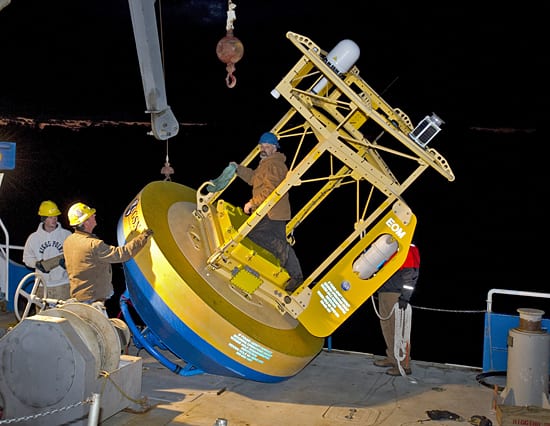
Isn’t ironic, don’t you think: dismantling the Ocean Observatories Initiative on World Oceans Day
June 9, 2026
“Why Sustainable Seafood Matters” is now available for preorder! Here’s what it’s about, and why I decided to write it.
June 8, 2026
Here’s how to join my IMCC8 symposium, “Ocean Science Communication: What’s New and What’s Next?”
April 22, 2026
Deep Sea Mining Symposium Announcement
April 21, 2026
Join Me at Upwell: A Wave of Ocean Justice — Our Fourth Year!
March 24, 2026

Happy Fun Science Friday – First Venomous Crustacean

Posted on October 25, 2013October 28, 2013 By Kersey Sturdivant 4 Comments on Happy Fun Science Friday – First Venomous Crustacean
Science

Happy Fun Science Friday everyone! After a busy semester I hope to get into the regular groove of Fun Science Friday posts.

This week I bring you the first and only known venomous crustacean, the remipede Speleonectes tulumensis.

Remipede
A remipede (Speleonectes tanumekes). Credit: Joris van der Ham

These crustaceans were first discovered in the 1980s and suspected to be venomous after documentation that behind their jaws, they had a pair of sharp, hollow-tipped fangs that were connected to glands.  This was a strong indication that the fangs were being used to inject a chemical into prey, though it was never proven…. Until now!  Step forward Bjorn von Reumont, from the Natural History Museum in London, whose team  thoroughly described the fangs and characterized the cocktail of toxins in the venom of S. tulumensis.

Read More “Happy Fun Science Friday – First Venomous Crustacean” »

CNN is airing “Blackfish” Thursday at 9. Watch with us and join the live twitter chat!

Posted on October 23, 2013October 27, 2013 By David Shiffman 2 Comments on CNN is airing “Blackfish” Thursday at 9. Watch with us and join the live twitter chat!

On Thursday, October 24th at 9:00 P.M. eastern time, CNN will be airing Blackfish, the critically-acclaimed documentary about orca whale captivity and SeaWorld. Be sure to check out Southern Fried Science’s review (and fact-check) of the film. Blackfish will be followed by a live debate at 11:00 hosted by Anderson Cooper. The debate will feature … Read More “CNN is airing “Blackfish” Thursday at 9. Watch with us and join the live twitter chat!” »

How to #DrownYourTown: a step by step guide to modeling sea level rise in Google Earth

Posted on October 18, 2013November 1, 2013 By Andrew Thaler 4 Comments on How to #DrownYourTown: a step by step guide to modeling sea level rise in Google Earth
#DrownYourTown

We’ve reached the point in the program where requests for #DrownYourTown are coming in faster than I can process. That’s great! It means people are really connecting with the #DrownYourTown hashtag as a way to bring the concept (if not the specific details) of sea level rise home. The response has been greater than I ever imagined!

So, rather than leave people high and dry (we wouldn’t want that, would we), here is a step by step guide to simulating sea level rise anywhere in the world using Google Earth and a little geographic wizardry. The best part? It can all be done with completely free software.

1. Download Google Earth — you can find it here. Take some time to play around with it. Google packed this free package with some awesome features.

Read More “How to #DrownYourTown: a step by step guide to modeling sea level rise in Google Earth” »

Welcome back, U.S. government science and environment agencies!

Posted on October 17, 2013October 27, 2013 By David Shiffman

On October 17th, after a 16 day shutdown, the U.S. government re-opened. Here are what the twitter accounts from U.S. science and environment agencies had to say on their first day back. I’ll continue to update this throughout the day as more twitter accounts come back online

Read More “Welcome back, U.S. government science and environment agencies!” »

#DrownYourTown: Exploring Sea Level Rise through real-time, interactive, GIS modeling

Posted on October 16, 2013November 1, 2013 By Andrew Thaler 4 Comments on #DrownYourTown: Exploring Sea Level Rise through real-time, interactive, GIS modeling
#DrownYourTown, Science

UPDATE: These posts, and the hashtag are getting a lot of attention, so I’d like to reiterate, Caveat Tweetor (twitter beware) — these models are being generated on the fly as request come in. They are not validated and there are many variables that influence sea level rise which are not taken into account. This is a fun way to visualize potential sea level rise but it would be inadvisable to use it for real estate speculation. 

This afternoon, I took to twitter to try out a novel outreach initiative — getting people to think about sea level rise by asking them to drown their home towns. With Google Earth and a “Sea Level” image layer booted up, I was poised for 2 hours of intense map manipulation. The requests came in fast, and ranged from the expected coastal cities with a couple meters of sea level rise all the way to the radical (yes, we flooded Reno, Nevada). After 120 minutes, I had produced models at 52 locations and interacted with more than 400 people. I was also completely exhausted. Here, for your enjoyment, is the complete collection of #DrownYourTown models from the initial 2-hour marathon.

Read More “#DrownYourTown: Exploring Sea Level Rise through real-time, interactive, GIS modeling” »

Science in the Fleet: What would your hometown look like with 80 meters Sea Level Rise

Posted on October 16, 2013April 29, 2014 By Andrew Thaler 33 Comments on Science in the Fleet: What would your hometown look like with 80 meters Sea Level Rise
#DrownYourTown, Popular Culture

UPDATE: These posts, and the hashtag are getting a lot of attention, so I’d like to reiterate, Caveat Tweetor (twitter beware) — these models are being generated on the fly as request come in. They are not validated and there are many variables that influence sea level rise which are not taken into account. This is a fun way to visualize potential sea level rise but it would be inadvisable to use it for real estate speculation. 

The central conceit in the world of Fleet–my dystopian maritime science fiction serial adventure–is that sea level has risen 80 meters, an extreme maximum projection under global climate change prediction (INSERT LINK TO USGS DATA HERE AFTER SHUTDOWN ENDS – UPDATE: Oh, neat, we have a federal government again. Here’s the source). Since 80 meters is pretty hard to visualize, I turned to Google Earth to help me simulate what our world would look like under those conditions, starting with my new residence in San Francisco:

FleetSanFran
San Francisco, 80 meters

Oh, but we’re not done yet.

Read More “Science in the Fleet: What would your hometown look like with 80 meters Sea Level Rise” »

If you aren’t following Sizing Ocean Giants, I don’t even want to know you

Posted on October 15, 2013October 27, 2013 By Andrew Thaler
Blogging

Earlier this semester, Dr. Craig McClain, of NESCENT and Deep Sea News fame, launched the Sizing Ocean Giants project. His crack team of exceptional undergraduates will be conducting “outresearch” — a research adventure in which outreach is an integrated component of their research, rather than a secondary tag-along. They are 10 articles deep into the … Read More “If you aren’t following Sizing Ocean Giants, I don’t even want to know you” »

An Ocean Playlist for Science Online Oceans

Posted on October 10, 2013October 27, 2013 By Andrew Thaler

So you’re heading out to Miami this weekend for Science Online Oceans and you’re thinking “hey, I really need some fresh jams to get me pumped up for the conference”. Or perhaps you’re thinking “you know, I need some good thoughtful rhymes that make me think about ocean issues from a different angle”? Well, we here at Southern Fried Science Aim to please. Enjoy.

Alela Diane – The Pirate’s Gospel

httpv://www.youtube.com/watch?v=SpwSxHiiNSw

Read More “An Ocean Playlist for Science Online Oceans” »

Everything is better with Aquaman

Posted on October 8, 2013October 27, 2013 By Andrew Thaler
Popular Culture

And that includes teen drama parody series. Especially when it promises some nerdy marine science in-jokes. httpv://www.youtube.com/watch?v=U3kpKNXLdCQ “You know what I love about members of the Chordata phylum? Nothing!” You and me both, Aquaman, you and me both.

Science in the Fleet: The Promise of Technology as a Panacea for Human Impacts

Posted on October 7, 2013October 27, 2013 By Andrew Thaler
Popular Culture, Science

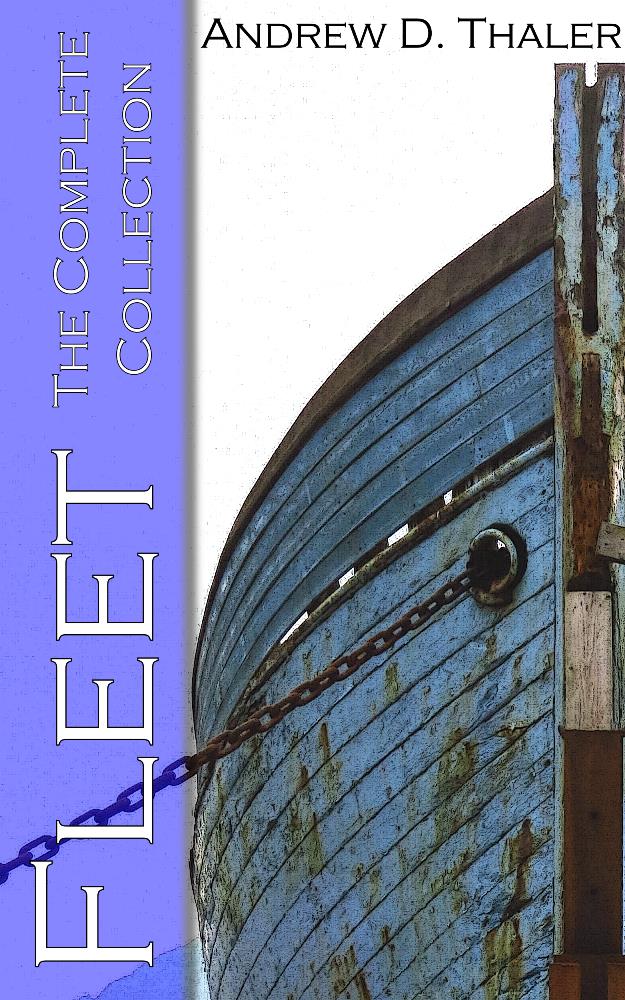
FleetCover1-REACHToday marks the release of Fleet: Wide Open, part 2 of my serial maritime science fiction adventure. With half the story revealed, we now see the roll technology plays in both the history and the day-to-day operations of the fleet. Specifically, we see three major technological advances that seem as though they would have been major solutions to the environmental problems facing the fleet, yet somehow, the world continues to fall apart.

In our world and the world of the fleet, we often hold up technological innovation as a panacea for global problems. It’s easy to look towards the next big advancement as the solution to our current woes — from alternative energy sources to groundbreaking trash removal devices — but what is often lost in the hype is the human component. Yes, technology is a necessary component of global environmental solutions. You can even look at the arc of human advancement as one long series of bootstrap-hoists — we need to utilize dirty tech to access environmentally sustainable tech (i.e. you can’t develop the ability to produce solar panels without first harnessing the energy locked in fossil fuels). But technology alone is useless without also changing human behavior. This creates a major problem, as technological innovation is often used as a tool to bypass human behavior entirely, the assumption being that it doesn’t matter what the individual does, so long as the tech is in place to mitigate it.

The horse piles of New York

Around the turn of the last century, New York City was in crisis. Horses, the primary means of transportation for people and products within the city have an unfortunate byproduct — feces, lots and lots of feces. At its peak, more than 60,000 horses were depositing upwards of 500 tones of manure every day. The horse crisis itself was the result of a major technological innovation — more efficient fertilizer based on mass produced phosphate. Where once there was a major economic incentive to collect the manure and resell it as fertilizer, now there was also no incentive. And so, the mountains of feces piled up. It got so bad that one editorial expounded that, by the 1930’s piles of horse manure would stand three stories tall and the city would be awash in an unending tide of feces.

Read More “Science in the Fleet: The Promise of Technology as a Panacea for Human Impacts” »

Posts pagination

Previous 1 … 119 120 121 … 273 Next

Popular Posts

The story of the pride flag made from NASA imagery: Bluesky's most-liked imageThe story of the pride flag made from NASA imagery: Bluesky's most-liked imageSeptember 27, 2024David Shiffman
"Why Sustainable Seafood Matters" is now available for preorder! Here's what it's about, and why I decided to write it."Why Sustainable Seafood Matters" is now available for preorder! Here's what it's about, and why I decided to write it.June 8, 2026David Shiffman
Tackling the least important debate in deep-sea mining: the desultory hyphenTackling the least important debate in deep-sea mining: the desultory hyphenJune 8, 2026Andrew Thaler
What Ocean Ramsey does is not shark science or conservation: some brief thoughts on "the Shark Whisperer" documentaryWhat Ocean Ramsey does is not shark science or conservation: some brief thoughts on "the Shark Whisperer" documentaryJuly 2, 2025David Shiffman
Deep-sea Mining, Domestic Cats, Star Trek, and Ocean Exploration: Andrew's mid-year podcast round-up.Deep-sea Mining, Domestic Cats, Star Trek, and Ocean Exploration: Andrew's mid-year podcast round-up.June 6, 2026Andrew Thaler
Shark of Darkness: Wrath of Submarine is a fake documentaryShark of Darkness: Wrath of Submarine is a fake documentaryAugust 10, 2014Michelle Jewell
The evolution of the International Whaling Commission – from  whaling quotas to whale conservationThe evolution of the International Whaling Commission – from  whaling quotas to whale conservationJune 10, 2026Chris Parsons
Isn’t ironic, don’t you think: dismantling the Ocean Observatories Initiative on World Oceans DayIsn’t ironic, don’t you think: dismantling the Ocean Observatories Initiative on World Oceans DayJune 9, 2026Southern Fried Science
What is a Sand Shark?What is a Sand Shark?November 12, 2017Chuck Bangley
That's not a blobfish: Deep Sea Social Media is Flooded by AI SlopThat's not a blobfish: Deep Sea Social Media is Flooded by AI SlopDecember 19, 2025Andrew Thaler

squishy

Subscribe to our RSS Feed for updates whenever new articles are published.

We recommend Feedly for RSS management. It's like Google Reader, except it still exists.

Southern Fried Science

  • Home
  • About SFS
  • Authors
  • Support SFS


If you enjoy Southern Fried Science, consider contributing to our Patreon campaign.

Copyright © 2026 Southern Fried Science.

Theme: Oceanly Premium by ScriptsTown