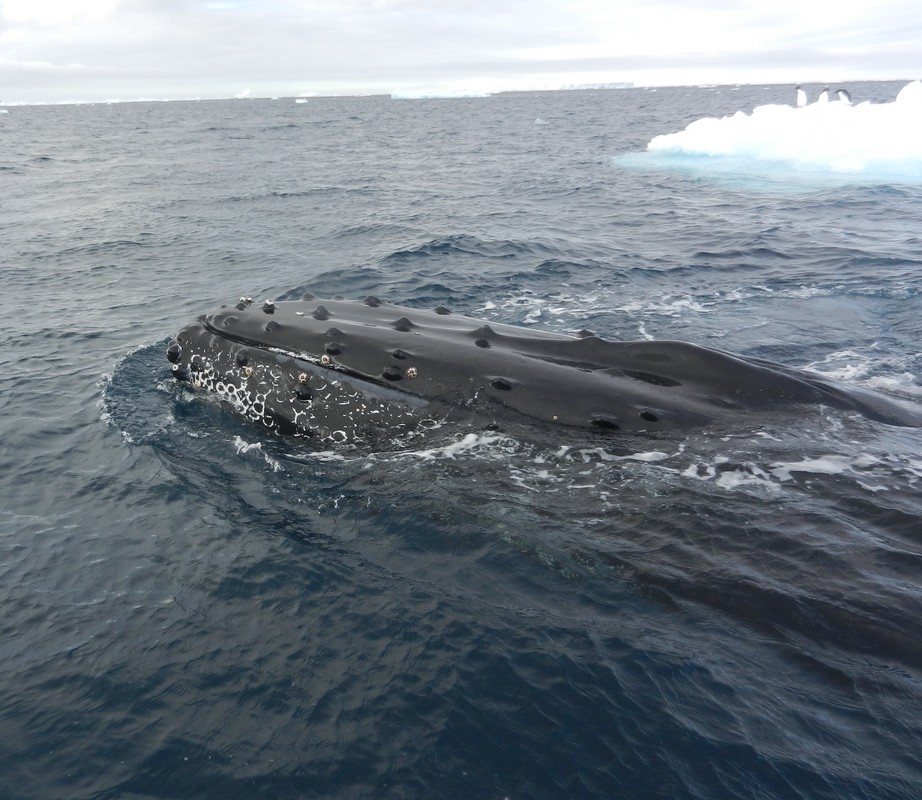

Earlier this semester, Dr. Craig McClain, of NESCENT and Deep Sea News fame, launched the Sizing Ocean Giants project. His crack team of exceptional undergraduates will be conducting “outresearch” — a research adventure in which outreach is an integrated component of their research, rather than a secondary tag-along. They are 10 articles deep into the … Read More “If you aren’t following Sizing Ocean Giants, I don’t even want to know you” »
So you’re heading out to Miami this weekend for Science Online Oceans and you’re thinking “hey, I really need some fresh jams to get me pumped up for the conference”. Or perhaps you’re thinking “you know, I need some good thoughtful rhymes that make me think about ocean issues from a different angle”? Well, we here at Southern Fried Science Aim to please. Enjoy.
Alela Diane – The Pirate’s Gospel
httpv://www.youtube.com/watch?v=SpwSxHiiNSw
And that includes teen drama parody series. Especially when it promises some nerdy marine science in-jokes. httpv://www.youtube.com/watch?v=U3kpKNXLdCQ “You know what I love about members of the Chordata phylum? Nothing!” You and me both, Aquaman, you and me both.
Today marks the release of Fleet: Wide Open, part 2 of my serial maritime science fiction adventure. With half the story revealed, we now see the roll technology plays in both the history and the day-to-day operations of the fleet. Specifically, we see three major technological advances that seem as though they would have been major solutions to the environmental problems facing the fleet, yet somehow, the world continues to fall apart.
In our world and the world of the fleet, we often hold up technological innovation as a panacea for global problems. It’s easy to look towards the next big advancement as the solution to our current woes — from alternative energy sources to groundbreaking trash removal devices — but what is often lost in the hype is the human component. Yes, technology is a necessary component of global environmental solutions. You can even look at the arc of human advancement as one long series of bootstrap-hoists — we need to utilize dirty tech to access environmentally sustainable tech (i.e. you can’t develop the ability to produce solar panels without first harnessing the energy locked in fossil fuels). But technology alone is useless without also changing human behavior. This creates a major problem, as technological innovation is often used as a tool to bypass human behavior entirely, the assumption being that it doesn’t matter what the individual does, so long as the tech is in place to mitigate it.
The horse piles of New York
Around the turn of the last century, New York City was in crisis. Horses, the primary means of transportation for people and products within the city have an unfortunate byproduct — feces, lots and lots of feces. At its peak, more than 60,000 horses were depositing upwards of 500 tones of manure every day. The horse crisis itself was the result of a major technological innovation — more efficient fertilizer based on mass produced phosphate. Where once there was a major economic incentive to collect the manure and resell it as fertilizer, now there was also no incentive. And so, the mountains of feces piled up. It got so bad that one editorial expounded that, by the 1930’s piles of horse manure would stand three stories tall and the city would be awash in an unending tide of feces.
Read More “Science in the Fleet: The Promise of Technology as a Panacea for Human Impacts” »
“The sea is big. The sea is cruel. She takes more than she gives. That’s how it’s always been.” Fuel is the lifeblood of the fleet and it is running out. It has been months since the crew of Miss Amy brought home a catch big enough to feed the fleet. With fuel rationed, there … Read More “Fleet: Wide Open now available in the Amazon Kindle Store!” »
InDEEP and the Deep-Ocean Stewardship Initiative have compiled a massive database of more than 250 online videos featuring ecology, biology, oceanography, and conservation of the deep ocean: Deep-sea Online Videos. There’s a ton of videos in there to explore (especially if you find yourself with an abundance of shutdown related free time). Here’s just one … Read More “TGIF: 250+ videos from the deep sea for you to enjoy” »
After receiving some great feedback on my first foray into indie publishing, I’ve decided to redo the covers for Fleet, my maritime science fiction serial. Take a look and let me know what you think. And, of course, check out Fleet: The Reach on Amazon’s kindle store. Fleet: Wide Open will be available on Monday!
Are you an ocean scientist suffering from government shutdown? Are you furloughed for the foreseeable future? Do you have friends, colleagues, co-workers, collaborators, rivals, or sworn enemies feeling the sting? You better believe we do to. Here’s your open thread to talk about how the government shutdown is affecting you and affecting the ocean. Here … Read More “Your Ocean Science Shutdown Open Thread” »
Back in the day, I worked as an intern at Rhode Island Marine Fisheries, where my job was basically to provide general field work help with whatever survey needed an extra pair of hands (yes, it was an awesome job). One of these was a beach seining survey looking at juvenile fishes using Rhode Island’s coastal salt ponds as nursery habitat. Among the usual silversides, mummichogs, and juvenile flounder, two of the ponds were also home to entire schools of something that I was only familiar with due to having relatives in Virginia: spot. These little Scianids, a member of the same family as Atlantic croaker and red drum, are caught in droves in the waters of Virginia and the Carolinas but traditionally have been rare north of the Chesapeake Bay. They were one of the more common species we caught in these two Rhode Island salt ponds, and occurred so consistently that we could actually observe them growing over the course of the summer. It isn’t unheard of for stray tropical fishes to get swept into Narragansett Bay on Gulf Stream eddies, where they’re either collected by aquarists or die during their first winter. However, these were populations of spot that we were seeing. I don’t know if these fish survived their first winter or have come back since I moved down to North Carolina, but even at the very beginning of my interest in fisheries ecology I knew this was odd.
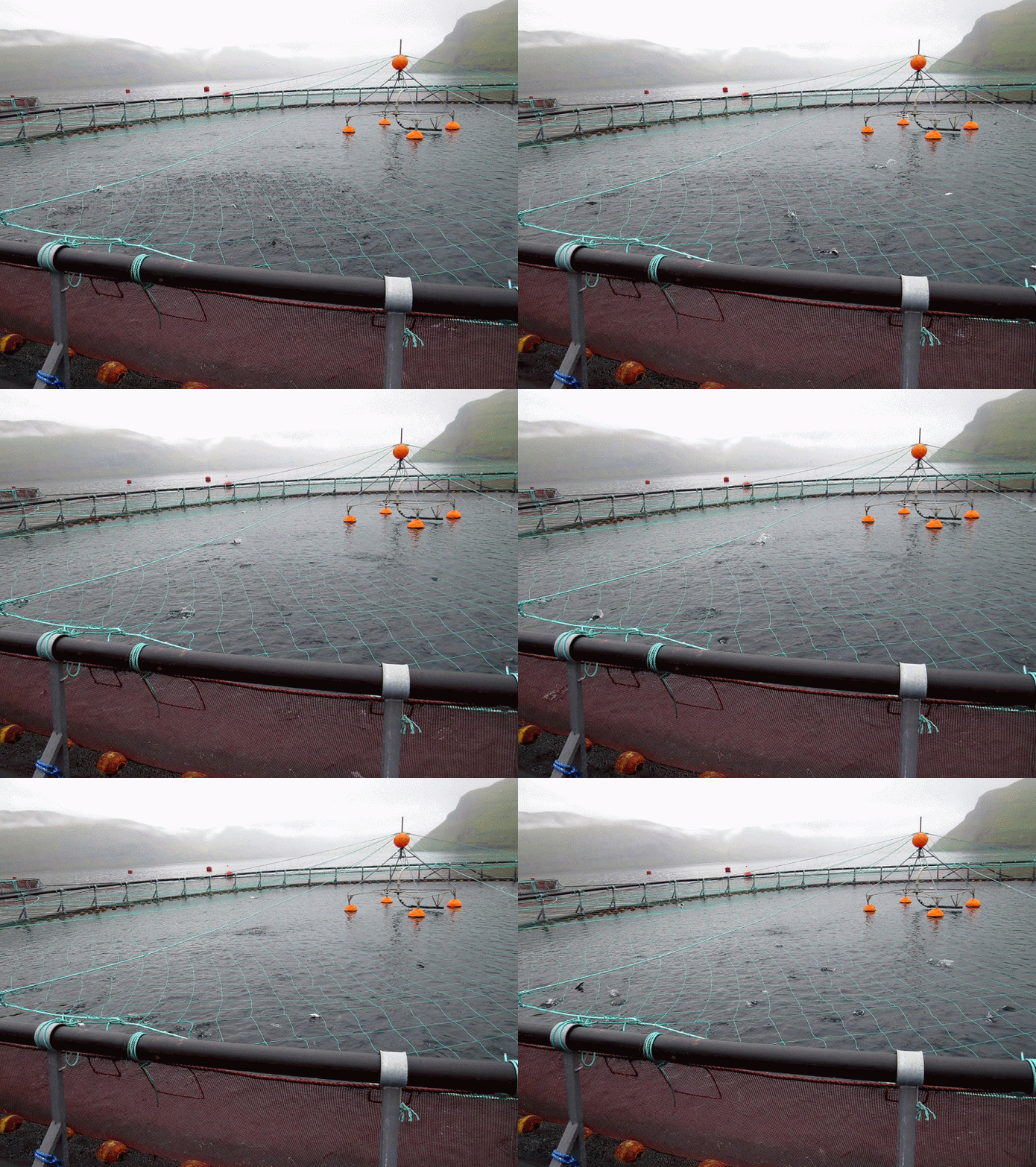
If you treat yourself to a salmon dinner in Manhattan, that delicious fish most likely came from the Faroe Islands. Should you be scratching your head and trying to remember your geography, you’re not alone. Yet, this tiny country in the North Atlantic is one of the world leaders in salmon aquaculture. While in the Faroes, I had the good fortune of a tour of a site run by the company Hiddenfjord in the town of Vestmanna by Jogvan Egholm. Since aquaculture is still a new and developing field, it’s always nice to see how things are done. Once I learned of the market connections to the US, however, I began to consider the tour the story of our food as well.

The salmon we visited were destined for the US and China, countries with the best market price. Recently, we’ve had salmon on the brain after a controversial taste-test by the Washington Post revealed testers preferred frozen, farmed salmon. Bottom line of the controversy: understand where your fish come from and the environmental and health implications of certain production styles. Not all farming is created equal – Europe does a much better job using salmon from their native range than us westerners. So here’s a story of a fish. After fully grown in the Faroes, they’ll be shipped to the UK by boat and flown the rest of the way by plane. Smaller fish stay in the European market. But it starts with an egg…