Skip to content

Southern Fried Science

Over 15 years of ocean science and conservation online

  • Home
  • About SFS
  • Authors
  • Support SFS

Recent Posts

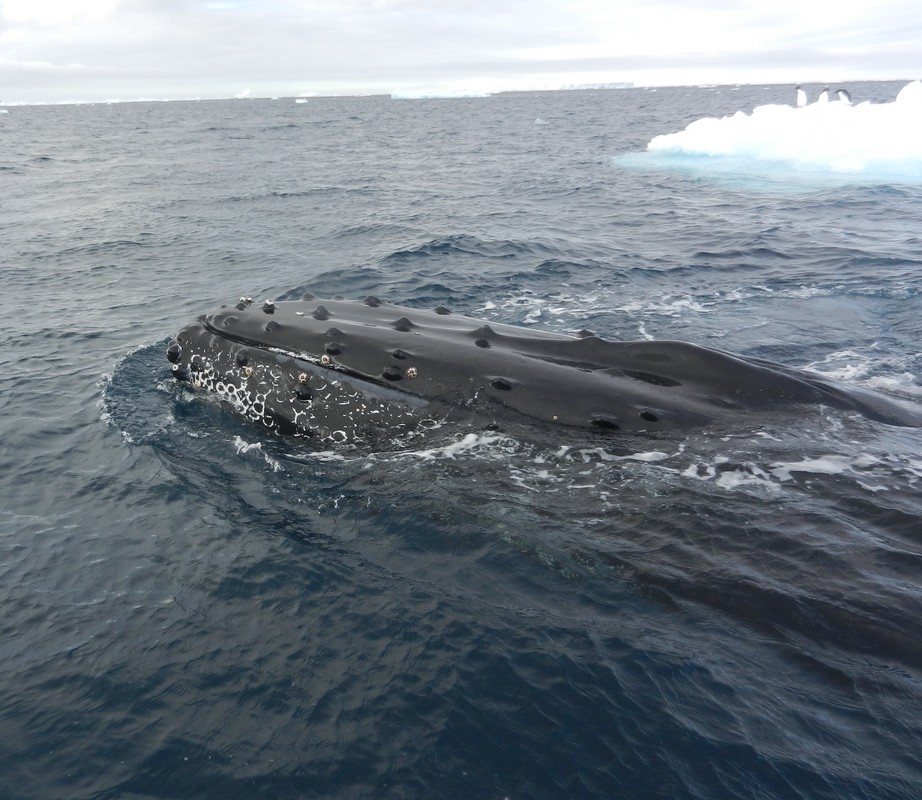
humpback whale in Antarctica
The evolution of the International Whaling Commission – from  whaling quotas to whale conservation
June 10, 2026
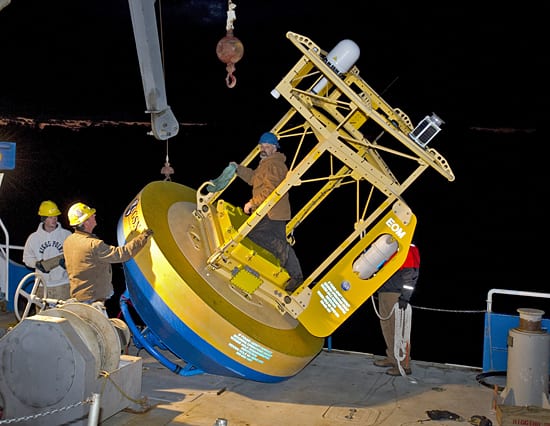
Isn’t ironic, don’t you think: dismantling the Ocean Observatories Initiative on World Oceans Day
June 9, 2026
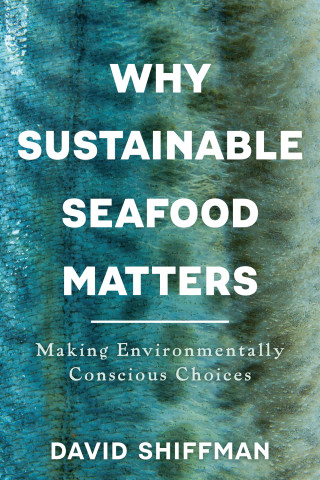
“Why Sustainable Seafood Matters” is now available for preorder! Here’s what it’s about, and why I decided to write it.
June 8, 2026
Here’s how to join my IMCC8 symposium, “Ocean Science Communication: What’s New and What’s Next?”
April 22, 2026
Deep Sea Mining Symposium Announcement
April 21, 2026
Join Me at Upwell: A Wave of Ocean Justice — Our Fourth Year!
March 24, 2026

#Ocean2Ocean: Corn Maze Edition

Posted on August 19, 2013October 27, 2013 By Andrew Thaler
Blogging

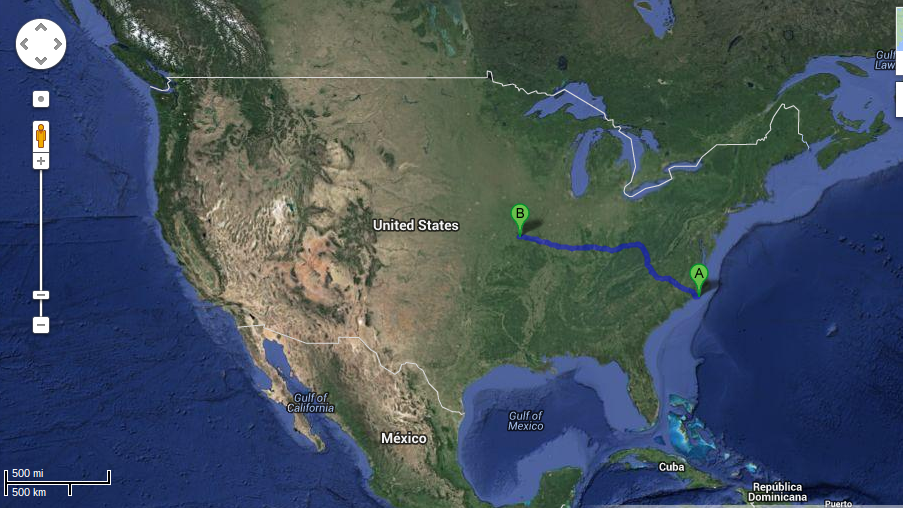
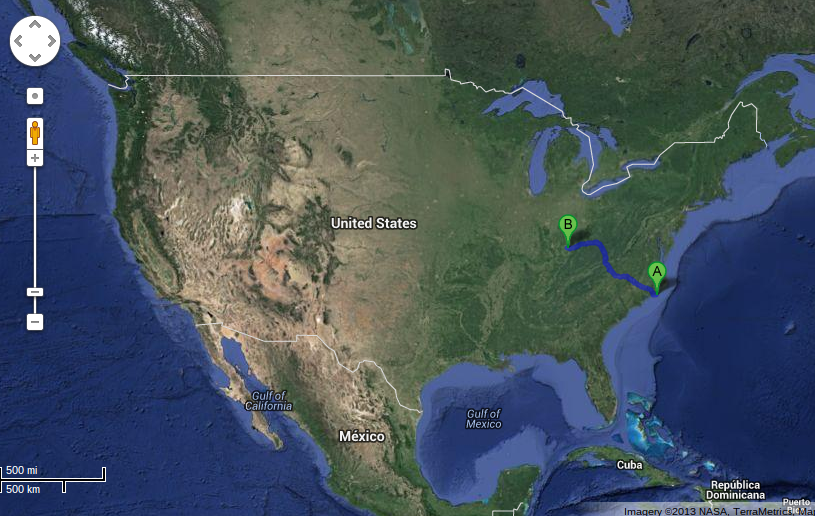
Screenshot 2013-08-19 at 11.35.00Location: Columbia, MO

Distance Traveled: 1119 miles

Distance Remaining: 1881 miles

MPG: 12.8

Status: awaiting repairs

The drive through Indiana and Illinois was long and uneventful. The goats have settled into their routine, and now seem to prefer napping in their crate to climbing in and out of the truck for a walkabout. We did get to see the St. Louis Arch as we drove through town, which the most exciting moment of the drive. Otherwise, we saw plenty of corn.

We stayed the night at the Circle B Ranch, another fabulous horse hotel. No llamas, this time, but the goats were delighted to have a stall to wander around and the horses were very curious about their new barn companions.

This morning, after more than 1000 miles, we finally had our first breakdown, as the surge-break assembly on one of trailer tires rusted out. We’re currently sitting in Columbia, MO awaiting a mechanic to come out and take a look. For what it’s worth, UHaul’s roadside assistance was professional and responsive.

Read More “#Ocean2Ocean: Corn Maze Edition” »

#Ocean2Ocean: Bluegrass State Edition

Posted on August 18, 2013October 27, 2013 By Andrew Thaler 3 Comments on #Ocean2Ocean: Bluegrass State Edition
Blogging

Progress to date.
Progress to date.

Location: West of Lexington, KY

Distance traveled: 645 miles

Distance remaining: 2355 miles

MPG: 12.2

Last night we checked in to the delightful Sunday Stables, where Luna and Hermione shared a barn (but not a stall) with horses, cats, chickens, and a llama. Susan Sunday was a fabulous host and the goats were glad of solid ground and some room to roam.

We crossed the border into Kentucky earlier this morning, and we greeted with the sight of massive oil refineries as well as an Amazon.com warehouse, very different from the mountains and coal plants of West Virginia.

Read More “#Ocean2Ocean: Bluegrass State Edition” »

#Ocean2Ocean: North Carolina in the rearview

Posted on August 17, 2013October 27, 2013 By Andrew Thaler
Blogging

After 7 hours of driving (North Carolina is a long state), we have crossed the Virginia border. Our departure from coastal NC was marked, inexplicably, by a flock of wild turkeys on the side of 70. Inconveniently, it also happens to be move in week for several Carolina universities; it was slow going through the Triangle.

The goats are calm, but confused.

Read More “#Ocean2Ocean: North Carolina in the rearview” »

From Ocean to Ocean: The Great Southern Fried Migration

Posted on August 16, 2013October 27, 2013 By Andrew Thaler 4 Comments on From Ocean to Ocean: The Great Southern Fried Migration
Blogging

The time has finally come. After 11 years in North Carolina, I have finally succumbed to the insatiable human desire to venture beyond the horizon. Tomorrow morning, Amy and I will hitch our worldly possessions to my tough old truck and drive west until we reach the Pacific Ocean. And, because we’re 1/4 of Southern Fried Science, we’ll live blog the entire journey. A few FAQ’s before we go: What are you doing in California? Amy has a post-doctoral fellowship at the California Ocean Science Trust, where she’ll be developing a new citizen science initiative. I will be searching for work once I get there. So, if you’re an employer Oakland or the San Francisco Bay area, and need a crack deep sea ecologist, conservation geneticist, or science communicator, please take a look at my Curriculum Vitae. What will happen to your chickens? The chickens have been adopted by a family who will love them and their eggs for years to come. I’ve said my goodbyes to Poly, Tikka, Olga, and Masala. What will happen to your goats? Luna and Hermione are coming with us. What?

Read More “From Ocean to Ocean: The Great Southern Fried Migration” »

Happy Fun Science Friday!!

Posted on August 16, 2013October 28, 2013 By Kersey Sturdivant
Science

kerseysquae

HAPPY FUN SCIENCE FRIDAY.

Let me begin by imploring any readers who are interested in a more ‘Open Ocean,’ to help support our crowd funding initiative – #OpenCTD.

http://www.rockethub.com/projects/26388-oceanography-for-everyone-the-openctd#description-tab

So for a number of years I have been celebrating Fun Science Friday; a mini-holiday that originated years ago when I was in graduate school. Our professor would bring Smarties to class each Friday, and we students would have some fun science exercise before diving into the more intricate nuances of the course. I was thoroughly enamored with FSF,  and not just because of those delicious Smarties, and endeavored to spread FSF wherever I went (some places were more receptive than others). I have finally been convinced by the Southern Fried crew to move my rather informal celebration of FSF, where I normally post a fun science fact each Friday, to generating a short blog about what I would normally post. So to all the Southern Fried readers, welcome to Fun Science Friday!!

Read More “Happy Fun Science Friday!!” »

Shark Regulation Updates

Posted on August 13, 2013October 28, 2013 By Chuck Bangley 12 Comments on Shark Regulation Updates
Conservation

While Shark Week was raging along, the Atlantic States Marine Fisheries Commission (ASMFC) approved a new round of shark fishery regulations for public comment.  Quite a bit has happened since the last time we covered U.S. shark fisheries here, so it’s time for a bit of a recap before discussing how the latest developments affect sharks and the people who fish for them.

Read More “Shark Regulation Updates” »

The Ocean belongs to everyone. Shouldn’t we all have access to the tools needed to study it?

Posted on August 12, 2013October 27, 2013 By Andrew Thaler
The Open CTD Project

Oceanography for Everyone – The OpenCTD I believe that scientific research should have as few barriers to participation as possible. I believe that not only should the results of scientific research be freely available to the public, but that the tools–software, hardware, and expertise–of science should be made as accessible as possible. In many cases, … Read More “The Ocean belongs to everyone. Shouldn’t we all have access to the tools needed to study it?” »

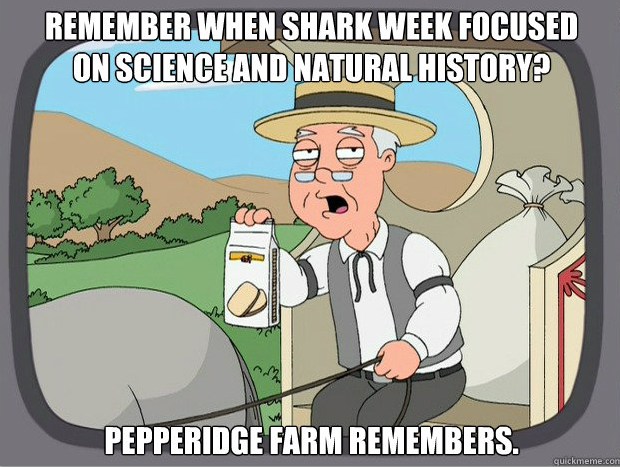
A Shark Week 2013 retrospective…with memes!

Posted on August 12, 2013August 14, 2013 By David Shiffman 7 Comments on A Shark Week 2013 retrospective…with memes!
Conservation, Popular Culture, Science

davesquare

As Shark Week 2013 comes to a close, I wanted to take a look back at which part of my outreach strategy worked (and didn’t work), as well as what I liked and disliked about Shark Week as a whole. Ever since my “15 important shark conservation and management terms explained with memes” post, I’ve been looking for an opportunity to incorporate more internet humor into a blog post, so here goes…

While this Shark Week allowed scientists  like myself to reach the public on a large scale, most of the content was...troubling.
While this Shark Week allowed scientists like myself to reach the public on a large scale, most of the content was…troubling.

Read More “A Shark Week 2013 retrospective…with memes!” »

DiveTracks: because we can’t talk underwater

Posted on August 6, 2013August 5, 2013 By Andrew Thaler
Science

We’re happy to announce a new experiment in our ongoing effort with casual video adventures. We take short videos from one of our SCUBA diving adventures, watch them together, and do a running commentary about whatever issues, topics, and stories emerge during the video. There’s just two rules – neither of us can have watched … Read More “DiveTracks: because we can’t talk underwater” »

World’s largest group of shark scientists calls on AP and Reuters to resist using the phrase “shark attacks”

Posted on August 5, 2013 By David Shiffman 7 Comments on World’s largest group of shark scientists calls on AP and Reuters to resist using the phrase “shark attacks”
Conservation, Popular Culture

davesquare

The American Elasmobranch Society is the world's oldest and largest professional association of shark and ray scientists
The American Elasmobranch Society is the world’s oldest and largest professional association of shark and ray scientists

The American Elasmobranch Society, the world’s largest professional organization of shark and ray scientists, has issued a resolution calling on the Associated Press Stylebook and the Reuters Style Guide  to retire the phrase “shark attack” in favor of a more accurate (and less inflammatory) wording that is scaled to represent real risk and outcomes. The AP Stylebook and Reuters Style Guides are reference guides for journalists and editors which focus on, among other things, reducing the usage of inaccurate and outdated terminology. The latest AP Stylebook, for example, had more than 90 new or updated entries which include encouraging journalists and editors to a stop using terms like  “illegal immigrant“,  “ethnic cleansing” and “homophobia”.

“Shark scientists in the United States and around the world have great respect for the integrity and reporting of the Associated Press and Reuters. We hope they will act on this recommendation and update their style guides to ensure that the public gets the most accurate information in the reporting of these incidents,” said Lara Ferry, President of the American Elasmobranch Society, who sent a formal letter to the AP Stylebook and Reuters Style Guide.

Currently, although “shark attack” is associated with an image of a large shark and a human fatality, the phrase  is used by the media as a catch-all to describe any encounter between a human and a shark, even those that don’t result in any physical contact whatsoever. Fully 38% of reported “shark attacks” in New South Wales, Australia from 1970-2009 resulted in no injury whatsoever. This is misleading and facilitates a perception among the public that sharks are more dangerous than they really are, a perception which has negatively impacted shark conservation and management policy.

“The accuracy in media reporting of shark bites and different human-shark interactions is especially important during the kinds of tragic periods we have seen this summer. The public deserves the best information to make sure there is no confusion between very serious and fatal shark bites and minor incidents,” said Christopher Neff, a Ph.D. student at Sydney University.

In a recent paper,  Neff and Bob Hueter of Mote Marine Lab proposed a scaled labeling typology to describe human-shark interactions. This typology covers the full range of these interactions,  including:

Read More “World’s largest group of shark scientists calls on AP and Reuters to resist using the phrase “shark attacks”” »

Posts pagination

Previous 1 … 123 124 125 … 273 Next

Popular Posts

That's not a blobfish: Deep Sea Social Media is Flooded by AI SlopThat's not a blobfish: Deep Sea Social Media is Flooded by AI SlopDecember 19, 2025Andrew Thaler
What Ocean Ramsey does is not shark science or conservation: some brief thoughts on "the Shark Whisperer" documentaryWhat Ocean Ramsey does is not shark science or conservation: some brief thoughts on "the Shark Whisperer" documentaryJuly 2, 2025David Shiffman
Screaming into the void - Why your scientific paper doesn’t matterScreaming into the void - Why your scientific paper doesn’t matterJune 18, 2026Chris Parsons
The story of the pride flag made from NASA imagery: Bluesky's most-liked imageThe story of the pride flag made from NASA imagery: Bluesky's most-liked imageSeptember 27, 2024David Shiffman
I can serve on your graduate thesis committee. Here’s what you can expect of me, and what I expect in return.I can serve on your graduate thesis committee. Here’s what you can expect of me, and what I expect in return.October 16, 2025David Shiffman
Shark of Darkness: Wrath of Submarine is a fake documentaryShark of Darkness: Wrath of Submarine is a fake documentaryAugust 10, 2014Michelle Jewell
What is a Sand Shark?What is a Sand Shark?November 12, 2017Chuck Bangley
The plague-busting, prairie-dog-vaccinating, ferret-saving droneThe plague-busting, prairie-dog-vaccinating, ferret-saving droneNovember 1, 2016Andrew Thaler
Our favorite sea monsters – Ningen (#4)Our favorite sea monsters – Ningen (#4)September 7, 2010Andrew Thaler
Fun facts and FAQs about Megalodon, Maryland's new (and definitely extinct) official state sharkFun facts and FAQs about Megalodon, Maryland's new (and definitely extinct) official state sharkApril 15, 2026David Shiffman

squishy

Subscribe to our RSS Feed for updates whenever new articles are published.

We recommend Feedly for RSS management. It's like Google Reader, except it still exists.

Southern Fried Science

  • Home
  • About SFS
  • Authors
  • Support SFS


If you enjoy Southern Fried Science, consider contributing to our Patreon campaign.

Copyright © 2026 Southern Fried Science.

Theme: Oceanly Premium by ScriptsTown