
Last Wednesday morning, the Fisheries Committee of the European Parliament voted on proposed amendments that would, if passed, form their response to the European Commission’s 2011 proposal to end all removal of shark fins at sea (and thereby close loopholes in the EU finning ban). As the EU is the single largest supplier of shark fins to … Read More “What the $&!* happened? A summary of the “contradictory, confusing, and inconsistent” EU finning ban votes” »

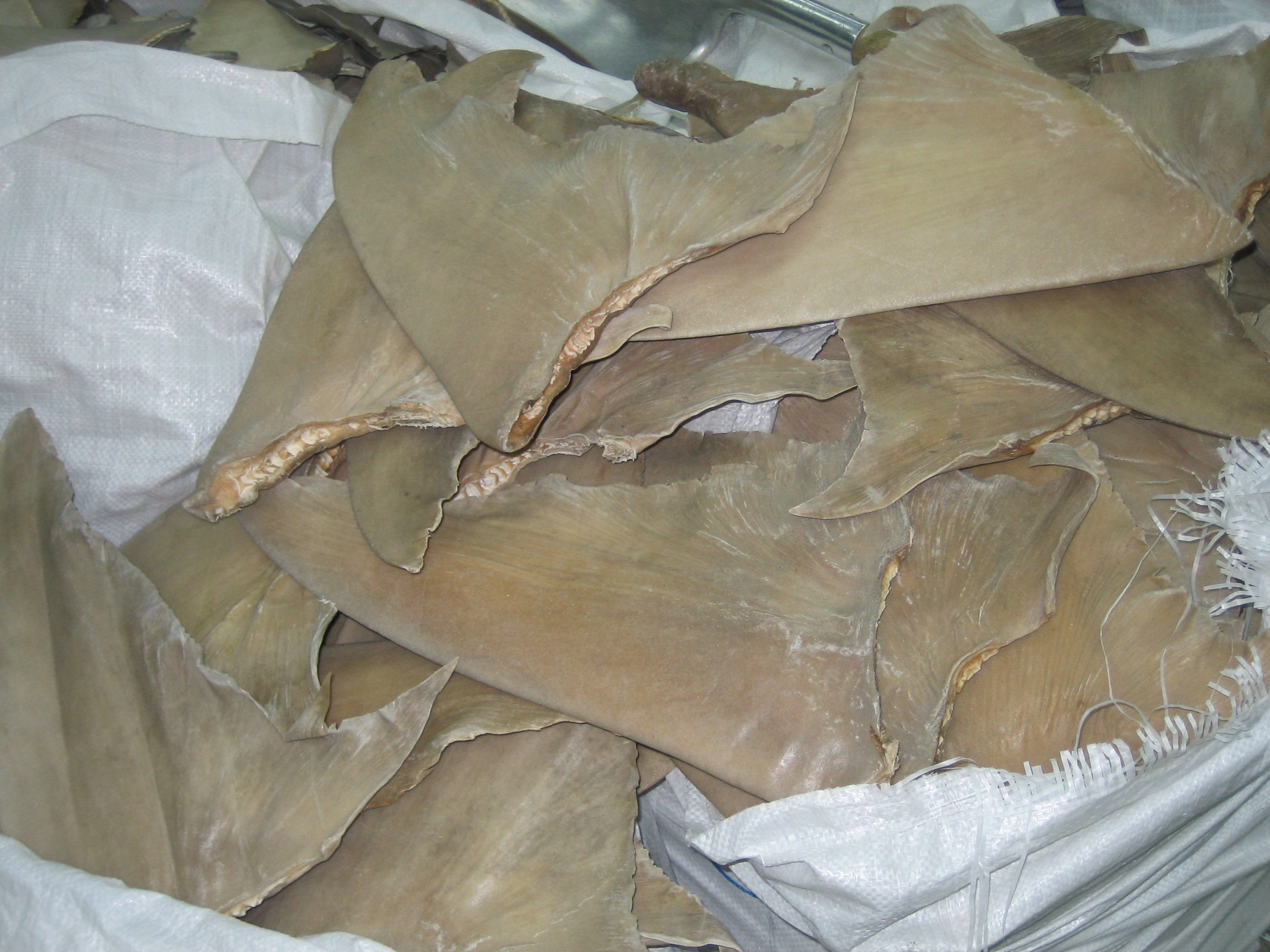

All eyes in the shark world are focused on Belgium, where the European Parliament’s Fisheries Committee votes Wednesday on one of the most significant conservation policies in years: a stronger EU-wide ban on shark finning via a prohibition on removing sharks at sea, with no more exceptions. Since some of the details are quite technical, emotions are running high, and a lot of misinformation is spreading, I’ve prepared a quick guide to help our readers understand the proposed policy. For much more detailed updates, follow the Shark Alliance’s blog.
1) The proposed policy would strengthen the current EU finning ban, not ban fins. As has previously been discussed, some of the language surrounding shark conservation policy can be confusing. As a reminder, shark finning is the act of removing fins from a shark at sea and dumping the body overboard. Finning of live sharks is incredibly inhumane (the “finned” shark will bleed to death or drown when dumped overboard), and incredibly wasteful whether the shark is alive or dead (less than 5% of the shark is used). Scientists are almost universally opposed to shark finning because it is often associated with unsustainable fishing and the practice makes it difficult for managers to know what species of shark the fin came from. The policy that the European Parliament is voting on is an amendment to the current EU “finning ban”,” which relies on a complicated and lenient fin to carcass ratio for enforcement. The European Commission has proposed requiring that sharks be landed with fins still attached, which would strengthen enforcement and data collection capabilities. This is not a “fin ban” that would make it illegal to buy, sell, or possess fins.
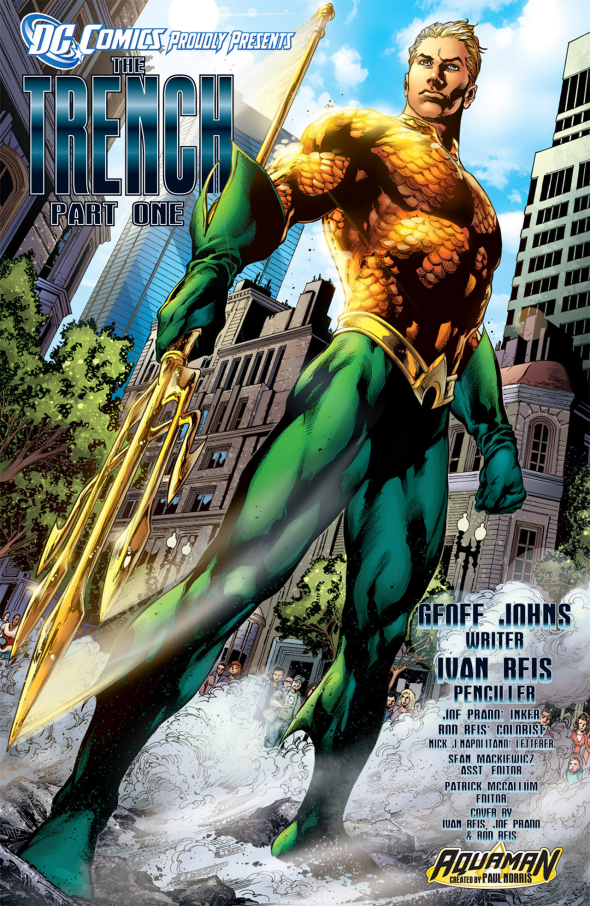
In response to yesterday’s review of Aquaman Volume 1: The Trench, Al Dove made a simple request via twitter:

This question is more complex than it first appears, and needs a little unpacking. Water is denser than air. When light passes through, the water acts as a filter, absorbing visible light in a predictable pattern from longest wavelengths (infrareds and reds) to shortest wavelengths (purples and ultraviolets). As Aquaman dives deeper, the brilliant colors of his orange and green costume will begin to fade.
Read More “Epilogue to the Return of the Science of Aquaman: Costume Palettes at Depth” »

After reducing Aquaman to a hypothermic, hyposmotic, constantly famished, case study in psychological trauma, I figure that I owe the king of Atlantis a second chance. After all, Aquaman was and still remains the most interesting hero in the DC universe. A generous fan sent me a copy of Aquaman Volume 1: The Trench, arguing that the New 52 version of everybody’s favorite aquatic hero is even more compelling than previous incarnations, with a stronger backstory, powers that make sense, and plenty of humor.
Last time I paid the hapless mariner a visit, many readers interpreted my incisive criticism of the science behind Aquaman as evidence that I had it out for our scale-clad hero. Since you all know that I’m going to take the misguided marine science in this volume to task, let’s start with all of the good stuff in this reimagination of DC’s oft-mocked champion.
The central conceit of New 52 Aquaman is that the comic book world has the same perception of Arthur Curry that we do–a hero with oddly specific and mostly useless powers that talks to fish. In addition, the citizens of the DC Universe believe that Atlantis is a fairy tale, so Aquaman’s kingly status is meaningless to the surface dwellers. The hybrid of a human father and Atlantean mother, Aquaman feels out of place in Atlantis and chooses to return to the surface with his wife, Mera. Comparing himself to his lighthouse-keeper father, he explains that even though he loves the sea, someone must protect the shore.
Read More “Return of the Science of Aquaman: Welcome to the Trench” »

Imagine swimming out from the beach on a warm, summer day. You feel a tingle in your spine and the ba-dumping chords of the Jaws theme inexplicably rise from your subconscious. There is something in the water and it is going to kill you. The deadliest creature in the ocean has chosen you, and there is no escape. You panic. You scan the waves, searching for a sign, something that reveals the threat. Where is it? What is it?!
You could be forgiven if you think, perhaps due to that ominous tune, a shark is stalking you. Despite their killer reputation, sharks rarely attack people and shark attacks, when they do occur, are rarely fatal. Perhaps you are fresh from a Marine Invertebrate Zoology course and your nightmares are now filled with images of cubozoans, the deadly box jellyfish. Box jellies may be extremely venomous, but they are responsible for less than 50 deaths a year and envenomation results in approximately a 20% mortality rate. Ah, but you’re clever, and you watch Discovery channel specials about the “Ten Most Deadly X in Y”, so you know that the deadliest creature is the ocean is the lethal sea snake, relative of the cobra. Clearly one must be stalking you through the shallows. Wrong. While sea snake venom is quite potent, only 1 in every 10 bites results in envenomation, and even then, the mortality rate is a comforting 10%.
No matter how hard you look, you won’t see the monster slowly gliding up behind you. The deadliest marine organism is not a shark, a jellyfish, or a snake. It is not the beautiful blue ring octopus or the unassuming cone snail. It is not the giant squid, the killer whale, or the murderous, man-eating, manatee. The undisputed king of maritime mortality is the lowly bacteria, Vibrio vulnificus.
Read More “Flesh-eaters of the Crystal Coast: why I prefer my oysters roasted” »

A few weeks ago, the Southern Fried Scientist asked what plans (if any) Mitt Romney had regarding the U.S. National Ocean Policy. Last Thursday night, voters may have gotten our first clue. During the most widely-viewed and important political speech of his life, a speech widely criticized for lacking any kind of policy details, Romney mocked President Obama for trying to do something about sea level rise and the declining state of our environment.
He said, ““President Obama promised to slow the rise of the oceans…[big pause for audience laughter]… and to heal the planet. My promise is to help you and your family.” Check out the clip:
There are essentially two ways to interpret the remark and the audience’s reaction. This was one of the biggest laugh lines of the whole convention, so it may have been intended as harmless humor, but why did the audience find it funny? Remember this is the same audience that booed a gay soldier and called for a hypothetical uninsured cancer patient to die a few months ago.
Read More “Romney mocked climate change and conservation. Really. That happened. In 2012.” »
anecdote
noun.
1. a short account of a particular incident or event, especiallyof an interesting or amusing nature.
2. a short, obscure historical or biographical account.
Climate Change
noun.
A change of climate which is attributed directly or indirectly to human activity that alters the composition of the global atmosphere and which is in addition to natural climate variability observed over comparable time periods.
Climate change is real and human activity is the cause. The theory that we are fundamentally altering our planet’s climate is supported by overwhelming evidence. Prominent global warming skeptics have, in the face of such evidence, acknowledged that climate change is happening, and that humans are the cause.
And still climate change denial continues to persist.
In the last decade, we have passed a threshold where the reality of climate change is no longer a hypothesis buried in bar graphs or something to be assessed by minute changes in careful measurements, but an observable phenomenon. Rather than anticipating the effects of human impacts on the climate, we must now live them. Thanks to a well-organized and well-funded climate denial industry, we missed our chance to change course. If the last decade was the hurricane warning, than this decade is landfall.
Read More “Climate Change Anecdotes Volume 1: Sea Ice and Nuclear Reactors” »
The American Elasmobranch Society
is a non-profit professional society focusing on the scientific study and conservation of sharks, skates, and rays. AES members meet each year in a different North American city, and this meeting is the world’s largest annual gathering of shark scientists. AES recently met in Vancouver, British Columbia for the 2012 meeting, and for the first time the event was live-tweeted by meeting attendees, including myself. I’ve organized the best conference tweets by session using Storify. If anyone has any questions or comments about the research presented below, please feel free to share it in the comments section of this blog post.
Here are selected tweets from the Elasmobranch Ecology sessions.
Read More “Tweets from the American Elasmobranch Society: Elasmobranch Ecology” »
The American Elasmobranch Society
is a non-profit professional society focusing on the scientific study and conservation of sharks, skates, and rays. AES members meet each year in a different North American city, and this meeting is the world’s largest annual gathering of shark scientists. AES recently met in Vancouver, British Columbia for the 2012 meeting, and for the first time the event was live-tweeted by meeting attendees, including myself. I’ve organized the best conference tweets by session using Storify. If anyone has any questions or comments about the research presented below, please feel free to share it in the comments section of this blog post.
Here are selected tweets from the Elasmobranch Conservation sessions.
Read More “Tweets from the American Elasmobranch Society: Elasmobranch Conservation” »

The American Elasmobranch Society is a non-profit professional society focusing on the scientific study and conservation of sharks, skates, and rays. AES members meet each year in a different North American city, and this meeting is the world’s largest annual gathering of shark scientists. AES recently met in Vancouver, British Columbia for the 2012 meeting, and for the first time the event was live-tweeted by meeting attendees, including myself. I’ve organized the best conference tweets by session using Storify. If anyone has any questions or comments about the research presented below, please feel free to share it in the comments section of this blog post.
Here are selected tweets from the Gruber Award (best student presentation) sessions.