
If you haven’t seen the excellent post on Mountain Beltway – Words matter – you should head over there and take a look. The post brought up some interesting ideas about word choice, and how the common definition of a word may convey a different meaning than the scientific definition. For science communicators, this may lead to confusion … Read More “The Importance of Word Choice: Terms with multiple meanings for scientists and the public” »
Ratty would be proud.
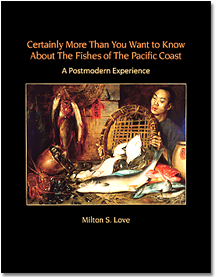
There is a website floating around the interwebs entitled “So you want to be a marine biologist?” that most future marine biologists who came of age in the early 21st century have encountered. The sage page of advice is followed up with “So you want to be a marine biologist, the revenge“. Reading through these two essays, one might come to the conclusion that their author, Dr. Milton Love of the University of California, Santa Barbara, should compose a voluminous tome to the fishes of the Pacific coast. Which is exactly what he’s done. Welcome to Certainly More Than You Want to Know About The Fishes of The Pacific Coast: a postmodern experience.
Despite it’s self-aware title, this book is far more than just an exhaustive guide to the fishes of the Pacific, though it certainly is that. The highly detailed taxonomic descriptions are rich with humor and insight into the ecology, behavior, and physiology of, if not each species, than each genus or species complex. Interspersed among the taxa are descriptions of prominent Pacific researchers, anecdotes from a lifetime of work on the water, stories by people who lived, worked, and fished these species, and the occasional poem, song, or limerick. Somehow, these disparate units manage to complement each other in a way that makes you want to read what is essential a taxonomy textbook cover-to-cover.

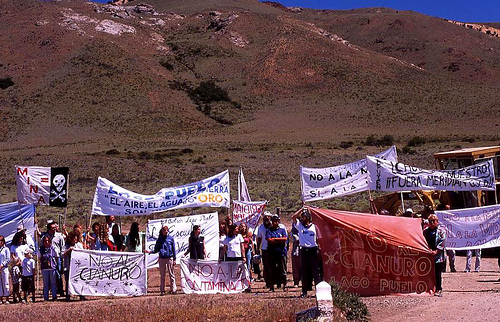
Buried within the depths of Andean geology lie small seams of gold tempting worldwide investors. These money-lined pockets aid the development of new extraction methods that dissolve gold from the mountains using cyanide. Cyanide is a metabolic poison, shutting down cellular respiration. In the wake of cyanide leaching stand piles of rubble and contaminated rivers where forested mountains and their people once stood. Surprisingly, Andean residents are willing to entertain the possibility of gold mining by this poisonous method, but oppose current mine development on environmental justice measures. A recent study by Urkidi and Walter in the journal Geoforum documents the emergence of justice narratives from mining conflicts in the Andes and predicts impacts on future development planning.
Read More “The Curse of Gold: Dimensions of Injustice in Gold-Mining Communities” »
At the 2nd International Marine Conservation Congress, Dr. Nick Dulvy and the IUCN Shark Specialist Group organized a special symposium called “Securing the Conservation of Sharks and Rays”. This symposium featured leading scientists, international policy experts, the founder of a creative non-profit, a National Geographic conservation photographer… and me. It was, without a doubt, the greatest professional honor of my (admittedly brief so far) career.
It’s the moment we’ve all been waiting for, the single most misunderstood marine creature that calls our oceans its home: the rare, elusive, often smelly, occasionally employable, Marine Biologist! For something so incredibly popular, articulate, good-looking, and revered, there sure are a lot of misconceptions about who marine biologists are and what they do. Myth … Read More “Misunderstood Marine Life # 1 – The five biggest myths about Marine Biologists” »
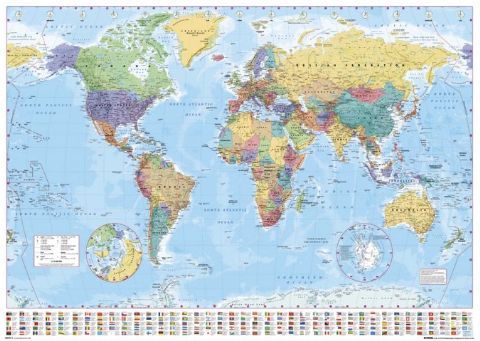
Challenge: find a map of the Pacific Ocean that includes both Japan and California. Or that focuses on any of the island nations in between.
One of the casualties of mapping a three-dimensional planet on two-dimensional paper is the part of the world that is split between the edges of the paper. Usually, this is the Pacific. As Sarah Palin made famous in the 2008 presidential campaign, as an Alaskan, she can see Russia from her house. While I admit that for Palin, this is an exaggeration, but for the residents of St. Lawrence Island, this view is a reality. In fact, they are as likely (if not more) to speak Russian than English and have the capability of kayaking to Russia if so desired. But your average world map makes that distance look infinite.

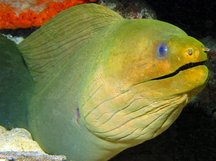
Since they are typically observed hiding in dark crevices while opening and closing their mouths in an apparently menacing gesture, it isn’t surprising that moray eels get a bad reputation. The fact that their sharp teeth face backward (causing severe damage to anyone trying to pull their hand out of a moray’s mouth) doesn’t help this reputation, and neither does the recent discovery that morays have a second set of “Alien”-like jaws that drags prey deep into their mouth and throat. The truth isn’t quite so simple. Most people know very little about these amazing animals.
The green moray (pictured above) is the most famous member of this group, but there are more than 200 species in the family Muraenidae. Green morays are not even really green (a yellow mucus deposited on a dark body creates the illusion of green skin). Snyder’s morays are less than a foot long when full grown, while giant slender morays can reach lengths of over 10 feet. Morays live in an impressive variety of habitats, including temperate and tropical seas, depths of several hundred meters, and even freshwater.
This post was originally published on September 6, 2010 as a part of our first Week of Ocean Pseudoscience. Enjoy!
Wandering through the grocery store the other day, I noticed something strange in the fish bin. Now, in general I’m pretty conscious of where my fish comes from, how it was caught, whether the fishery as a whole or the specific population is sustainable. I pay attention to those details and I can usually tell when a company’s branding is legitimate and when it’s just greenwashing.
Imagine my shock when I found a packet of Orange Roughy, sold by the Full Circle brand, and marketed as sustainable.