
Skip to content

Southern Fried Science

Over 15 years of ocean science and conservation online

  • Home
  • About SFS
  • Authors
  • Support SFS
Latest News
  • Norway and Cook Islands put their deep-sea mining plans on pause

Recent Posts

Join Me at Upwell: A Wave of Ocean Justice — Our Fourth Year!
March 24, 2026
How close did the world’s first deep-sea mining come to the dredging the world’s largest cold-water coral reef?
March 17, 2026
Here are some ocean conservation technologies that I’m excited about
February 19, 2026
Walking Backwards Into the Future: Applying Indigenous Knowledge to Deep Sea Mining
February 5, 2026
The Urgency Does Not Exist: My statement on Deep-sea Mining to the Subcommittee on Energy and Mineral Resources
January 24, 2026
Bipartisan Concern Expressed Over Deep Sea Mining at Congressional Hearing
January 23, 2026

What does the high seas biodiversity treaty means for the future of deep-sea mining?

Posted on March 17, 2023March 18, 2023 By Andrew Thaler
What does the high seas biodiversity treaty means for the future of deep-sea mining?
Uncategorized

This month, delegations from around the world agreed upon a treaty to protect biodiversity beyond national jurisdiction — ocean life beyond the limit of any country’s borders. The High Seas Treaty represents the culmination of over 2 decades of debate and negotiation. Once adopted, it establishes a framework for the protection and equitable sharing of marine genetic resources — animals and their DNA; promotes the implementation of marine protected areas in the high seas; and creates a scientific and technical body to review environmental impact assessments for ocean activities beyond borders.

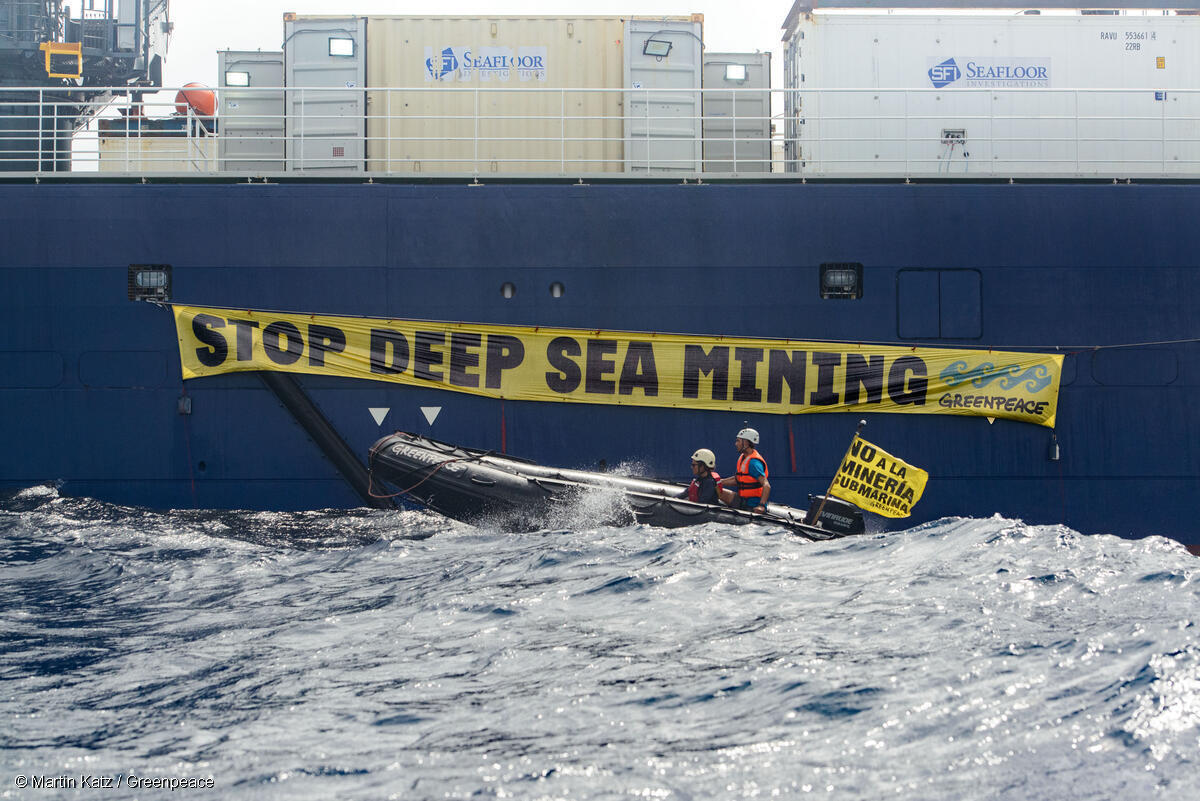
While this treaty is a monumental achievement for protecting the common heritage of humankind, it still leaves several loopholes for ocean exploitation. Chief among them is the exemption of deep-sea mining from the final regulations.

Read More “What does the high seas biodiversity treaty means for the future of deep-sea mining?” »

Woodworking off the grid: upgrades to my DIY solar workshop

Posted on February 17, 2023January 8, 2024 By Andrew Thaler
Built to Last

Two years ago, I set out on a little mission: to build an off-grid solar array that would power my woodshop. This array needed to charge all my cordless batteries, but also drive my table saw, miter saw, circular saw, and the big router on my slab flattening jig. But there was a catch. The entire system could cost no more than one American Recovery Act stimulus check. 

That first build can be found here: I turned my woodshop into a personal solar farm.

It worked. I beat the heck out of that set up and, other than in the dead of winter when it was too cold for the battery, it could handle most everything I threw at it, pretty well. It wasn’t perfect, and it had some issues with overdrawing, but the safety stops I put in place ensured that when I did push it too hard, it shut itself down rather than compromising components. There were limits, though, as I added bigger tools like a bench planer and started hogging through much tougher stock, I began to run into more and more issues. 

So here we are, 2 years later, with all the upgrades and modifications that I made to my off-grid workshop to keep things running hard. 

Read More “Woodworking off the grid: upgrades to my DIY solar workshop” »

The Last of Us zombie fungus has nothing on the brain-eating, sex-changing, Sacculina barnacle.

Posted on January 23, 2023January 24, 2023 By Andrew Thaler
The Last of Us zombie fungus has nothing on the brain-eating, sex-changing, Sacculina barnacle.
Science

In the Last of Us, the most gruesome live-action adaptation of a video game about people being turned into fungus since 1993’s Super Mario Bros, a mutated species of Cordyceps destroys society by converting humans into mindless, sporulating mushroom people.

Cordyceps, a fungus that most commonly parasitizes ants, is real. It really does hijack its host’s nervous system, alter its behavior, and turn it into a spore-producing zombie. The outcome is strangely beautiful.

Though the current darling of gritty, realistic, science-based zombie fiction, Cordyceps is such a lightweight in the world of brain-breaking parasites that tech bros brew it into their adaptogenic coffee.

If you want to meet a truly unsettling zombie-making parasite, allow me to introduce you to Sacculina.

Sacculina is a genus of barnacle that parasitizes crabs. While most parasitic barnacles are perfectly happy growing on the carapace of a crab, Sacculina takes this partnership to the extreme.

Female Sacculina larvae drift through the ocean, until they encounter a crab. The larva then settles on the crab and searches for a joint in the crab’s carapace. Once it finds a gap in the arthropod’s armor, it transforms into a kentrogon, a specialized phase of the barnacle life cycle that possess a stylet–an organic syringe-like structure–which allows Sacculina to inject itself into the crab, and not much else. At this point, the hard shell attached to the crab’s carapace falls off and the barnacle continues to grown within its host.

It gets so much weirder from here.

Read More “The Last of Us zombie fungus has nothing on the brain-eating, sex-changing, Sacculina barnacle.” »

It’s science fiction, until it isn’t.

Posted on January 17, 2023 By Andrew Thaler
It’s science fiction, until it isn’t.
Conservation

This piece originally appeared in the farewell issue of the Deep-sea Mining Observer.

Four years ago, I took over the Deep-sea Mining Observer from my predecessor, Arlo Hemphill. Conceived by the Pew Charitable Trust in 2016, The DSM Observer was created to be an online trade journal for the emerging industry as the International Seabed Authority navigated through the creation of an Exploitation Code for Seabed Minerals in the Area. Originally envisioned to run for two years, we continued to cover and report on critical developments into 2022.

After six years, the Deep-sea Mining Observer is coming to close.

During my tenure here, I tried to capture the full breadth of issues surrounding deep-sea mining. We covered the first species to be IUCN Red Listed due to the potential threat of mining. We examined the rise and fall of Nautilus Minerals. We reported the launch of the Patania II nodule collector test vehicle. We investigated how bioprospecting, often put forward as an industry in potential conflict with deep-sea mining, works in practice. We explored the complex political and geologic history of the Rio Grande Rise. We looked at how new technologies may change the financial landscape for seabed mining. We tracked a semi-mysterious cache of polymetallic nodules from the CCZ offered for sale. And we looked at how other industries intersect with deep-sea mining.

Read More “It’s science fiction, until it isn’t.” »

22 things scientists learned about sharks in 2022

Posted on December 16, 2022 By David Shiffman
Science

2022 has been a weird year for humans, but it was a very interesting year for sharks! Shark species representing 90% of the global shark fin trade got listed on CITES Appendix II, which will require strict regulation, documentation, and dramatically improved sustainability of their fisheries. The once-every-four-years Sharks International conference was held in Valencia, Spain, and recordings of all talks are available until summer 2023. And sharks even made it into one of those “what Fox News is showing instead of current events that are bad for Republicans” memes!

There were also a lot of fascinating scientific discoveries, which this post will round up for you. As always, this is not meant to be a “best” or “top” list, so if your science isn’t included here please do not send angry letters. This is just some cool stuff I learned this year thanks to my amazing colleagues, in no particular order. Whenever possible I’ll also provide links to further reading on the topic. I hope you enjoy!

Read More “22 things scientists learned about sharks in 2022” »

Soon may the explainer come: Everything you’ve always wanted to know about sea shanties but were afraid to ask

Posted on November 22, 2022January 8, 2024 By David Shiffman
Soon may the explainer come: Everything you’ve always wanted to know about sea shanties but were afraid to ask
Featured

The hot new thing on the internet is the latest revival of a centuries-old musical tradition. The humble sea shanty has taken the internet by storm, with remixes of remixes getting millions of views. The phenomenon written up in The New York Times, the Wall Street Journal, the Washington Post, and CNN, and inspired an SNL skit.

As a marine biologist who learned to sing many of these songs to pass time on research vessels while honoring maritime traditions, I’ve loved watching this style of music spill all over my social media feeds, letting a new generation experience them. (Watch this man’s skepticism quickly fade to joy as he listens to Wellerman and tell me it’s not one of the purest things you’ve ever seen).

Illustration of sailors hauling on halyard, from an article on sailor chanteys. Image from W Symons, via WikiMedia Commons

However, reading people’s explanations of why Sea Shanties are The Next Big Thing has made me realize something important: I didn’t know as much of the history of this style of music as I thought I did, and I’m not alone—much of the information contained in the articles I linked to above is oversimplified or even incorrect (Wellerman is a maritime song, but isn’t really a sea shanty, for one egregious example). As I began to ask around, I realized that there isn’t a single authoritative and thorough article about the history and culture of the sea shanty written for lay audiences anywhere on Al Gore’s internet. So I decided to dig into the literature, speak to experts, and write one myself. I hope you enjoy it!

Read More “Soon may the explainer come: Everything you’ve always wanted to know about sea shanties but were afraid to ask” »

I am deep-sea ecologist Andrew Thaler and this is where you verify my social media accounts.

Posted on November 7, 2022November 21, 2022 By Andrew Thaler
Blogging

These are my active social media accounts: Twitter (automated posting): https://twitter.com/DrAndrewThaler Facebook: https://www.facebook.com/drandrewthaler Instagram: https://www.instagram.com/drandrewthaler/ TikTok: https://www.tiktok.com/@drandrewthaler Mastodon: https://mastodon.social/@DrAndrewThaler Project Mushroom: https://projectmushroom.social/@DrAndrewThaler

The best tool for the job is you

Posted on November 4, 2022January 8, 2024 By Andrew Thaler
The best tool for the job is you
Built to Last

I know, I know. I started this series and then totally lost track of it. It needs an update and a fresh coat of finish. Fortunately, a few chats about getting started in woodworking inspired me to put some more work into my ridiculous woodworking manifesto.

This is Part 5 of Built to Last: A Reflection on Environmentally Conscientious Woodworking.

  • Built to Last: A Reflection on Environmentally Conscientious Woodworking
  • Part 1: I turned my woodshop into a personal solar farm.
  • Part 2: Getting a handle on workworking chemicals, or sometimes we all need to vent.
  • Part 3: Furniture as Revolution.
  • Part 4: The best tool for the job is you
  • A good joint is built to last: archaeologists uncover evidence for the earliest structural use of wood.

I’ve been woodworking my whole life, but this merger of science, conservation, woodworking, and the environment began with what remains one of the most popular articles on Southern Fried Science: How to build a canoe from scratch on a graduate student stipend. That was my return to serious woodworking after almost a decade and one fun way to celebrate passing my prelims.

So what do you actually need to get started woodworking?

You really don’t need nearly as much to get started as the woodworkers of YouTube may lead you to believe. Sure, as you progress you may want a really nice sander, you may find a domino joiner appealing, you might want to drop $1000 on a full set of nice hand planes, or maybe you start investing on milling machines.

But, at the beginning, you need something that cuts and something that connects. My freshman year of college, David Shiffman and I started a ridiculous company that recovered used lofts from dumpsters and dorm rooms at the end of the year, stored them over the summer, and then sold them back at a steep discount to incoming students as a recycled alternative to building a new loft. They had character.

We had exactly two power tools between us. A corded Skil drill that I paid $20 for and didn’t even have variable speed, and a very old corded jigsaw from a brand that doesn’t even exist. A hammer, a cheap handsaw, and the screwdriver that came in my truck’s spare tire kit rounded out our arsenal. We disassembled, rebuilt, and modified thousands of lofts using those tools. It really doesn’t take much.

Read More “The best tool for the job is you” »

A roundup of recent deep-sea mining news

Posted on October 31, 2022October 31, 2022 By Andrew Thaler
Uncategorized
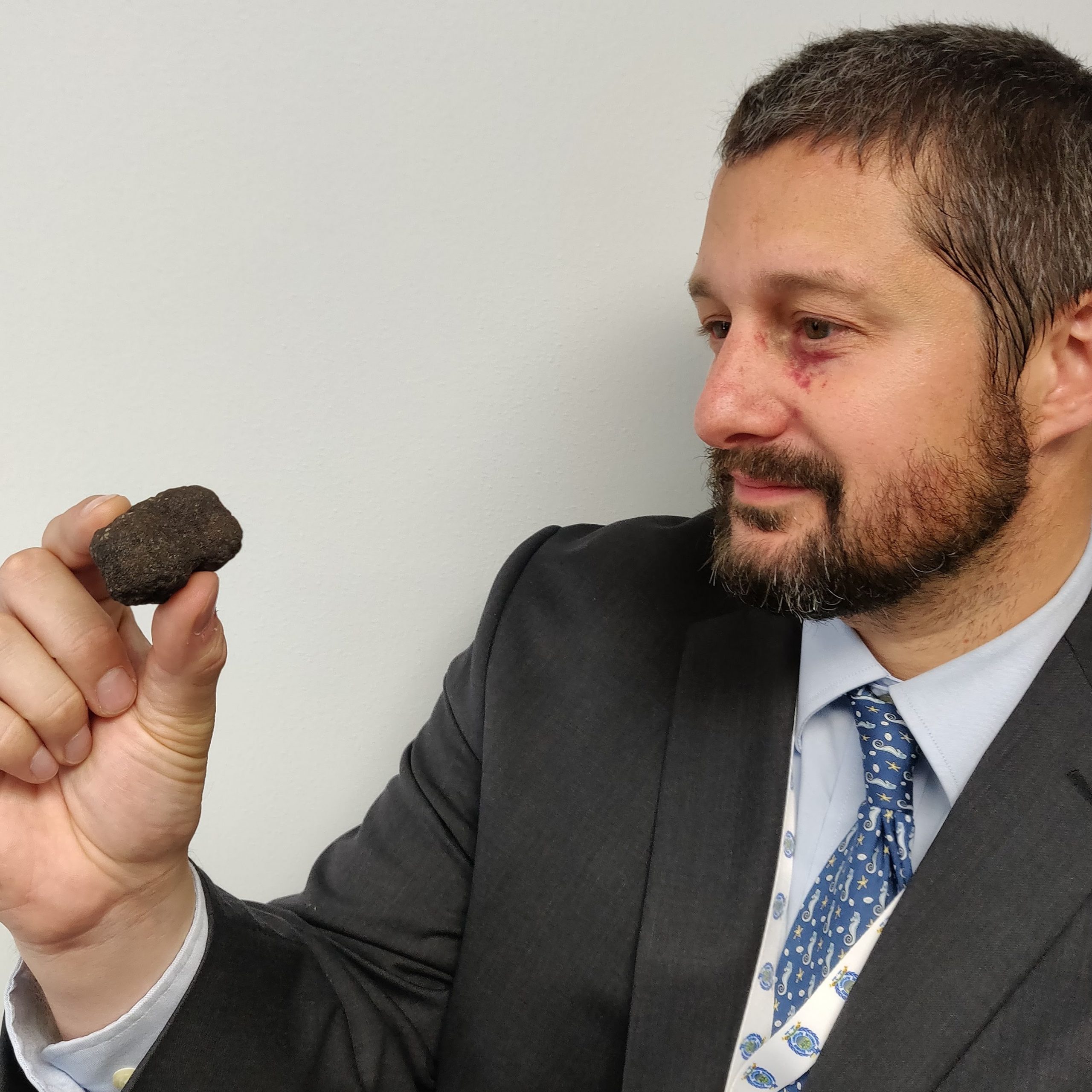
The author, pondering a polymetallic nodule.

The third part of the 27th session of the International Seabed Authority, a meeting where the rules and regulations about how the deep ocean will be mined, begins today. If process is your jam, you can watch the UN negotiations here: https://isa.org.jm/web-tv

For a very concise overview of where we currently stand, I published the transcript of my recent talk, here: Deep-Sea Mining: A whirlwind tour of the state of the industry and current policy regimes

Some recent press to get you up to speed

  • Landing on the Abyssal Plain
  • New Zealand joins call for ‘conditional’ ban on seabed mining in international waters
  • NZ Opposes Seabed Mining in International Waters
  • Cook Islands Seabed Minerals Authority ‘concerned’ with New Zealand’s call for deep sea mining ban
  • The Case Against Deep-Sea Mining
  • How will China’s submersibles help us explore the ocean depths?

Read More “A roundup of recent deep-sea mining news” »

So Elon Musk bought Twitter…

Posted on October 28, 2022October 28, 2022 By Andrew Thaler
So Elon Musk bought Twitter…
Blogging

For a while it seemed like the deal wasn’t going to go through. After his initial offer, Elon Musk tried everything he could to back out of it, short of sitting for a deposition in the resulting law suit. But, at the end of the day, it went through, and Elon Musk now owns Twitter.

Lots of folks are worried about what a Musk-controlled Twitter will become. His conditional commitment to press freedom depends entirely on how much praise is heaped upon him. His record as an employer is a mess. And now he controls one of the most potent, though slowly waning, outlets for public engagement, and certainly the preferred medium of journalists and politicians.

I’ve taught Social Media for Environmental Communications at Duke University for the last 11 years. Every year there’s been some big social media shakeup, and every year we look at how that shakeup will impact professionals using social media primary as an outreach and engagement tool. This has the potential to big the biggest shift in how folks approach social media that we’ve seen in a long time. But it also could be a whole heap of nothing. It all depends on the whims of a single, inconsistent owner who may not really know what he has or what his vision for it is.

So what will this new Twitter look like? I suspect that we won’t see tectonic shifts in how Twitter operates immediately. It will take months for any of Musk’s vision to trickle into the user experience. I don’t get the impression that there are many people left for whom an ownership change is going to push them to finally get a Twitter account. The platform seems largely out of its growth phase. So there will likely be a slow and steady attrition of users as they get less and less out of using Twitter. They won’t be replaced.

Long-term, I expect to see a hard push towards monetization of an increasingly small active user base. Which, in itself, will make that user base even smaller.

Read More “So Elon Musk bought Twitter…” »

Posts pagination

Previous 1 … 19 20 21 … 270 Next

Popular Posts

How close did the world's first deep-sea mining come to the dredging the world's largest cold-water coral reef?How close did the world's first deep-sea mining come to the dredging the world's largest cold-water coral reef?March 17, 2026Andrew Thaler
What Ocean Ramsey does is not shark science or conservation: some brief thoughts on "the Shark Whisperer" documentaryWhat Ocean Ramsey does is not shark science or conservation: some brief thoughts on "the Shark Whisperer" documentaryJuly 2, 2025David Shiffman
Tangier, an Island out of Time.Tangier, an Island out of Time.July 3, 2017Andrew Thaler
That's not a blobfish: Deep Sea Social Media is Flooded by AI SlopThat's not a blobfish: Deep Sea Social Media is Flooded by AI SlopDecember 19, 2025Andrew Thaler
Urea and Shark OsmoregulationUrea and Shark OsmoregulationNovember 15, 2010David Shiffman
Shark of Darkness: Wrath of Submarine is a fake documentaryShark of Darkness: Wrath of Submarine is a fake documentaryAugust 10, 2014Michelle Jewell
Alberta, Canada is the proud owner of the largest man-made pyramid on the planetAlberta, Canada is the proud owner of the largest man-made pyramid on the planetOctober 16, 2012Andrew Thaler
Here's what I teach my students about finding jobs in marine biology and conservationHere's what I teach my students about finding jobs in marine biology and conservationApril 10, 2024David Shiffman
Join Me at Upwell: A Wave of Ocean Justice — Our Fourth Year!Join Me at Upwell: A Wave of Ocean Justice — Our Fourth Year!March 24, 2026Angelo Villagomez
America's Second-Largest Estuary is a Lagoon Full of SharksAmerica's Second-Largest Estuary is a Lagoon Full of SharksApril 12, 2018Chuck Bangley

squishy

Subscribe to our RSS Feed for updates whenever new articles are published.

We recommend Feedly for RSS management. It's like Google Reader, except it still exists.

Southern Fried Science

  • Home
  • About SFS
  • Authors
  • Support SFS


If you enjoy Southern Fried Science, consider contributing to our Patreon campaign.

Copyright © 2026 Southern Fried Science.

Theme: Oceanly Premium by ScriptsTown