
Skip to content

Southern Fried Science

Over 15 years of ocean science and conservation online

  • Home
  • About SFS
  • Authors
  • Support SFS

Recent Posts

Here’s how to join my IMCC8 symposium, “Ocean Science Communication: What’s New and What’s Next?”
April 22, 2026
Deep Sea Mining Symposium Announcement
April 21, 2026
Join Me at Upwell: A Wave of Ocean Justice — Our Fourth Year!
March 24, 2026
How close did the world’s first deep-sea mining come to the dredging the world’s largest cold-water coral reef?
March 17, 2026
Here are some ocean conservation technologies that I’m excited about
February 19, 2026
Walking Backwards Into the Future: Applying Indigenous Knowledge to Deep Sea Mining
February 5, 2026

#JacquesWeek, Lionfish tax, coral that glows, accelerating climate change, and more! Monday Morning Salvage: July 10, 2017

Posted on July 10, 2017July 12, 2017 By Andrew Thaler
Weekly Salvage

Fog Horn (A Call to Action)

  • Protect the Outer Continental Shelf! Last week, the president announced a plan to open up significant portions of the outer continental shelf for oil and gas exploration. Call you representative! The public comment period opens today and runs through August 17. We’ll have a template script prepped for your use this week.
  • Today is the day to submit public comments to defend America’s National Monuments! More than 1 million comments have been submitted so far, and from my cursory survey, almost all of them are in favor of protecting these gems of American history and nature. Submit formal public comments on the DOI Monument Review and make your voice heard.

Flotsam (what we’re obsessed with right now)

  • #JacquesWeek! It’s coming! Only two weeks to go!

  • Tangier Island. I’m still thinking a lot about the Island out of Time.

Read More “#JacquesWeek, Lionfish tax, coral that glows, accelerating climate change, and more! Monday Morning Salvage: July 10, 2017” »

What to expect from #JacquesWeek 2017?

Posted on July 7, 2017 By Andrew Thaler
Uncategorized

Classic Cousteau Films? Yes! In depth ocean discussions? 100% Hilarious tweets? Probably! Exceptional photoshops? I hope so! Even more classic Cousteau Films, Documentaries, and Clips? We. Are. On. It. #JacquesWeek returns July 23, right here, on the internet.

Cecil the Lion 2 years later, spawning crayfish, and extreme ice: Thursday Afternoon Dredging: July 6th, 2017

Posted on July 6, 2017 By David Shiffman
Uncategorized


Cuttings (short and sweet):

  • Watch this spotted eagle ray swim in Arkive footage.

    Footage from Arkive
  • Follow Samantha Leigh, a graduate student investigating (among other things) how bonnethead sharks can digest seagrass, on twitter.
  • Cecil the lion was killed 2 years ago, and wildlife authorities still struggle to protect animals in the park where he lived. By Christina Nunez, for National Geographic.
  • Rare footage of crayfish spawning captured by divers in a marine reserve off Wellington, New Zealand. By Ruby Macandrew, for Stuff.

Read More “Cecil the Lion 2 years later, spawning crayfish, and extreme ice: Thursday Afternoon Dredging: July 6th, 2017” »

Tangier, an Island out of Time.

Posted on July 3, 2017July 3, 2017 By Andrew Thaler
Climate change

Tangier Island is sinking.

The last inhabited island on the Virginia side of the Chesapeake Bay covers barely 740 acres of marsh and sand, 1/3 of the area it had when it was first mapped in the 1850s. Tangier suffers from the dual onslaught of erosion and sea level rise. In a good year, the island loses 7 to 9 acres of land, while the westernmost beach recedes 4 meters, exposing homes, gardens, and even graves to the Chesapeake’s unrelenting waves. The town, situated on three sandy ridges, rises to a high point just 1.2 meters above sea level. As salt water incursion and erosion deplete trees and other vegetation, erosion will increase. With a conservative projection of mean sea level rise of 4.4 millimeters per year for the southern Chesapeake Bay, the highest point in town, if it manages to stave off the inexorable erosion, would be completely underwater in 270 years. Tangier will be uninhabitable centuries before that.

Crab shacks in the main harbor. Photo by author.

The Chesapeake Bay and mid-Atlantic coastlines are hot spots for climate change, expecting greater than average sea level rise and more frequent and intense storms. Though the residents of the conservative community on tangier are skeptical, the evidence for human-induced climate change’s impact on the island and the effect of sea level rise is undeniable. Intensifying storms and more dramatic temperature shifts have and will continue to exacerbate erosion. Many residents believe that, had Hurricane Sandy made landfall over the Chesapeake Bay, rather than further north, Tangier would already be largely abandoned. Even the glancing blow from Sandy left significant damage in its wake.

One big storm could spell the end for this 350-year-old community.

Read More “Tangier, an Island out of Time.” »

Nerds of trust, deep-sea mining, ocean art, and more! Monday Morning Salvage: July 3, 2017

Posted on July 3, 2017July 2, 2017 By Andrew Thaler
Weekly Salvage

Fog Horn (A Call to Action)

  • Protect the Outer Continental Shelf! Last week, the president announced a plan to open up significant portions of the outer continental shelf for oil and gas exploration. Call you representative! The public comment period opens today and runs through August 17. We’ll have a template script prepped for your use by the end of the week.

Flotsam (what we’re obsessed with right now)

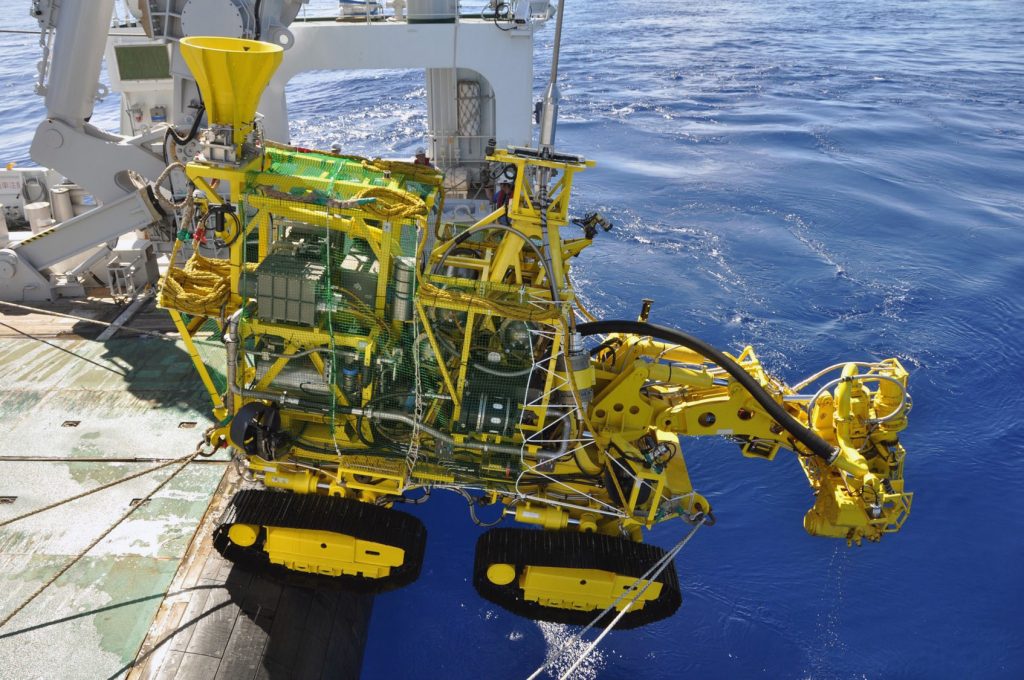
  • Deep-sea mining. It’s closer to happening now than ever before, and scientists, conservationists, and ocean stakeholders are very concerned.

Image: James St. John/Flickr Creative Commons

  • Can deep-sea mining avoid the environmental mistakes of mining on land? As an industry, probably not.
  • Experts Warn that Seabed Mining Will Lead to ‘Unavoidable’ Loss of Biodiversity. And check below for the primary source, co-authored by several leaders in deep ocean science.

Read More “Nerds of trust, deep-sea mining, ocean art, and more! Monday Morning Salvage: July 3, 2017” »

Asian carp, airguns, and cod recoveries: Thursday Afternoon Dredging: June 29th, 2017

Posted on June 29, 2017June 29, 2017 By David Shiffman
Uncategorized


Cuttings (short and sweet):

  • Watch what a little skate looks like inside an embryo, from the Gillis Lab at the University of Cambridge

    Little skate embryo, courtesy of Gillis Lab
  • Follow the Fur Bearers, a Vancouver-based mammal conservation organization, on twitter!
  • Invasive Asian carp found in Great Lakes, beyond electrified barrier. By Oliver Milman, for the Guardian.
  • 6 things you’re missing if you’re not watching deep sea research live feeds. By Alexis Baldera, for the Ocean Conservancy Blog.

Read More “Asian carp, airguns, and cod recoveries: Thursday Afternoon Dredging: June 29th, 2017” »

A Survival Guide to Conference Travel

Posted on June 28, 2017June 27, 2017 By Guest Writer 1 Comment on A Survival Guide to Conference Travel
Academic life

Travis Nielsen is the founder and CEO of Azurigen Management and Consulting Solutions Inc. A STEM project management firm that specializes in linking conservation based science to business and government. He is a published scientist specializing in Marine Biology with 10 years experience in STEM, and 10 years of experience in management and leadership. He has been responsible for projects with budgets up to $500,000, working with multiple stakeholders, large public engagement mandates, and with staffs up to 100 people in locations all across the globe.


Attending Conferences is one of the main ways that academics get their ideas out there. If you’re lucky, your school or business will reimburse the money that you spend to go to conferences, but you still have to put the money upfront first. Sometimes, they will only reimburse up to a certain amount and the rest has to come out of your pocket. I have picked up a few tricks and suggestions in my years of conferencing that may help others plan a great conference trip, without succumbing to the pitfalls.

Plan ahead – Though I realize this isn’t always possible, if you know in advance what you want to do, then plan ahead as much as you can. Research the location, figure travel documents, check ticket prices, accommodation options, food availability, etc. The more time you have to plan, the better prepared you will be, plus you may find deals if you plan earlier, or find someone to share the expense.

Experiment with travel plans BEFORE booking – NEVER book the first option or what you are told to book. If you are paying for things always ALWAYS look to see if there is a creative solution to your travel. Is it cheaper to book a trip as two round trips? A series of one way tickets? Are certain airports cheaper to fly through than others? Is there hostel accommodations nearby? Is it cheaper if you book a few days early? If you are being reimbursed for your travel, then your business will appreciate you trying to make it as cost effective as possible. It can be easier that you think, use sites like kayak.com or expedia and with a little bit of goofing around you can end up doing things like spending 7 weeks circumnavigating the globe for less than $800.00 a month.

Read More “A Survival Guide to Conference Travel” »

#JacquesWeek returns July 23, 2017!

Posted on June 27, 2017June 27, 2017 By Andrew Thaler
Uncategorized

I am pleased to announce that Southern Fried Science will once again host Jacques Week, an ocean lovers’ alternative to Shark Week. Three years ago, on a bit of a whim, we launched Jacques Week, an effort to not only provide a respite from the blood-in-the-water, often fake documentaries of the premier basic cable ocean event, but to give us a chance to celebrate what makes ocean documentaries great–compelling stories, stunning visuals, a bit of human connection–with the greatest ocean filmmaker of them all: Captain Jacques Yves Cousteau.

We’ve selected a series of classic Cousteau films to watch together from July 23, 2017 to July 28, 2017. As always, we go to great efforts to find ones that are available online, but we have also selected several that are only available through purchase. Since it’s becoming harder and harder to find some of the classic collections, this year we’re giving you plenty of lead time to track them down. We have selected three films from the Jacques Cousteau Odyssey collection (The Nile Part I and II and Clipperton: The Island the Time Forgot). You can find these on Amazon, eBay, and other online retailers, as well as your local library.

Included this year will be a series of discussions on Twitter and Facebook, as well as Facebook live. The official schedule will be released the week before (though, if you follow me on Twitter, you already have some idea what we’re planning). Follow the #JacquesWeek hashtag for news, announcements, discussion, and Cousteau trivia.

We aren’t associated with any of the Cousteau organizations. This is a purely grassroots celebration of the man who brought ocean adventure, science, and conservation to the world.

Read More “#JacquesWeek returns July 23, 2017!” »

What does your sandwich cost, rare species in the deep, dong worms, and more! Monday Morning Salvage: June 26, 2017

Posted on June 26, 2017June 26, 2017 By Andrew Thaler
Weekly Salvage

Flotsam (what we’re obsessed with right now)

  • NPR did a great breakdown on the full carbon cost of one sandwich.
  • Public Lab was born from the desperate need for unconflicted data during the Deepwater Horizon disaster. Since then, they’ve grown into a global movement for citizen science. They just relaunched their world-changing balloon mapping kit on Kickstarter. Get yours now!

Read More “What does your sandwich cost, rare species in the deep, dong worms, and more! Monday Morning Salvage: June 26, 2017” »

Fossil whales, Amazon dams, and offshore wind: Thursday Afternoon Dredging: June 22nd, 2017

Posted on June 22, 2017June 22, 2017 By David Shiffman
Uncategorized

Cuttings (short and sweet):

  • Watch these freshwater rays (genus Potamotrygon) from this video by the California Academy of Sciences

    Video by California Academy of Sciences
  • Follow Dr. Kara Feilich, a freshwater fish conservation biologist, on twitter! 
  • New fossil fills in whale evolutionary history. By Brian Switek, for Scientific American.
  • How can scientists engage with policymakers? By new AAAS Leshner Fellow Meghan Duffy, for Dynamic Ecology


Read More “Fossil whales, Amazon dams, and offshore wind: Thursday Afternoon Dredging: June 22nd, 2017” »

Posts pagination

Previous 1 … 58 59 60 … 272 Next

Popular Posts

What Ocean Ramsey does is not shark science or conservation: some brief thoughts on "the Shark Whisperer" documentaryWhat Ocean Ramsey does is not shark science or conservation: some brief thoughts on "the Shark Whisperer" documentaryJuly 2, 2025David Shiffman
That's not a blobfish: Deep Sea Social Media is Flooded by AI SlopThat's not a blobfish: Deep Sea Social Media is Flooded by AI SlopDecember 19, 2025Andrew Thaler
What is a Sand Shark?What is a Sand Shark?November 12, 2017Chuck Bangley
Considering writing a popular science book? Here's my adviceConsidering writing a popular science book? Here's my adviceJuly 7, 2025David Shiffman
This is not an article about epoxy river tables.This is not an article about epoxy river tables.June 4, 2024Andrew Thaler
Shark of Darkness: Wrath of Submarine is a fake documentaryShark of Darkness: Wrath of Submarine is a fake documentaryAugust 10, 2014Michelle Jewell
Shark scientists want their research to help save threatened species, but don’t know how. Our new paper can help.Shark scientists want their research to help save threatened species, but don’t know how. Our new paper can help.December 1, 2025David Shiffman
Build a dirt cheap, tough-as-nails field computer in a Pelican caseBuild a dirt cheap, tough-as-nails field computer in a Pelican caseJuly 21, 2015Andrew Thaler
Join Me at Upwell: A Wave of Ocean Justice — Our Fourth Year!Join Me at Upwell: A Wave of Ocean Justice — Our Fourth Year!March 24, 2026Angelo Villagomez
Marine Biology Career AdviceMarine Biology Career AdviceMay 30, 2025David Shiffman

squishy

Subscribe to our RSS Feed for updates whenever new articles are published.

We recommend Feedly for RSS management. It's like Google Reader, except it still exists.

Southern Fried Science

  • Home
  • About SFS
  • Authors
  • Support SFS


If you enjoy Southern Fried Science, consider contributing to our Patreon campaign.

Copyright © 2026 Southern Fried Science.

Theme: Oceanly Premium by ScriptsTown