


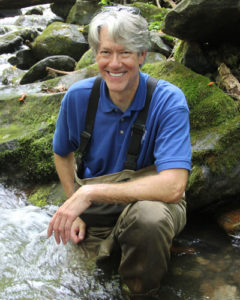
 Dr. Bernie Kuhajda joined the Tennessee Aquarium Conservation Institute staff in May 2012 after 25 years at the University of Alabama, where he managed a museum collection of one million specimens of preserved fishes from all around the world. Though his studies of fishes and other aquatic organisms have taken him around the United States, Mexico, and Central Asia, his particular expertise is surveying and monitoring threatened and endangered species from aquatic systems in the Southeast, in part to help evaluate the effectiveness of conservation programs. He currently teaches weekend courses at the University of Alabama Gadsden Campus and on the main campus in Tuscaloosa every summer. He serves on multiple USFWS Recovery Teams/Groups for endangered and threatened species.
Imagine possessing untold wealth but lacking the means to keep it safe. That is the broad-strokes reality faced by those of us who work to protect the Southeast’s rich aquatic biodiversity.
Our waterways are home to an incredible natural profusion, one that is unrivaled in the temperate world. More than 1,400 aquatic species reside in waterways within a 500-mile radius of the Tennessee Aquarium’s home in Chattanooga, including about three-quarters (73.1 percent) of all native fish species in the United States. More than 90 percent of all American mussels and crayfish species live within that same area, as do 80 percent of North America’s salamander species and half of its turtle species.
Read More “Protecting the freshwater riches of the Southeastern US” »
Southern Fried Science has at the forefront of trying to debunk fake news, such as faux documentaries about mermaids or giant sharks. In their article “Fish tales: combating fake science in the popular media” Andrew Thaler and David Shiffman asked that:
“scientists familiarize themselves with common sources of misinformation within their field, so that they can be better able to respond quickly when factually inaccurate content begins to spread”

Read More “Sifting the fact from the false in an internet full of fake ‘news’” »
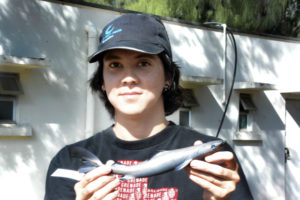 Paul J. Clerkin is a graduate researcher at the Pacific Shark Research Center of Moss Landing Marine Laboratories in Moss Landing, California. Clerkin specializes in rare and deep-sea chondrichthyans and is focusing on new species descriptions and life histories of poorly understood sharks species. His thesis work is with Dr. David A. Ebert studying sharks encountered during two surveys in the Southern Indian Ocean in 2012 and 2014, a total of 126 days at sea. He has also conducted research for other projects aboard ships in the Bering Sea, South East Atlantic, Philippine Sea, and across the Pacific. He was featured in the “Alien Sharks” series on Shark Week.
This week, Travel Channel is airing a pilot for my new series, Deep Sea Mysteries (“like” our page on Facebook!). In the course of research, I visit extraordinary fishing communities to find and study rare, poorly known and even undescribed species. This show is the first of its kind, different from the Shark Week programs I’ve done in the past. It continues a focus on sharks and other deep-sea animals, but is notably (and pleasantly) more educational. There are more species, more facts, more science, and an emphasis on conservation effort.
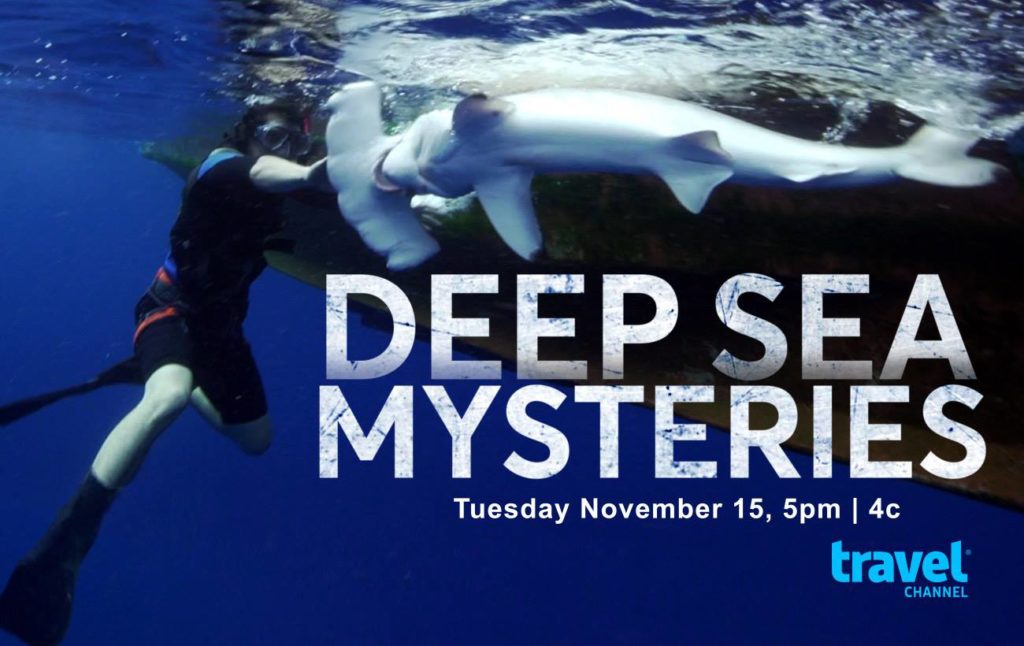
Also, as a travel show, the series combs through the beautiful regions, interesting people and unique stories behind each expedition.
Read More “New TV show: Deep Sea Mysteries with Paul Clerkin premieres tonight!” »
We stand at a crossroads.
Southern Fried Science has occupied a unique niche in the online ocean community. We have defended commercial and recreational fishers as often as we have opposed them. We have at times stood behind ocean conservation policy and at times pushed back against excessive legislation. We have criticised those within our community and those without. We have been radically libertarian and radically socialist and every label in between.
We are comfortable joining the long call, the great song that booms from the belly of a blue whale, and circles the world as it echoes through the community.
We are comfortable being the lone cry of dissent, pushing back against the onslaught of righteous exuberance.
We have never sought consensus, only common ground.
For almost a year now a phrase has been rattling around inside my head. At first it was just catchy cadence, something to use on the next article. But the more I thought about it, the more I came to understand what it really means; how deeply it permeates almost every aspect of life on this planet.
Diversity is resilience.
Happy FSF! As some of you may know (and for those who don’t), I study the bottom of the ocean, and I do so primarily using innovative technology to image the seafloor (e.g., Wormcam). The interesting work I’ve conducted has resulted in me having the opportunity to present my work to a larger lay audience, in the form of a TEDx presentation.

I am giving my TED talk with my good buddy and colleague Steve Sabo. In our talk, “A Picture is Worth a Thousand Worms”, Steve & I will illustrate the significance of the ocean floor through advancements in underwater camera technology and data visualization, making complex science more accessible for everyone.
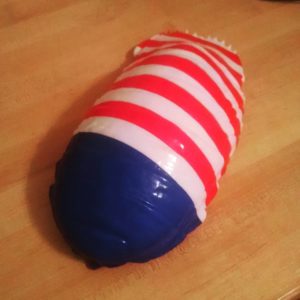 Southern Fried Science loves giant isopods. There are few deep-sea animals more iconic, more charismatic, more weird and wonderful, than the deep-sea isopod. The biggest of the deep-sea isopods, the giant deep-sea isopod, Bathynomus giganteus, is a quintessentially American beast. It dwells in the deep Gulf of Mexico. The bulk of its known range falls within the United States Exclusive Economic Zone. It was first collected by American scientist Alexander Agassiz (though it was formally described by his colleague and collaborator French zoologist Alphonse Milne-Edwards). Tough on the outside, soft on the inside, fiercely independent yet able to work in massive aggregations to consume the bloated carcass of a whale, alternately terrifying and adorable, I can think of no better animal to represent the deep water of the United States better than our own Bathynomous giganteus.
So today, with an historic election looming, we decided it was past time to reflect on the things we love, the things that unite us, the things that fill us with wonder, and call upon Congress to officially adopt the giant deep-sea isopod as the National Deep-sea Animal of the United States.
Read More “We love giant isopods and America should love them too!” »
Picture a pill bug, roly poly, woodlouse, or doodle bug, an animal found under rocks and logs throughout the United States. Now picture an animal similar to that pill bug, but as big as a cat, crawling across the Gulf of Mexico. That is the giant deep-sea isopod.
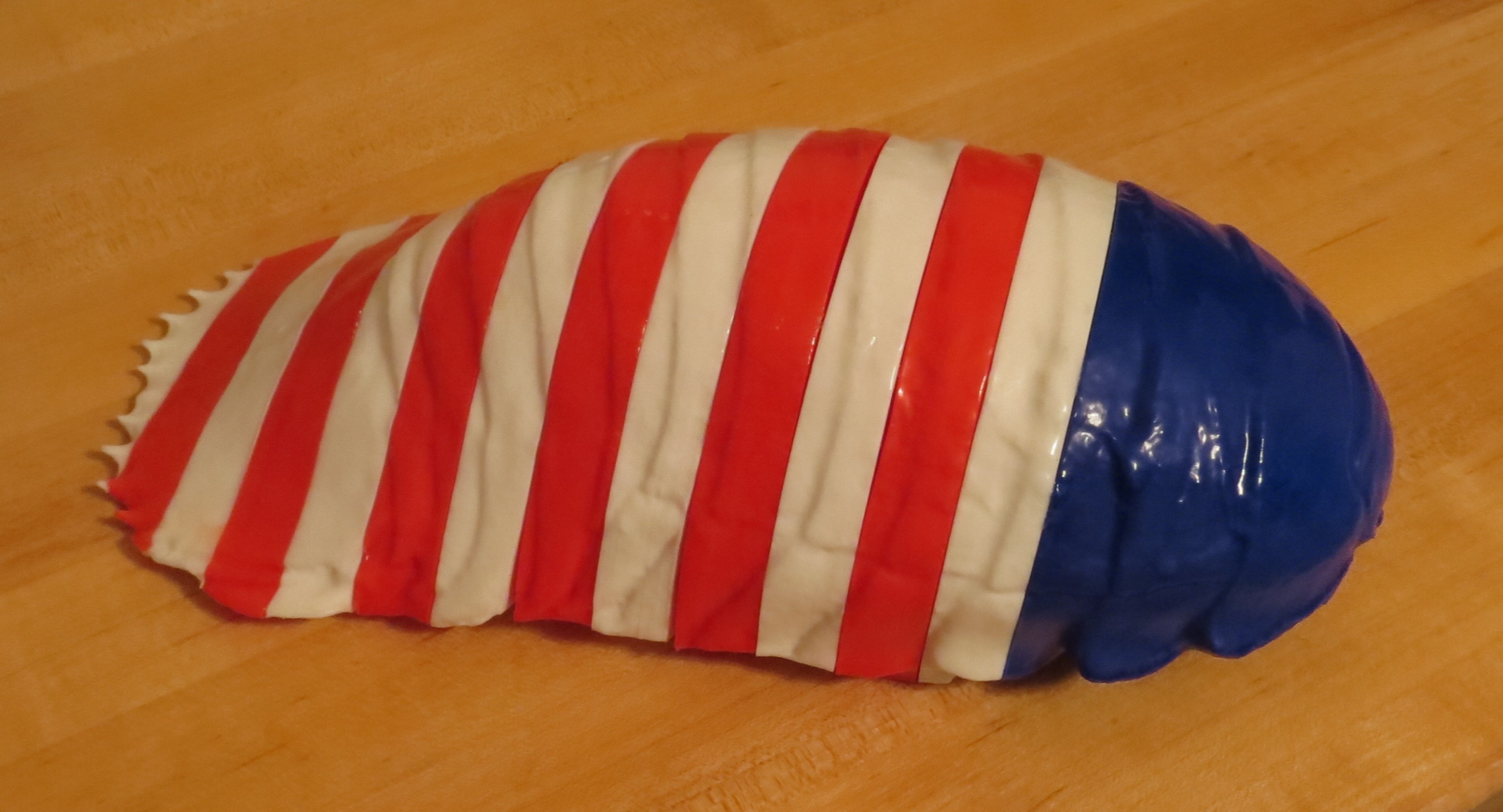
The deep waters of the United States’ Exclusive Economic Zone is home to this large, recognizable animal, which can reach almost 2 feet in length. Since their discovery in the late 19th century, giant isopods have captured the public’s imagination, acting as an Ambassador Species for deep-sea ecosystems. Ambassador Species are important for education, exploration, and conservation as they provide a charismatic icon to help introduce people to new and unfamiliar places.
WHEREAS:
The US Fish and Wildlife Service is adapting new technology to the business of saving and endangered species: they’re sending in the drones.
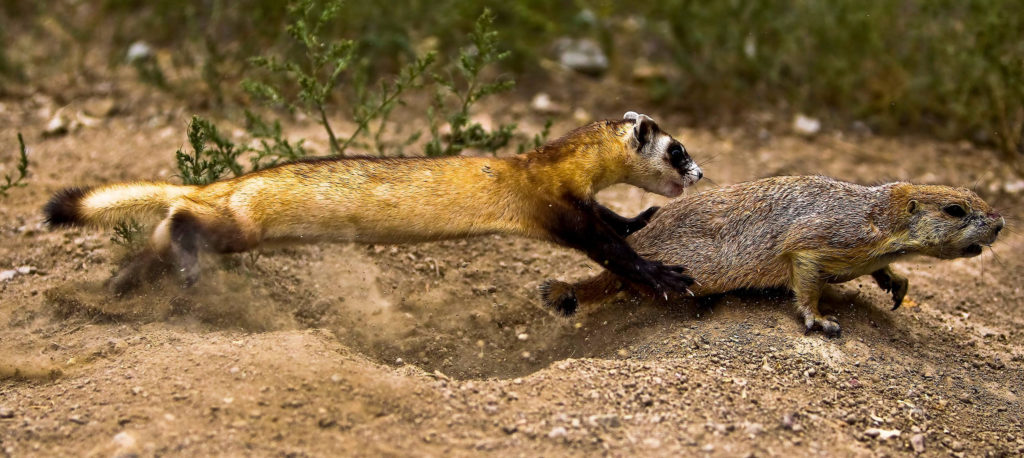
Black-footed ferrets are a small, solitary, extremely territorial weasel-like animal that lives in the American west. Once abundant in central North America, today, their wild population stands at around 500. Black-footed ferrets were decimated by sylvatic plague (a close relative of the bubonic plague), as well as habitat loss and an early eradication campaign.
Read More “The plague-busting, prairie-dog-vaccinating, ferret-saving drone” »
A bit of Academic science fiction for your Tuesday morning enjoyment.
A reminder: Southern Fried Science is entirely supported by contributions from our readers. Head over to Patreon to help keep our servers running and fund new and novel ocean outreach projects. And if you like my occasional forays into fiction, you’ll find a lot more over there.
Fall Semester
“I’m sorry,” the dean said as he rested his coffee mug on the heavy stack of CV’s littering his desk, “we just don’t have any demand for your class this semester. Maybe in the Spring.”
“What if I add another core credit? I could include a writing module. I could add a history component.”
The dean leaned forward. “You know I can’t do that, Doctor…”
“Thomas, sir.”
“Dr. Thomas. It wouldn’t be fair to the students. We’re not going to pad out a class just so you can get paid. I’m sorry. It’s just not in the cards. Maybe next semester you can stir up some interest in Introduction to Genome Editing.”
“So what do I do now?”
“Well,” the dean paused, earnest and thoughtful, “if you want to keep your office, you’ll have to volunteer to TA one of the chemistry lab units. Otherwise, I’m afraid your campus access expires at midnight this Friday.”
Read More “Disenfranchised Adjuncts Wanted: Flexible Morality a Plus” »