
Skip to content

Southern Fried Science

Over 15 years of ocean science and conservation online

  • Home
  • About SFS
  • Authors
  • Support SFS

Recent Posts

Here’s how to join my IMCC8 symposium, “Ocean Science Communication: What’s New and What’s Next?”
April 22, 2026
Deep Sea Mining Symposium Announcement
April 21, 2026
Join Me at Upwell: A Wave of Ocean Justice — Our Fourth Year!
March 24, 2026
How close did the world’s first deep-sea mining come to the dredging the world’s largest cold-water coral reef?
March 17, 2026
Here are some ocean conservation technologies that I’m excited about
February 19, 2026
Walking Backwards Into the Future: Applying Indigenous Knowledge to Deep Sea Mining
February 5, 2026

Sizing Sizing Ocean Giants: Patterns of #scicomm outreach in a marine megapaper

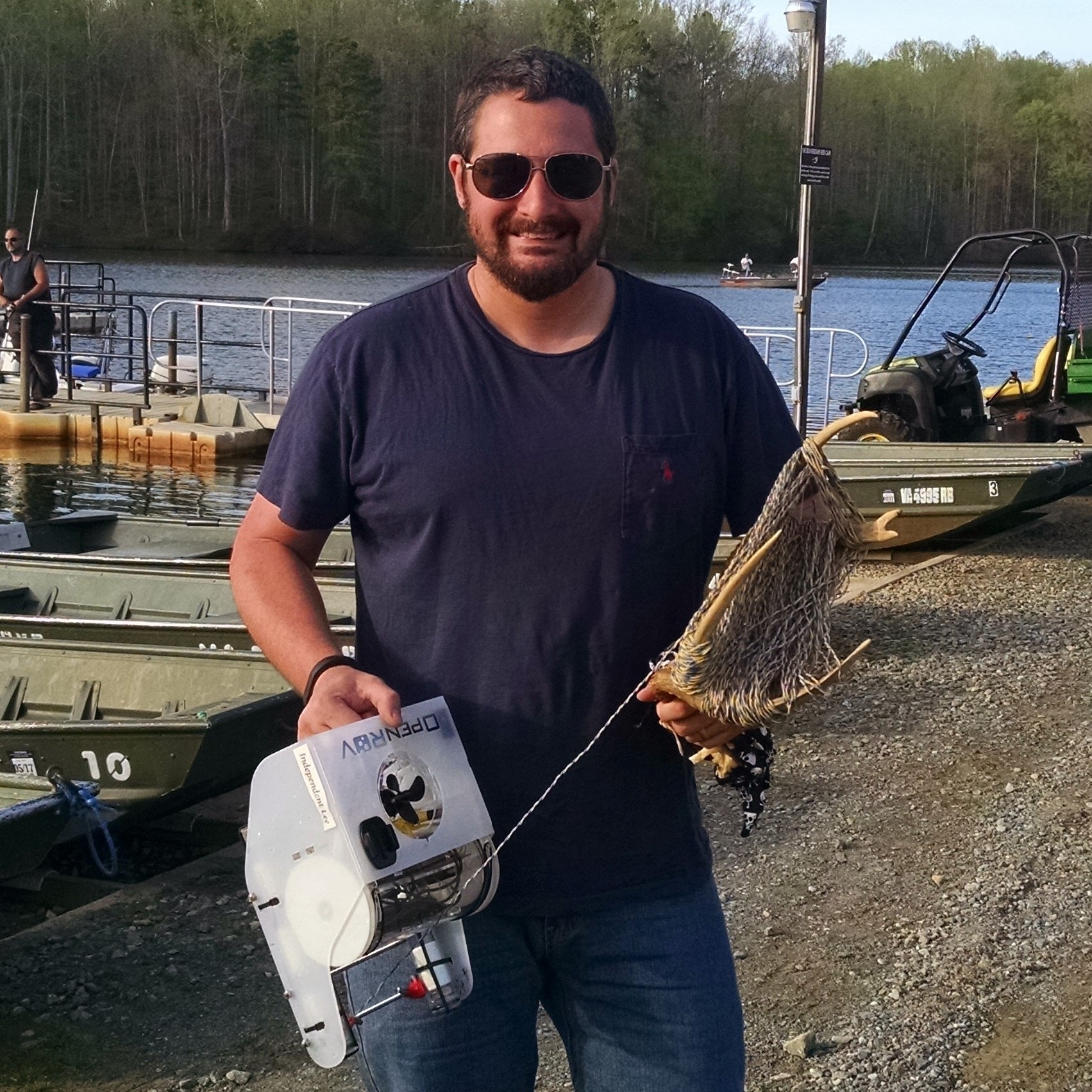
Posted on January 20, 2015February 9, 2021 By Andrew Thaler 2 Comments on Sizing Sizing Ocean Giants: Patterns of #scicomm outreach in a marine megapaper
Blogging, Conservation, Science

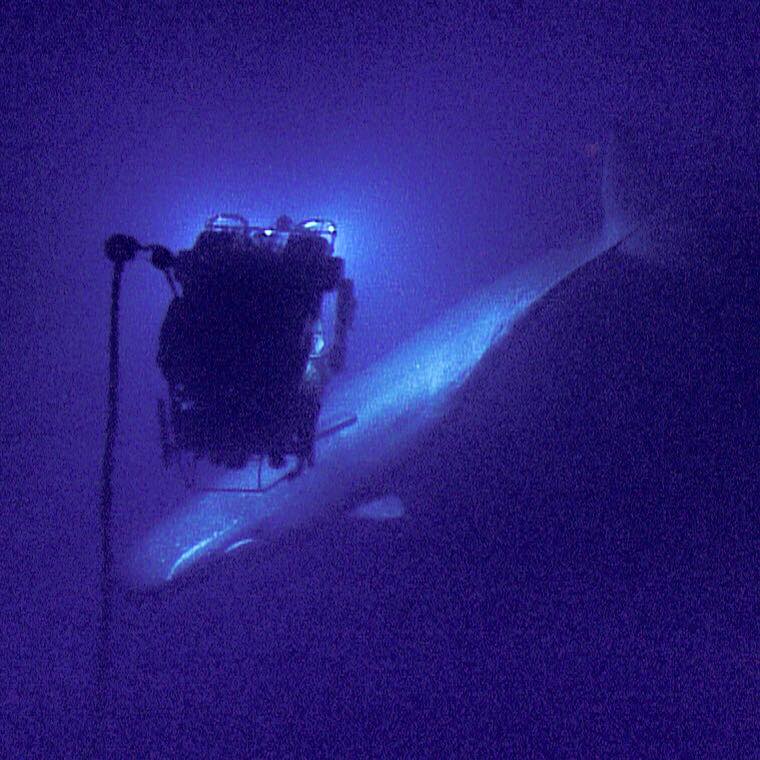
Last week, Craig McClain and many friends published Sizing Ocean Giants: patterns of intraspecific size variation in marine megafauna, a research paper that would better be described as a monograph. The response to the paper has been overwhelming.

Since it’s publication last Tuesday, Sizing Ocean Giants has been viewed almost 44,000 times by 38,000 people and downloaded 1200 times. If this seems like a lot for what is essentially a natural history monograph, you are correct. According to Altmetric, a service that measures the non-citation impact of scientific papers, Sizing Ocean Giants is the most discussed and shared article in the history of PeerJ. With a score of 546 (most papers average a score of 5, PeerJ papers average about 20), our paper has climbed into the 99th percentile of all articles ever tracked.

We’ve been covered in the Washington Post, Newsweek, National Geographic, and Scientific American, as well as numerous non-English media outlets from Mexico to Greece. Opa!  We’ve seen a small attention spike on twitter and tons of shares (almost 12,000) via Facebook.

So how do we account for the huge success of this massive paper?

Read More “Sizing Sizing Ocean Giants: Patterns of #scicomm outreach in a marine megapaper” »

The dangers of excessive self-citation

Posted on January 18, 2015January 22, 2015 By Chris Parsons 2 Comments on The dangers of excessive self-citation
Uncategorized

Warning: This blog contains themes of a professional ethical nature that some readers may find offensive. Intended for a mature academic audience only.

As I was spending a lazy Sunday morning, tucked up in bed fiddling with my iPad, a perky little blog came across my Twitter feed (read it here). Some rather sad data were contained within: approximately 82% of journal articles in the humanities don’t get cited (within the first five years of publication anyway) and just over a quarter (27%) of natural science articles don’t get cited either. I was actually surprised that the percentage of non-cited paper was that low, until I read down the article and noticed that the analysis didn’t include self-citations. Scientists, especially marine biologists, are particularly bad at excessively self-citing, or as I like to call it, #citurbation.

Self-citations are the guilty secret of science researchers. Let’s face it, we’ve all done it at some time. Now I’m as guilty as the next scientist – late one Friday night I’m still working and on the computer screen in front of me I have a half-done editorial and, guiltily,  I slip in a self-citation. Or in the final throes of a massive multi-authored monograph, I toss in a self-citation from left field. But why is it that marine biologists so often self-cite? Is it because of lack of attention? Biomedical articles rarely go uncited (and their journals typically have much higher impact factors). Is it because marine biology journals tend to have low impact factors and marine articles are spread across so many journals that they don’t get the same prominence (see this previous SFS blog, he says in a blatant example of self-citing)?

Read More “The dangers of excessive self-citation” »

The words we use matter in climate change adaptation

Posted on January 17, 2015January 17, 2015 By Bluegrass Blue Crab 6 Comments on The words we use matter in climate change adaptation
Uncategorized

In 2012, North Carolina outlawed climate change, receiving major press as the face of conservative climate policy. The intent of the law was to stop planning processes from basing their decisions on modeled climate change scenarios of the future, which would halt large investments in coastal development. But the letter of the law actually outlawed … Read More “The words we use matter in climate change adaptation” »

Six things I learned about Giant Isopods while Sizing Ocean Giants

Posted on January 13, 2015January 13, 2015 By Andrew Thaler 4 Comments on Six things I learned about Giant Isopods while Sizing Ocean Giants
Science

Today, Craig McClain, along with a massive team of ocean scientists (including me!) published our monumental paper: Sizing ocean giants: patterns of intraspecific size variation in marine megafauna. This massive monograph investigates patterns of size among 25 ocean giants, the biggest, most massive members of their respective taxa. You can probably guess which species I had a hand in reviewing.

httpv://www.youtube.com/watch?v=xtk5t7sSb3s

Along the way, I learned quite a few cool things about the magnificent giants of the deep sea.

1. Giant deep-sea isopods are sexually dimorphic. 

Read More “Six things I learned about Giant Isopods while Sizing Ocean Giants” »

An open letter to new Discovery Channel President Rich Ross from a shark scientist

Posted on January 9, 2015January 9, 2015 By David Shiffman 1 Comment on An open letter to new Discovery Channel President Rich Ross from a shark scientist
Conservation, Popular Culture, Science

Dear Rich Ross, new President of the Discovery Channel,

I was excited to learn about your commitment to no longer show fake documentaries on the Discovery Channel. These shows have been incredibly damaging not only to Discovery’s goals of being the “number one non-fiction media company in the world” by”telling compelling and accurate stories,” but to public understanding of science and conservation. In recent years, the Discovery Channel has tried hard to actively muddle the fact that these documentaries were fake, including hiding vague disclaimers at the very end.  I’ve spoken to hundreds of schoolchildren about sharks, and every time someone asks me about megalodon or mermaids.  Viewers believed that they were real, and your channel actively bragged about the fact that people believed that they were real.

By claiming that megalodon isn’t extinct and mermaids are real but the government is covering this up, these shows resulted in scientists receiving threats and harassment,  and resulted in important government agencies getting so many angry phone calls that they had to issue public statements. Producers for some of these shows intentionally lied to scientists to convince them to appear onscreen, intentionally lied to journalists about the facts behind them,  and intentionally caused a real-life public panic. They actually showed a documentary about a legendary (read as “fake”)  shark called Hitler. In short, I will be glad to see Shark Week and the Discovery Channel return to your roots of fact-based programming.

However, while “we won’t actively lie to viewers anymore” is an important step that I applaud, Shark Week and other Discovery Communications programs have many other problems that should be addressed. Shark Week 2014’s “Zombie Sharks” glorified wildlife harassment for no reason, as the entire stated goal of the show was for a non-scientist with a history of wildlife harassment to try to answer a question that scientists have known the answer to for decades. This problem is not limited to Zombie Sharks, but pervades Discovery Communications shows.

Read More “An open letter to new Discovery Channel President Rich Ross from a shark scientist” »

Snowy Owls and Goliath Groupers: Why I co-authored “Trophy fishing for species threatened with extinction.”

Posted on January 9, 2015January 9, 2015 By Andrew Thaler 2 Comments on Snowy Owls and Goliath Groupers: Why I co-authored “Trophy fishing for species threatened with extinction.”
Blogging, Conservation, Science

In both my professional and private life, I am a man who wears many hats. I am a deep-sea ecologist, a science writer, a goatherd, a geneticist, a conservation advocate, a grill master, and many others. When David asked me to join him in co-authoring “Trophy fishing for species threatened with extinction: A way forward building on a history of conservation” I did so not in my capacity as a marine science Ph.D., but as a recreational fisherman who cares deeply about the survival of his sport. Without fish, there is no fishing.

I was, at first, skeptical, but over the course of a summer, I came to appreciate what David was trying to accomplish.

I wrote most of my thesis on this boat, with a rod in the water.

Before I talk about fish, I need to talk about birds. 

Read More “Snowy Owls and Goliath Groupers: Why I co-authored “Trophy fishing for species threatened with extinction.”” »

The era of the million-dollar tuna is over.

Posted on January 5, 2015January 5, 2015 By Andrew Thaler
Conservation, Science

For the last several years, we’ve been following the first-of-the-year Tsukiji Tuna Auction. In the past, this auction has served as a (often questionable) benchmark for the demand for Bluefin Tuna. At its peak, the price of Bluefin Tuna broke the scales at nearly $1,800,000. As the price continued to inflate, last year we even released an early warning to journalists covering the auction, cautioning them against drawing too many conclusions about the expectedly massive auction price. We we’re all caught off guard when the price of the first fish barely topped $70,000 dollars, kilo-for-kilo not even the most expensive fish sold that day.

Today, the numbers are in, and the first Bluefin of the year sold for a measly $37,500, barely enough to cover the cost to fuel for a fishing boat.

The era of the million-dollar tuna is over.

Read More “The era of the million-dollar tuna is over.” »

Southern California is basically Mordor: Climate forcing effects in Middle Earth

Posted on December 24, 2014December 23, 2014 By Andrew Thaler
Popular Culture, Science

“It is a barren wasteland, riddled with fire and ash and dust, the very air you breathe is a poisonous fume.” Boromir, The Lord of the Rings Mordor, the seat of the Dark Lord’s power, a barren wasteland crawling with orcs, dry and desolate. Or at least, that’s what we’re led to believe thanks to … Read More “Southern California is basically Mordor: Climate forcing effects in Middle Earth” »

Warg extirpation and the destabilization of eagle colonies in Middle Earth

Posted on December 23, 2014December 23, 2014 By Andrew Thaler
Popular Culture, Science

“Eagles! The eagles are coming!” Pippin, Return of the King “I came from the end of bag, but no bag went over me. I am the friend of bears and the guest of eagles. I am Ring-winner and Luckwearer; and I am Barrel-rider.” Bilbo Bagins, The Hobbit Truly, in this late age, is there anything … Read More “Warg extirpation and the destabilization of eagle colonies in Middle Earth” »

Middle Earth could have been saved by the Endangered Species Act

Posted on December 22, 2014December 21, 2014 By Andrew Thaler 2 Comments on Middle Earth could have been saved by the Endangered Species Act
Popular Culture, Science

Smaug gigan
Smaug gigananteus syn. Cordylus giganteus, the Giant Girdled Lizard, because of course there’s an actual species named Smaug. Photo by Wilfried Berns.

In a cave in the Lonely Mountain there lived a dragon. Not a gnarly, goblin-stuffed, slimy cave, filled with the bowels of orcs and fishy creepers, nor yet an empty, granite, echo-less cave with nothing in it to lie down on or horde: it was a dragon-cave, and that meant gold. At least it did, until a nasty band of poachers found Lonesome Smaug, the last of his species, alone, asleep, threatening none, and smote his genus from the red ledger, stripping Middle Earth of critical biodiversity.

The ecologists of Carsondell would say, of the age of war that followed, that the men and dwarves and elves and hobbits brought the darkness upon themselves. Indeed, as the Dark Lord raised his army, denuded the forests, and belched carbon from the factories of Mordor, Gandalf the Grey, one of the more powerful, though among the least conservation-minded, of the wizards would remark: “It has been said that dragon-fire could melt and consume the Rings of Power, but there is not now any dragon left on earth in which the old fire is hot enough.”

The Grey Wizard failed to mention that, were it not for his callousness, there would be*.

Read More “Middle Earth could have been saved by the Endangered Species Act” »

Posts pagination

Previous 1 … 96 97 98 … 272 Next

Popular Posts

Playing God - How the ESA "God Squad" just voted for the extinction of a uniquely American whalePlaying God - How the ESA "God Squad" just voted for the extinction of a uniquely American whaleApril 9, 2026Southern Fried Science
The story of the pride flag made from NASA imagery: Bluesky's most-liked imageThe story of the pride flag made from NASA imagery: Bluesky's most-liked imageSeptember 27, 2024David Shiffman
What Ocean Ramsey does is not shark science or conservation: some brief thoughts on "the Shark Whisperer" documentaryWhat Ocean Ramsey does is not shark science or conservation: some brief thoughts on "the Shark Whisperer" documentaryJuly 2, 2025David Shiffman
Here's how to join my IMCC8 symposium, "Ocean Science Communication: What's New and What's Next?"Here's how to join my IMCC8 symposium, "Ocean Science Communication: What's New and What's Next?"April 22, 2026David Shiffman
Our favorite sea monsters – Ningen (#4)Our favorite sea monsters – Ningen (#4)September 7, 2010Andrew Thaler
Shark of Darkness: Wrath of Submarine is a fake documentaryShark of Darkness: Wrath of Submarine is a fake documentaryAugust 10, 2014Michelle Jewell
Join Me at Upwell: A Wave of Ocean Justice — Our Fourth Year!Join Me at Upwell: A Wave of Ocean Justice — Our Fourth Year!March 24, 2026Angelo Villagomez
On the clarity of animals: the art and science of clearing and stainingOn the clarity of animals: the art and science of clearing and stainingDecember 17, 2013Guest Writer
That's not a blobfish: Deep Sea Social Media is Flooded by AI SlopThat's not a blobfish: Deep Sea Social Media is Flooded by AI SlopDecember 19, 2025Andrew Thaler
What can the funniest shark memes on the internetz teach us about ocean science and conservation?What can the funniest shark memes on the internetz teach us about ocean science and conservation?November 8, 2013David Shiffman

squishy

Subscribe to our RSS Feed for updates whenever new articles are published.

We recommend Feedly for RSS management. It's like Google Reader, except it still exists.

Southern Fried Science

  • Home
  • About SFS
  • Authors
  • Support SFS


If you enjoy Southern Fried Science, consider contributing to our Patreon campaign.

Copyright © 2026 Southern Fried Science.

Theme: Oceanly Premium by ScriptsTown