Skip to content

Southern Fried Science

Over 15 years of ocean science and conservation online

  • Home
  • About SFS
  • Authors
  • Support SFS

Tag: NOAA

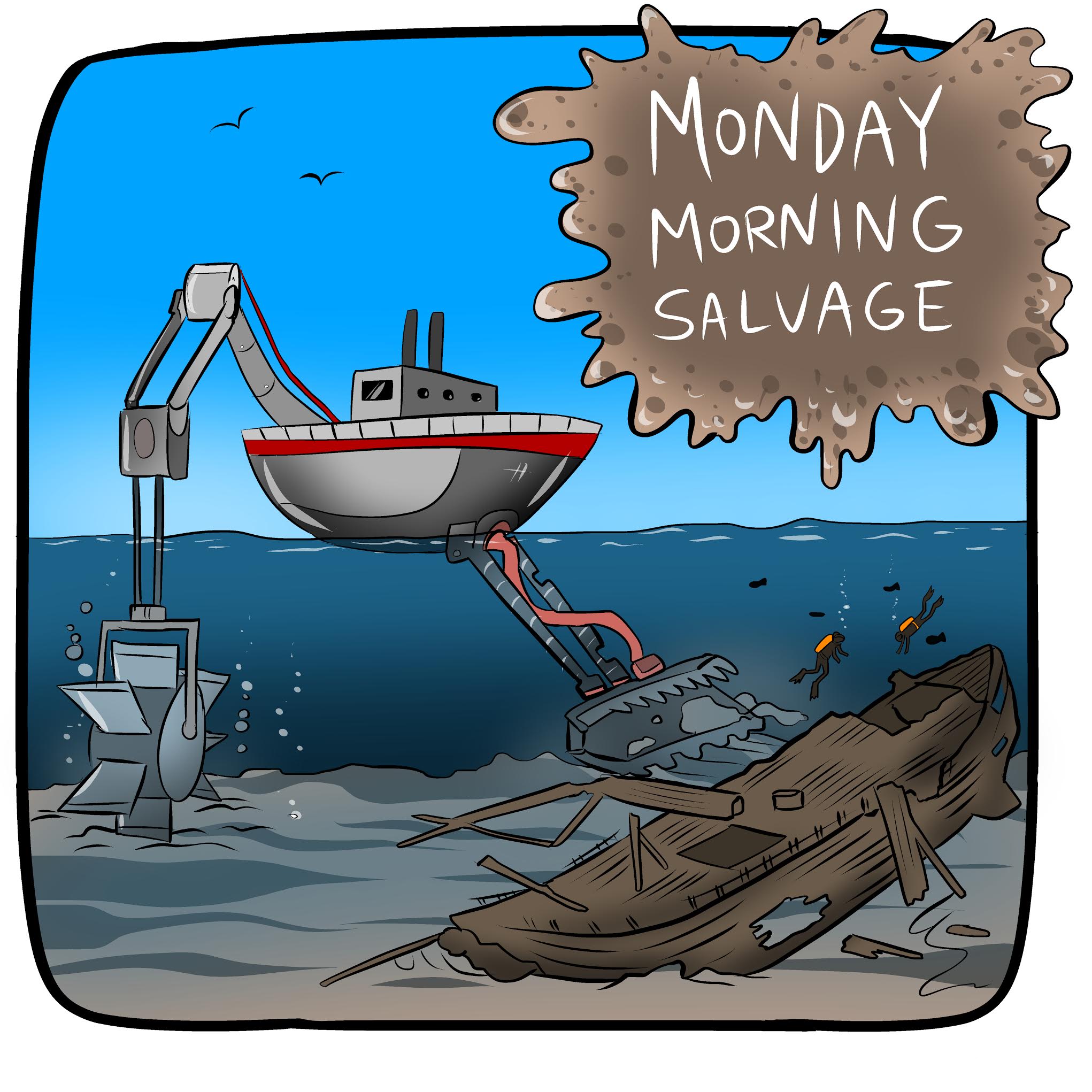
HAGFISH! Also deep-sea mining, climate change, The Ocean Cleanup, and more! Monday Morning Salvage: July 17, 2017

Posted on July 17, 2017 By Andrew Thaler
Weekly Salvage

Fog Horn (A Call to Action)

  • Hakai Magazine want to hear from you! Dear Hakai Magazine Reader, Who Are You?

Flotsam (what we’re obsessed with right now)

  • Everything Tangier is utterly fascinating right now: Angry messages to the Trump-supporting mayor of Tangier Island illustrate a need to listen, not to shout.
  • I’m still just dumbfounded by this: Did a Glowing Sea Creature Help Push the U.S. Into the Vietnam War? In other words, Ocean Literacy could save us all from annihilation.
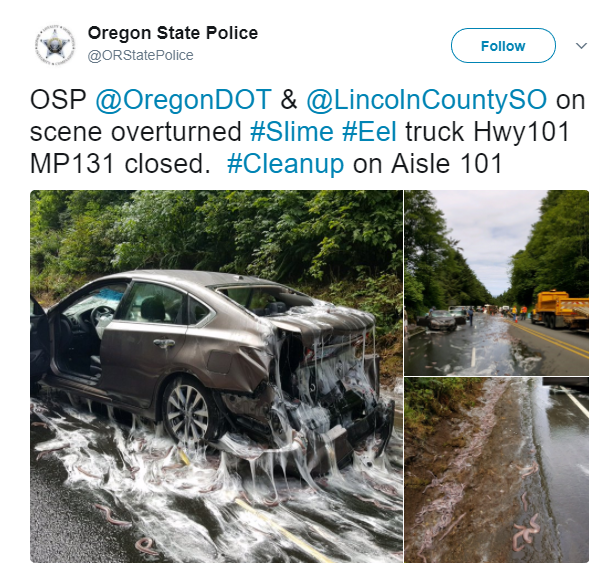
  • I really hope you’re not sick of hagfish yet. Because Hagfish!
  • Best headline, ever: Sea Spiders Pump Blood With Their Guts, Not Their Hearts.
Read More “HAGFISH! Also deep-sea mining, climate change, The Ocean Cleanup, and more! Monday Morning Salvage: July 17, 2017” »

Monday Morning Salvage: NOAA Special Edition (call your representatives!)

Posted on March 6, 2017March 6, 2017 By Andrew Thaler
Weekly Salvage

This weekend, the Washington Post reported on a leaked proposed budget from the Administration which includes drastic, agency-breaking cuts to the National Oceanic and Atmospheric Administration. This comes in the wake of new Commerce Secretary Wilbur Ross pledging to protect peer-reviewed researchers and shield NOAA climate scientists from partisan attacks and that the Department of … Read More “Monday Morning Salvage: NOAA Special Edition (call your representatives!)” »

Fun Science FRIEDay – The worlds largest sponge.

Posted on June 3, 2016 By Kersey Sturdivant
Conservation, Science

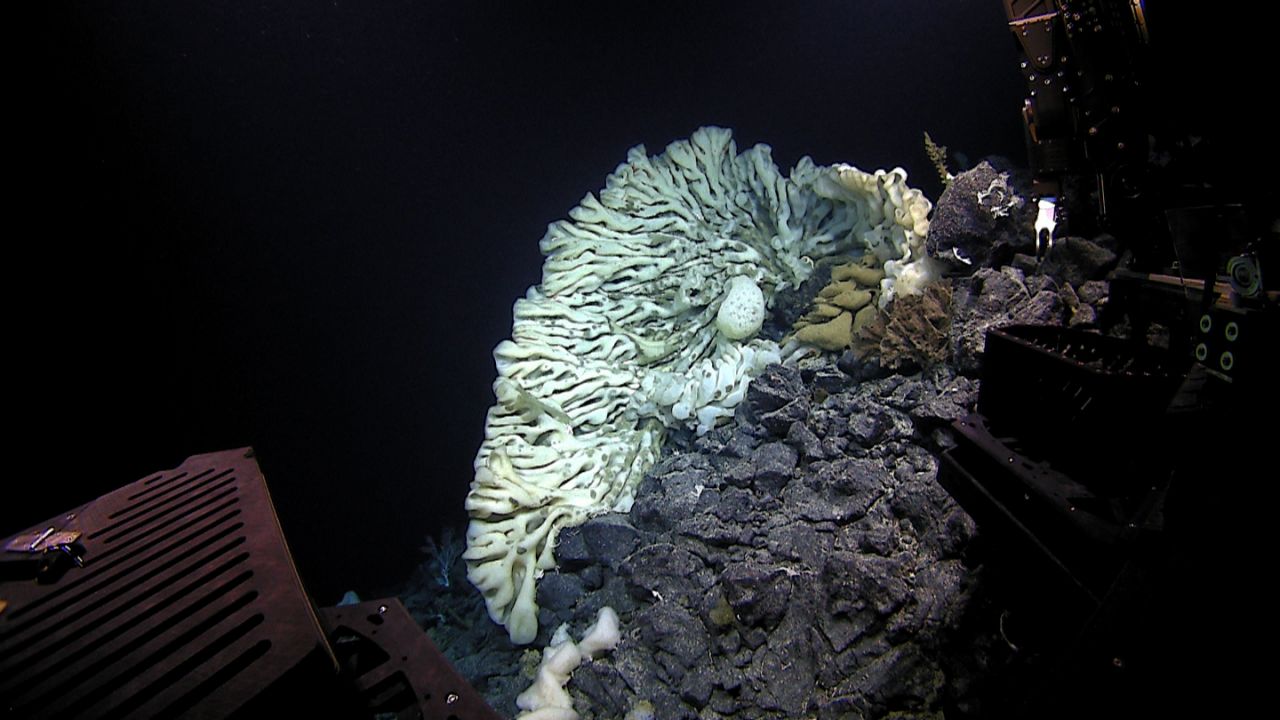
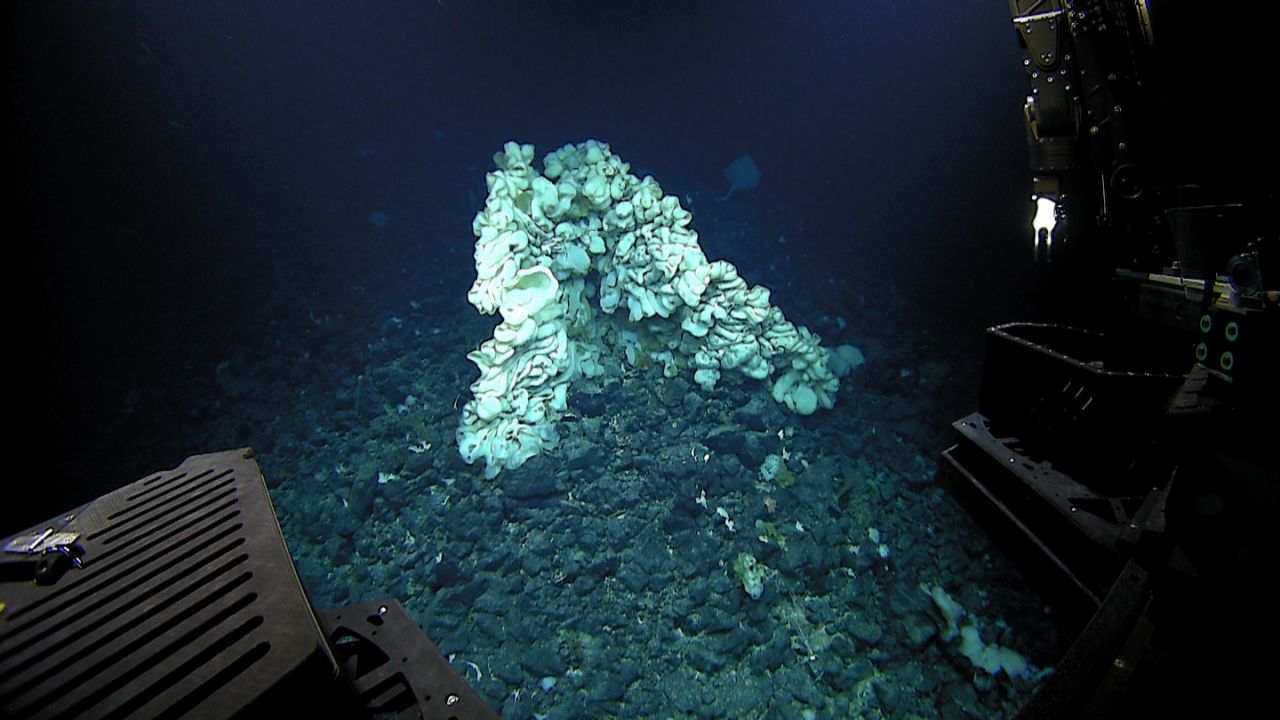
Recently a team of scientists on a deep sea expedition in the Northwestern Hawaiian Islands aboard the R/V Okeanos Explorer made a monumental discovery… pun intended. While exploring the depths of the seafloor in Papahānaumokuākea Marine National Monument, with their remotely operated vehicles (ROV) Seirios and Deep Discover, they discovered and documented the largest sponge ever observed on this planet… or any planet for that matter.

Large hexactinellid sponge found in Papahānaumokuākea Marine National Monument (Photo credit: NOAA's Office of Exploration and Research)
Large hexactinellid sponge found in Papahānaumokuākea Marine National Monument (Photo credit: NOAA’s Office of Exploration and Research)
Lateral view of a large hexactinellid sponge found in Papahānaumokuākea Marine National Monument (Photo credit: NOAA's Office of Exploration and Research)
Lateral view of a large hexactinellid sponge found in Papahānaumokuākea Marine National Monument
(Photo credit: NOAA’s Office of Exploration and Research)


Read More “Fun Science FRIEDay – The worlds largest sponge.” »

Beaufort NOAA Lab Builds Community: It would be a huge loss to say goodbye

Posted on March 27, 2014 By Bluegrass Blue Crab
Conservation, Uncategorized

Hopefully many of our faithful readers have seen the sad announcement that the NOAA lab in Beaufort, NC may be no more. The main reason cited for the potential closure is financial – the cost of maintaining an aging building. Our friends over at the fisheries blog have written a sound debunking of this reasoning, also lamenting the loss of an institution over a century old and hub of fisheries research for the mid-Atlantic. In short, the Beaufort Lab represents a strong history of productive research, recent investment into infrastructure, and a critical part of a much larger marine science community in the region. It’s fair to say that the lab is the founding member and backbone of a marine science consortium  with the Rachel Carson National Estuarine Research Reserves, Duke University, NC State, the University of North Carolina, NC Division of Marine Fisheries, and Carteret Community College.

Beyond the institutions in a list, the Beaufort lab cements a broader community and economy of Carteret County, which is still largely based on fishing. While relations with the universities and state fisheries enforcement can sometimes be strained, NOAA rises above as a voice of reason and glue of collaboration around protecting our marine resources for food, economy, and society. If you believe me, there are steps you should take right now to voice your support for the lab by contacting local Congressional representation – those with the power to stop the closure: Congressman Walter Jones, Senator Kay Hagen, and Senator Richard Burr – and write a public comment to the House Committee currently reviewing the decision. For those who need a little more context and information, read on for some personal testimony demonstrating the value of the Beaufort lab I observed during my dissertation work in the area, which was focused on collaborative fisheries research. In a nutshell, I’ve observed how the Beaufort lab builds relationships between scientists and fishermen and therefore, indirectly, trust in NOAA.

Read More “Beaufort NOAA Lab Builds Community: It would be a huge loss to say goodbye” »

Changes Proposed for U.S. Fisheries Management: The Good, The Bad, and The Ugly

Posted on February 9, 2014February 10, 2014 By Chuck Bangley 13 Comments on Changes Proposed for U.S. Fisheries Management: The Good, The Bad, and The Ugly
Conservation

This past Tuesday, the draft bill to reauthorize the Magnuson-Stevens Act was released by the U.S. House.  The Magnuson-Stevens Act is a big deal because this is the law that lays out how fisheries management works in the United States.  This time, a number of changes have been proposed by Representative Doc Hastings, some of which could fundamentally change fisheries management and fisheries science in U.S. waters.  The proposed changes immediately became controversial, garnering overwhelming support from witnesses to the House Natural Resources Committee hearing of the bill (witnesses included representatives from the recreational and commercial fishing industries as well as the Mid-Atlantic Fishery Management Council) while the Pew Charitable Trust strongly opposed the bill, calling it the “Empty Oceans Act” (translated into GIFs by Upwell for your viewing pleasure).

How might the Hastings bill affect your favorite marine species (both in the water and on your dinner plate)?  Read on to see the good, bad, and ugly aspects of these proposed changes, at least according to this particular fisheries scientist.

Read More “Changes Proposed for U.S. Fisheries Management: The Good, The Bad, and The Ugly” »

Welcome back, U.S. government science and environment agencies!

Posted on October 17, 2013October 27, 2013 By David Shiffman

On October 17th, after a 16 day shutdown, the U.S. government re-opened. Here are what the twitter accounts from U.S. science and environment agencies had to say on their first day back. I’ll continue to update this throughout the day as more twitter accounts come back online

Read More “Welcome back, U.S. government science and environment agencies!” »

Open thread for NOAA scientists to speak freely about scientific and technical matters based on their official work without approval from the public affairs office or their supervisors.

Posted on December 8, 2011 By Andrew Thaler 1 Comment on Open thread for NOAA scientists to speak freely about scientific and technical matters based on their official work without approval from the public affairs office or their supervisors.
Science

Yesterday the National Oceanic and Atmospheric Association (NOAA) released their new scientific integrity policy, which specifically states that: “To support a culture of openness, one of the policy’s key provisions affirms unequivocally that NOAA scientists may speak freely with the media and public about scientific and technical matters based on their official work without approval … Read More “Open thread for NOAA scientists to speak freely about scientific and technical matters based on their official work without approval from the public affairs office or their supervisors.” »

Beneath the Waves Film Festival: Microworlds – What Do Marine Mammals Eat?

Posted on April 14, 2011April 2, 2011 By David Shiffman
Science

This 2011 Beneath the Waves Film Festival entry comes from Paul Hillman at NOAA.  What Do Marine Mammals Eat? is part of the Microworlds series, which focuses on NOAA scientists interacting with public school students.    

Pirate fishing: far less awesome then it sounds

Posted on January 25, 2011January 25, 2011 By David Shiffman 6 Comments on Pirate fishing: far less awesome then it sounds
Conservation, Science

Earlier this month, NOAA provided a list of “pirate fishing” countries to Congress. This report identifies Portugal, Italy, Venezuela, Colombia, Ecuador, and Panama as nations whose vessels engage in “illegal, unreported, unregulated” fishing.

Russell Smith, NOAA deputy assistant secretary for international fisheries, explains why this so-called pirate fishing is such a big deal:

“Illegal fishing must be stopped as it subjects our fishermen to unfair competition and undermines efforts to sustainably manage the valuable fish stocks around the world that so many communities depend on for food and jobs.”

The Pew Charitable trusts reports that an estimated 20% of all fish removed from the oceans are fished illegally. NOAA claims that this results in an annual loss of $23 billion to legal fisheries worldwide. Specifically, the six violator countries listed here are guilty of having:

“fishing vessels that did not comply with measures agreed to under various international fishery management organizations, such as closed fishing seasons, vessel registry lists, and a ban on the use of driftnets. Other violations included illegal gear modifications, fishing without authorization, and possession of undersized bluefin tuna.”

Read More “Pirate fishing: far less awesome then it sounds” »

The red snapper controversy: Interviews with fishermen

Posted on May 31, 2010 By David Shiffman 2 Comments on The red snapper controversy: Interviews with fishermen
Conservation, Science

New proposed regulations for the red snapper fishery have  conservationists celebrating and fishermen marching on Washington, DC in protest. Quota reductions are some of the most extreme and far-reaching  I’ve ever come across. A huge area of the ocean (over 10,000 square miles) has been targeted for closure of not just the red snapper fishery… but all “bottom fishing” of the 73 species in the snapper-grouper management complex. According to the South Atlantic Fisheries Management Council, such severe regulations are necessary because of the degree of overfishing that has been occurring (8 times the sustainable level since 1970). As a result of this overfishing, the stock is also considered to be seriously overfished- the National Marine Fisheries Service estimates that current stocks are 3% of target size. A total area closure is necessary, according to the SAFMC, because even accidental bycatch of red snapper while trying to catch other snapper-grouper complex fishes can seriously impact such a reduced population. Since these fish live in relatively deep water, they often die after being released. Finally, an 87% reduction in red snapper mortality needs to occur over many years (possibly decades) to rebuild stocks. These regulations are in place right now via a process called “the interim rule”, and meetings will take place later this year to determine if they should remain in place.

Because of the controversy surrounding this topic, SAFMC science personnel were unable to be interviewed. However, . Zack Bowen, a charter boat operator from Savannah, Georgia, and Blaine Dickenson, a recreational fishermen and SAFMC advisor, agreed to participate.

Read More “The red snapper controversy: Interviews with fishermen” »

Posts pagination

Previous 1 2 3

Popular Posts

Shark scientists want their research to help save threatened species, but don’t know how. Our new paper can help.Shark scientists want their research to help save threatened species, but don’t know how. Our new paper can help.December 1, 2025David Shiffman
Norway and Cook Islands put their deep-sea mining plans on pause.Norway and Cook Islands put their deep-sea mining plans on pause.December 3, 2025Andrew Thaler
What Ocean Ramsey does is not shark science or conservation: some brief thoughts on "the Shark Whisperer" documentaryWhat Ocean Ramsey does is not shark science or conservation: some brief thoughts on "the Shark Whisperer" documentaryJuly 2, 2025David Shiffman
The Trouble with Teacup PigsThe Trouble with Teacup PigsOctober 14, 2012Andrew Thaler
What we know we don't know: impacts of deep-sea mining on whales, dolphins, sharks, turtles, and other migratory species.What we know we don't know: impacts of deep-sea mining on whales, dolphins, sharks, turtles, and other migratory species.November 20, 2025Andrew Thaler
2025: My year in writing, public speaking, and media interviews2025: My year in writing, public speaking, and media interviewsDecember 3, 2025David Shiffman
Urea and Shark OsmoregulationUrea and Shark OsmoregulationNovember 15, 2010David Shiffman
Shark of Darkness: Wrath of Submarine is a fake documentaryShark of Darkness: Wrath of Submarine is a fake documentaryAugust 10, 2014Michelle Jewell
Build a dirt cheap, tough-as-nails field computer in a Pelican caseBuild a dirt cheap, tough-as-nails field computer in a Pelican caseJuly 21, 2015Andrew Thaler
How tiny satellites are tracking marine wildlifeDecember 1, 2025Andrew Thaler
Subscribe to our RSS Feed for updates whenever new articles are published.

We recommend Feedly for RSS management. It's like Google Reader, except it still exists.

Southern Fried Science

  • Home
  • About SFS
  • Authors
  • Support SFS


If you enjoy Southern Fried Science, consider contributing to our Patreon campaign.

Copyright © 2025 Southern Fried Science.

Theme: Oceanly Premium by ScriptsTown