Skip to content

Southern Fried Science

Over 15 years of ocean science and conservation online

  • Home
  • About SFS
  • Authors
  • Support SFS

Tag: sea level rise

Terraforming Mars on Earth, giant larvaceans, conservation jobs, and more! Monday Morning Salvage: May 8, 2017

Posted on May 8, 2017May 8, 2017 By Andrew Thaler
Weekly Salvage

Fog Horn (A Call to Action)

  • The time to save the EPA is now! The EPA is seeking public input on the new administrations approach to environmental regulations. They are required to seek public input. They are required to respond to public input. Go tell them how you feel. Public comments close May 15. Here’s the docket with instructions on how to comment: Evaluation of Existing Regulations. We’ve even prepared a script for you.

Flotsam (what we’re obsessed with right now)

  •  On a tiny island in the middle of the Atlantic, a terraforming project a century-and-a-half in the making is underway. A 150-year-old experiment on the remote Ascension Island may help us green Mars. Can it also help us save Earth?
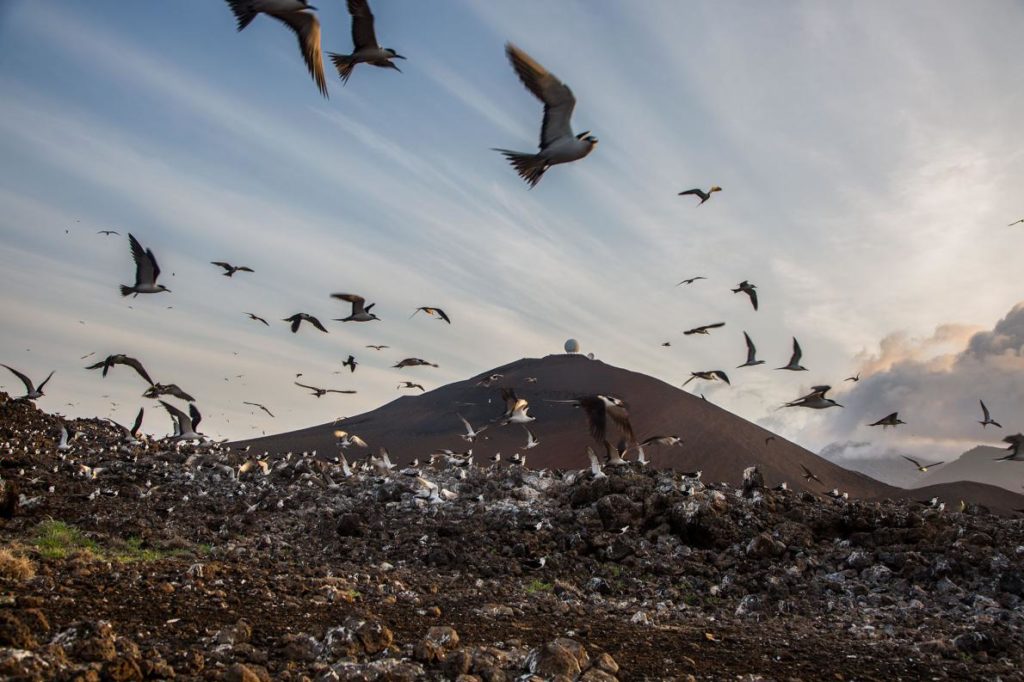
Seabirds on Ascension Island. Photo by Clare Fieseler.
  • It also happens to be longtime friend of Southern Fried Science Clare Fieseler’s first major story for National Geographic, so go follow her on twitter.

Jetsam (what we’re enjoying from around the web)

  • Women have a crucial—yet often overlooked—role in fisheries. The Invisible Fishing Fleet by Ilima Loomis at Hakai Magazine.
  • “What do you do when you’re a graduate student and you’ve been sexually assaulted by the PI of a very exciting paleoanthropological site?” An incredibly powerful piece by Holly Dunsworth: In case this helps you: This happened to me while I was trying to become a paleoanthropologist.
  • The general theme of this site appears to be ‘humans are terrible, robots are awesome’. Staying on brand: In a first, deep sea robots get a close look at giant larvaceans, a key player in the biological carbon pump.
  • Deep-sea mining is really heating up. Locals threaten armed campaign against PNG seabed mine.
  • In the Pacific Northwest, the diligence of citizen scientists is shedding light on the lives, and deaths, of seabirds. Drawing Meaning from Death, One Seabird at a Time by Larry Pynn at Hakai.
  • This is a pretty great demonstration of how statistics can be used to mislead: Generating Datasets with Varied Appearance and Identical Statistics through Simulated Annealing.

Read More “Terraforming Mars on Earth, giant larvaceans, conservation jobs, and more! Monday Morning Salvage: May 8, 2017” »

When we ate the rich.

Posted on January 14, 2016January 10, 2016 By Andrew Thaler
Uncategorized

On January 1, 2016, the Southern Fried Science central server began uploading blog posts apparently circa 2041. Due to a related corruption of the contemporary database, we are, at this time, unable to remove these Field Notes from the Future or prevent the uploading of additional posts. Please enjoy this glimpse into the ocean future while we attempt to rectify the situation.


The first floating city, Aquapolis, set sail in 1975 at the Okinawa World Expo. Aquapolis was intended to be a symbol of the infinite possibilities of life at sea. It would herald a new era of seasteading and create permanent colonies, even nations, that existed exclusively at sea.

Aquapolis was sold for scrap in 2000, her vision unrealized.

From Sealand to the Seasteading Institute, from the Republic of Rockall to China’s Reclaimed Island Territories to the tech pirates harbored aboard The World, the dream of a micro-nation at sea renews itself with every new generation.

The Maldives were the first nation-state to float away.

It shouldn’t be surprising that catastrophic sea level rise was the catalyst that finally ignited the first self-sufficient floating colonies. This tiny island chain, none more than a meter above sea level, had two advantages: The Maldives had already invested in developing floating platforms to expand their territory and develop novel luxury hotels and the Maldives were rich.

Read More “When we ate the rich.” »

Ocean Conservation Priorities for 2041

Posted on January 7, 2016January 2, 2016 By Andrew Thaler
Uncategorized

On January 1, 2016, the Southern Fried Science central server began uploading blog posts apparently circa 2041. Due to a related corruption of the contemporary database, we are, at this time, unable to remove these Field Notes from the Future or prevent the uploading of additional posts. Please enjoy this glimpse into the ocean future while we attempt to rectify the situation.


Another year, another set of ocean conservation priorities. As with the last 5 years, there will be some new ones, and some repeats. The biggest issues shouldn’t be a surprise to anyone, plastics have been an issue forever and global norming is rapidly taking over the broader ocean conversation. For a refresher, check out our priorities for 2036, 2037, 2038, 2039, and 2040.

Sea Level Rise Induced Habitat Loss: This has been a big one on the docket the last few years. As the ocean rises many species are experiencing dramatic loss of habitat, especially sensitive coastal nursery grounds. Although we’ve known about this for a while, we haven’t even begun to quantify the extent of damage to marine populations. Salt inundation is also compromising coast terrestrial habitats, driving essential species further inland.

Read More “Ocean Conservation Priorities for 2041” »

To dyke, or not to dyke: A debate coming to a town near you

Posted on January 23, 2015 By Michelle Jewell
#DrownYourTown, Conservation

Finally, President Obama’s state of the union called out Congress’s problem with climate change. Their denial is merely a symptom of overall scientific ignorance, a simply medieval issue that has temporarily stalled many great nations’ progress throughout history. Yet, President Obama’s points about climate change and it’s relevance to the nation gives one hope that there is a small smoldering ember of collaborative-driven leadership buried under piles of Benghazi reports, and it couldn’t come a moment too soon. The USA has stalled its scientific and technological growth at a key time in global history and is already generations behind the modern world in technological advancements to protect its people against a rising threat – the ocean.

Let me present you with a case study. I live in Zeeland in the Netherlands, and this area is protected by the world-famous Oosterschelde surge barrier; a 9km system of dams, movable concrete slabs, and artificial islands.  The Oosterschelde is one of many ocean barriers strategically placed along the Dutch coast and has been deemed one of the Seven Wonders of the Modern World by the American Society of Civil Engineers.  During storm events, the Oosterschelde’s massive concrete slabs shut and cut off Zeeland’s waterways from the surge of the North Sea.

By Nils van der Burg from Madrid, Spain (IMG_7446) [CC BY-SA 2.0 (http://creativecommons.org/licenses/by-sa/2.0)], via Wikimedia Commons
The Oosterschelde Delta Works – 9km long: By Nils van der Burg from Madrid, Spain (IMG_7446) [CC BY-SA 2.0 (http://creativecommons.org/licenses/by-sa/2.0)], via Wikimedia Commons

Read More “To dyke, or not to dyke: A debate coming to a town near you” »

#DrownYourTown Coastal States Road Trip is coming to your (virtual) town

Posted on February 11, 2014 By Andrew Thaler
#DrownYourTown, Science

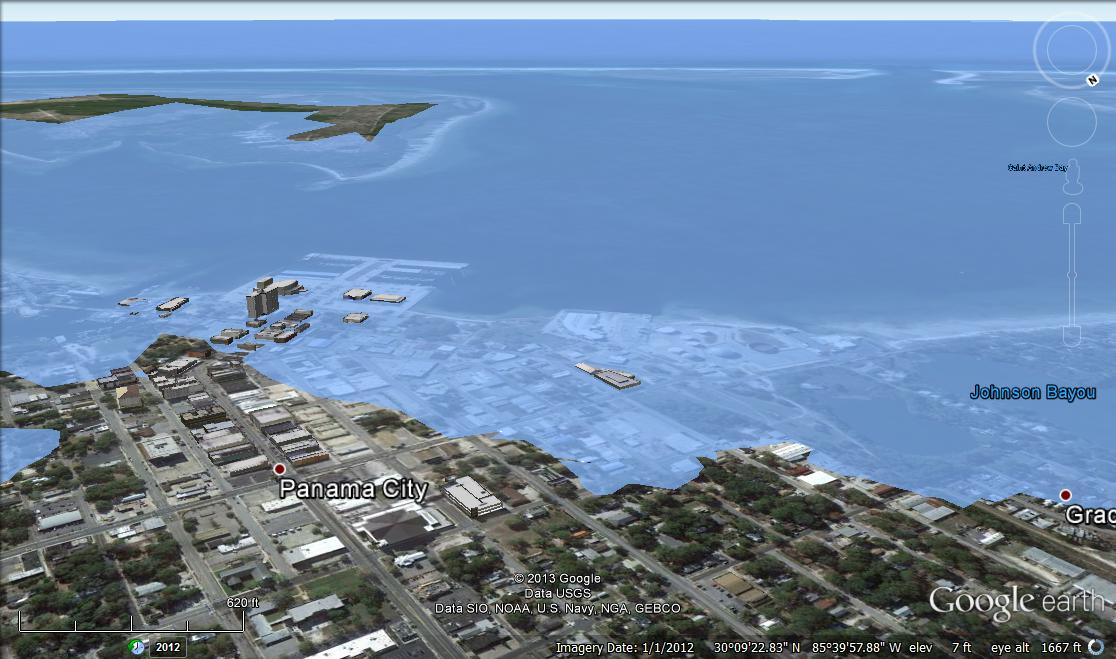
Last week, I kicked off the #DrownYourTown Coastal States Road Trip with a cruise through California. Over the next few weeks, we’ll visit every coastal US state (and territory) and see what they look like after 5 meters of sea level rise. The first week of images is available at the #DrownYourTown tumblr and you can follow along in real time on twitter @DrownYourTown.

Panama City, FL after 5 meters of sea level rise.

Read More “#DrownYourTown Coastal States Road Trip is coming to your (virtual) town” »

A scientist writes science fiction – thoughts on self-publishing my first novel

Posted on December 16, 2013December 17, 2013 By Andrew Thaler 1 Comment on A scientist writes science fiction – thoughts on self-publishing my first novel
Popular Culture

Early this month, I completed and self-published my first science fiction novel through Amazon’s Kindle Direct publishing service (and, a few days later, as a paperback through Createspace). The ideas for the book were conceived over a long week in August, while vacationing with my parents at a rental house in St. Michaels, Maryland. Wandering through the low-lying eastern shore towns started me thinking about the kinds of stories we would tell hundreds of years from now. Thus, the central conceit of Fleet — that it was not a tale of environmental devastation but of people living their lives in a post-sea-level-rise world — surfaced.

Writing Fleet was a marathon. All told, from the first day that I started outlining characters and deciding what the central story of Fleet — uncovering a human disaster caused by desperation and betrayal, then buried at sea — to the day I hit publish on the Amazon server, Fleet took a little over 3 and a half months, during which time I was also moving across the country, finishing several scientific manuscripts, and looking for a job.

Having now had a few weeks to decompress, I think it’s a good time to reflect on the book, what I tried to accomplish, and where it goes from here.

Read More “A scientist writes science fiction – thoughts on self-publishing my first novel” »

Release the Kraken! Fleet now available in paperback!

Posted on December 6, 2013December 13, 2013 By Andrew Thaler
Popular Culture

Are you ready to join the crew of Miss Amy? Come explore a future ocean in my maritime science fiction adventure! Fleet: The Complete Collection (Amazon eBook) Fleet: The Complete Collection (Amazon paperback) Fleet: The Complete Collection (Createspace paperback)  

The last climate change refugees fight for survival in this grim view of our future ocean – Fleet: The Complete Collection

Posted on November 29, 2013 By Andrew Thaler
Popular Culture

Fleet: The Complete Collection  “The sea is big. The sea is cruel. She takes more than she gives. That’s how it’s always been.” The world has changed. Coastal cities lie abandoned as the encroaching sea rises, drowning and reshaping the land. Violent plagues, impervious to antibiotics, sweep across the planet, erasing entire communities in a … Read More “The last climate change refugees fight for survival in this grim view of our future ocean – Fleet: The Complete Collection” »

How to #DrownYourTown: a step by step guide to modeling sea level rise in Google Earth

Posted on October 18, 2013November 1, 2013 By Andrew Thaler 4 Comments on How to #DrownYourTown: a step by step guide to modeling sea level rise in Google Earth
#DrownYourTown

We’ve reached the point in the program where requests for #DrownYourTown are coming in faster than I can process. That’s great! It means people are really connecting with the #DrownYourTown hashtag as a way to bring the concept (if not the specific details) of sea level rise home. The response has been greater than I ever imagined!

So, rather than leave people high and dry (we wouldn’t want that, would we), here is a step by step guide to simulating sea level rise anywhere in the world using Google Earth and a little geographic wizardry. The best part? It can all be done with completely free software.

1. Download Google Earth — you can find it here. Take some time to play around with it. Google packed this free package with some awesome features.

Read More “How to #DrownYourTown: a step by step guide to modeling sea level rise in Google Earth” »

#DrownYourTown: Exploring Sea Level Rise through real-time, interactive, GIS modeling

Posted on October 16, 2013November 1, 2013 By Andrew Thaler 4 Comments on #DrownYourTown: Exploring Sea Level Rise through real-time, interactive, GIS modeling
#DrownYourTown, Science

UPDATE: These posts, and the hashtag are getting a lot of attention, so I’d like to reiterate, Caveat Tweetor (twitter beware) — these models are being generated on the fly as request come in. They are not validated and there are many variables that influence sea level rise which are not taken into account. This is a fun way to visualize potential sea level rise but it would be inadvisable to use it for real estate speculation. 

This afternoon, I took to twitter to try out a novel outreach initiative — getting people to think about sea level rise by asking them to drown their home towns. With Google Earth and a “Sea Level” image layer booted up, I was poised for 2 hours of intense map manipulation. The requests came in fast, and ranged from the expected coastal cities with a couple meters of sea level rise all the way to the radical (yes, we flooded Reno, Nevada). After 120 minutes, I had produced models at 52 locations and interacted with more than 400 people. I was also completely exhausted. Here, for your enjoyment, is the complete collection of #DrownYourTown models from the initial 2-hour marathon.

Read More “#DrownYourTown: Exploring Sea Level Rise through real-time, interactive, GIS modeling” »

Posts pagination

Previous 1 2 3 4 Next

Popular Posts

What Ocean Ramsey does is not shark science or conservation: some brief thoughts on "the Shark Whisperer" documentaryWhat Ocean Ramsey does is not shark science or conservation: some brief thoughts on "the Shark Whisperer" documentaryJuly 2, 2025David Shiffman
That's not a blobfish: Deep Sea Social Media is Flooded by AI SlopThat's not a blobfish: Deep Sea Social Media is Flooded by AI SlopDecember 19, 2025Andrew Thaler
Alberta, Canada is the proud owner of the largest man-made pyramid on the planetAlberta, Canada is the proud owner of the largest man-made pyramid on the planetOctober 16, 2012Andrew Thaler
The story of the pride flag made from NASA imagery: Bluesky's most-liked imageThe story of the pride flag made from NASA imagery: Bluesky's most-liked imageSeptember 27, 2024David Shiffman
Florida Senate fails basic biology, accidentally outlaws sex.Florida Senate fails basic biology, accidentally outlaws sex.May 11, 2011Andrew Thaler
Shark of Darkness: Wrath of Submarine is a fake documentaryShark of Darkness: Wrath of Submarine is a fake documentaryAugust 10, 2014Michelle Jewell
What can the funniest shark memes on the internetz teach us about ocean science and conservation?What can the funniest shark memes on the internetz teach us about ocean science and conservation?November 8, 2013David Shiffman
I turned my woodshop into a personal solar farm.I turned my woodshop into a personal solar farm.June 21, 2021Andrew Thaler
Marine Biology Career AdviceMarine Biology Career AdviceMay 30, 2025David Shiffman
Oarfish: The true tale of the fish we can’t seem to get enough ofOarfish: The true tale of the fish we can’t seem to get enough ofAugust 19, 2015Guest Writer
Subscribe to our RSS Feed for updates whenever new articles are published.

We recommend Feedly for RSS management. It's like Google Reader, except it still exists.

Southern Fried Science

  • Home
  • About SFS
  • Authors
  • Support SFS


If you enjoy Southern Fried Science, consider contributing to our Patreon campaign.

Copyright © 2026 Southern Fried Science.

Theme: Oceanly Premium by ScriptsTown