Skip to content

Southern Fried Science

Over 15 years of ocean science and conservation online

  • Home
  • About SFS
  • Authors
  • Support SFS

Author: Andrew Thaler

Marine science and conservation. Deep-sea ecology. Population genetics. Underwater robots. Open-source instrumentation. The deep sea is Earth's last great wilderness.

The search for an inexpensive, field-ready 3D printer continues: Anet A6 (review)

Posted on February 21, 2019November 15, 2019 By Andrew Thaler
Reviews and Interviews

One of the reasons 3D printing exploded seemingly overnight a decade ago has a lot to do with the RepRap project, an initiative to build a fully open-source and largely 3D-printable 3D-printer. The idea of a machine that could replicate itself was pulled straight from the pages of science fiction, and yet, here were machines–janky, kludgey, barely functional, machines–assembled from parts clearly fabricated by those same machines. They were conceptually impressive, but not a particularly awe-inspiring sight to behold.

And then came Josef Průša and the Prusa Mendel.

Affectionately known as the Ford Model T of the 3D printing world, the Prusa Mendel was the first of the open-source 3D printers that was designed to be easily mass produced. It looked good and it ran great. Released under an open-source license, it was replicated and iterated on a massive scale. That didn’t prevent Průša from building a successful company. The current Prusa i3 MK2 is among the most successful desktop 3D printers in the world, and certainly one of the best.

There are a lot of Prusa i3 clones.

Clocking in at $197.69, the Anet A6 is the most expensive printer in this review series. It’s also the biggest, with a massive 220mm by 220mm by 250mm build area. It’s an upgraded version of the popular Anet A8, with a larger build volume and a better user interface, but not much else. From reviews, this printer seemed like a solid representation of what you can get at the top end of the menagerie of sub-$200 Prusa i3 clones. It (and its smaller A8 brother) certainly have the fan-base and hacking community to support its reputation.

Anet A6, working hard. Photo by author.

This acrylic-framed beast ships as a kit, so expect to spend half a day putting this printer together.

If you’re going off of dollar per cubic millimeter, this is the best bang for you buck by a wide margin. And that’s about the extent of the good things I have to say about this machine.

For an explanation of our testing protocols, please see: We’re gonna beat the heck out of these machines: The search for the best dirt-cheap 3D printer for fieldwork.

Read More “The search for an inexpensive, field-ready 3D printer continues: Anet A6 (review)” »

Deep-sea gator falls covered in isopods, more struggles for the Ocean Cleanup, a robot lost in the cold (but not the one you’re thinking of), and more! Monday Morning Salvage: February 18, 2019

Posted on February 18, 2019February 17, 2019 By Andrew Thaler
Weekly Salvage

Flotsam (what we’re obsessed with right now)

What do you do if you find yourself at the helm of a major Louisiana marine science institution? If you’re Dr. Craig McClain, you plant the first experimental Alligator falls in the deep Gulf of Mexico!

Photos courtesy Dr. Craig McClain via Deep Sea News.

On the other hand, if you find yourself at the helm of a US Navy destroyer, you might want to review this incredible and exhaustive accounting of the USS Fitzgerald disaster and how training deficits, exhaustion, and poor decision making compounded to create a deadly situation.

USS Fitzgerald. Public domain photo.

Read More “Deep-sea gator falls covered in isopods, more struggles for the Ocean Cleanup, a robot lost in the cold (but not the one you’re thinking of), and more! Monday Morning Salvage: February 18, 2019” »

The search for an inexpensive, field-ready 3D printer: Monoprice Mini Delta (review)

Posted on February 13, 2019November 15, 2019 By Andrew Thaler
Reviews and Interviews

[NOTE: Please see our update regarding this printer: Finding the best dirt-cheap, field-tough 3D printer for science and conservation work: six months later.]

Monoprice is an interesting organization. They’re a rebadging company that seeks out unbranded or off-brand products, makes a few tweaks, and then sells them to secondary markets under their own brand. They made their mark in the early 2000s selling good, cheap cables and have expanded from there. You can find headphones, cookware, cables, computer accessories, and, of course, 3D printers, under the Monoprice label. But that doesn’t mean their products are cheap knockoffs. Monoprice has a reputation for finding quality equipment.

The Monoprice Mini Delta is a rebadged Malyan M300. From the specs, it doesn’t look like Monoprice changed anything but the logo, and that’s a good thing. Malyan printers have a great reputation.

This is a delta printer, which means rather than having independent X, Y, and Z-axes, three identical stepper motor arrays work in tandem to control the position of the extruder while the bed itself remains stationary. It uses a Bowden-style extruder that keeps the weight on the printhead down. It has an aluminum frame with steel structural elements. The relatively small circular print area is 110 mm diameter by 120 mm height. Controls are integrated into the printer and it allegedly has WiFi capability through an app.

The Monoprice Mini Delta is available on Amazon for $159.99.

We’re going to make this little printer suffer.

For an explanation of our testing protocols, please see: We’re gonna beat the heck out of these machines: The search for the best dirt-cheap 3D printer for fieldwork.

Read More “The search for an inexpensive, field-ready 3D printer: Monoprice Mini Delta (review)” »

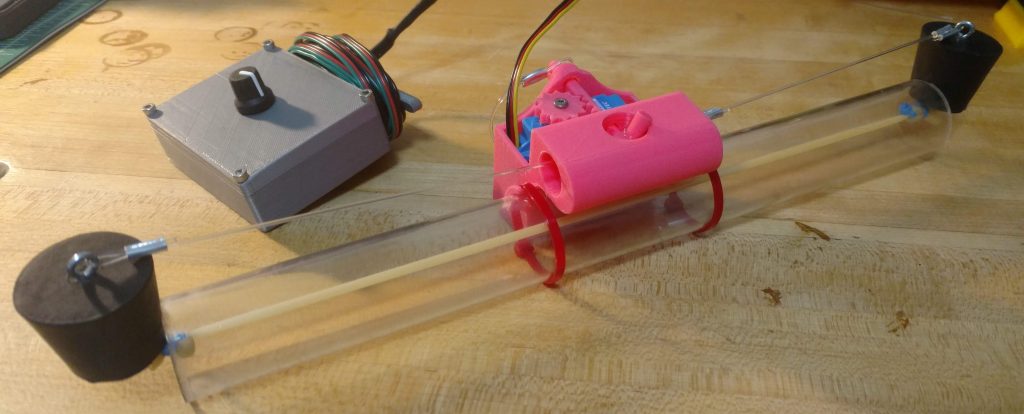
The next generation open-source, 3D-printable Niskin bottle has arrived!

Posted on February 12, 2019February 12, 2019 By Andrew Thaler
Oceanography for Everyone, Science

The Niskin bottle, a seemingly simple device designed to take water samples at discrete depths, is one of the most important tools of oceanography. These precision instruments allow us to bring ocean water back to the surface to study its chemical composition, quality, and biologic constituency. If you want to know how much plastic is circulating in the deep sea, you need a Niskin bottle. If you need to measure chemical-rich plumes in minute detail, you need a Niskin bottle. If you want to use environmental DNA analyses to identify the organisms living in a region of the big blue sea, you need a Niskin bottle.

View this post on Instagram

It's ready! The next-generation open-source, 3D-printable Niskin bottle is here! What do you want to sample? #ocean #oceanography #opensource #3dprinting #ecology #conservation

A post shared by Andrew David Thaler (@drandrewthaler) on Feb 12, 2019 at 2:52pm PST

Niskin bottles are neither cheap nor particularly easy to use. A commercial rosette requires a winch to launch and recover, necessitating both a vessel and a crew to deploy. For informal, unaffiliated, or unfunded researchers, as well as citizen scientists or any researcher working on a tight budget, getting high-quality, discrete water samples is an ongoing challenge.

Read More “The next generation open-source, 3D-printable Niskin bottle has arrived!” »

Remembering Walter Munk, a photo on a flash drive in a pile of poo from a seal at the bottom of the sea, lucky vikings, and more! Monday Morning Salvage: February 11, 2019

Posted on February 11, 2019February 11, 2019 By Andrew Thaler
Weekly Salvage

Foghorn (A Call to Action!)

  • Walter Munk, World-Renowned Oceanographer and Revered Scientist has died.

Flotsam (what we’re obsessed with right now)

  • So many mesmerizing videos from Deep Sea News! Experience the Life of the Deep Gulf of Mexico in 20 Videos.
  • This is a staggeringly beautiful image: One Great Shot: The Guillemot and the Iceberg.
Carsten Egevang goes looking for seals in Greenland and finds a photogenic guillemot instead.
  • Did you lose a flash drive? NIWA might have it. They were defrosting leopard seal poo…you won’t believe what happened next!
This photo of a sealion on a Southland beach was found on a USB stick swallowed by a leopard seal. Credit: unknown

Read More “Remembering Walter Munk, a photo on a flash drive in a pile of poo from a seal at the bottom of the sea, lucky vikings, and more! Monday Morning Salvage: February 11, 2019” »

Mud volcanoes, starfish wasting, the stinkiest fruit, and more! Monday Morning Salvage: February 4, 2019.

Posted on February 4, 2019February 4, 2019 By Andrew Thaler
Weekly Salvage

Foghorn (A Call to Action!)

  • Scientists demand military sonar ban to end mass whale strandings.

Flotsam (what we’re obsessed with right now)

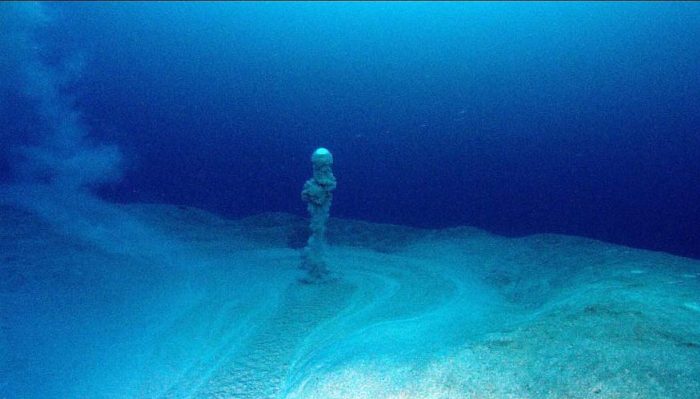
  • Mud volcanoes, the baby cousins for hydrothermal vents and methane seeps, don’t get nearly as much attention as they deserve. There she blows! Mud volcanoes in the Mediterranean.
Underwater mud volcanoes in the Flower Garden National Marine Sanctuary in the Gulf of Mexico. Escaping gas can be seen rising from the mud volcano. PC: Sea Research Foundation (SRF) and the Ocean Exploration Trust (OET).
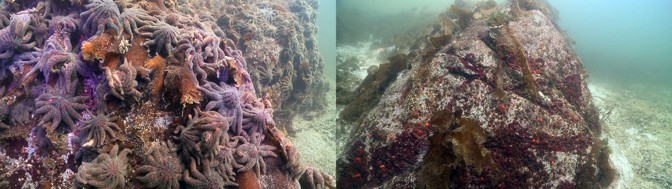
  • Starfish wasting disease continues to plague the Pacific: A Starfish-Killing Disease Is Remaking the Oceans.
Two photos of the same rock, 20 days apart (Neil McDaniel)

Read More “Mud volcanoes, starfish wasting, the stinkiest fruit, and more! Monday Morning Salvage: February 4, 2019.” »

We’re gonna beat the heck out of these machines: The search for the best dirt-cheap 3D printer for fieldwork.

Posted on January 28, 2019March 7, 2019 By Andrew Thaler
We’re gonna beat the heck out of these machines: The search for the best dirt-cheap 3D printer for fieldwork.
Reviews and Interviews

What makes a good 3D printer for field work? It needs to be reliable, it needs to be durable, it needs to be reasonably portable. It also needs to print good, strong parts with decent resolution. They don’t have to be pretty, but they do have to work.

Last year, if you asked me what the absolute best 3D printer for field work was, I wouldn’t have hesitated to tell you it’s the Printrbot Simple Metal. This little beast has traveled the world with me, gone to sea, and taken an absolutely massive beating. And it’s still my main workhorse. At $600 plus a lot of custom modifications, it’s still the best deal in terms of quality, cost, and reliability out there.

If you can find one.

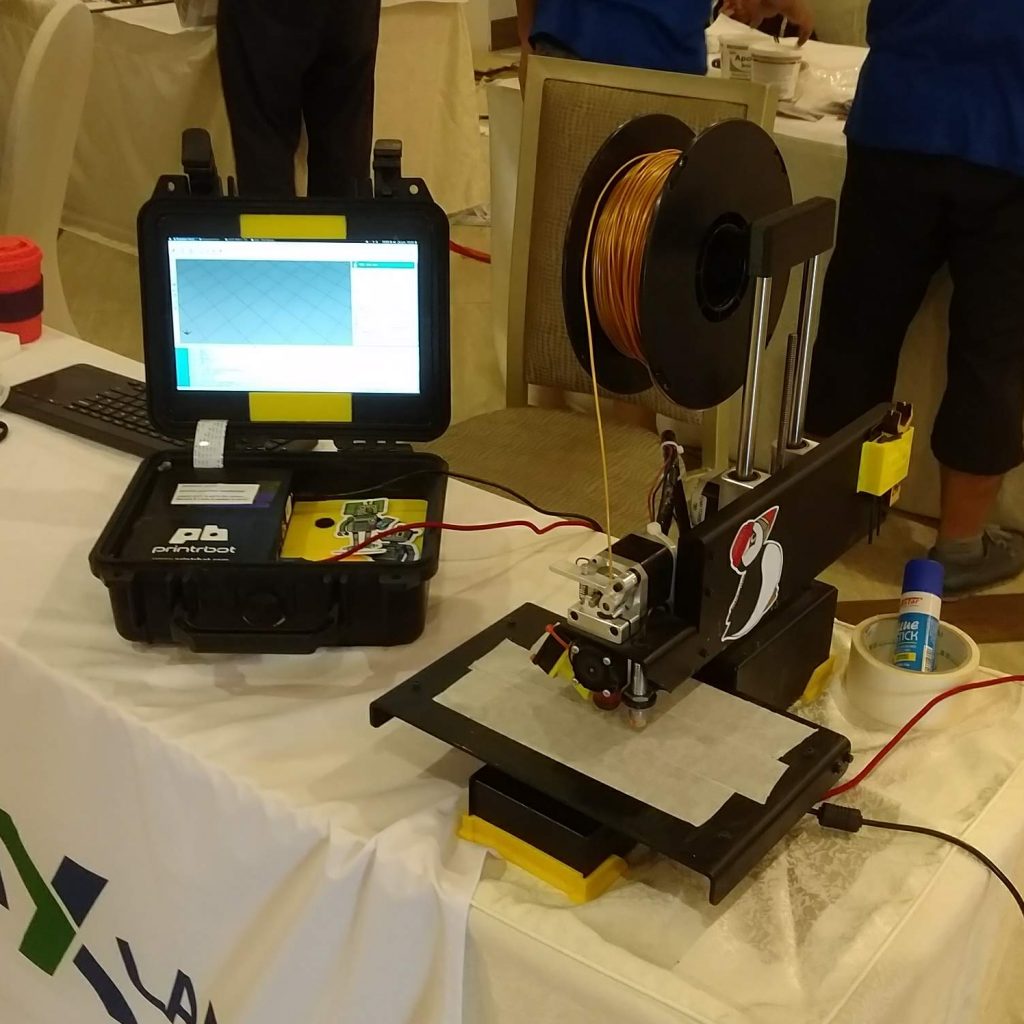
My Simple Metal, with the famous 3D-printed computer driving the 3D-printer that 3D-printed that computer.

Printrbot went out of business last year, due in large part to the proliferation of cheaper machines that have pretty good quality. The company sat in an awkward niche, too expensive for entry-level consumers, not quite up to par for people looking to drop several thousand on a professional machine. As important as it is to me, “can you kick the crap out of it and drop it off a boat?” is not a criteria that rates highly for most people who want a low-cost machine that will sit comfortably on a desk forever.

But that puts me in an tough spot right now. Conservation Tech, especially low-cost, open-source conservation tech, is booming, and we need machines that work in the field on the budget of a conservation biologist. I couldn’t tell you what the best cheap 3D printer on the market is right now for people who need it for field work, travel, or just want a tough machine that works and doesn’t cost much.

So I’m going to buy a bunch, beat them to hell, and figure it out.

The Southern Fried Science Ultimate 3D Printer Review Process

Read More “We’re gonna beat the heck out of these machines: The search for the best dirt-cheap 3D printer for fieldwork.” »

Hagfish, hagfish, hagfish, hagfish, the social value of a hydrothermal vent, more ways plastic booms could kill the ocean, and hagfish. Monday Morning Salvage: January 28, 2019.

Posted on January 28, 2019January 27, 2019 By Andrew Thaler
Weekly Salvage

Flotsam (what we’re obsessed with right now)

It’s all hagfish today, baby!


Hagfish appear to use slime to avoid predators like sharks (top) and large fish (bottom). The images above are from videos showing fish eating a hagfish, which then produces slime and is able to escape (Images from wikimediacommons).
  • No One Is Prepared for Hagfish Slime
  • Found: The First Fossil of the Slime-Spewing Hagfish and ‘Like finding a sneeze’: fossil identified as 100m-year-old hagfish.
  • Slime, baby, slime!

Read More “Hagfish, hagfish, hagfish, hagfish, the social value of a hydrothermal vent, more ways plastic booms could kill the ocean, and hagfish. Monday Morning Salvage: January 28, 2019.” »

The ongoing wonder of hagfish, deep-sea mining’s race to the bottom, saving whales with lineless lobster traps, and more! Monday Morning Salvage: January 21, 2019

Posted on January 21, 2019January 22, 2019 By Andrew Thaler
Weekly Salvage
Logo for Monday Morning Salvage.

Foghorn (A Call to Action!)

It’s month two of the longest shutdown in US history and there’s only one party who won’t allow a vote to reopen the government proceed. Have you called you senator today?

  • The Shutdown Is Making the U.S. Less Prepared for Hurricane Season

And while I have your attention, FYI:

  • Thousands of Scientists Endorse Study Proclaiming Trump’s Border Wall a Disaster for Wildlife

Flotsam (what we’re obsessed with right now)3-D Printing the Ulitmate Deep-Sea Christmas Tree

  • Oceans Warming Faster Than Predicted, Scientists Say and Ocean Warming Is Accelerating Faster Than Thought, New Research Finds.
  • Ministry hints Putin’s Arctic ambitions are not realistic. There is unease in several Russian government ministries as officials start to understand that the President’s objectives for the Northern Sea Route can not be reached. The only way to please the president might be to expand the sea route itself.
  • Hagfish are so good. We don’t deserve hagfish.
    • How hagfish launch slime missiles that swell 10,000 times in size.
    • How hagfish can make enough slime to clog a shark’s jaws in seconds

Read More “The ongoing wonder of hagfish, deep-sea mining’s race to the bottom, saving whales with lineless lobster traps, and more! Monday Morning Salvage: January 21, 2019” »

A lost continent, rich in cobalt crusts, could create a challenging precedent for mineral extraction in the high seas.

Posted on January 18, 2019January 18, 2019 By Andrew Thaler
A lost continent, rich in cobalt crusts, could create a challenging precedent for mineral extraction in the high seas.
Science

[This article originally appeared yesterday in the Deep-sea Mining Observer. ~Ed.]

The Rio Grande Rise is an almost completely unstudied, geologically intriguing, ecologically mysterious, potential lost continent in the deep south Atlantic. And it also hosts dense cobalt-rich crusts.

The Rio Grande Rise is a region of deep-ocean seamounts roughly the area of Iceland in the southwestern Atlantic. It lies west of the Mid-Atlantic Ridge off the coast of South America and near Brazil’s island territories. As the largest oceanic feature on the South American plate, it straddles two microplates. And yet, like much of the southern Atlantic deep sea, it is relatively under sampled.

Almost nothing is known about the ecology or biodiversity of the Rio Grande Rise.

Read More “A lost continent, rich in cobalt crusts, could create a challenging precedent for mineral extraction in the high seas.” »

Posts pagination

Previous 1 … 22 23 24 … 149 Next

Popular Posts

The story of the pride flag made from NASA imagery: Bluesky's most-liked imageThe story of the pride flag made from NASA imagery: Bluesky's most-liked imageSeptember 27, 2024David Shiffman
"Why Sustainable Seafood Matters" is now available for preorder! Here's what it's about, and why I decided to write it."Why Sustainable Seafood Matters" is now available for preorder! Here's what it's about, and why I decided to write it.June 8, 2026David Shiffman
What Ocean Ramsey does is not shark science or conservation: some brief thoughts on "the Shark Whisperer" documentaryWhat Ocean Ramsey does is not shark science or conservation: some brief thoughts on "the Shark Whisperer" documentaryJuly 2, 2025David Shiffman
Tackling the least important debate in deep-sea mining: the desultory hyphenTackling the least important debate in deep-sea mining: the desultory hyphenJune 8, 2026Andrew Thaler
Shark of Darkness: Wrath of Submarine is a fake documentaryShark of Darkness: Wrath of Submarine is a fake documentaryAugust 10, 2014Michelle Jewell
Deep-sea Mining, Domestic Cats, Star Trek, and Ocean Exploration: Andrew's mid-year podcast round-up.Deep-sea Mining, Domestic Cats, Star Trek, and Ocean Exploration: Andrew's mid-year podcast round-up.June 6, 2026Andrew Thaler
What is a Sand Shark?What is a Sand Shark?November 12, 2017Chuck Bangley
I just told 850 shark scientists a hard truth: We’re not communicating shark conservation correctly.I just told 850 shark scientists a hard truth: We’re not communicating shark conservation correctly.June 1, 2026David Shiffman
That's not a blobfish: Deep Sea Social Media is Flooded by AI SlopThat's not a blobfish: Deep Sea Social Media is Flooded by AI SlopDecember 19, 2025Andrew Thaler
Why ocean science is still one of the worst-funded scientific fields worldwideWhy ocean science is still one of the worst-funded scientific fields worldwideJune 3, 2026Chris Parsons
Subscribe to our RSS Feed for updates whenever new articles are published.

We recommend Feedly for RSS management. It's like Google Reader, except it still exists.

Southern Fried Science

  • Home
  • About SFS
  • Authors
  • Support SFS


If you enjoy Southern Fried Science, consider contributing to our Patreon campaign.

Copyright © 2026 Southern Fried Science.

Theme: Oceanly Premium by ScriptsTown