Skip to content

Southern Fried Science

Over 15 years of ocean science and conservation online

  • Home
  • About SFS
  • Authors
  • Support SFS

Category: Education

A precautionary approach to health, safety, and conservation while 3D printing in the home.

Posted on May 13, 2016February 15, 2018 By Andrew Thaler
Conservation, Education

3D printers are awesome.

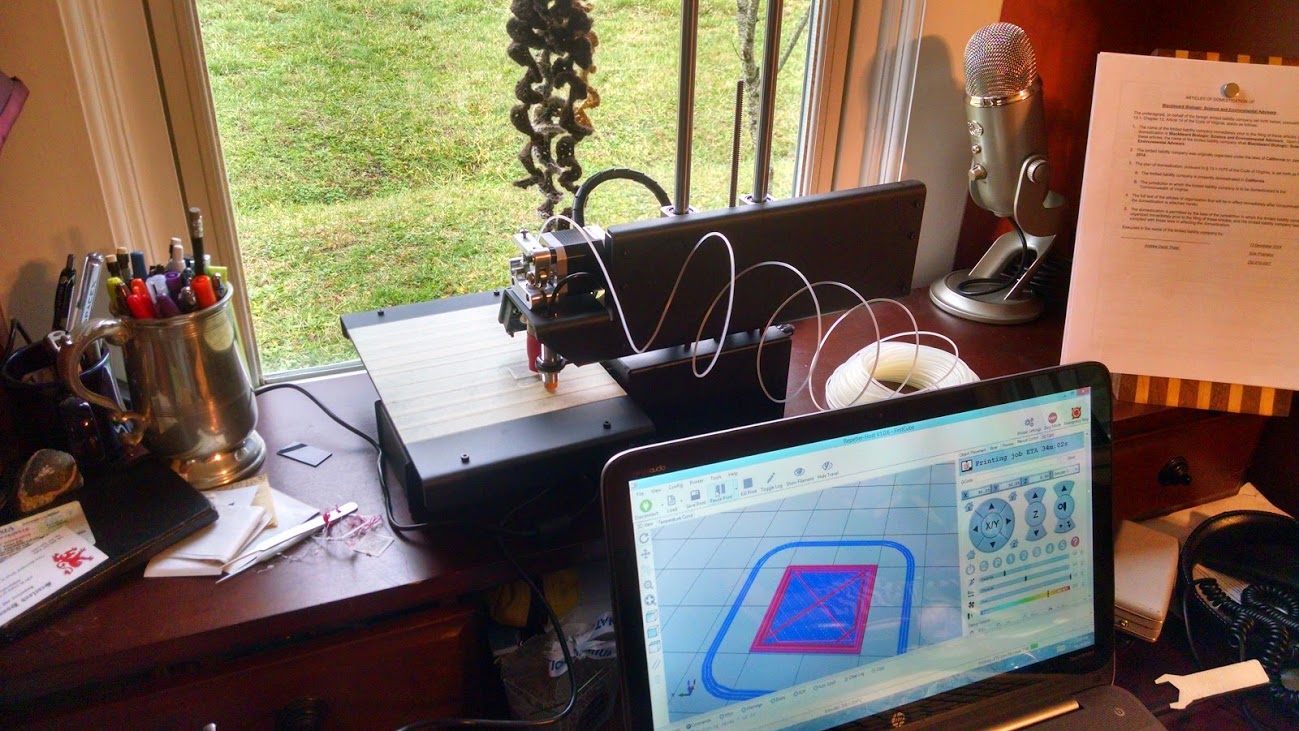
A Printrbot in the home.

That sentiment really shouldn’t surprise anyone who follows this blog. From oceanographic equipment, to farm tools, to just things around the house, over the last year I’ve made 3D printing a standard part of my toolbox.

A conversation last week on Twitter got me thinking again about 3D printers, safety, and disposability. On one hand, by allowing us to fabricate intricate custom parts at home, 3D printers can help us reduce the amount of waste produced and allow us to extend the life of otherwise disposable items. On the other hand, 3D printers produce their own plastic waste, particularly if, like me, you develop a lot of new projects from scratch.

Read More “A precautionary approach to health, safety, and conservation while 3D printing in the home.” »

Introducing Field School: A Resource for Marine Science Research and Education

Posted on May 9, 2016May 9, 2016 By Guest Writer
Conservation, Education, Science

julia_staffJulia Wester  is the Director of Program Development for Field School. She received her PhD from the Abess Center for Ecosystem Science and Policy at the University of Miami in 2016. Her dissertation studied the psychology of decision making about the environment, specifically with regard to limited water resources. She also received a Msc with Distinction in Biodiversity Conservation and Management from Oxford University and worked as a Legislative Aide in South Florida, focusing on environmental policy. She has consulted with nonprofit programs to evaluate their educational programs and assisted with training staff to conduct effective public outreach.

Field School logoThe folks at Southern Fried Science, as part of their commitment to research and education, have generously given us this platform to talk about our educational start-up, Field School. (Thanks, SFS!). They’ve also been kind enough to get excited about working with us to develop and test new research techniques, study awesome animals and ecosystems, and improve marine science field education—so stay tuned for some of those upcoming collaborations!

What is field school? 

Field School is a hybrid company on a mission to support field research in marine and environmental science, and create high-quality educational and training opportunities for students and the public. We offer hands-on, research focused courses on a variety of topics, from corals to sharks, on our 55’ custom live-aboard research vessel.

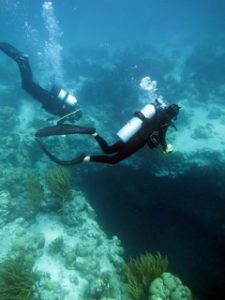
Field School offers researchers and students opportunities to engage with and study tropical marine ecosystems. Photo credit: Kristine Stump

Part of what makes Field School special is the team we’ve brought together. Our captain and crew all have doctoral and/or masters degrees in marine or environmental science, have authored numerous scientific publications, and have a combined 25 years of experience in field education and outreach. We have developed short- and long-term training and mentoring opportunities for students, teach highly reviewed and award-winning university courses, and work with partner non-profits to create outreach programs for the public. We collaborate closely with our scientific advisory board and partner universities to develop the conservation and research projects our students work on, ensuring their time in our courses is professionally relevant and meaningful.

Read More “Introducing Field School: A Resource for Marine Science Research and Education” »

Big ideas and little robots: Using the OpenROV in interdisciplinary STEM projects

Posted on May 4, 2016May 3, 2016 By Guest Writer 1 Comment on Big ideas and little robots: Using the OpenROV in interdisciplinary STEM projects
Conservation, Education, Science

portrait-joeyJoey Maier is a biology professor at Polk State College where he uses every possible opportunity to encourage his students to spend time in the water, play with technology, and do #CitizenScience. As an undergraduate, he did a stint as an intern for Mark Xitco and John Gory during their dolphin language experiments.  He then spent the years of his M.Sc. at the University of Oklahoma thawing out and playing with bits of decaying dolphin.  After discovering that computers lack that rotten-blubber smell, Joey became a UNIX sysadmin and later a CISSP security analyst.  
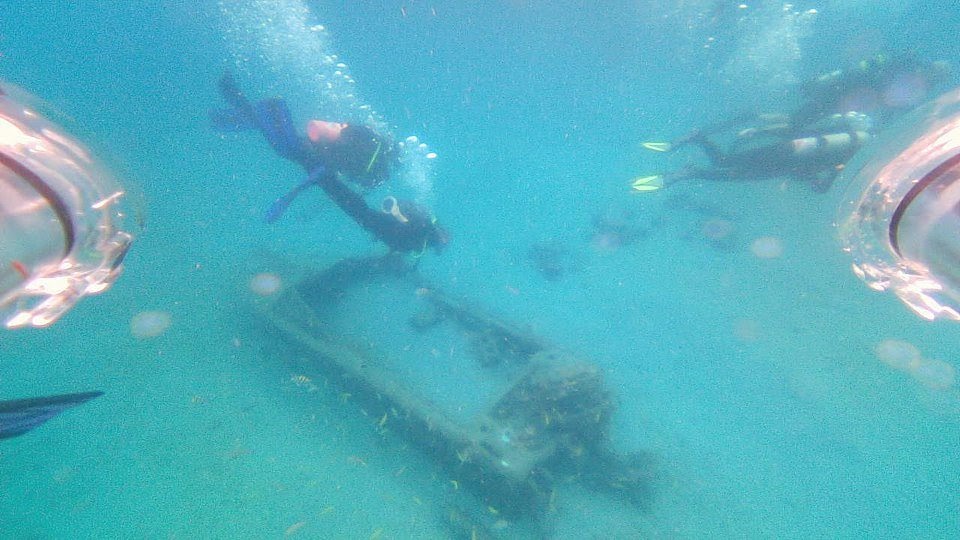
While his pirate game is weak, he is often seen with a miniature macaw on his shoulder. His spare time is spent SCUBA diving and trying to hang out with people who have submersibles.  You can follow him on Twitter or Facebook.


There’s a Klingon bird of prey hanging from the ceiling in my office.

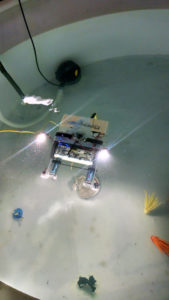
I may teach biology, but at heart I’m a sci-fi nerd.  Naturally, I’m interested in futurism, robots, lasers and all manner of techy paraphernalia.  I’d been watching the OpenROV project for a while, but hadn’t gotten one yet.  They were obviously awesome little machines that gave me a serious case of gadget envy, and I knew that some of our students would love to pilot an ROV.  I needed a much better reason than that, however, to justify getting one.  There’s no line item in our budget for, “Wow, that’s cool!” and I was fairly certain that the college administration would tend to favor lower cost and more familiar forms of student engagement

Photo courtesy Joey Maier.

This tweet changed everything.  When I found out that Andrew had designed a mini-Niskin bottle, the wheels in my head started turning.  Assembling an OpenROV would, naturally, be a very STEM-oriented project.  The times our students piloted the ROV could become water sampling field trips, and the kids could analyze their samples back at school as a laboratory activity. If students recorded the process, they could make a short film. I mulled over the possibilities and bounced ideas off of my dive buddies during the hours we spent traveling to and from the coast.

Read More “Big ideas and little robots: Using the OpenROV in interdisciplinary STEM projects” »

Throwback Thursday – Who Am I?

Posted on March 16, 2016June 3, 2016 By Kersey Sturdivant
Education

Roughly every few Thursdays the Condon Lab at the University of North Carolina Wilmington host an “Who Am I” Throwback Thursday. The premise is to expose people to scientist who have had a measurable influence in their respective fields. We will start broadcasting those Who Am I at Southern Fried Science. This week features one … Read More “Throwback Thursday – Who Am I?” »

Shark MOOC: There’s a big shark party, and you’re invited!

Posted on February 26, 2016February 26, 2016 By Guest Writer
Education, Science

BemisWilliam E Bemis is Professor of Ecology and Evolutionary Biology at Cornell and lead faculty member for the edX MOOC Sharks! Global Biodiversity, Biology, and Conservation. He studied at Cornell University, the University of Michigan, the University of California Berkeley, and the University of Chicago before serving 20 years as Professor of Biology at the University of Massachusetts Amherst. From 2005 to 2013, he served as Kingsbury Director of Shoals Marine Laboratory at Cornell. Bemis conducts research in comparative vertebrate anatomy, trains research students, and teaches courses in vertebrate anatomy and evolution.

A

How do you get thousands of people interested in basic biological concepts? By teaching a course on some of the most fascinating animals on Earth – sharks and their relatives.
This is a particularly exciting time to be a shark scientist. An explosion of new research methods and technologies are leading to a surprising world of discovery. Our new course, free and open to anyone in the world, explores discoveries in many areas, including:

Read More “Shark MOOC: There’s a big shark party, and you’re invited!” »

Six ways the new Old Spice ad violates the Marine Mammal Protection Act

Posted on February 15, 2016February 16, 2016 By Andrew Thaler 9 Comments on Six ways the new Old Spice ad violates the Marine Mammal Protection Act
Education

This is art. Maybe. Probably. Old Spice has taken it upon themselves to ask the all-important question: How many different violations of the Marine Mammal Protection act can we demonstrate in a single minute and fifteen second commercial? As it turns out, quite a few.

https://www.youtube.com/watch?v=5hteeecX1oQ

The Marine Mammal Protection Act expressly forbids the “taking” of marine mammals, a “take” being defined as:

“To harass, hunt, capture, collect, or kill, or attempt to harass, hunt, capture, collect, or kill any marine mammal. This includes, without limitation, any of the following:

  • the collection of dead animals, or parts thereof
  • the restraint or detention of a marine mammal, no matter how temporary
  • tagging a marine mammal
  • the negligent or intentional operation of an aircraft or vessel
  • the doing of any other negligent or intentional act which results in disturbing or molesting a marine mammal
  • feeding or attempting to feed a marine mammal in the wild.” 

Source.

Broadly, this include any actions that may interfere with a marine mammal’s behavior or cause it undue stress. Fines can be… severe.

Read More “Six ways the new Old Spice ad violates the Marine Mammal Protection Act” »

What is it about mercury? Thinking about chemicals in the public discourse

Posted on February 9, 2016February 9, 2016 By Bluegrass Blue Crab 1 Comment on What is it about mercury? Thinking about chemicals in the public discourse
Education, Science

All of the revelations about the lead in the water system of Flint, Michigan have made residents and curious neighbors alike  wonder ‘haven’t we solved the lead problem’? There are thousands of well-established scientific studies; the sources and even many of the solutions are well-understood and frequently implemented. Not to say the problem’s gone, but we’ve wrapped are heads around it. So how is it possible that a new lead problem has surprisingly reared its ugly head? And more importantly, what does that mean for exposure to chemicals for which we’ve barely scratched the scientific surface?

The world of fisheries has its analog – mercury. We’ve all heard the recommendations for pregnant women and small children to avoid tilefish, swordfish, mackerel, and shark. We understand that it bioaccumulates in the food chain – and that as humans not exactly at the bottom, we’re susceptible. The dynamics of methylmercury (the poison variety) and elemental mercury are fairly well mapped out and we can identify areas of potential hazard where more methylmercury is likely to be naturally created. We’ve also stopped doing things like spraying mercury-based pesticides and covering our landscape and foodscape with the toxin. Kids have even stopped playing with ‘quicksilver’, it’s been removed from dental fillings and vaccines, and you should get rid of that mercury-based thermometer. Yet, if you scanned most people’s hair (the way we measure these things), there would be mercury present. And there’s still a host of ways they might have been exposed. But the better question is – if there’s still mercury in your body, what else is floating around in your system? And why do we focus on only the best-understood pathway of chemical exposure?

Modern Mercury Exposures

Read More “What is it about mercury? Thinking about chemicals in the public discourse” »

Scanning the Sea: How I create 3D printable ocean objects using a smartphone and free software.

Posted on November 7, 2015November 7, 2015 By Andrew Thaler
Education
Trilobites!
Trilobites!

From simple sand dollars to life-sized hammerhead shark skulls, 3D printable ocean objects present an incredible opportunity for ocean outreach. Many commercial biological models are expensive, fragile, and often overkill for educators’ needs, where simple, robust, and easily replaceable anatomical models suffice. Over the last year, I’ve been honing my 3D printing skills, learning how to design 3D-printable objects, and mastering 3D scanning using free software and the now-ubiquitous smartphone. My designs, along with the open-source objects used for Oceanography for Everyone, can be found on my YouMagine profile (though Patreon supporters get early access to most prints).

Earlier this year, I wrote about how the ability to essentially photocopy a three dimensional object in a matter of hours revived my Ocean Optimism and opened up a whole new world of outreach possibilities. Since then, I’ve been working behind the scenes on some bigger projects that depend on 3D printing, one of which, Oceanography for Everyone launched last month. It’s a big ocean out there, and one person can’t possibly come close to producing a comprehensive collection of ocean objects. With several successful 3D scans under my belt, I think it’s time to share the process and invite the rest of the ocean-loving world join me in my efforts to scan the sea.

123D Catch, the software that powers it all.

Read More “Scanning the Sea: How I create 3D printable ocean objects using a smartphone and free software.” »

Ocean Kickstarter of the Month: Meet Norman the Nurse Shark

Posted on October 6, 2015October 6, 2015 By Andrew Thaler
Education, Science

In this book kids learn about sharks and the oceans as they travel with Norman on his adventure through the Bahamas.

Sharks4Kids First Book: Meet Norman the Nurse Shark

Sharks4Kids is an educational non-profit based in Florida that produces curricula and media designed to teach primary-school age kids about sharks and shark conservation. They also conduct Skype-in-lessons, classroom visits, field trips, and shark tagging camps. For their first Kickstarter campaign, they’re producing a book, targeted at elementary-school students.

Sharks matter, according to my co-author who uses the handle WhySharksMatter, and ocean outreach literature targeting younger students is often light on solid educational content. Online media is great, when available, but not everyone has reliable access to the internet. One of the campaign goals is to distribute this book to schools in the Bahamas, which is a major benefit to a region where persistent, high-bandwidth internet is not always a given.

Onward to the Ocean Kickstarter criteria!

1. Is it sound, reasonable, and informed by science? Sharks4Kids has a solid tract record producing entertaining and scientifically literate content that appeals to a younger audience. I have no doubt that Norman the Nurse Shark, though necessarily anthropomorphized, will provide fact-based, pseudoscience-free information about nurse sharks. 

Read More “Ocean Kickstarter of the Month: Meet Norman the Nurse Shark” »

Keeping your robot invasions under control.

Posted on September 28, 2015 By Andrew Thaler
Conservation, Education, Science

It’s been a big week for papers here at Southern Fried Science. This morning, Amy, myself, William (of Bomai Cruz fame), and Dominik and Erika of OpenROV published our guidelines on minimizing the potential for microROVs to act as invasive species vectors in Tropical Conservation Science. The abstract: Remotely operated vehicles (ROVs) present a potential risk … Read More “Keeping your robot invasions under control.” »

Posts pagination

Previous 1 … 5 6 7 Next

Popular Posts

Shark scientists want their research to help save threatened species, but don’t know how. Our new paper can help.Shark scientists want their research to help save threatened species, but don’t know how. Our new paper can help.December 1, 2025David Shiffman
Norway and Cook Islands put their deep-sea mining plans on pause.Norway and Cook Islands put their deep-sea mining plans on pause.December 3, 2025Andrew Thaler
What Ocean Ramsey does is not shark science or conservation: some brief thoughts on "the Shark Whisperer" documentaryWhat Ocean Ramsey does is not shark science or conservation: some brief thoughts on "the Shark Whisperer" documentaryJuly 2, 2025David Shiffman
What we know we don't know: impacts of deep-sea mining on whales, dolphins, sharks, turtles, and other migratory species.What we know we don't know: impacts of deep-sea mining on whales, dolphins, sharks, turtles, and other migratory species.November 20, 2025Andrew Thaler
2025: My year in writing, public speaking, and media interviews2025: My year in writing, public speaking, and media interviewsDecember 3, 2025David Shiffman
The Trouble with Teacup PigsThe Trouble with Teacup PigsOctober 14, 2012Andrew Thaler
Urea and Shark OsmoregulationUrea and Shark OsmoregulationNovember 15, 2010David Shiffman
How tiny satellites are tracking marine wildlifeDecember 1, 2025Andrew Thaler
Shark of Darkness: Wrath of Submarine is a fake documentaryShark of Darkness: Wrath of Submarine is a fake documentaryAugust 10, 2014Michelle Jewell
Build a dirt cheap, tough-as-nails field computer in a Pelican caseBuild a dirt cheap, tough-as-nails field computer in a Pelican caseJuly 21, 2015Andrew Thaler
Subscribe to our RSS Feed for updates whenever new articles are published.

We recommend Feedly for RSS management. It's like Google Reader, except it still exists.

Southern Fried Science

  • Home
  • About SFS
  • Authors
  • Support SFS


If you enjoy Southern Fried Science, consider contributing to our Patreon campaign.

Copyright © 2025 Southern Fried Science.

Theme: Oceanly Premium by ScriptsTown