Cuttings (short and sweet):
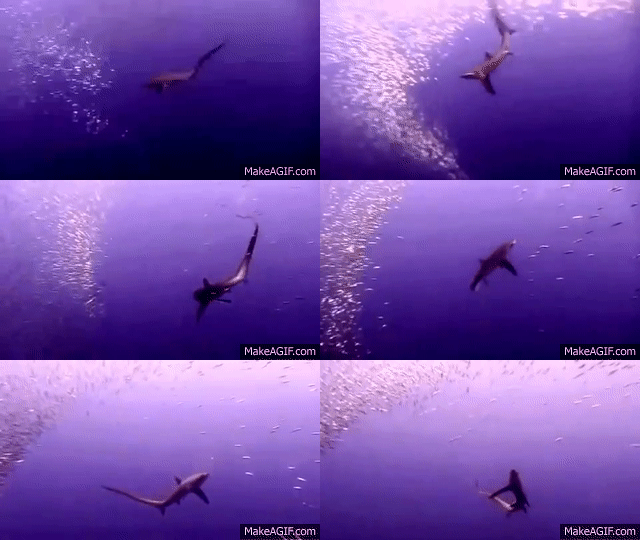
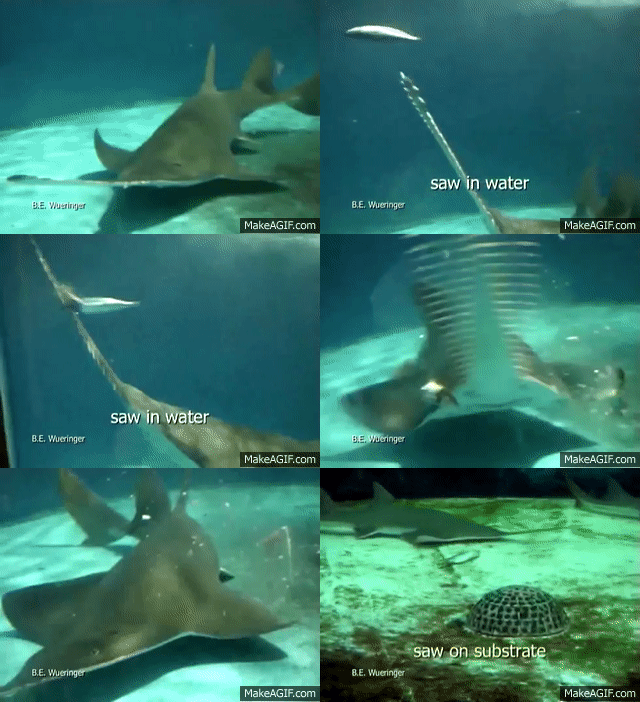
- How thresher sharks use their tails, from this paper by Oliver and friends.

- Follow Brit Finucci @BritFinucci on twitter! Follow her for awesome photos of her research with deep sea sharks.
- I love this commerical and I’m pretty sure that you will too.
Read More “Thursday Afternoon Dredging: December 15th, 2016” »


Southern Fried Science loves giant isopods. There are few deep-sea animals more iconic, more charismatic, more weird and wonderful, than the deep-sea isopod. The biggest of the deep-sea isopods, the giant deep-sea isopod, Bathynomus giganteus, is a quintessentially American beast. It dwells in the deep Gulf of Mexico. The bulk of its known range falls within the United States Exclusive Economic Zone. It was first collected by American scientist Alexander Agassiz (though it was formally described by his colleague and collaborator French zoologist Alphonse Milne-Edwards). Tough on the outside, soft on the inside, fiercely independent yet able to work in massive aggregations to consume the bloated carcass of a whale, alternately terrifying and adorable, I can think of no better animal to represent the deep water of the United States better than our own Bathynomous giganteus.