
Skip to content

Southern Fried Science

Over 15 years of ocean science and conservation online

  • Home
  • About SFS
  • Authors
  • Support SFS

Recent Posts

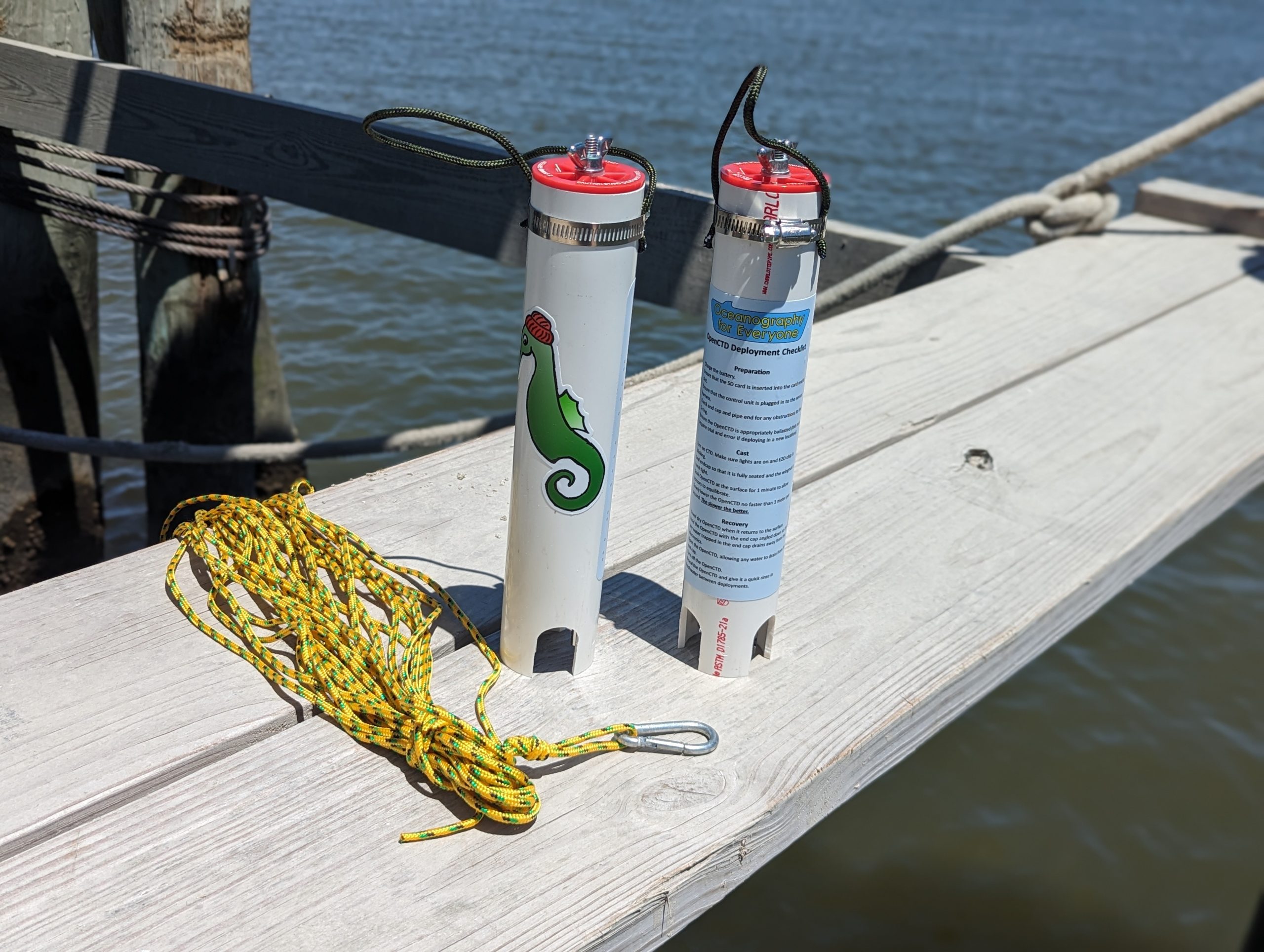
The next OpenCTD is here!
June 22, 2026
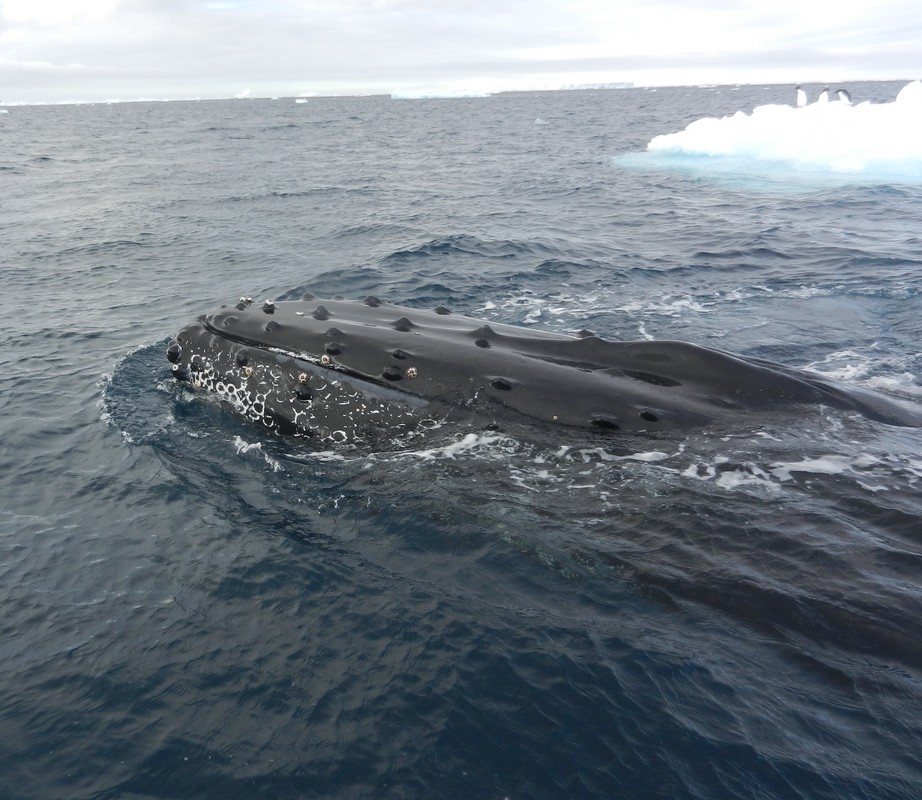
humpback whale in Antarctica
The evolution of the International Whaling Commission – from  whaling quotas to whale conservation
June 10, 2026
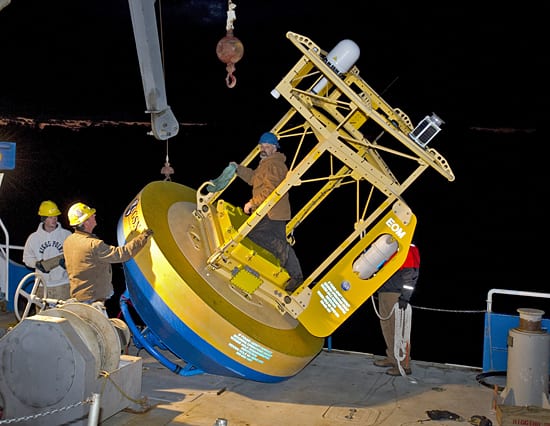
Isn’t ironic, don’t you think: dismantling the Ocean Observatories Initiative on World Oceans Day
June 9, 2026
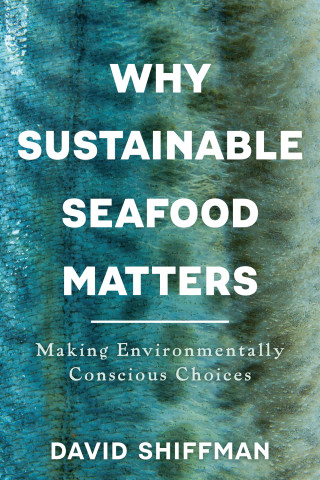
“Why Sustainable Seafood Matters” is now available for preorder! Here’s what it’s about, and why I decided to write it.
June 8, 2026
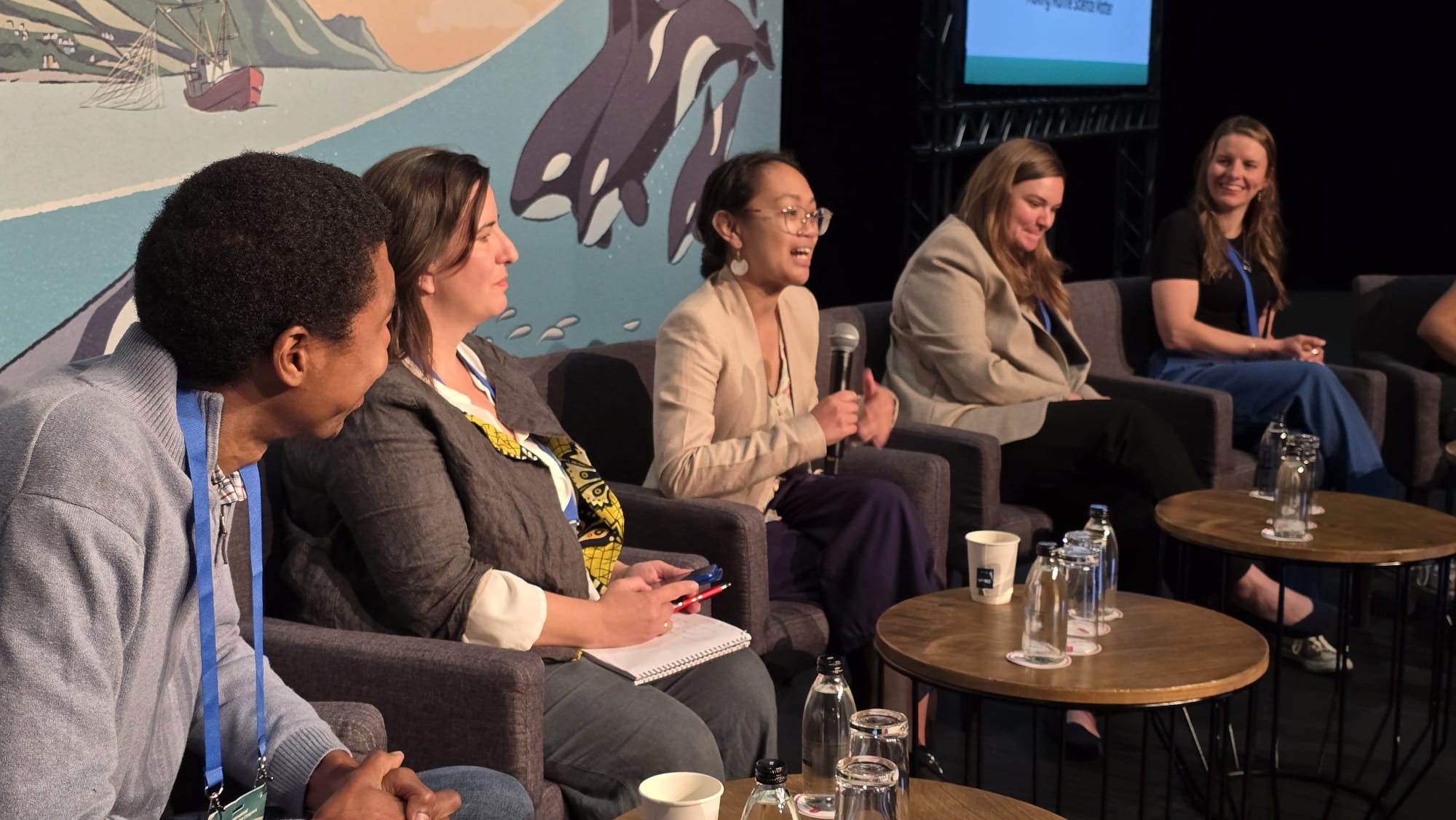
Here’s how to join my IMCC8 symposium, “Ocean Science Communication: What’s New and What’s Next?”
April 22, 2026
Deep Sea Mining Symposium Announcement
April 21, 2026

Bigger than just conservation: The WWF Pacific Shark Heritage Program

Posted on September 17, 2014 By Guest Writer 2 Comments on Bigger than just conservation: The WWF Pacific Shark Heritage Program
Conservation, Science

IanIan Campbell has spent his entire career employed across the spectrum of fisheries science and policy, working as a marine surveyor, a fisheries observer and writing fisheries policy for the UK & European governments. He even spent several years as a commercial diver working on oil rigs and for the film industry. Ian is currently leading WWF’s global shark management work. You can follow him on twitter @IanFisheries , and follow the WWF campaign @WWF_sharks.

On September 2, in a back room on the campus of the Secretariat of the Pacific Regional Environment Programme (SPREP), on the small island of Samoa, we at the environment conservation non-government organisation, World Wide Fund for Nature WWF quietly launched our Pacific Shark Heritage Programme. This launch was incorporated into the bigger, much flashier United Nations meeting on Small Island Developing States (SIDS), where the United Nations Secretary General Ban Ki Moon spoke of partnerships, conservation of the oceans’ resources and responsible stewardship. There were meetings of Heads of State & UN officials, the World Bank and Ambassadors, with lots of “high-level statements” and “roadmaps for the future of the oceans” announced at champagne & canapé receptions. Yet, we believe, it was our unheralded meeting in the SPREP’s training centre (tea & coffee were provided), that could have the biggest impact on sharks (and rays, rays need love too) and Pacific Island culture.

There are two major components to WWF’s work in the Pacific. The first is to highlight how intrinsically linked sharks and rays are to the many diverse cultures of the Pacific Island nations. We have documented apocryphal tales, fable and legends that have been passed down from generation to generation over hundreds, if not thousands of years. Tales that have been told in villages and communities ever since people have inhabited these islands. And contained in these stories are some truly remarkable accounts of love, war, marriage advice and even a bit of shark taxonomy. Did you know, for example, that in the Cook Islands, a kindly shark gave Ina, the Fairy Voyager a lift across the ocean to be with her fiancé Tinarau, the God of the Ocean? Ina took with her coconuts to ensure she didn’t die of thirst, but no way of opening them (you always forget something, right?). Ina tried to break the coconut on the shark’s head, which resulted in the hammerhead getting its’ distinctive shape. So there’s a taxonomic question answered. It may be a fable, but it’s still as accurate as some recent Shark Week documentaries. On the beautiful island of Taveuni in Fiji, villagers and school children still speak of Dakuwaqa, the shark god, a ferocious warrior who actually protects the islanders. At the SIDS conference there are carvings and murals of Samoan shark legends everywhere, some selling for up to $40,000 (US). In Pacific Island countries, sharks are everywhere and everyone knows about sharks. At WWF, we know we need to keep this history alive.

Read More “Bigger than just conservation: The WWF Pacific Shark Heritage Program” »
Natural history needs more .gifs

Posted on September 15, 2014July 5, 2015 By Andrew Thaler 1 Comment on Natural history needs more .gifs
Science

There’s something glorious about .gifs, the short video clips that proliferate across the internet. Not quite as demanding of commitment as a full video, slightly more than a still image. These mighty little loops of endless wonder can express joy, surprise, or disdain far better than their static counterpart. They are an artform unique to the web.

Yet, somehow, the humble .gif has never garnered the same level of prestige as a carefully crafted photograph or a lovingly edited documentary. Heck, some science communicators think we should to away with .gifs completely. This is, of course, misguided.

Read More “Natural history needs more .gifs” »

How you can help support Southern Fried Science

Posted on September 10, 2014 By Andrew Thaler
Blogging

Image courtesy of the Love Lab.

Earlier this summer, we switched funding models from an ad hoc Paypal-based donation system to Patreon, a crowdfunding style service for authors, musicians, writers, and, thanks to us, scientists. Thanks to our wonderful Patrons, Southern Fried Science is, for the first time in history, financially sustainable.

We’re still growing. As many of you witnessed during the last Shark Week, our servers are spinning at full capacity and our bandwidth is consistently maxed out. We need to upgrade to a bigger, dedicated server. That costs money.

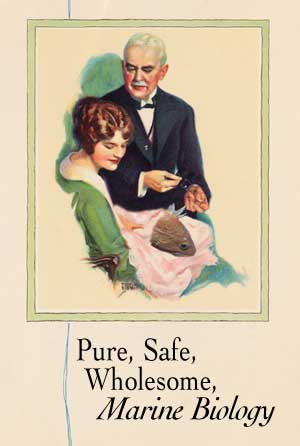
Southern Fried Science is, and always will be, free and ad free. With the exception of the rare Amazon affiliate links that appears if we mention specific products, we don’t post ads. There are no awkward pitches for weight loss supplements; no pop-ups encouraging enticing you to check your car insurance; no dehumanizing images of Walmart shoppers. Just pure, safe, wholesome marine science and conservation.

Read More “How you can help support Southern Fried Science” »

Breaching Blue Chapter 5: The Hunters

Posted on September 5, 2014 By Andrew Thaler
Popular Culture

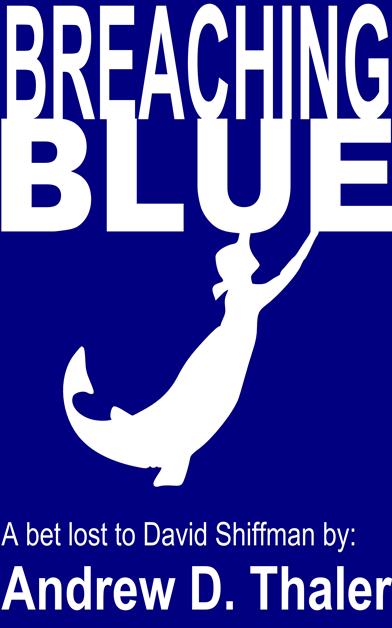
breakingblueAll week I’m posting the first five chapters from my absurd work-in-progress, Breaching Blue. Check out Chapters 1, 2, 3, and 4. This concludes our week long mermaid adventure. Enjoy. And, if you don’t enjoy, blame Shiffman.


The reef made them strong. Janthina no longer hesitated to swim above the sunbreak, to explore the illuminated waters above. Each morning, as the sunlight penetrated the twilight waters of the reef, Janthina would rise into the realm of light. The animals that lived in the sun were new. They were active, vibrant, powerful. They moved as if the whole ocean was theirs to command.

Janthina spied Tornus below. The arch of her back was unmistakable. She had grown into a powerful, confident mermaid, broad across the shoulders and strong. Resting on the seafloor, she look like nothing so much as a massive boulder. Tornus sat in a circle with Simnia, Luidia, and several others, fashioning spearheads from a pile of discarded stingray carcasses, their meal from the previous day. The long, jagged barbs were perfect for hunting. They could puncture the toughest scales and would remain lodged until their prey went limp.

The barbs were cheap. The spears, though, required great effort to prepare. The instructions for their manufacture were scattered across the reef. It took nearly a full lunar cycle for Tornus and her compatriots to find enough driftwood, another cycle to grind them down into long, sturdy shafts.  They were solid and  stout. There were none to spare.

Janthina swam down to greet her sisters.

Read More “Breaching Blue Chapter 5: The Hunters” »

Ocean Optimism and Aliens

Posted on September 5, 2014September 5, 2014 By Chris Parsons 1 Comment on Ocean Optimism and Aliens
Conservation

Ripley: How long after we’re declared overdue can we expect a rescue? Hicks: … Seventeen days. Hudson: Seventeen days? Hey man, I don’t wanna rain on your parade, but we’re not gonna last seventeen hours! Those things are gonna come in here just like they did before. And they’re gonna come in here… Ripley: Hudson! Hudson: …and … Read More “Ocean Optimism and Aliens” »

Mr Darcy’s Guide to Conference Etiquette – Part 1

Posted on September 4, 2014September 5, 2014 By Chris Parsons
Blogging

It is a truth universally acknowledged that conferences are a necessity for the professional growth of an academic. They are important occurrences for learning about the methods and results of peers in one’s field, cutting edge techniques and the latest information that could be incorporated into one’s own studies and papers. With the vast quantity of scientific publications now available that would fill library upon library in my family seat of Pemberley, conferences veritably serve up a buffet of the latest and most relevant research results, saving one weeks of searching and heaven forbid, reading. Conferences are also opportunities for informal colloquies where one can receive and give advice, share ideas and develop research and writing partnerships. Many of these latter activities occur, of course, outside of the lecture halls, over a bottle of claret or a glass of port – or, for the less refined, a dram of Scotch whisky. Rare is the conference where one does not come home with a leather-bound notebook full of contacts with whom to correspond, studies to cite and methods to apply to one’s own work. Occasionally conferences have even been known to foster romantic liaisons, and there has been more than one highly advantageous and amicable marriage that has resulted from an academic meeting.

Oh yes, conferences are also places where one may share one’s own work. They give one a chance to share data and ideas with academic peers, to receive support, or possibly criticism, so that one can strengthen and refine one’s analysis and one’s interpretation of data.

However, it is becoming all too common that, for many, the latter is the only reason to go to a conference. Moreover, an oral presentation is increasingly the only format of worth and if one’s abstract is not accepted, or if one is offered “merely” an alternative format, such as a poster, one will refuse to attend.

Quite frankly, I view any academics who would refuse to attend a conference on their own specialist topic because they are denied an oral presentation, as poor and narrow-minded. Nothing grows in a vacuum, and innovative science is no exception. To refuse to attend a meeting because one is not presenting a talk is to figuratively cut off one’s nose to spite one’s face. It is the academic who suffers who denies himself the latest research results from, and direct interaction with, the best scholars in his field.

I recognize that there are many academic institutions that will provide funding for conferences only when one has an oral presentation accepted, but if one belongs to such an institution, then work to change its policy! Such institutions are stifling academic growth, and moreover ultimately reducing their visibility, reputation and enrollment. Each academic that goes to a conference is potentially an opportunity to market and advertise a university, and potentially attract and recruit students. The tuition from just a single graduate student persuaded to come to a university or college by talking to a conference goer, pays back the expenses of sending that person to the conference tenfold. This also encompasses funding graduate students, as potential students would as likely, if not more so, listen to their peers about an institution. A single happy, enthusiastic graduate student at a conference could potentially attract dozens of other students to apply to a college or university, a fact that many academic administrators overlook to their financial disadvantage.

Moreover, do not look down upon alternative presentation formats. Posters give one a unique ability to talk directly to conference goers, often while they are well flown on a glass or two of wine, in a depth one cannot achieve with the audience at an oral presentation. A single good, well-designed poster is also very memorable, much more so than dozens of slides in an oral presentation. Speed presentations likewise are excellent conveyors of certain types of information, such as innovative ideas or hypotheses, and like the poster can often be more memorable. Moreover, if one can describe one’s research in a three minute window clearly and concisely, one can also present one’s information in a way that might be more palatable to the general public, the press or policy makers. If one has a project that needs to reach a wider audience – for example, research on the conservation of an endangered species, or highlighting a new threat to the environment – a speed presentation might indeed be the best format.

As for other aspects of participating in conferences, if one volunteers to review abstracts, please do so promptly. Many people are waiting to make travel plans and visa applications, or finalize grant applications based on these decisions. By dilly-dallying, one may not only frustrate the organizers (who very often are senior members of one’s field who will likely remember those who are reliable and efficient reviewers and those who are lazy wastrels who do not live up to their commitments – I certainly do!) but also deny colleagues the chance of attending the conference, ultimately impacting their careers. Also, when and if reviewing, be ethical. If one is given the abstract of a colleague in one’s department, a student or similar, or even a competitor, and one clearly has a conflict of interest, do the right thing and declare it.  The organizers will respect honesty and professional integrity, and one will earn their respect, whereas if one’s conflict is not declared and is later discovered, it could be extremely detrimental, even ruinous, to one’s professional reputation.

If one’s submitted abstract is not accepted, do not write to organizers an angry tirade. “Do you not know who I am!” emails will not work, as they can easily see who one is – an entitled ego-ridden oik! Threats that one will not attend, or that one will tell one’s colleagues not to attend either, unless one’s abstract is accepted, will also not work. The organizers will likely respond not to let the carriage door hit one on the nether regions on the way out. Their job is already difficult, and having a recognized childish and obnoxious attendee at their meeting will not make their job any easier, or more pleasant for the other attendees. Moreover, such behavior is an attempt to circumvent the peer-review process. Peer-review is one of the foundations of academic quality control. Peer-review may have its faults, but it is the best feedback process academia has. Trying to circumvent peer-review by bullying and threats will only make one appear unethical and unprofessional in the eyes of the organizers, who as noted above, are likely to be senior. Most certainly they will be well connected, and will likely tell others about one’s unethical and unprofessional behavior (this again I have seen all too frequently).

It has also become all too common for would-be presenters to berate the scientific program committee if their presentation was chosen as an alternate format, even though the presenter indicated said format was their preferred alternate. Often such admonishments are accompanied with polemics along the lines of “there is no way I can convey the magnificence of my work in a speed presentation” or “I can guarantee that everyone will want to see my talk because it is so important/innovative/will single-handedly save the world/will change our understanding of the universe as we know it, so how can it be relegated to a poster.” Oh the arrogance…

However, people often must cancel attendance at conferences, and presentation slots may become available at the eleventh hour. If one would really prefer a different format for one’s presentation or a chance to present if rejected, politely (and I emphasize politely) contact the organizers and ask if one might be placed in a queue of some sort to take advantage of such last minute cancellations. A polite, good natured request is remembered, whereas an angry tirade… well, it too will be remembered but not in an advantageous way.

Assuming that all goes well and one’s abstract is accepted (even if it is not one’s first choice of format), one should note that many conferences require presenters to register in advance of the meeting, often by the early registration deadline to provide time for the organizers to build the program, and to contact wait-listed presenters in a timely manner. It is simply one’s own fault if one ignores email notifications and does not read submission instructions, and arrives at a meeting to find that one does not have one’s presentation in the program, because one did not register as required; a mistake which might be financially costly.

If the meeting approaches and one realizes that one cannot attend, do tell the organizers as quickly as possible. Conferences typically have a limited number of presentation slots and a queue of hopeful attendees, as noted above. If one informs the organizers swiftly, it will mean that perhaps someone else can present a talk in one’s absence, and as funding is often (sadly) dependent on presenting, perhaps even attend the meeting. By procrastinating and not informing organizers that one cannot attend, one has basically denied colleagues the potential to progress their careers, and for conservation meetings, perhaps even to help protect the environment. Moreover, do not pass on one’s work for another to present in one’s stead (another troubling trend). They will not be able to present it as well and will not be able to answer any questions appropriately. Again this is more likely to reflect badly upon oneself, as well as irritate the organizers who could have gifted one’s presentation slot to someone else, as noted above.

In my next installment I will describe the proper etiquette once a conference is actually upon one. But for now I must be away as my butler tells me that members of the local gentry are calling and I must play the gracious host. I only hope that they do not have a half of unmarried daughters in tow, looking for a suitable husband of means. Sometimes it is truly wearisome to have such a large and sought-after endowment.

???????????????????????????????

Breaching Blue Chapter 4: Over the Edge

Posted on September 4, 2014 By Andrew Thaler
Popular Culture

breakingblueAll week I’m posting the first five chapters from my absurd work-in-progress, Breaching Blue. Check out Chapters 1, 2, and 3. Enjoy. And, if you don’t enjoy, blame Shiffman.


Clymene swam just below the sunbreak, testing the limits of her own courage. The reef was behind her, its unexplored pinnacles rising into sunlit waters. She cut a lazy circle around the coralline towers as she drifted upwards with each circuit. Luidia watched from a distance.

Clymene cast an elegant profile as Luidia looked up from her sentry. Her tail was long and graceful, slimmer than Janthina’s, with a broader fluke. Her arms were long and limber; her fingers reached nearly to her peduncle, where there powerful muscles of her tail met the wide blades of her fluke. Luidia admired her sister. Her own stumpy hands barely reached past her waist, and hers was a bulkier build. Luidia had one advantage over her more streamlined sister. The massive pelvic fins that sprung from the base of her tail were fantastically versatile, she could to pivot and turn with exceptional precision. Where Clymene was constantly frustrated by the tight narrow corridors they continued to discover within the reef, Luidia could traverse them with ease.

Read More “Breaching Blue Chapter 4: Over the Edge” »

Sharks aren’t always the top of the food chain

Posted on September 3, 2014 By David Shiffman 1 Comment on Sharks aren’t always the top of the food chain
Blogging, Science

Most people think of sharks as being apex predators, large, fearsome  hunters sitting right at the top of the ocean food chain.  Of course, that isn’t always the case. There are more than 500 known species of sharks, and they vary in size from the size of a pencil to the size of a school bus. In many cases, there’s a larger predator in their environment, which can lead to some surprising and amazing  interactions.

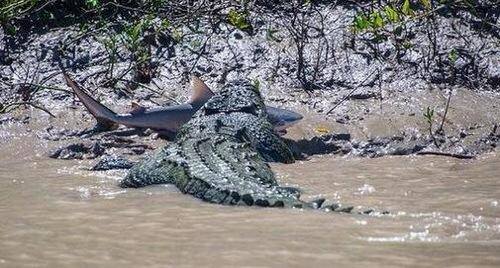
A crocodile ate a bull shark

Brutus, a famous crocodile in Australia, was recently photographed eating a juvenile bull shark. Southern Fried Science writer Sarah Keartes has the full story at EarthTouch.

Photo by Andrew Paice

Read More “Sharks aren’t always the top of the food chain” »

Marine Conservation, Inspiration and a Great Big Geek

Posted on September 3, 2014September 3, 2014 By Chris Parsons 1 Comment on Marine Conservation, Inspiration and a Great Big Geek
Conservation

From 14-18th August 2014, the 3rd International Marine Conservation Congress was held in Glasgow, Scotland. The IMCC meetings are the largest international academic conferences on marine conservation. IMCC3 had over 700 presentations ranging from fisheries science to how marine scientists could better interact with the media, from Marine Protected Area effectiveness to the ethical treatment … Read More “Marine Conservation, Inspiration and a Great Big Geek” »

Breaching Blue Chapter 3: In the Heart of the Reef

Posted on September 3, 2014 By Andrew Thaler
Popular Culture

All week I’m posting the first five chapters from my absurd work-in-progress, Breaching Blue. Check out Chapter 1 and Chapter 2. Enjoy. And, if you don’t enjoy, blame Shiffman.


The mermaids listened intently as Tornus described the mysterious chamber.

“We have to go inside.” Amphisamytha declared.

Read More “Breaching Blue Chapter 3: In the Heart of the Reef” »

Posts pagination

Previous 1 … 102 103 104 … 273 Next

Popular Posts

Ageism in the conservation job marketAgeism in the conservation job marketJune 19, 2026Chris Parsons
What Ocean Ramsey does is not shark science or conservation: some brief thoughts on "the Shark Whisperer" documentaryWhat Ocean Ramsey does is not shark science or conservation: some brief thoughts on "the Shark Whisperer" documentaryJuly 2, 2025David Shiffman
Screaming into the void - Why your scientific paper doesn’t matterScreaming into the void - Why your scientific paper doesn’t matterJune 18, 2026Chris Parsons
The next OpenCTD is here!The next OpenCTD is here!June 22, 2026Andrew Thaler
What is a Sand Shark?What is a Sand Shark?November 12, 2017Chuck Bangley
Undermining the Law of the Sea. Some additional thoughts following my OpEd in the Hill.Undermining the Law of the Sea. Some additional thoughts following my OpEd in the Hill.June 22, 2026Andrew Thaler
The story of the pride flag made from NASA imagery: Bluesky's most-liked imageThe story of the pride flag made from NASA imagery: Bluesky's most-liked imageSeptember 27, 2024David Shiffman
That's not a blobfish: Deep Sea Social Media is Flooded by AI SlopThat's not a blobfish: Deep Sea Social Media is Flooded by AI SlopDecember 19, 2025Andrew Thaler
Our favorite sea monsters – Ningen (#4)Our favorite sea monsters – Ningen (#4)September 7, 2010Andrew Thaler
Did monster hunters find a 120 meter long giant squid on google maps?Did monster hunters find a 120 meter long giant squid on google maps?June 17, 2016Andrew Thaler

squishy

Subscribe to our RSS Feed for updates whenever new articles are published.

We recommend Feedly for RSS management. It's like Google Reader, except it still exists.

Southern Fried Science

  • Home
  • About SFS
  • Authors
  • Support SFS


If you enjoy Southern Fried Science, consider contributing to our Patreon campaign.

Copyright © 2026 Southern Fried Science.

Theme: Oceanly Premium by ScriptsTown