Skip to content

Southern Fried Science

Over 15 years of ocean science and conservation online

  • Home
  • About SFS
  • Authors
  • Support SFS

Recent Posts

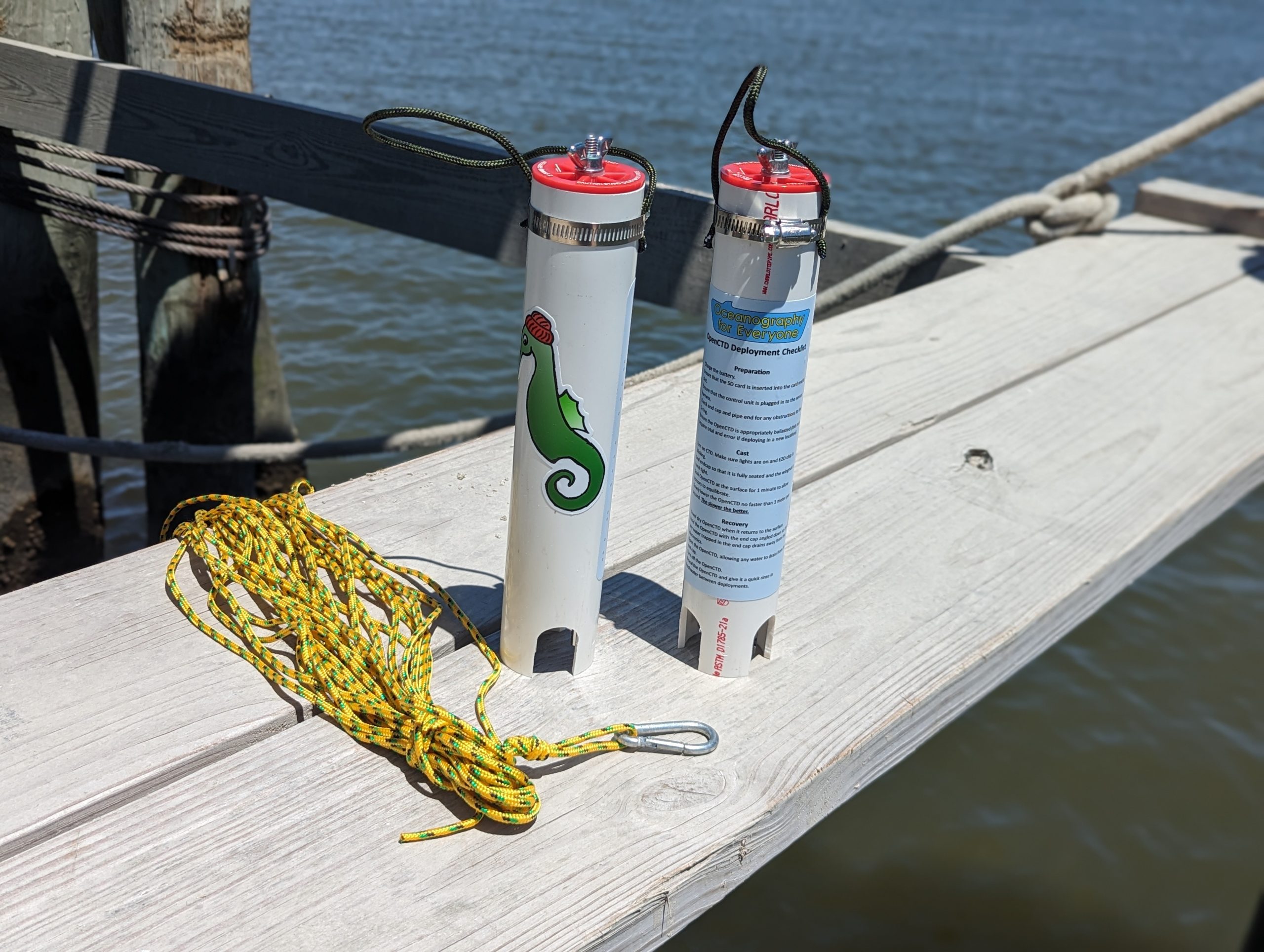
The next OpenCTD is here!
June 22, 2026
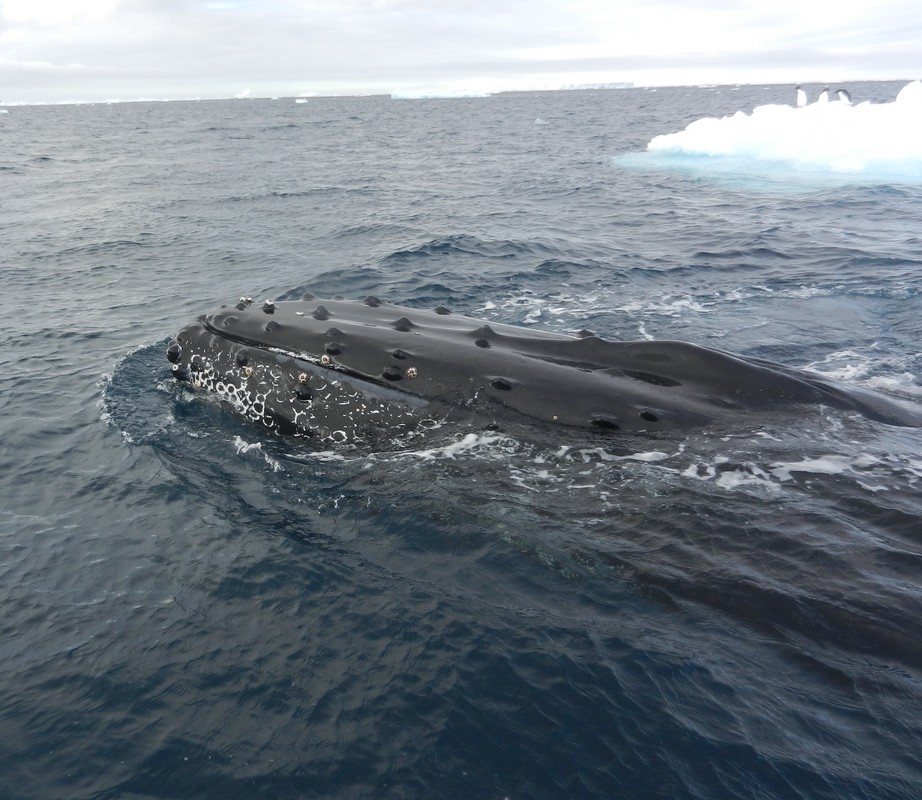
humpback whale in Antarctica
The evolution of the International Whaling Commission – from  whaling quotas to whale conservation
June 10, 2026
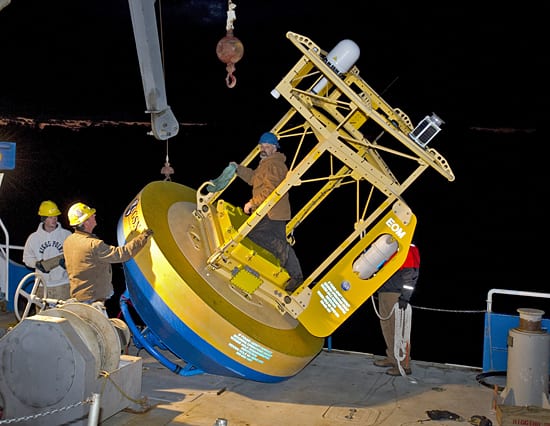
Isn’t ironic, don’t you think: dismantling the Ocean Observatories Initiative on World Oceans Day
June 9, 2026
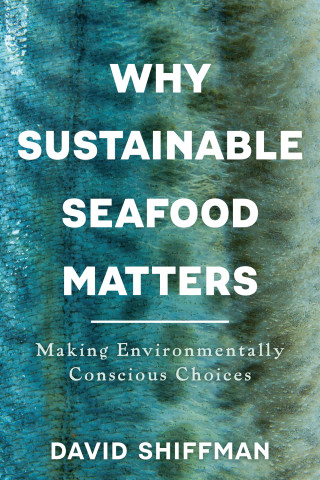
“Why Sustainable Seafood Matters” is now available for preorder! Here’s what it’s about, and why I decided to write it.
June 8, 2026
Here’s how to join my IMCC8 symposium, “Ocean Science Communication: What’s New and What’s Next?”
April 22, 2026
Deep Sea Mining Symposium Announcement
April 21, 2026

Dawn take you all: Bilbo Baggins’ approach is better than “don’t feed the trolls”

Posted on May 21, 2014 By David Shiffman 4 Comments on Dawn take you all: Bilbo Baggins’ approach is better than “don’t feed the trolls”
Blogging, Science

“Dawn take you all, and be stone to you!”For just at that moment the light came over the hill, and there was a mighty twitter in the branches. William never spoke for he stood turned to stone as he stooped; and Bert and Tom were stuck like rocks as they looked at him. And there they stand to this day, all alone, unless the birds perch on them; for trolls, as you probably know, must be underground before dawn, or they go back to the stuff of the mountains they are made of, and never move again. – “The Hobbit,” J.R.R. Tolkien. (Yes, it really says twitter in this section of text. This is the only place in “The Hobbit” or any of the Lord of the Rings books where the word twitter appears.)

Trolls at the world premiere of "The Hobbit: An Unexpected Journey". Creative Commons license from Flickr user Kewl
Trolls at the world premiere of “The Hobbit: An Unexpected Journey”. Creative Commons license from Flickr user Kewl


Though I have largely enjoyed my experiences with online outreach, there are, to put it mildly, lots of unpleasant people on the internet. An extremist opinion and an anonymous forum for expressing it can be a recipe for some particularly nasty conversations. Some people seem to take pleasure in disrupting a conversation even when they have no particular stake in it, and these people are commonly referred to as “trolls.” There are various strategies for dealing with them (for example, here’s an explanation of this blog’s comment policy). In general, “don’t feed the trolls”  is a common piece of advice for those engaged in online discussions. “Don’t feed the trolls” means that if someone is behaving in an inflammatory manner, you should simply not respond. While it’s certainly true that many internet trolls enjoy a combative discussion and that engagement may give an extremist idea more exposure than it would otherwise receive, I’ve never liked the idea of “don’t feed the trolls.”

Read More “Dawn take you all: Bilbo Baggins’ approach is better than “don’t feed the trolls”” »
Six reasons why Menhaden are the greatest fish we ever fished.

Posted on May 21, 2014May 24, 2014 By Andrew Thaler 2 Comments on Six reasons why Menhaden are the greatest fish we ever fished.
Science

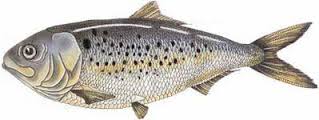
Image from Maine Department of Marine Resources.

Menhaden, Brevoortia tyrannus, is, without a doubt, the single most important fish in the western Atlantic. This oily filter-feeder swims in schools so large that they block the sun from penetrating the water’s surface as it regulates ocean health. Earlier this week, we were greeted by news that menhaden stocks were rebounded, yet despite their near-universal importance in the western Atlantic and Gulf of Mexico, most Americans have near heard of a menhaden.

Let’s fix that. Here are six reasons you should know what a menhaden is.

1. Menhaden go by many names.

The Narragansett called them munnawhatteaug. Colonists called them poghaden, bony-fish, whitefish, pogy, mossbunker, fat-bat. Perhaps most endearingly, menhaden were called bug-heads, thanks to the parasitic isopod that was often found in place of their tongues. They have also been called “the most important fish in the sea“.

Read More “Six reasons why Menhaden are the greatest fish we ever fished.” »

Don’t build a new inter-ocean canal across Nicaragua

Posted on May 21, 2014 By Guest Writer 1 Comment on Don’t build a new inter-ocean canal across Nicaragua
Conservation

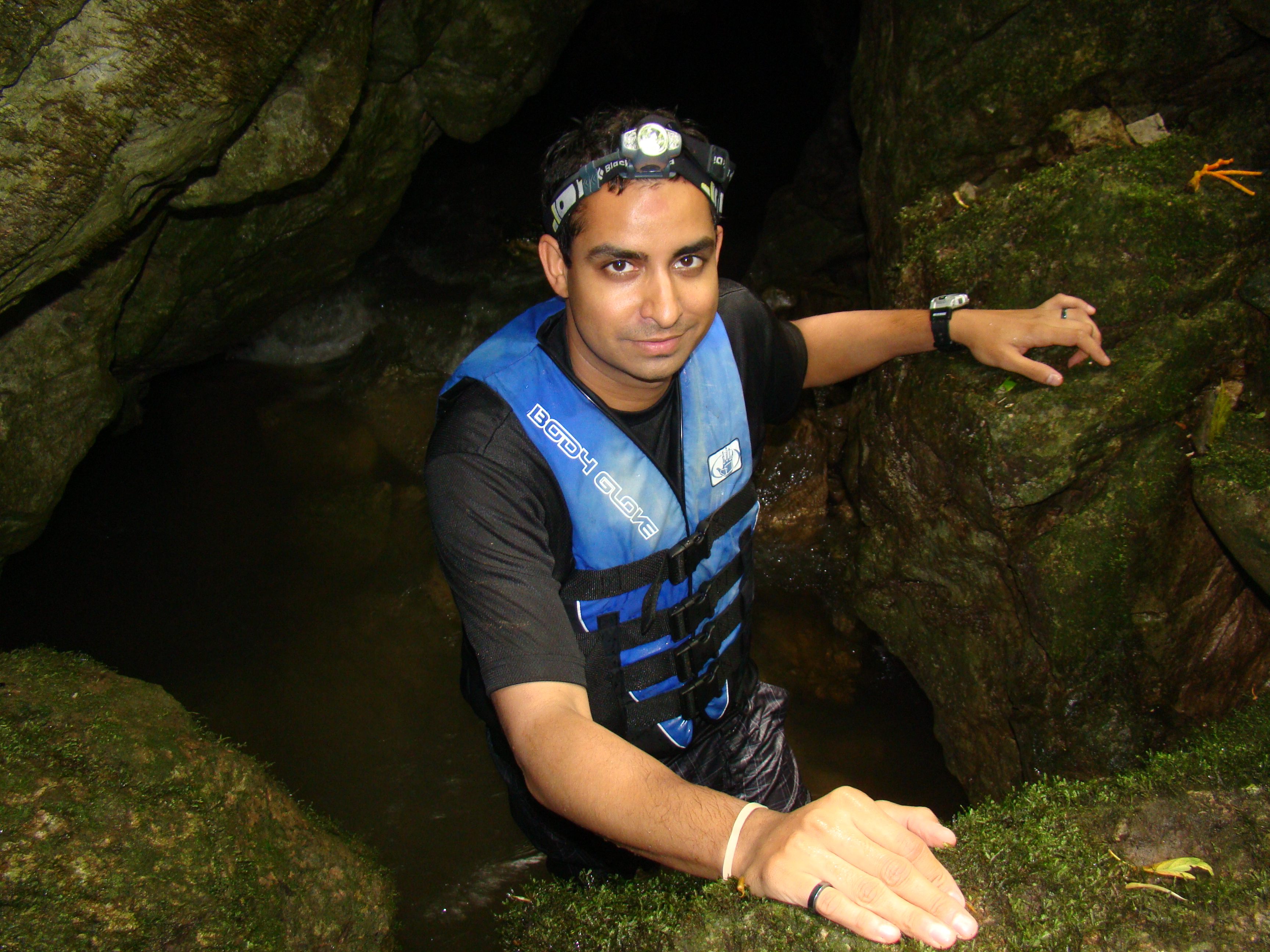
ProsantaDr.Prosanta Chakrabarty is an Assistant Professor at Louisiana State University and an ichthyologist and evolutionary biologist. He is also Curator of Fishes at LSU’s Museum of Natural Science. You can learn more about him from his website www.prosanta.net and follow him on Twitter @LSU_FISH.

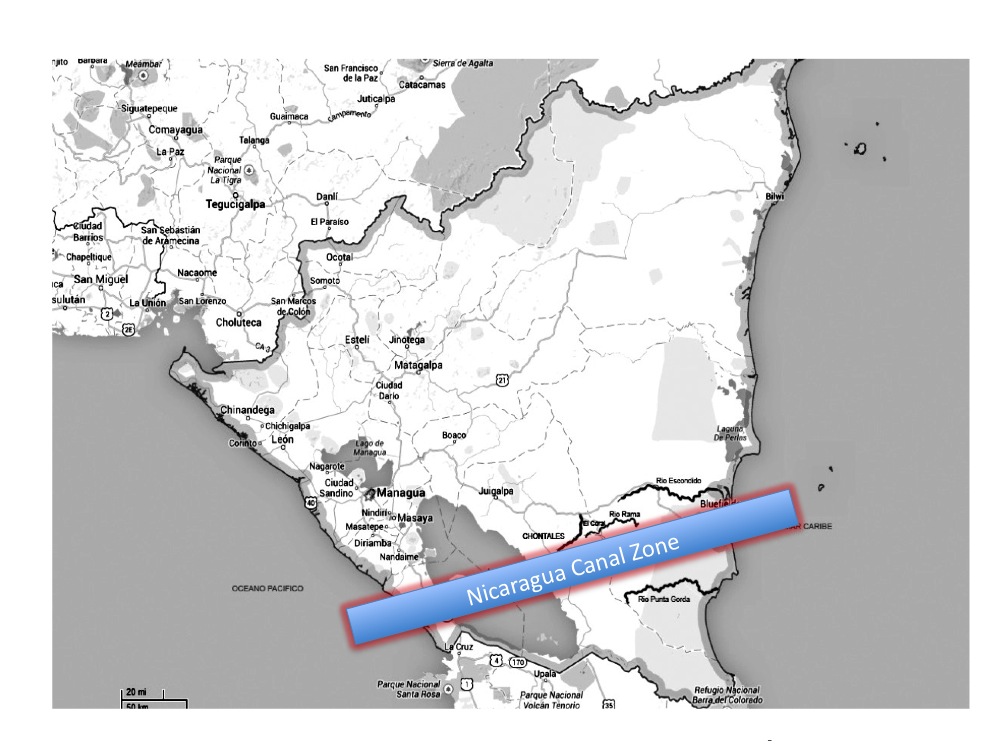
The National Assembly of Nicaragua approved the rights to build a new canal through the country to connect the Carribean (Atlantic) to the Pacific just as the Panama Canal does about 400 miles to the south. The approval of this contract was done largely without any scientific insights and largely without warning. The rights were given to a Chinese firm, the Hong Kong Nicaragua Development (HKND) and gives them power over this property for up to 100 years. The HKND has no experience with a project of this scale, and was largely unknown until this deal.

CanalThe new canal would be enormous, and cut across Lake Nicaragua (Cocibolca) and also adjacent rivers and waterbodies. No environmental impact studies have been completed. The Academia de Ciencias de Nicaragua recently published a manuscript detailing the problems with this proposed canal, “EL CANAL INTEROCEÁNICO POR NICARAGUA: Aportes al debate” [Available here: ]

It is multi-authored, thoughtful and level-headed: it is also a searing criticism of the stupidity of the idea of this new canal. The report thoroughly examines cultural, environmental, and economic impacts of the proposed canal.

Here are the top reasons I’ve learned from that report (with pg.#s) why this canal is ‘muy malo’ for the people and environment of Nicaragua.

Read More “Don’t build a new inter-ocean canal across Nicaragua” »

We need a different economic model for supporting conservation work. Here’s my story.

Posted on May 12, 2014May 12, 2014 By Bluegrass Blue Crab 3 Comments on We need a different economic model for supporting conservation work. Here’s my story.
Uncategorized

Many years ago, I was offered a job doing restoration work at a coal company while perusing festival booths in Fairbanks, Alaska. Still wearing my college-aged rose colored glasses, I was skeptical of working for conservation within industry, said thanks-but-no-thanks, and returned to upstate New York to finish my degree. Looking back, I honestly believe I could have enacted more positive change for the earth had I taken that job than I have in the almost decade since.

I recall this story because while at a recent all-volunteer biodiversity festival, a friend asked me ‘why can’t people do all this great work as their paid work?’ A group of us stood around silently for a few minutes, realizing that this question derived of innocent curiosity delved deep into issues of societal values, our current economic system, and conservation philosophy. In short, the answer is that because conservation brings in none of its own revenue, but depends on the tax money or philanthropy of others. When that dries up, no conservation careers are available. And even when they are, a high percentage of time on the job is spent looking for future funding through grants.

Read More “We need a different economic model for supporting conservation work. Here’s my story.” »

The incredible biodiversity of Aquaman: the grand finale

Posted on May 12, 2014May 12, 2014 By Andrew Thaler
Popular Culture, Science

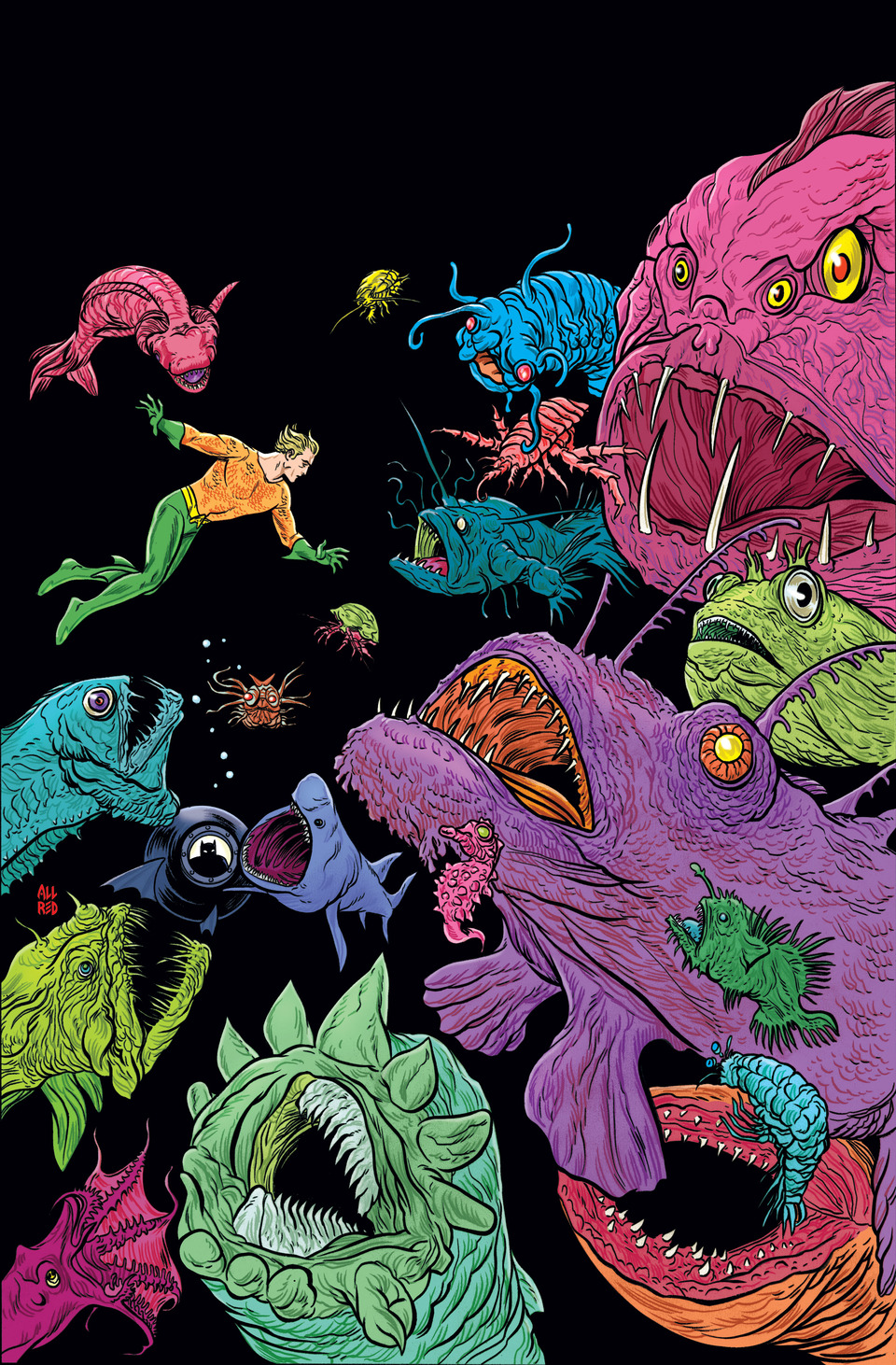
Aquaman #31 variant cover. Art by Mike Allred.

We’ve traveled far, this last week. From gentle basking sharks gliding across the surface of the North Sea to titanically tiny worms dwelling in the deep. The variant cover for Aquaman #31 is a fantastically diverse sampling of real ocean organisms, many of them not only profoundly weird but also almost entirely unstudied. Mike Allred’s is a small taste of the unknown still waiting to be explored.

I saved the best for last, including my favorite squid and scale worm. Before we dive into these final identifications, let’s take a moment to review.

Read More “The incredible biodiversity of Aquaman: the grand finale” »

Nereus, never to rise.

Posted on May 10, 2014 By Andrew Thaler
Science

Reports are coming in from the Kermadec Expedition that Nereus, the world’s first Hybrid AUV/ROV and deepest diving robot, has perished. The full-ocean capable robot, who dove to the bottom of Challenger Deep several year before James Cameron’s Deepsea Challenger, was lost on a 10,000 meter dive in the Kermadec Trench. Researchers and crew members were hopeful that … Read More “Nereus, never to rise.” »

The penultimate installment of the incredible biodiversity of Aquaman’s variant cover

Posted on May 9, 2014May 9, 2014 By Andrew Thaler
Popular Culture, Science

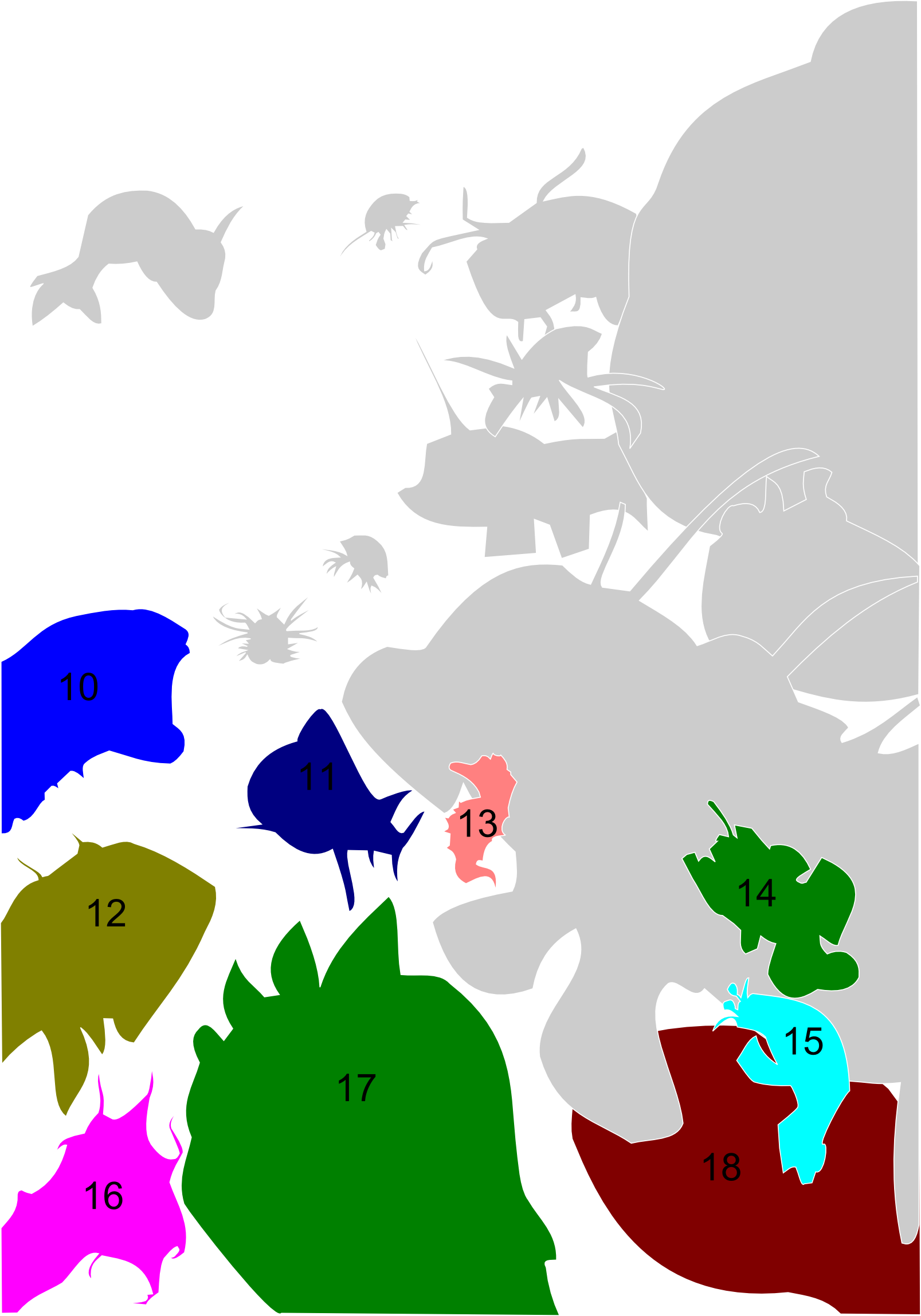
aquapurged5We are approaching the home stretch, with the second to last installment of our tour through this amazing Aquaman cover. Have you been following along? How many have you guessed so far?

If you haven’t been following along, you can catch up with the previous installments, below:

  • The incredible biodiversity of Aquaman’s variant cover
  • The incredible biodiversity of Aquaman’s variant cover: Episode 2
  • The incredible biodiversity of Aquaman’s variant cover: Halfway Home
  • The incredible biodiversity of Aquaman’s variant cover: Part four of a six part trilogy

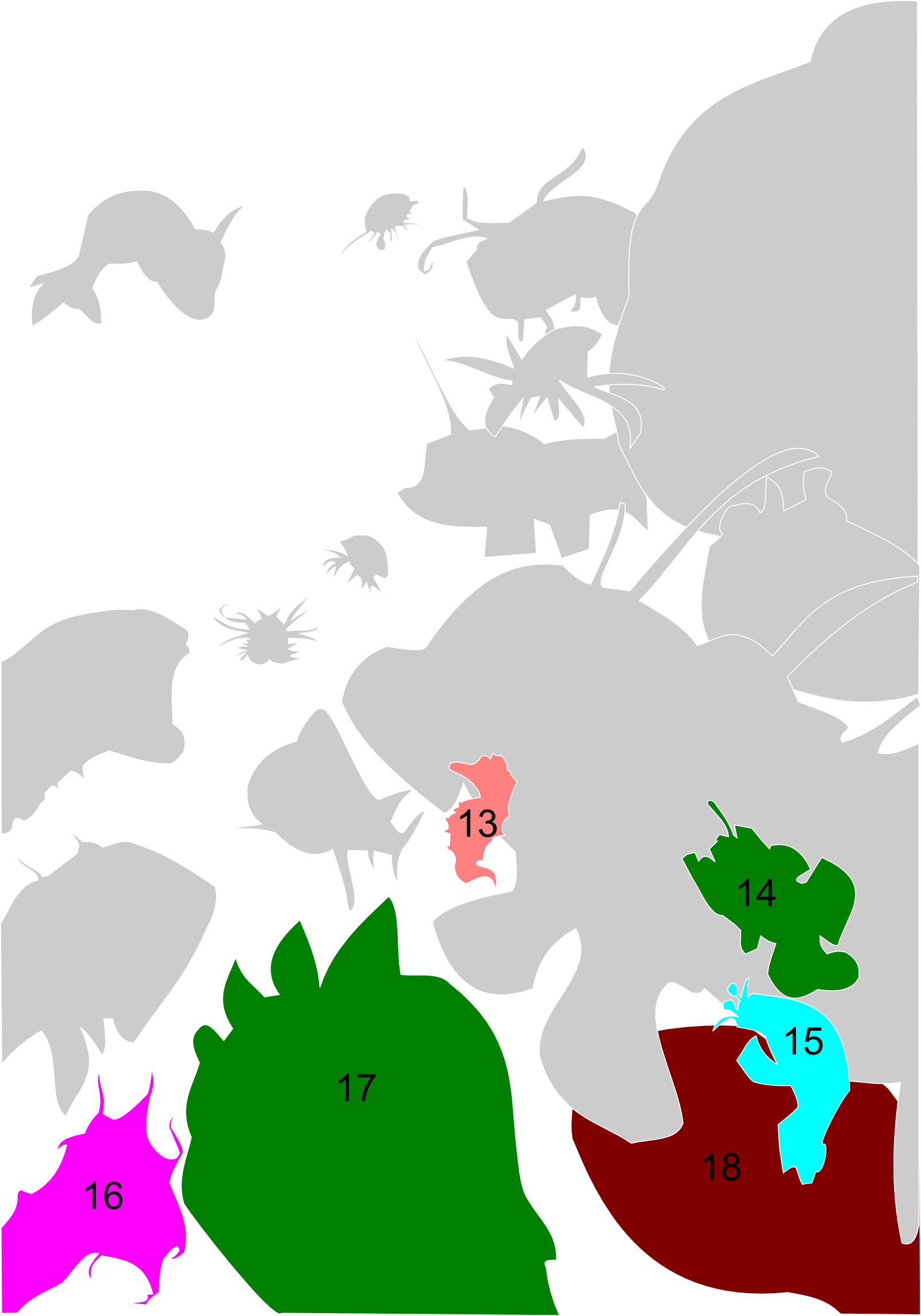
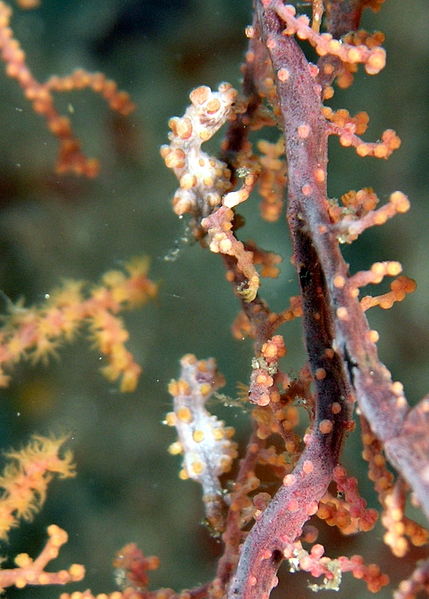
13. Pygmy Seahorse (Hippocampus bargibanti)

429px-Hippocampus_bargibanti3
Pygmy Seahorse. Photo by Jens Petersen.

seahorseI started my career in marine science working with seahorses, so these goofy, thoroughly un-fish-like fish, hold a special place in my heart. All seahorses are pretty weird, but pygmy seahorses might be the weirdest. These tiny animals, barely 2 centimeters long, live exclusively on gorgonian corals, their lump profile allows them to blend perfectly into the backdrop. Their bulbous protrusions will assume the color of their host coral.

Read More “The penultimate installment of the incredible biodiversity of Aquaman’s variant cover” »

A style guide for journalists who want to write about something covered on Southern Fried Science

Posted on May 8, 2014May 9, 2014 By Andrew Thaler
Blogging

Thank you for your interest in one of our articles. Please feel free to contact any of our authors for further information but do keep in mind that we are all science writers. If your publication is looking for a more than a brief (less than 300 word) interview, please consider contracting one of us to write the piece.

For press queries, please contact southernfriedscientist at gmail with the subject line PRESS QUERY.

A few key points of style.

1. The name of the website is Southern Fried Science. The URL is southernfriedscience.com with no capitals. Our writers are either correspondents, senior correspondents, or editor-in-chief. You can find out who is what on our author page. If unsure, please refer to them as either authors or scientists.

Read More “A style guide for journalists who want to write about something covered on Southern Fried Science” »

The incredible biodiversity of Aquaman’s variant cover: Part four of a six part trilogy.

Posted on May 8, 2014May 8, 2014 By Andrew Thaler
Popular Culture, Science

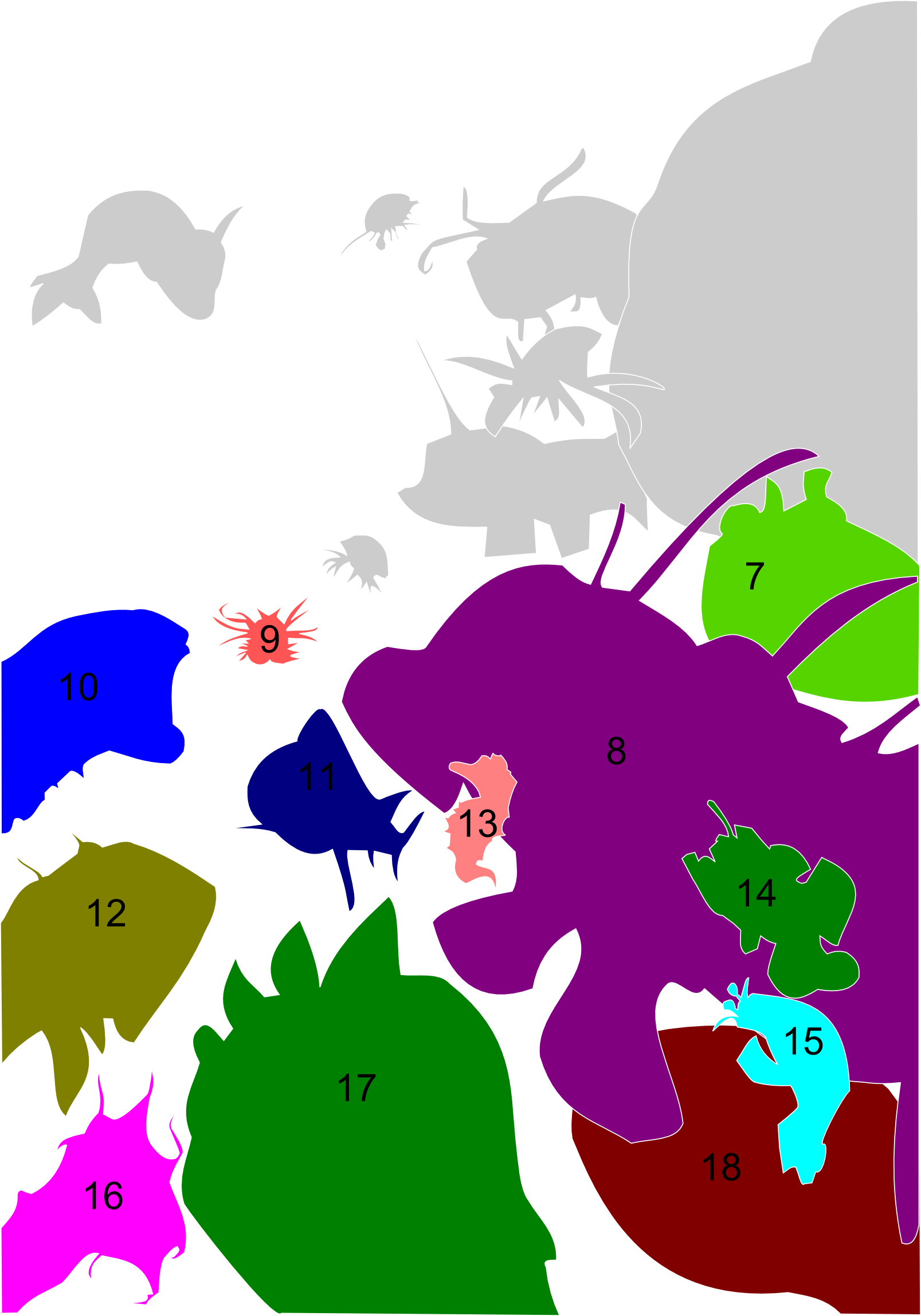
aquapurged4Welcome to day four of our delightful tour through the weird, wonderful creatures on Michael Allred’s incredible Aquaman cover. It’s all fish today!

Since we’re at the halfway point, now seems like a good time to reflect on why this cover matters so much. I’ve been a fan of Aquaman for a long time, and for all the amazing visuals in the latest iteration of our Atlantean hero, the deep sea remains noticeably underrepresented. Comic books mirror life and it is rare to see deep-sea creatures feature in art, let alone popular art. To have so many deep-sea organisms featured prominently on a piece of genre-crossing pop art is a rare and welcome opportunity to share my love for fangtooths, vampire squid, vent worms, monkfish, fringeheads, and isopods with a new and diverse audience.

Downward with the bestiary of barotollerant glory!

Read More “The incredible biodiversity of Aquaman’s variant cover: Part four of a six part trilogy.” »

The incredible biodiversity of Aquaman’s variant cover: Halfway Home

Posted on May 7, 2014May 8, 2014 By Andrew Thaler
Popular Culture, Science

aquapurged3It’s day three of our epic journey through the wonderful deep-sea creatures featured on this variant cover for Aquaman #31. Have you taken a shot at naming all 18 species, yet? We identified species 1, 2, and 3 on Monday and 4, 5, and 6 on Tuesday.

Today we continue with 7, 8, and 9, one of which is is a major fishery.

Read More “The incredible biodiversity of Aquaman’s variant cover: Halfway Home” »

Posts pagination

Previous 1 … 107 108 109 … 273 Next

Popular Posts

Screaming into the void - Why your scientific paper doesn’t matterScreaming into the void - Why your scientific paper doesn’t matterJune 18, 2026Chris Parsons
What Ocean Ramsey does is not shark science or conservation: some brief thoughts on "the Shark Whisperer" documentaryWhat Ocean Ramsey does is not shark science or conservation: some brief thoughts on "the Shark Whisperer" documentaryJuly 2, 2025David Shiffman
Ageism in the conservation job marketAgeism in the conservation job marketJune 19, 2026Chris Parsons
The next OpenCTD is here!The next OpenCTD is here!June 22, 2026Andrew Thaler
Undermining the Law of the Sea. Some additional thoughts following my OpEd in the Hill.Undermining the Law of the Sea. Some additional thoughts following my OpEd in the Hill.June 22, 2026Andrew Thaler
The story of the pride flag made from NASA imagery: Bluesky's most-liked imageThe story of the pride flag made from NASA imagery: Bluesky's most-liked imageSeptember 27, 2024David Shiffman
What is a Sand Shark?What is a Sand Shark?November 12, 2017Chuck Bangley
That's not a blobfish: Deep Sea Social Media is Flooded by AI SlopThat's not a blobfish: Deep Sea Social Media is Flooded by AI SlopDecember 19, 2025Andrew Thaler
Our favorite sea monsters – Ningen (#4)Our favorite sea monsters – Ningen (#4)September 7, 2010Andrew Thaler
I can serve on your graduate thesis committee. Here’s what you can expect of me, and what I expect in return.I can serve on your graduate thesis committee. Here’s what you can expect of me, and what I expect in return.October 16, 2025David Shiffman

squishy

Subscribe to our RSS Feed for updates whenever new articles are published.

We recommend Feedly for RSS management. It's like Google Reader, except it still exists.

Southern Fried Science

  • Home
  • About SFS
  • Authors
  • Support SFS


If you enjoy Southern Fried Science, consider contributing to our Patreon campaign.

Copyright © 2026 Southern Fried Science.

Theme: Oceanly Premium by ScriptsTown