

Skip to content

Southern Fried Science

Over 15 years of ocean science and conservation online

  • Home
  • About SFS
  • Authors
  • Support SFS

Recent Posts

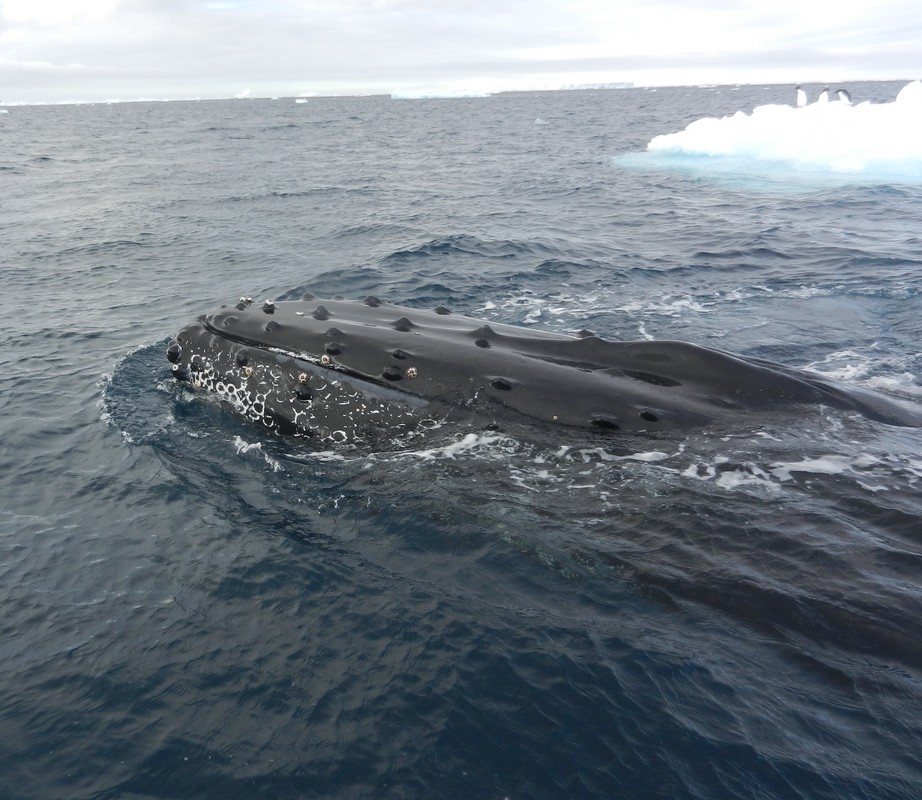
humpback whale in Antarctica
The evolution of the International Whaling Commission – from  whaling quotas to whale conservation
June 10, 2026
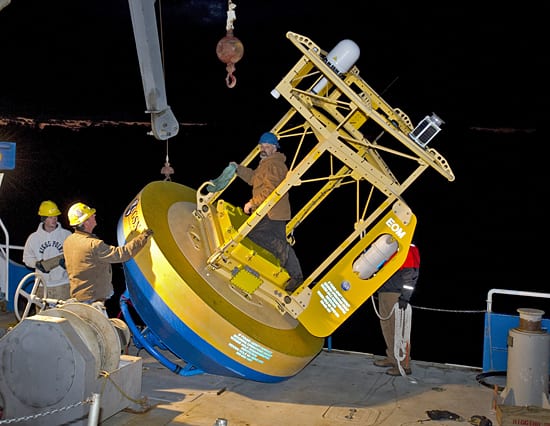
Isn’t ironic, don’t you think: dismantling the Ocean Observatories Initiative on World Oceans Day
June 9, 2026
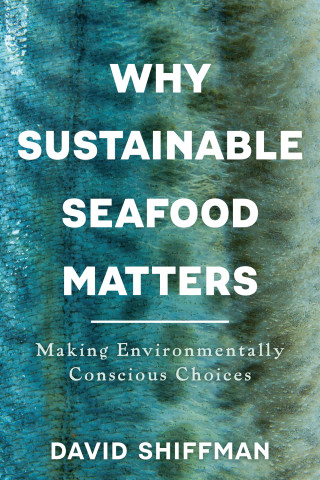
“Why Sustainable Seafood Matters” is now available for preorder! Here’s what it’s about, and why I decided to write it.
June 8, 2026
Here’s how to join my IMCC8 symposium, “Ocean Science Communication: What’s New and What’s Next?”
April 22, 2026
Deep Sea Mining Symposium Announcement
April 21, 2026
Join Me at Upwell: A Wave of Ocean Justice — Our Fourth Year!
March 24, 2026

ScienceOnline Oceans update: Registration information and costs

Posted on April 23, 2013October 27, 2013 By David Shiffman

davesquare

sciooceansI have exciting news about ScienceOnline Oceans to share! General registration will start in a little over two weeks. As this is a little different from traditional scientific conferences, I’d like to explain the process in some detail.

Registration 

Registration will take place in four stages.

1) Session moderators and workshop leaders. If your proposal for a session or workshop at ScienceOnline Oceans has been accepted (more information on that soon), a spot is automatically reserved for you, and registration will be a separate process. Please DO NOT register through the regular process.

2) Open registration. Open registration will take place on Wednesday, May 8th. To accommodate people in different time zones, there will be two registration times: 9:00 a.m. EST and 2:00 P.M. EST. There are 50 available spots during each timeslot, and they are first come, first served. In the past, ScienceOnline open registration spots have filled up in as little as 5 minutes, so please be sure to be prompt!

3) Lottery. The remaining spots will be filled by lottery. If you do not get a spot during open registration, sign up for the lottery and we’ll get back to you soon to let you know if you got a spot! Please note that the lottery is for the opportunity to register, not for a free spot.

4) Waitlist. There is also a waitlist for those who don’t get a spot during open registration or the lottery. As additional spots become available due to cancellations, people will be accepted off the waitlist.

Costs

Read More “ScienceOnline Oceans update: Registration information and costs” »

The Incredible Shrinking Cups: Geology is pretty cool, too

Posted on April 22, 2013April 4, 2013 By Andrew Thaler
Science

There’s some seriously cool geology down at the world’s deepest known hydrothermal vents. What’s this all about?

The Incredible Shrinking Cups: Into the Cayman Abyss

Posted on April 18, 2013April 4, 2013 By Andrew Thaler
Science

We’re going into the Cayman Abyss! What’s this all about?

Five more marine organisms that put their superhero counterparts to shame

Posted on April 17, 2013January 27, 2015 By Andrew Thaler
Popular Culture, Science

Evolution is the most creative force on the planet. Everywhere we look, we find species with novel and phenomenal adaptations that put their comic book brethren to shame. In no ecosystem is this more apparent than in the vast and unfathomable ocean. Marine species, especially those in the deep sea, have evolved to survive in a environment that is completely alien to us. Several months ago, I unveiled “Five organisms with real super powers that rival their comic book counterparts“, but that was just the beginning. Without further adieu, I give you 5 more marine organisms that put their superhero counterparts to shame (and one bonus critter).

The blind shrimp with super senses

Rimicaris exoculata – http://eol.org/data_objects/13231836

In the deep sea, eyes are not among the most useful sense organs. While many deep-sea species have extremely reduced eyes, some have abandoned these organs entirely. Rimicaris exoculata is a shrimp endemic to deep-sea hydrothermal vents in the mid-Atlantic that is completely eyeless. Its carapace is smooth, without even a hint of reduced, vestigial eyes. This, unfortunately, is a problem because Rimicaris exoculata is a farmer. The blind shrimp grows bacteria in its gill chamber, bacteria that can convert the chemical-rich hydrothermal vent fluid into food for the shrimp.

For lack of a more descriptive adjective, hydrothermal vents are hot. Some can exceed 400°C. Rimicaris exoculata needs to get close to this hot vent fluid to feed its crop of bacteria, but not so close as to become a hydrothermal hors d’oeuvre. And so, the blind shrimp evolved a completely new light-sensitive organ mounted on the top of its carapace–the rhodopsin-rich dorsal eyespot.

The dorsal eyespot of Rimicaris exoculata doesn’t “see” in the normal sense, there is still almost no light in the deep sea. Rather, this shrimp is adapted to detect the black body radiation emitted by the hydrothermal vent. For Rimicaris exoculata, the deep sea glows with the light of super-heated hydrothermal fluid, allowing it to both find food for its bacterial crop and avoid getting cooked itself.

It should be no surprise that Rimicaris exoculata is undoubtedly the favorite deep sea organism of another blind champion with super senses–Daredevil.

Read More “Five more marine organisms that put their superhero counterparts to shame” »

The Incredible Shrinking Cups: Just checking out some vents.

Posted on April 16, 2013April 4, 2013 By Andrew Thaler
Science

Isis checking out the Beebe Vent Field. Or Piccard, if you drive on the right side of the road. Whats this all about?

Sea Leveler Update: one week of #sealevelrise

Posted on April 13, 2013October 28, 2013 By Andrew Thaler

Now that most of the bugs are out of the system, here is what a one week readout looks like on the Sea Leveler. A few observations: The Sea Leveler is driven by twitter’s own search API, which is not perfect. The rapid dramatic drops are due to twitter updating its search parameters to exclude … Read More “Sea Leveler Update: one week of #sealevelrise” »

Arduino Project Log: Building the Sea Leveler Part 1 – Hardware

Posted on April 13, 2013April 13, 2013 By Andrew Thaler
The Open CTD Project

headshot-thalerSMALL

The Sea Leveler.
The Sea Leveler.

Two weeks ago, I announced my latest Hacking the Ocean project, an open-source, Arduino-powered water level meter that monitors the frequency of tweets containing the hashtag #sealevelrise. Since launch, the Sea Leveler has had some bugs and received some good press.  Now that I’ve had some time to monitor its performance and work the bugs out of its code, it is finally time for the promised “how to build the Sea Leveler” post.

This project was much more involved than my Arduino build and significantly more rewarding. The Sea Leveler was a challenge on multiple fronts, from learning to make the Arduino talk to twitter to physically modifying the water level meter. As I noted in my first project log, I have very little programming experience, and the major goal of this build was to level up my C++ skills. I’m very happy with the results, both technical and aesthetic.

For simplicity, I’m going to break this into two posts, one for hardware and one for software.

Read More “Arduino Project Log: Building the Sea Leveler Part 1 – Hardware” »

Conservation Conversations: Sustainable Seafood

Posted on April 12, 2013 By David Shiffman
Conservation, Science

davesquare

I’d like to introduce you to a new series I’ve been working on called “Conservation Conversations”.  Each discussion, which will take place first on twitter, will focus on a particular marine conservation issue. I will then Storify and share selected responses here on the blog, allowing the conversation to continue.

The first conservation conversation focused on sustainable seafood. A new paper showed that many fisheries scientists and conservationists believe that the Marine Stewardship Council’s “sustainable seafood” certification process is too lenient, a topic I’ve written about before. I wanted to know how my twitter followers decide what seafood is sustainable. I also asked whether they choose to avoid seafood entirely or focus on sustainable seafood.

Read More “Conservation Conversations: Sustainable Seafood” »

The Incredible Shrinking Cups: Surprise Shark!

Posted on April 12, 2013April 4, 2013 By Andrew Thaler
Science

We actually watched an Oceanic White-tip take several lunges at the ROV Isis on her way down. Sadly, she was only visible on the umbilical camera (a low-res upward facing camera we use to watch the status of the ROV’s tether), which we don’t record. What’s all this about?

Surviving Grad School: Credit Cards, Reimbursement, and International Travel

Posted on April 11, 2013April 11, 2013 By Andrew Thaler
Science

headshot-thalerSMALLReimbursements and International Travel

Graduate school comes with several financial challenges that require planning and careful attention to details. Chief among these challenges are the two big wallet busters: university reimbursements and international travel. Often these two combine to form a deadly, money sucking hydra. You will inevitably need to pay for something – airline tickets, hotels, fuel, equipment, contractors – out of your personal funds, and then file for reimbursement with your university. Depending on how efficient your finance office is, it could take anywhere from four days to several months for your reimbursement to be issued. If you paid with a credit card, during this time you’re paying interest on those charges.

International travel adds another layer to the mix.  Most credit card companies will charge a foreign transaction fee (often 3%), there’s a high degree of variability regarding which networks are accepted where, and many nations have adopted EMV chips (a feature few US cards have) for added security. Whether it’s for a field season or a major scientific conference, you will probably have to make at least one big international trip. If you haven’t planned ahead, you may find yourself stuck with little or no functional currency, and end up leaning heavily on cash advances, travelers checks, or other high fee alternatives.

You should use a credit card to pay for reimbursable expenses, especially travel, if for no other reason than you need money in your bank account for things like food and shelter. If you’ve read my previous post–Credit, why it matters, how to build it, and how to use it–then this should seem familiar. I’m talking about your tank, with some particular caveats for international travel. If you’ve planned ahead and paid attention to the details, you can carry an extra balance for several months without incurring any additional fees.

Read More “Surviving Grad School: Credit Cards, Reimbursement, and International Travel” »

Posts pagination

Previous 1 … 129 130 131 … 273 Next

Popular Posts

That's not a blobfish: Deep Sea Social Media is Flooded by AI SlopThat's not a blobfish: Deep Sea Social Media is Flooded by AI SlopDecember 19, 2025Andrew Thaler
What Ocean Ramsey does is not shark science or conservation: some brief thoughts on "the Shark Whisperer" documentaryWhat Ocean Ramsey does is not shark science or conservation: some brief thoughts on "the Shark Whisperer" documentaryJuly 2, 2025David Shiffman
Screaming into the void - Why your scientific paper doesn’t matterScreaming into the void - Why your scientific paper doesn’t matterJune 18, 2026Chris Parsons
The story of the pride flag made from NASA imagery: Bluesky's most-liked imageThe story of the pride flag made from NASA imagery: Bluesky's most-liked imageSeptember 27, 2024David Shiffman
I can serve on your graduate thesis committee. Here’s what you can expect of me, and what I expect in return.I can serve on your graduate thesis committee. Here’s what you can expect of me, and what I expect in return.October 16, 2025David Shiffman
Ageism in the conservation job marketAgeism in the conservation job marketJune 19, 2026Chris Parsons
Shark of Darkness: Wrath of Submarine is a fake documentaryShark of Darkness: Wrath of Submarine is a fake documentaryAugust 10, 2014Michelle Jewell
What is a Sand Shark?What is a Sand Shark?November 12, 2017Chuck Bangley
Fun facts and FAQs about Megalodon, Maryland's new (and definitely extinct) official state sharkFun facts and FAQs about Megalodon, Maryland's new (and definitely extinct) official state sharkApril 15, 2026David Shiffman
Our favorite sea monsters – Ningen (#4)Our favorite sea monsters – Ningen (#4)September 7, 2010Andrew Thaler

squishy

Subscribe to our RSS Feed for updates whenever new articles are published.

We recommend Feedly for RSS management. It's like Google Reader, except it still exists.

Southern Fried Science

  • Home
  • About SFS
  • Authors
  • Support SFS


If you enjoy Southern Fried Science, consider contributing to our Patreon campaign.

Copyright © 2026 Southern Fried Science.

Theme: Oceanly Premium by ScriptsTown