
Skip to content

Southern Fried Science

Over 15 years of ocean science and conservation online

  • Home
  • About SFS
  • Authors
  • Support SFS

Recent Posts

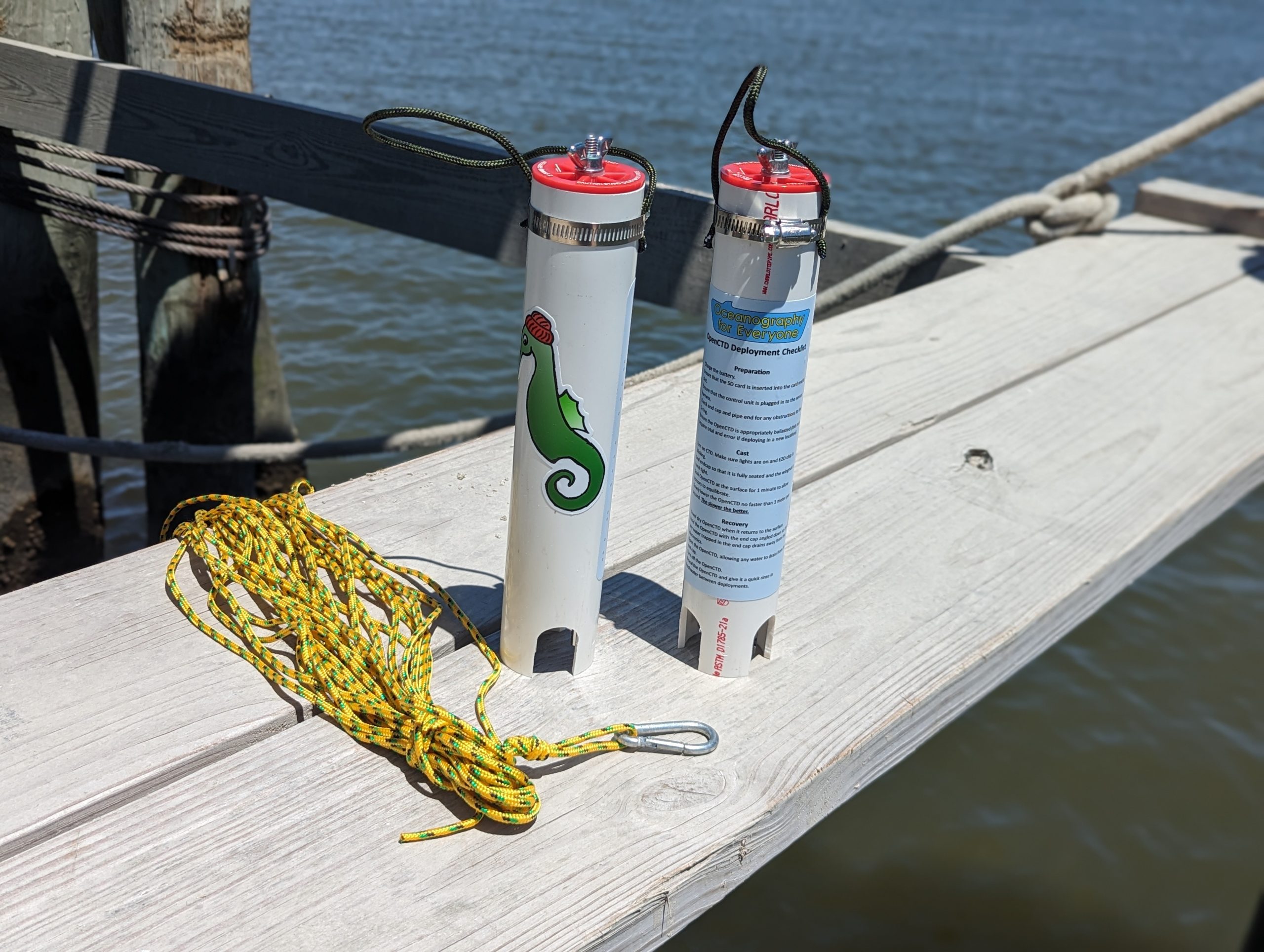
The next OpenCTD is here!
June 22, 2026
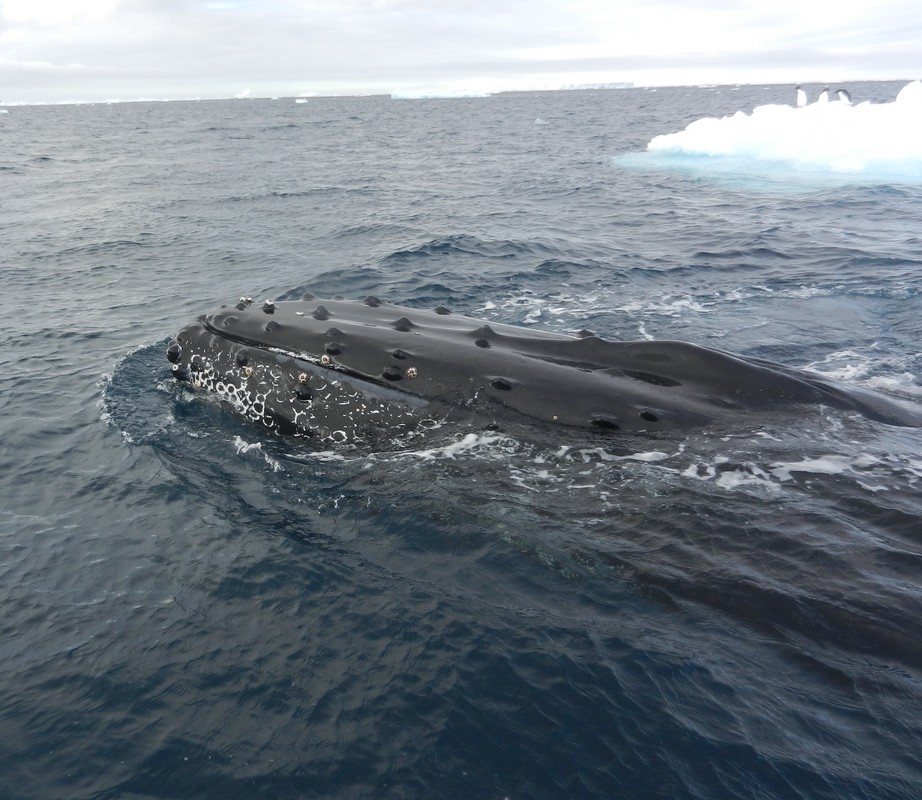
humpback whale in Antarctica
The evolution of the International Whaling Commission – from  whaling quotas to whale conservation
June 10, 2026
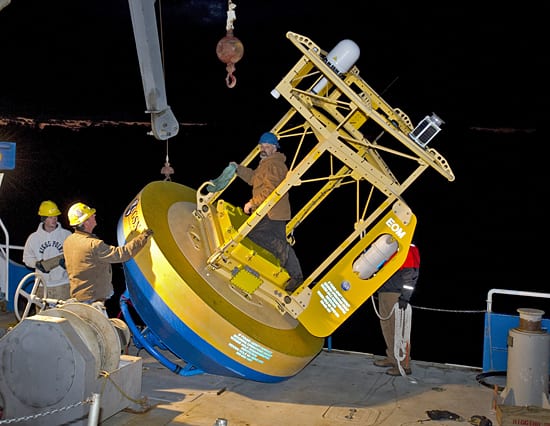
Isn’t ironic, don’t you think: dismantling the Ocean Observatories Initiative on World Oceans Day
June 9, 2026
“Why Sustainable Seafood Matters” is now available for preorder! Here’s what it’s about, and why I decided to write it.
June 8, 2026
Here’s how to join my IMCC8 symposium, “Ocean Science Communication: What’s New and What’s Next?”
April 22, 2026
Deep Sea Mining Symposium Announcement
April 21, 2026

A couple of tips when requesting papers

Posted on February 2, 2011February 3, 2011 By Andrew Thaler 2 Comments on A couple of tips when requesting papers
Science

As search algorithms are getting better and better, some scientific papers are getting more difficult to access. Journal subscriptions are expensive and many institutions are foregoing all but the highest impact journals. For those working outside of academia, only open access journals are a viable option. I’m fortunate that my university subscribes to most scientific journals, which means that many of my colleagues will drop me an e-mail, tweet, or phone call along the lines of “Hey, I don’t have access to this article. Can you send me a copy?”

The answer is, without hesitation, always yes. Science can only progress when we have access to the literature. At this point, I’m fielding 4 or 5 paper requests per week, and I imagine many other scientists are doing the same. Most of the time the requests are simple and straight forward. Sometimes they’re so cryptic that it takes another round of e-mails before I even know it’s a paper request. I thought it would be helpful to compile a short list of advice for how to make it all just a little easier.
Read More “A couple of tips when requesting papers” »

Biodiversity Wednesday: Great Smoky Salamanders

Posted on February 2, 2011February 1, 2011 By Bluegrass Blue Crab 2 Comments on Biodiversity Wednesday: Great Smoky Salamanders
Uncategorized

herpetology.us

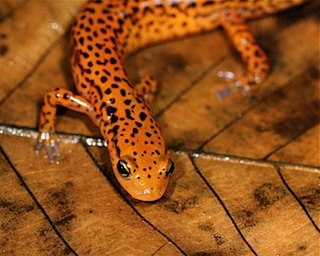
The Great Smoky Mountains are one of those places of wonder right in our own backyard. Not only have the coal and timber communities cultivated the banjo, bluegrass, and moonshine, but they are one of the most unique habitats in the world due to their forest canopy chemistry. As one of the oldest mountains chains on earth, their caps are often rounded and covered in trees, providing sheltered habitat at a variety of altitudes for critters great and small. In fact, it’s the small ones that actually deserve the most notoriety – the mountain chain boasts the highest diversity of amphibians in the world and herpetologists travel long distances to find the many salamanders hiding under the Smokies’ logs and leaf litter. This kind of refuge is increasingly important in the struggle to keep amphibians alive.

Read More “Biodiversity Wednesday: Great Smoky Salamanders” »

State of the Field: Policy is not just for policymakers anymore

Posted on February 1, 2011 By Bluegrass Blue Crab 1 Comment on State of the Field: Policy is not just for policymakers anymore
Uncategorized

Even the Governator believes in public participation, thanks cdcr.ca.gov

Continuing this series’ recent theme of ways to make policy work, let’s consider a broader view of what policy is and therefore who gets to create policy. It’s not just the elected officials with legislation in their job description. For one, those people are accountable to the people who elected them. Second, formal written policy is not the only kind that is effective – informal rules, community traditions, and other forms of policy are often best. Plus, these types of policy offer the general public a change to be involved in creation and implementation.

There is a large literature on the value of participation in policymaking, especially in fisheries (Silver and Campbell 2005). Here I will focus on three particularly important aspects of participation to management at the scale of an estuary, where I work: a) additional knowledge creation, b) community buy-in, and c) tighter feedback loops. These are important for relatively large-scale systems with several communities and many variables that could affect management.

Read More “State of the Field: Policy is not just for policymakers anymore” »

Ethical Debate: Clean Energy and the State of the Union

Posted on February 1, 2011January 30, 2011 By David Shiffman 7 Comments on Ethical Debate: Clean Energy and the State of the Union
Uncategorized

I’ve been critical of President Obama’s policies concerning science, technology and education in the past. I think he uses a lot of great-sounding rhetoric, but I have yet to see very much in the way of actual results. Despite lofty promises about climate change, we remain without a cap-and-trade system or any sort of meaningful response plan. To make things worse, the administration recently fired their primary adviser for climate change policy. Is all hope lost? Perhaps not.

Read More “Ethical Debate: Clean Energy and the State of the Union” »

Shark Science Monday: Aurelie Godin discusses shark management in Canada

Posted on January 31, 2011January 30, 2011 By David Shiffman 2 Comments on Shark Science Monday: Aurelie Godin discusses shark management in Canada
Conservation

In this week’s edition of Shark Science Monday, Aurelie Godin discusses Canada’s shark management policies. If you have a question for Aurelie, please leave it as a comment below and I’ll make sure that she gets it.

Great Diagrams of Science: It’s a bird! It’s a plane! It’s… a really bad drawing of a bird.

Posted on January 28, 2011January 28, 2011 By David Shiffman 2 Comments on Great Diagrams of Science: It’s a bird! It’s a plane! It’s… a really bad drawing of a bird.
Uncategorized

The latest edition of my Great Diagrams of Science series comes from a field near and dear to my heart- using stable isotope analysis to map a food web. Japanese scientists Wada, Mizutani, and Minagawa got the opportunity to study the feeding ecology of penguins in Antarctica, and were some of the first researchers to use stable isotopes for food web analysis. To travel so far and use what was at the time (1991) state-of-the-art technology, they must have received an impressively large grant. Their results played a part in revolutionizing how scientists study food web interactions, so the grant money was well spent in that regard.

However, it seems that none of it was spent on graphic design:

Read More “Great Diagrams of Science: It’s a bird! It’s a plane! It’s… a really bad drawing of a bird.” »

One more week to take the Reader Survey!

Posted on January 28, 2011 By Andrew Thaler
Uncategorized

Thank you to everyone who has responded to our survey. There’s still a chance to win some free books or great big piles of swag! To sweeten the deal, we’re going to add one more prize to the list. One lucky winner, randomly drawn from or pile of surveys, will win an autographed copy of … Read More “One more week to take the Reader Survey!” »

Weekly Dose of TED – Ed Burtynsky photographs the landscape of oil

Posted on January 28, 2011January 17, 2011 By Bluegrass Blue Crab
Uncategorized

Ed Burtynsky, perhaps most famous for his movie Manufactured Landscapes, takes a moment to show what he sees as “symbols of how we use the land”. Do you agree that oil is the dominant landscape feature nowadays? Is the use of photography and other art media helpful in gaining new perspective for exactly how humans … Read More “Weekly Dose of TED – Ed Burtynsky photographs the landscape of oil” »

Send testimony to help protect Guam’s sharks!

Posted on January 26, 2011January 26, 2011 By David Shiffman 14 Comments on Send testimony to help protect Guam’s sharks!
Conservation, Science

The sharks of Guam need your help! Bill number 44-31, which would make selling or possessing shark fins illegal in Guam, was just introduced by members of the Senate. The Natural Resources Committee will hold a hearing on the bill next Tuesday night Guam time, which is Monday night our time.

This bill is expected to face strong opposition from the fishing industry, which has a powerful voice.  However, you can help! You send a letter in support of this policy to Shark Defenders, and they will make sure that it gets into the right hands.  Many of the letters will be read out loud as testimony, and receiving a large number of letters in support of the law will be a big help!

Please send these letters to Info AT SharkDefenders DOT com by Monday afternoon U.S. East Coast time (sooner would be better).

Read More “Send testimony to help protect Guam’s sharks!” »

Biodiversity Wednesday: The Sea of Cortes

Posted on January 26, 2011January 25, 2011 By Andrew Thaler 2 Comments on Biodiversity Wednesday: The Sea of Cortes
Uncategorized

The Sea of Cortes (commonly referred to as the Gulf of California) lies between the Baja Peninsula and mainland Mexico. Glorified in Steinbeck’s narrative The Log from the Sea of Cortes, detailing his adventures with Ed Ricketts during a six-week collecting trip, the region is rich in both history and biodiversity. The sea is formed by the separation of the Pacific and North American tectonic plates. The East Pacific Rise runs through the Sea of Cortes and continues north to become the San Andreas Fault. The Colorado River empties into the sea at the Colorado River Delta.

Read More “Biodiversity Wednesday: The Sea of Cortes” »

Posts pagination

Previous 1 … 181 182 183 … 273 Next

Popular Posts

The next OpenCTD is here!The next OpenCTD is here!June 22, 2026Andrew Thaler
What Ocean Ramsey does is not shark science or conservation: some brief thoughts on "the Shark Whisperer" documentaryWhat Ocean Ramsey does is not shark science or conservation: some brief thoughts on "the Shark Whisperer" documentaryJuly 2, 2025David Shiffman
Undermining the Law of the Sea. Some additional thoughts following my OpEd in the Hill.Undermining the Law of the Sea. Some additional thoughts following my OpEd in the Hill.June 22, 2026Andrew Thaler
What is a Sand Shark?What is a Sand Shark?November 12, 2017Chuck Bangley
The story of the pride flag made from NASA imagery: Bluesky's most-liked imageThe story of the pride flag made from NASA imagery: Bluesky's most-liked imageSeptember 27, 2024David Shiffman
Tagging Bull Sharks in the Neuse RiverTagging Bull Sharks in the Neuse RiverAugust 4, 2011Guest Writer
That's not a blobfish: Deep Sea Social Media is Flooded by AI SlopThat's not a blobfish: Deep Sea Social Media is Flooded by AI SlopDecember 19, 2025Andrew Thaler
Our favorite sea monsters – Ningen (#4)Our favorite sea monsters – Ningen (#4)September 7, 2010Andrew Thaler
Rice’s whale and the curious case of the disappearing species.Rice’s whale and the curious case of the disappearing species.June 25, 2026Southern Fried Science
Shark of Darkness: Wrath of Submarine is a fake documentaryShark of Darkness: Wrath of Submarine is a fake documentaryAugust 10, 2014Michelle Jewell

squishy

Subscribe to our RSS Feed for updates whenever new articles are published.

We recommend Feedly for RSS management. It's like Google Reader, except it still exists.

Southern Fried Science

  • Home
  • About SFS
  • Authors
  • Support SFS


If you enjoy Southern Fried Science, consider contributing to our Patreon campaign.

Copyright © 2026 Southern Fried Science.

Theme: Oceanly Premium by ScriptsTown