


Skip to content

Southern Fried Science

Over 15 years of ocean science and conservation online

  • Home
  • About SFS
  • Authors
  • Support SFS

Recent Posts

humpback whale in Antarctica
The evolution of the International Whaling Commission – from  whaling quotas to whale conservation
June 10, 2026
Isn’t ironic, don’t you think: dismantling the Ocean Observatories Initiative on World Oceans Day
June 9, 2026
“Why Sustainable Seafood Matters” is now available for preorder! Here’s what it’s about, and why I decided to write it.
June 8, 2026
Here’s how to join my IMCC8 symposium, “Ocean Science Communication: What’s New and What’s Next?”
April 22, 2026
Deep Sea Mining Symposium Announcement
April 21, 2026
Join Me at Upwell: A Wave of Ocean Justice — Our Fourth Year!
March 24, 2026

The best tool for the job is you

Posted on November 4, 2022January 8, 2024 By Andrew Thaler
The best tool for the job is you
Built to Last

I know, I know. I started this series and then totally lost track of it. It needs an update and a fresh coat of finish. Fortunately, a few chats about getting started in woodworking inspired me to put some more work into my ridiculous woodworking manifesto.

This is Part 5 of Built to Last: A Reflection on Environmentally Conscientious Woodworking.

  • Built to Last: A Reflection on Environmentally Conscientious Woodworking
  • Part 1: I turned my woodshop into a personal solar farm.
  • Part 2: Getting a handle on workworking chemicals, or sometimes we all need to vent.
  • Part 3: Furniture as Revolution.
  • Part 4: The best tool for the job is you
  • A good joint is built to last: archaeologists uncover evidence for the earliest structural use of wood.

I’ve been woodworking my whole life, but this merger of science, conservation, woodworking, and the environment began with what remains one of the most popular articles on Southern Fried Science: How to build a canoe from scratch on a graduate student stipend. That was my return to serious woodworking after almost a decade and one fun way to celebrate passing my prelims.

So what do you actually need to get started woodworking?

You really don’t need nearly as much to get started as the woodworkers of YouTube may lead you to believe. Sure, as you progress you may want a really nice sander, you may find a domino joiner appealing, you might want to drop $1000 on a full set of nice hand planes, or maybe you start investing on milling machines.

But, at the beginning, you need something that cuts and something that connects. My freshman year of college, David Shiffman and I started a ridiculous company that recovered used lofts from dumpsters and dorm rooms at the end of the year, stored them over the summer, and then sold them back at a steep discount to incoming students as a recycled alternative to building a new loft. They had character.

We had exactly two power tools between us. A corded Skil drill that I paid $20 for and didn’t even have variable speed, and a very old corded jigsaw from a brand that doesn’t even exist. A hammer, a cheap handsaw, and the screwdriver that came in my truck’s spare tire kit rounded out our arsenal. We disassembled, rebuilt, and modified thousands of lofts using those tools. It really doesn’t take much.
Read More “The best tool for the job is you” »

A roundup of recent deep-sea mining news

Posted on October 31, 2022October 31, 2022 By Andrew Thaler
Uncategorized
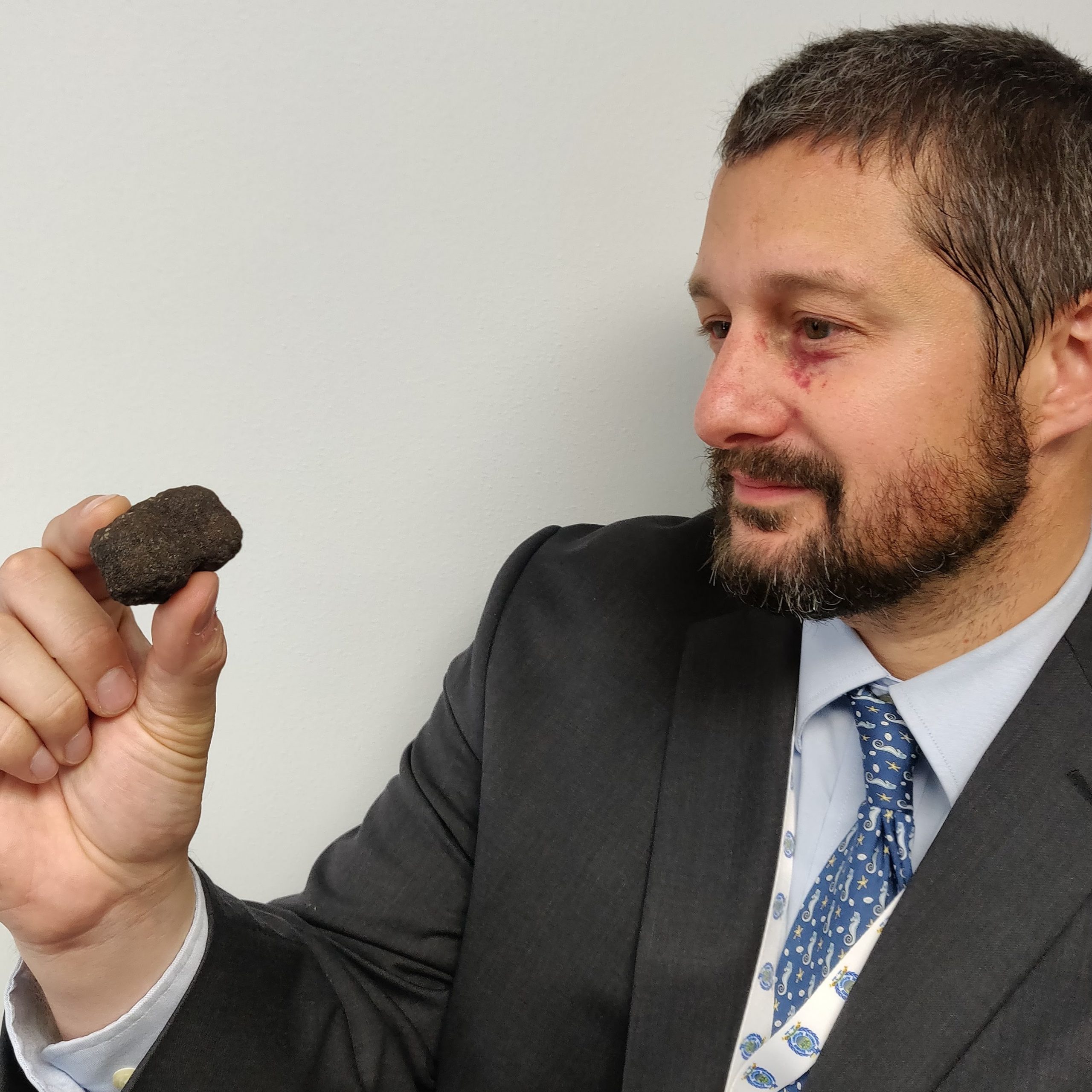
The author, pondering a polymetallic nodule.

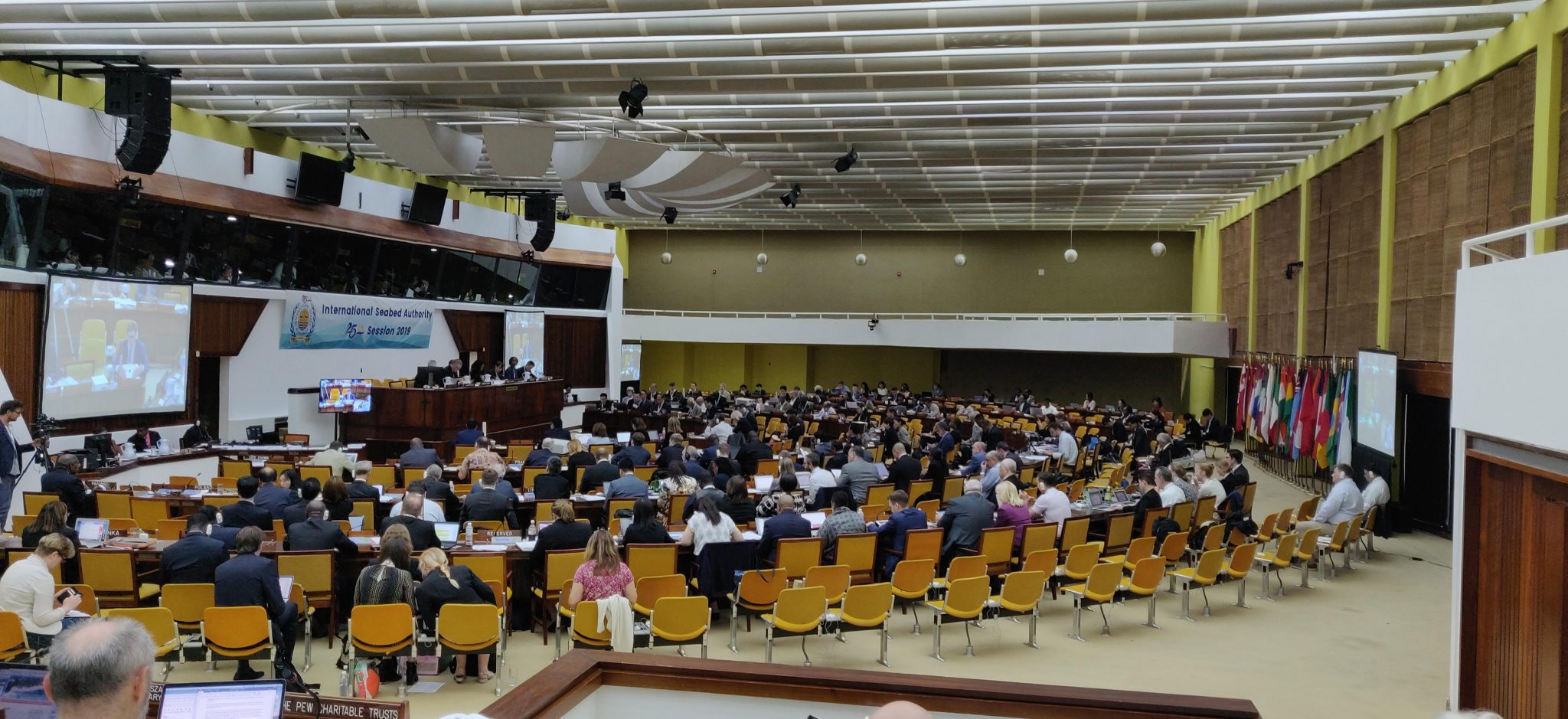
The third part of the 27th session of the International Seabed Authority, a meeting where the rules and regulations about how the deep ocean will be mined, begins today. If process is your jam, you can watch the UN negotiations here: https://isa.org.jm/web-tv

For a very concise overview of where we currently stand, I published the transcript of my recent talk, here: Deep-Sea Mining: A whirlwind tour of the state of the industry and current policy regimes

Some recent press to get you up to speed

  • Landing on the Abyssal Plain
  • New Zealand joins call for ‘conditional’ ban on seabed mining in international waters
  • NZ Opposes Seabed Mining in International Waters
  • Cook Islands Seabed Minerals Authority ‘concerned’ with New Zealand’s call for deep sea mining ban
  • The Case Against Deep-Sea Mining
  • How will China’s submersibles help us explore the ocean depths?

Read More “A roundup of recent deep-sea mining news” »

So Elon Musk bought Twitter…

Posted on October 28, 2022October 28, 2022 By Andrew Thaler
So Elon Musk bought Twitter…
Blogging

For a while it seemed like the deal wasn’t going to go through. After his initial offer, Elon Musk tried everything he could to back out of it, short of sitting for a deposition in the resulting law suit. But, at the end of the day, it went through, and Elon Musk now owns Twitter.

Lots of folks are worried about what a Musk-controlled Twitter will become. His conditional commitment to press freedom depends entirely on how much praise is heaped upon him. His record as an employer is a mess. And now he controls one of the most potent, though slowly waning, outlets for public engagement, and certainly the preferred medium of journalists and politicians.

I’ve taught Social Media for Environmental Communications at Duke University for the last 11 years. Every year there’s been some big social media shakeup, and every year we look at how that shakeup will impact professionals using social media primary as an outreach and engagement tool. This has the potential to big the biggest shift in how folks approach social media that we’ve seen in a long time. But it also could be a whole heap of nothing. It all depends on the whims of a single, inconsistent owner who may not really know what he has or what his vision for it is.

So what will this new Twitter look like? I suspect that we won’t see tectonic shifts in how Twitter operates immediately. It will take months for any of Musk’s vision to trickle into the user experience. I don’t get the impression that there are many people left for whom an ownership change is going to push them to finally get a Twitter account. The platform seems largely out of its growth phase. So there will likely be a slow and steady attrition of users as they get less and less out of using Twitter. They won’t be replaced.

Long-term, I expect to see a hard push towards monetization of an increasingly small active user base. Which, in itself, will make that user base even smaller.

Read More “So Elon Musk bought Twitter…” »

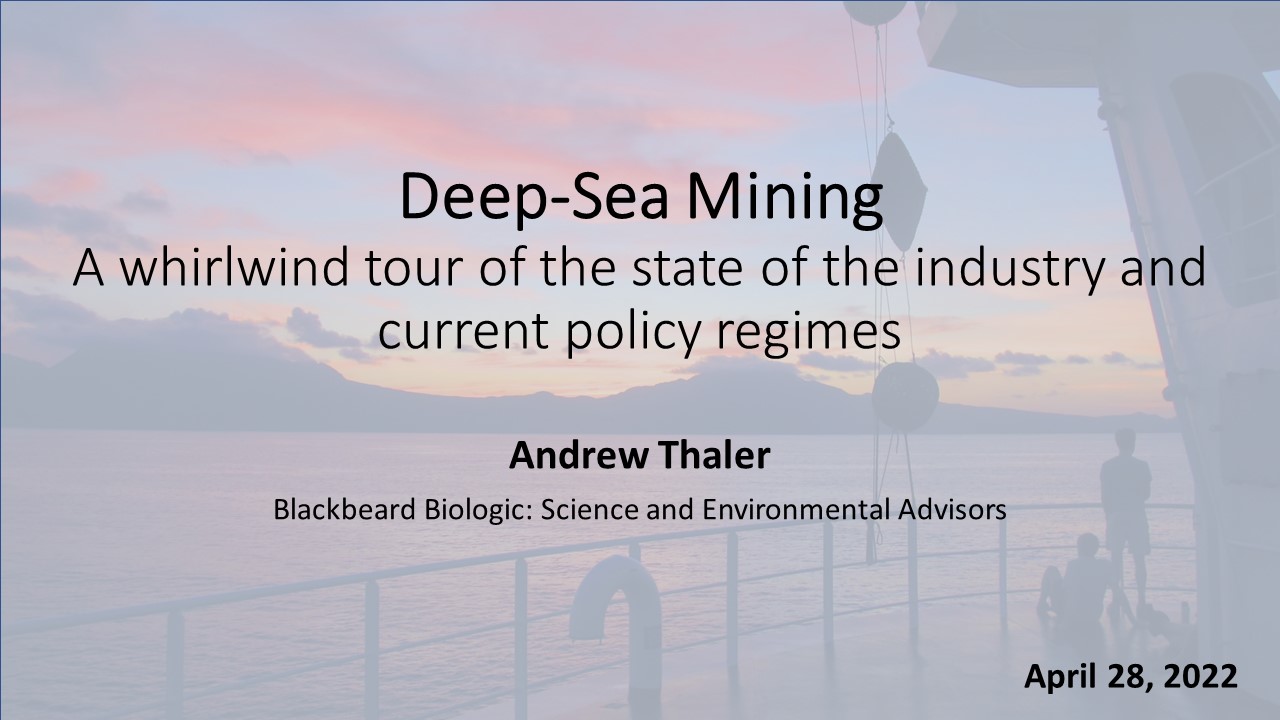
Deep-Sea Mining: A whirlwind tour of the state of the industry and current policy regimes

Posted on September 23, 2022October 4, 2022 By Andrew Thaler
Science

On April 28, 2022, I was invited to give a short talk to a gathering of Environmental NGO representatives to provide an overview and my perspective on the current state of development for deep-sea mining. Below is the transcript of that talk.

Good afternoon and thank you for inviting me. Today I’m going to give you a very brief whirlwind tour of the current state of deep-sea mining and the policy regime around this developing industry.

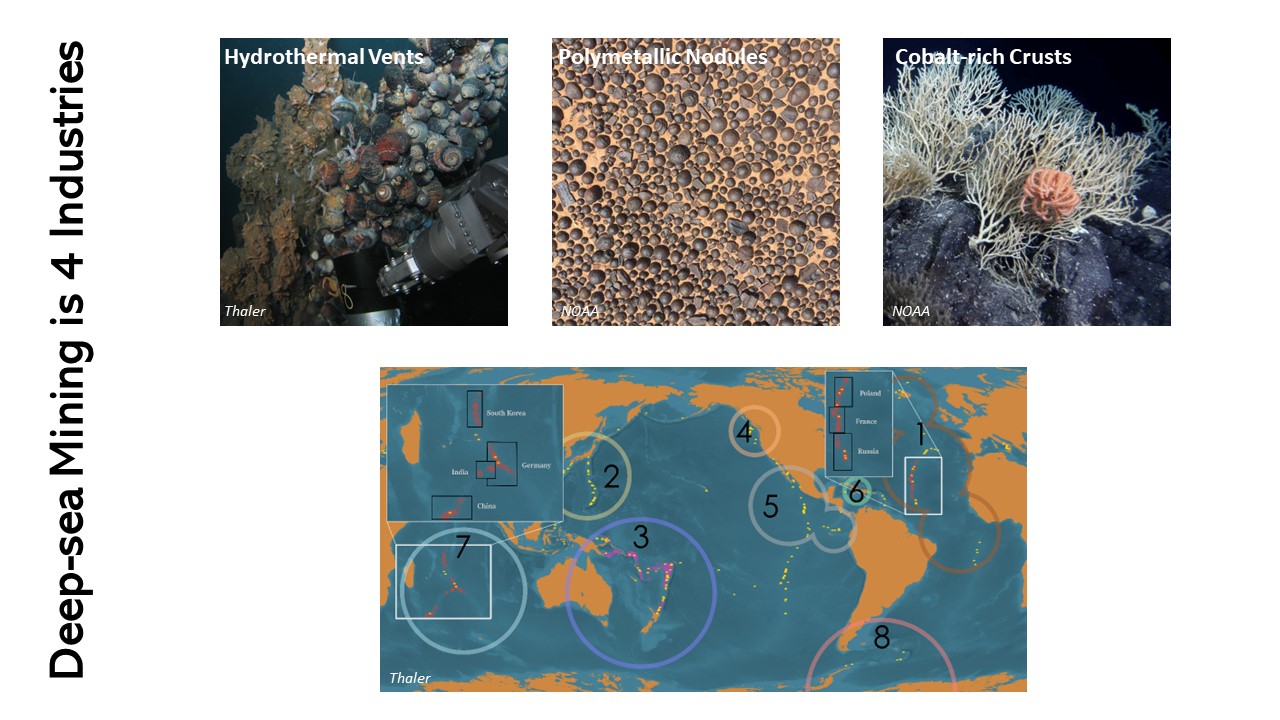
The first thing I need to highlight is that we often talk about deep-sea mining as one cohesive thing, but it’s really four separate and distinct industries, all developing in tandem, with significant differences in the types of metals targeted, the technology necessary to exploit those metals, and the motivations for doing so.

Read More “Deep-Sea Mining: A whirlwind tour of the state of the industry and current policy regimes” »

Community Oceanography with low-cost, open-source CTDs

Posted on September 23, 2022 By Andrew Thaler
Oceanography for Everyone

On September 14, 2022, I gave a talk on community oceanography and the OpenCTD for the AtlantOS Ocean Hour “Democratizing ocean observations through low-cost technologies” workshop. Below is the transcript from that talk.

Good morning and thank you for inviting me.

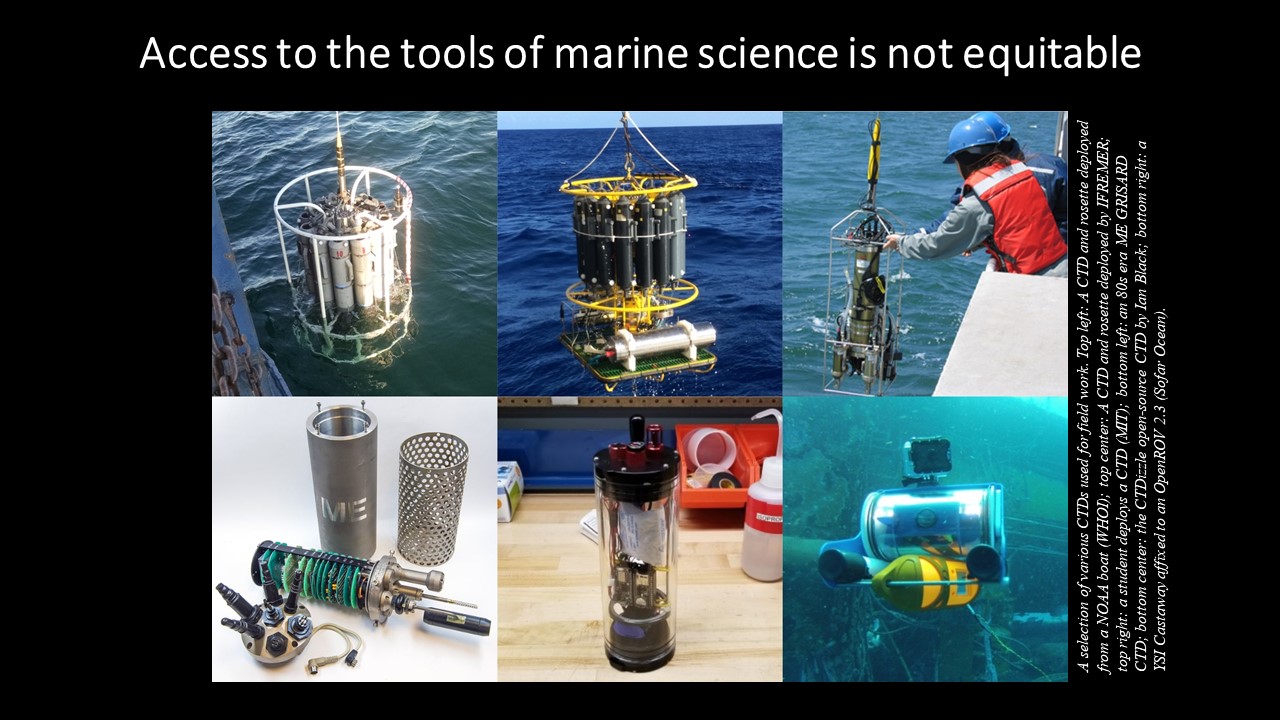
Access to the tools of science is not equitable, and nowhere is this inequality of access more pronounced than in the ocean sciences, where all but a few entities have the capital to mount major oceanographic research campaigns. I come from the world of deep-sea ecology, where budgets can quickly climb into the tens of millions of dollars. But even small-scale coastal research can be stymied by the need for vessels, equipment, and instruments, access to which is often controlled by research institutions.

As the need to understand the dramatic changes happening both at the surface and beneath the waves accelerates, barriers to access that precludes the participation of the full breadth of ocean stakeholders erodes our potential to understand, anticipate, and mitigate those changes.

One of the missions of my post-Academic career has been to make the tools of ocean science more accessible to more people. I believe that the ocean belongs to everyone and that the tools to study the ocean should be available to anyone with the curiosity and motivation to pursue that inquiry.

Chief among those tools is the workhorse of oceanography, the CTD.

Read More “Community Oceanography with low-cost, open-source CTDs” »

Two Years of Deep-sea Mining in Review: For Deep-sea mining, battery technology is the ultimate x-factor

Posted on March 20, 2022March 21, 2022 By Andrew Thaler
Two Years of Deep-sea Mining in Review: For Deep-sea mining, battery technology is the ultimate x-factor
Science

As in-person negotiations on the future of exploitation in the deep ocean resume this week in Kingston Jamaica, we reflect back on the last two years of development as reported on our sister site, the Deep-sea Mining Observer. This article first appeared on August 26, 2021.


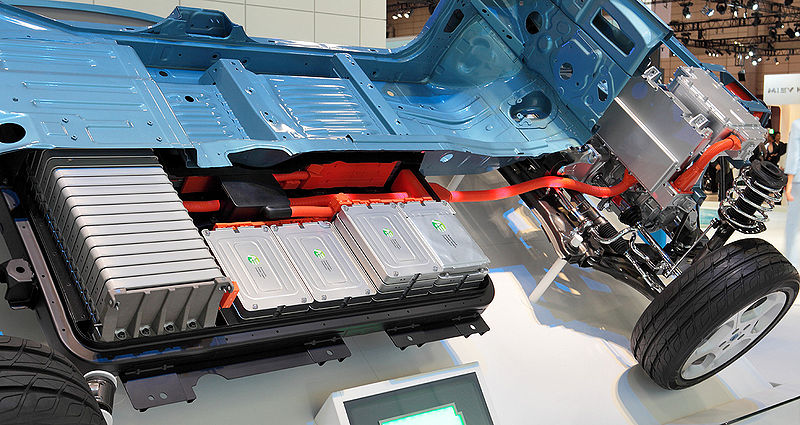
Deep-sea mining is frequently framed as a race to the seafloor. While that is not technically true–deep-sea mining has, in fact, been incredibly slow to develop as an industry, with nearly half a century of technological innovation, diplomatic negotiation, and environmental exploration under its belt without producing a single ounce of commercial ore–the deep-sea mining industry is in a race against the one major technological innovation that could upend the industry’s claim to being a foundational technology for the renewable resource transition. 

The race is not to the bottom of the sea before fossil fuel consumption creates runaway global warming (with a 30-year-horizon, deep-sea mining is well positioned to facilitate the long-term transition to renewables, but is unlikely to make a major impact in the resource demands needed to meat the IPCC 2030 targets). The race is to reach commercial production before the evolving state of battery technology renders the majority of seabed resources superfluous. Battery chemistry is the x-factor that will shape the long-term prospects for the viability of deep-sea mining. 

Read More “Two Years of Deep-sea Mining in Review: For Deep-sea mining, battery technology is the ultimate x-factor” »

Two Years of Deep-sea Mining in Review: Major Brands Say No to Deep-sea Mining, for the Moment

Posted on March 20, 2022March 17, 2022 By Andrew Thaler
Two Years of Deep-sea Mining in Review: Major Brands Say No to Deep-sea Mining, for the Moment
Science

As in-person negotiations on the future of exploitation in the deep ocean resume this week in Kingston Jamaica, we reflect back on the last two years of development as reported on our sister site, the Deep-sea Mining Observer. This article first appeared on April 15, 2021.


On Wednesday, March 30, several major technology and automotive companies joined the deep-sea mining moratorium movement. Google, BMW, Volvo, and Samsung SDI (a Samsung subsidiary responsible for manufacturing small lithium-ion batteries for smartphones and other applications) signed on to the World Wide Fund For Nature’s Global Deep-sea Mining Moratorium Campaign. These are the first major corporations to commit not to source minerals from the deep seabed or finance deep-sea mining activities, and to exclude seafloor minerals from their supply chain. 

“Sustainability leaders should be concerned about how their green image could be affected by incorporating deep sea minerals into their metal supply chain,” says Kristina M. Gjerde, Senior High Seas Advisor to the IUCN Global Marine and Polar Programme. “Deep sea minerals are not solving the problem of harmful impacts, just relocating it elsewhere, where the affected communities are less able to speak for themselves. Moreover, it should be clear by now that relocating mining to the deep sea is unlikely to reduce the issues associated with terrestrial mining. By increasing the availability of minerals, deep sea mining could in fact make it harder to clean up terrestrial mining activities.”

As major automotive manufacturers in the midst of a pivot to electric vehicles, BMW and Volvo’s announcements represent a potential threat to the deep-sea metal market. BMW expects 50% of all its vehicle sales to be electric by the end of the decade, with several BMW subsidiaries, including Mini, producing only EVs by 2030. Volvo, who also intends to be fully electric by 2030, recently shipped its first all-electric vehicle to the United States, though software issues caused the long-awaited XC40 Recharge to be held in port pending a critical system update.

Read More “Two Years of Deep-sea Mining in Review: Major Brands Say No to Deep-sea Mining, for the Moment” »

Two Years of Deep-sea Mining in Review: Delegates struggle to develop Regional Environmental Management Plans during a global pandemic

Posted on March 20, 2022March 21, 2022 By Andrew Thaler
Two Years of Deep-sea Mining in Review: Delegates struggle to develop Regional Environmental Management Plans during a global pandemic
Science

As in-person negotiations on the future of exploitation in the deep ocean resume this week in Kingston Jamaica, we reflect back on the last two years of development as reported on our sister site, the Deep-sea Mining Observer. This article first appeared on January 29, 2021.


Since the pandemic brought travel to a halt, the International Seabed Authority has been working to meet contractor deadlines and make progress on a variety of issues revolving around finalizing the mining code, facilitating workshops, and engaging stakeholders and experts through remote meetings. These efforts include workshops on the development of Regional Environmental Management Plans (REMPs) for the Northwest Pacific and the Northern Mid-Atlantic Ridge. Though some stakeholders were satisfied with the efforts to move workshops online, many were left frustrated by a process that felt rushed, less transparent, and less inclusive of the breadth of stakeholders represented by the deep-sea mining community.

Regional Environmental Management Plans are one of the foundational policy instruments that determine how contractors act and interact within a geographic region. They provide guidance for not just individual lease blocks, but for how the whole of an area, including multiple lease blocks by multiple contractors, as well as areas of particular environmental interest and set asides will be managed. The process of negotiating a REMP is long and detail-oriented and includes the input of numerous stakeholder groups and expert advisors. So far, only a single REMP, for the Clarion-Clipperton  Fracture Zone, has been approved by the International Seabed Authority. 

Read More “Two Years of Deep-sea Mining in Review: Delegates struggle to develop Regional Environmental Management Plans during a global pandemic” »

Two Years of Deep-sea Mining in Review: Has pulling the Trigger already backfired?

Posted on March 19, 2022March 17, 2022 By Andrew Thaler
Two Years of Deep-sea Mining in Review: Has pulling the Trigger already backfired?
Science

As in-person negotiations on the future of exploitation in the deep ocean resume this week in Kingston Jamaica, we reflect back on the last two years of development as reported on our sister site, the Deep-sea Mining Observer. This article first appeared on August 26, 2021.


The Republic of Nauru turned the deep-sea mining world on its head this summer when it invoked Article 15, colloquially known as the Trigger, starting a 2-year countdown on the finalization of mining regulations for polymetallic nodules in areas beyond national jurisdiction. This countdown means that commercial deep-sea mining could potentially commence within 3 years. But that commencement depends on a suite of benchmarks, both procedural and technological, that have yet to be met. 

While Nauru and its deep-sea mining contractor, Nauru Ocean Resources Inc. (a wholly owned subsidiary of The Metals Company), emphasize the urgency of unlocking seafloor metals to accelerate the transition to a fossil fuel-free future, many stakeholders have expressed surprise at what they feel is a premature invocation of a rule designed to prevent oppositional member states from stonewalling progress on a mining code. 

The two year clock doesn’t guarantee that a mining code will be complete within that time frame, but rather that either the mining code be finalized or a submitted Plan of Work be considered by the Council based on current and best-available standards and guidelines. Though The Metals Company has stated in the past that it would not support invoking Article 15 unless it was certain it had the backing of the majority of the Council, those political winds could easily change in the next three years, and the Council retains the authority to reject a Plan of Work. 

It remains to be seen whether and if a mining code drafted under ticking clock of the two-year countdown will be more or less amenable to the preferences of deep-sea mining contractors and their sponsor states, but initial responses from delegations representing ISA Council members, the Legal and Technical Commission, and observers suggest that invoking Article 15 is just as likely to backfire on the Republic of Nauru and The Metals Company. 

Read More “Two Years of Deep-sea Mining in Review: Has pulling the Trigger already backfired?” »

Two Years of Deep-sea Mining in Review: A pivotal moment in the history of deep-sea mining

Posted on March 19, 2022March 17, 2022 By Andrew Thaler
Two Years of Deep-sea Mining in Review: A pivotal moment in the history of deep-sea mining
Science

As in-person negotiations on the future of exploitation in the deep ocean resume this week in Kingston Jamaica, we reflect back on the last two years of development as reported on our sister site, the Deep-sea Mining Observer. This article first appeared on June 30, 2021.


The spring and summer of 2021 will likely stand as the pivotal moment in the history of deep-sea mining. Months of intense protest amidst significant at-sea progress on environmental impact studies and prototype testing were capped off earlier this week by the explosive announcement that the Republic of Nauru, sponsoring state of Nauru Ocean Resources Inc, a wholly-owned subsidiary of The Metals Company (formerly DeepGreen), was invoking Article 15 triggering the 2-year countdown to complete the Mining Code.

An apparent sea change in the relationship between mining contractors, environmental NGOs, and other stakeholders, began in late March, when the Worldwide Fund for Nature announced a new campaign to get major corporations to pledge to exclude minerals produced from the deep sea from their supply chains until the impacts to the ocean were more thoroughly understood. These companies included BMW and Volvo, which have a major stake in electric vehicle manufacturing, and Samsung SDI, who produce small cell lithium batteries for electronic devices. 

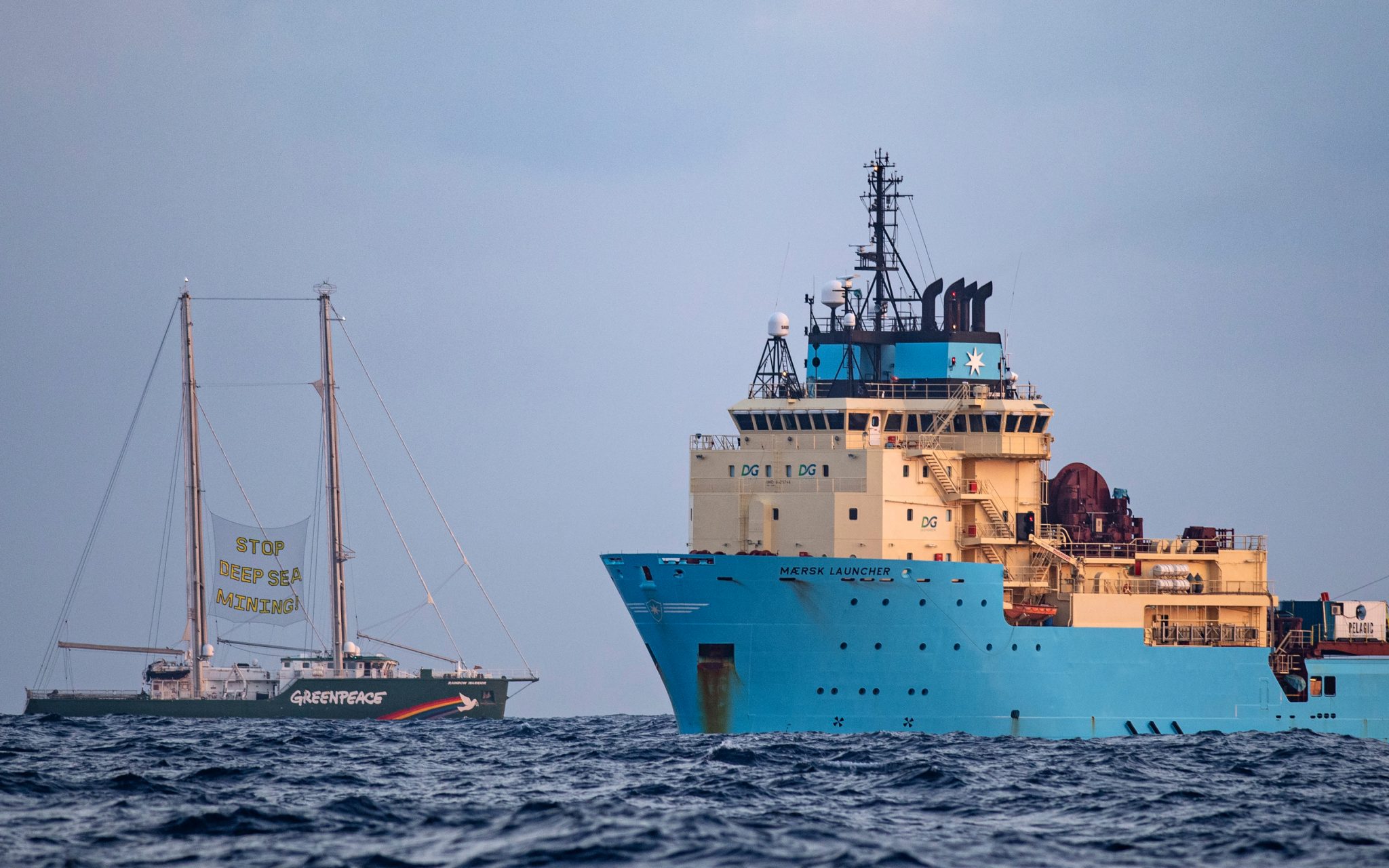
That announcement came just days before both GSR and The Metals Company were preparing for at-sea campaigns to continue their environmental baseline work and prototype nodule collector testing in the Clarion Clipperton Zone. The Metals Company’s Expedition 5B was one of several research cruises conducted over the last few years as part of a comprehensive plan to characterize the ecosystems, including pelagic communities, around their polymetallic nodule leases in the NORI-D contract areas and assess the potential impacts of their eventual nodule extraction operations. As DeepGreen, The Metals Company had previously lent the use of their ship, the Maersk Launcher, to the high seas plastic collection program The Ocean Cleanup. 

Only days later, GSR launched its own four-week research campaign in collaboration with  the EU MiningImpact program. During a month at sea, they tested the Patania II nodule collector prototype. The Patania II did suffer an engineering failure during sea trials which left the collector detached on the seafloor for several days before successful recovery to the surface, a scenario which is not unexpected during prototype testing. “This is pioneering engineering work and we were prepared for multiple eventualities.” said Kris Van Nijen, Managing Director of GSR in a press release. “…we were able to reconnect Patania II and we look forward to completing the mission, including further deployments of Patania II.”

Read More “Two Years of Deep-sea Mining in Review: A pivotal moment in the history of deep-sea mining” »

Posts pagination

Previous 1 … 22 23 24 … 273 Next

Popular Posts

The story of the pride flag made from NASA imagery: Bluesky's most-liked imageThe story of the pride flag made from NASA imagery: Bluesky's most-liked imageSeptember 27, 2024David Shiffman
"Why Sustainable Seafood Matters" is now available for preorder! Here's what it's about, and why I decided to write it."Why Sustainable Seafood Matters" is now available for preorder! Here's what it's about, and why I decided to write it.June 8, 2026David Shiffman
What Ocean Ramsey does is not shark science or conservation: some brief thoughts on "the Shark Whisperer" documentaryWhat Ocean Ramsey does is not shark science or conservation: some brief thoughts on "the Shark Whisperer" documentaryJuly 2, 2025David Shiffman
Tackling the least important debate in deep-sea mining: the desultory hyphenTackling the least important debate in deep-sea mining: the desultory hyphenJune 8, 2026Andrew Thaler
Deep-sea Mining, Domestic Cats, Star Trek, and Ocean Exploration: Andrew's mid-year podcast round-up.Deep-sea Mining, Domestic Cats, Star Trek, and Ocean Exploration: Andrew's mid-year podcast round-up.June 6, 2026Andrew Thaler
Shark of Darkness: Wrath of Submarine is a fake documentaryShark of Darkness: Wrath of Submarine is a fake documentaryAugust 10, 2014Michelle Jewell
What is a Sand Shark?What is a Sand Shark?November 12, 2017Chuck Bangley
I just told 850 shark scientists a hard truth: We’re not communicating shark conservation correctly.I just told 850 shark scientists a hard truth: We’re not communicating shark conservation correctly.June 1, 2026David Shiffman
That's not a blobfish: Deep Sea Social Media is Flooded by AI SlopThat's not a blobfish: Deep Sea Social Media is Flooded by AI SlopDecember 19, 2025Andrew Thaler
Isn’t ironic, don’t you think: dismantling the Ocean Observatories Initiative on World Oceans DayIsn’t ironic, don’t you think: dismantling the Ocean Observatories Initiative on World Oceans DayJune 9, 2026Southern Fried Science

squishy

Subscribe to our RSS Feed for updates whenever new articles are published.

We recommend Feedly for RSS management. It's like Google Reader, except it still exists.

Southern Fried Science

  • Home
  • About SFS
  • Authors
  • Support SFS


If you enjoy Southern Fried Science, consider contributing to our Patreon campaign.

Copyright © 2026 Southern Fried Science.

Theme: Oceanly Premium by ScriptsTown