
Skip to content

Southern Fried Science

Over 15 years of ocean science and conservation online

  • Home
  • About SFS
  • Authors
  • Support SFS
Latest News
  • Norway and Cook Islands put their deep-sea mining plans on pause

Recent Posts

Join Me at Upwell: A Wave of Ocean Justice — Our Fourth Year!
March 24, 2026
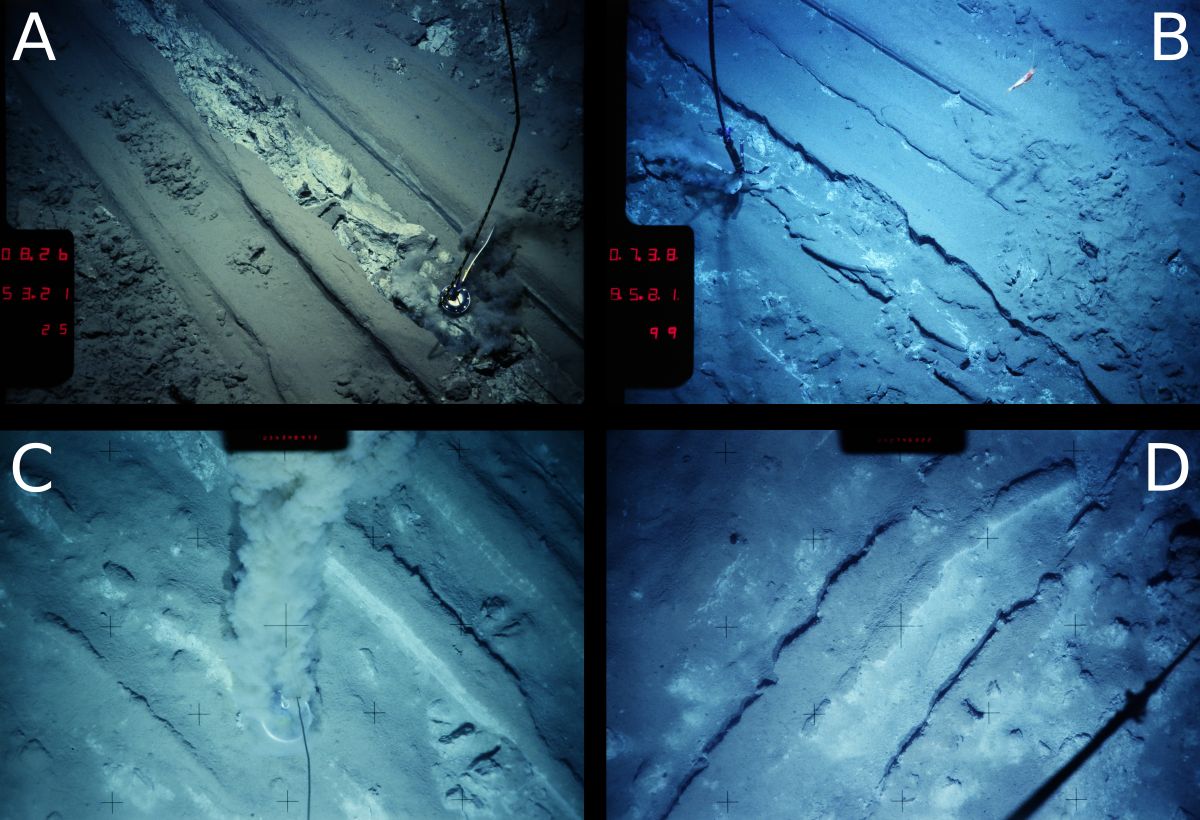
How close did the world’s first deep-sea mining come to the dredging the world’s largest cold-water coral reef?
March 17, 2026
Here are some ocean conservation technologies that I’m excited about
February 19, 2026
Walking Backwards Into the Future: Applying Indigenous Knowledge to Deep Sea Mining
February 5, 2026
The Urgency Does Not Exist: My statement on Deep-sea Mining to the Subcommittee on Energy and Mineral Resources
January 24, 2026
Bipartisan Concern Expressed Over Deep Sea Mining at Congressional Hearing
January 23, 2026

The next generation of low-cost, open-source oceanographic instruments is here! Meet the OpenCTD rev 2!

Posted on January 7, 2020January 7, 2020 By Andrew Thaler 1 Comment on The next generation of low-cost, open-source oceanographic instruments is here! Meet the OpenCTD rev 2!
Oceanography for Everyone, Open Science, Science
Four generations of OpenCTD. Left to Right: Prototype 2, which went through sea trials in Lake Superior, rev 1, rev 1 in the smaller form factor (this one was deployed in Alaska), and OpenCTD rev 2.

In 2013, Kersey Sturdivant and I embarked upon a quixotic quest to create an open-source CTD — the core tool of all oceanographic research that measures the baseline parameters of salinity, temperature, and depth. We weren’t engineers; neither of us had any formal training in electronics or sensing. And, full confession, we weren’t (and still aren’t) even oceanographers! What we were were post-doc marine ecologists working with tight budgets who saw a desperate need among our peers and colleagues for low-cost alternatives to insurmountably expensive equipment. And we had ties to the growing Maker and DIY electronics movements: Kersey through his work developing Wormcam and me through my involvement with OpenROV. 

We had no idea what we were getting ourselves into. 

The very first OpenCTD prototype.

Seven years and five iterations later, we are releasing the long anticipated OpenCTD rev 2 as well as the comprehensive Construction and Operation Manual! OpenCTD rev 2 builds on over half a decade of iteration and testing, consultation with oceanographers, engineers, developers, and makers around the world, extensive coastal and sea trials, and a series of workshops designed to test and validate the assembly process. 

Read More “The next generation of low-cost, open-source oceanographic instruments is here! Meet the OpenCTD rev 2!” »

Shark Week 2019 reviews and thoughts

Posted on December 24, 2019December 24, 2019 By David Shiffman
Popular Culture, Reviews and Interviews, Science

I wasn’t able to watch live this year, but I DVR-ed all 18 specials and watched them eventually! Here are my reviews, ratings, and thoughts. I did not watch the feature-length movie, which they claim is the first fictional entertainment content they’ve ever produced… causing me to stare in megalodon. Overall, this was not a strong year for science, facts, or diversity (of either sharks or shark researchers).

As a reminder, I grade on the following aspects of a show: is there actual science or natural history educational content / is there made up nonsense, are actual credentialed experts with relevant expertise featured or are they self-proclaimed “shark experts” who say wrong nonsense all the time, what species are featured (with bonus points for species we rarely or never see), and do they feature diverse experts or just the same white men (reminder: my field is more than 50% women)? It’s not a perfect rubric, but it’s better than this actual system for ranking shark news introduced this year in “sharks gone wild 2:”

Rankings appear in no particular order, if you care about the order the shows actually aired in please see this Discovery press release.

Read More “Shark Week 2019 reviews and thoughts” »

10 sharks that mattered in the 2010’s

Posted on December 19, 2019December 19, 2019 By David Shiffman
Blogging, Popular Culture, Science, Uncategorized

Just when you thought it was safe to read another decade-in-review listicle…

You can buy this on a tshirt

As the 2010’s come to an end, it’s a time to reflect on the often-problematic decade that was as we plan for a hopeful future. I am a sucker for year-in-review and decade-in-review listicles, and was devastated to learn that no one had yet written a decade-in-review listicle for sharks! Please enjoy my official, scientific list of the most important science, conservation, and pop culture sharks from the past decade.

Read More “10 sharks that mattered in the 2010’s” »

SciComm Infuses Science with Soul

Posted on November 26, 2019November 25, 2019 By Michelle Jewell
Blogging

Every scientist I work with spends most of the day communicating, whether that’s preparing grants, manuscripts, theses, outreach talks, emails to colleagues/students… the list goes on.  However, most of these outlets share fairly strict formatting rules. Grants comes with pages of guidelines. Talks have defined who I am, what I did, found, next, thank you slide.  While this sterile approach is arguably fundamental to science’s critical tenant of replication, it makes for terrible communication.

Read More “SciComm Infuses Science with Soul” »

Meet the newest Southern Fried Science contributor, Dr. Catherine Macdonald

Posted on November 25, 2019November 27, 2019 By Catherine Macdonald
Conservation, Science

Hello, world of Southern Fried Science.

The Field School team restrains a blacktip shark for a quick work-up during a female-scientist-led trip with the amazing non-profit Terranaut Club.

I’m Catherine—if we’re being official about it, Dr. Catherine Macdonald—and I’m the newest contributing writer around here. Before we get into science, I thought it might be helpful to get better acquainted.  

Read More “Meet the newest Southern Fried Science contributor, Dr. Catherine Macdonald” »

Vanishing Islands, nuclear leaks, oceans of plastic, and one feisty Beluga. Weekly Salvage: November 18, 2019

Posted on November 18, 2019November 17, 2019 By Andrew Thaler
Weekly Salvage

Transcript available below.

Read More “Vanishing Islands, nuclear leaks, oceans of plastic, and one feisty Beluga. Weekly Salvage: November 18, 2019” »

Finding the best dirt-cheap, field-tough 3D printer for science and conservation work: six months later.

Posted on November 15, 2019November 15, 2019 By Andrew Thaler
Uncategorized
A fully upgraded Ender-3.

Four years ago, I had the chance to lead a research cruise on Lake Superior to explore the potential of low-cost, open-source tools for marine field work. This was the proving ground for the OpenCTD, the Niskin3D, the OpenROV 2.7, and the idea that, rather than packing cases and case of gear, we could put everything we needed on a flash drive and print it at sea. 

During that cruise, as my trusty Printrbot, was churning out Niskin bottles, we caught a wave and the 3D printer was thrown to the ground. I came down hours later to find it upside down on the floor of a retrofitted fish hold, happily chugging along. I picked it up, put it back on the counter, and went back to sleep. The print didn’t even fail.

That is the kind of beast we need. 

Over the years, whenever someone asked me what the best 3D Printer for field work was, the answer was always the same: The Printrbot Simple Metal. But Printrbot is gone (for now) and we needed a replacement.

Half a year ago, we completed an exhaustive review of the cheapest 3D-printers on the market, with an eye towards low-cost, robust tools that would endure the rigors of field work without blowing our grant budget. We wanted 3D printers that were workhorses. They didn’t have to be pretty, they didn’t have to produce perfect prints, they just had to spit out strong serviceable parts with minimal fuss. They had to be reasonably portable. And they had to be able to take a beating and keep on printing.

We never found a replacement for the absolute tank that is the Printrbot Simple Metal, but after months of testing, settled on a pair of good alternatives (notably for a fraction of the cost of the Printrbot when it was still in production): for those who need big build volumes, the Creality Ender-3. For those who need portability above all, the Monoprice Mini-Delta. 

But that was six months ago. I promised to put these two machines into heavy use. After several hundred hours of printing, we’re ready to update our review of both machines. 

Executive Summary. My recommendation still stands, both both printers need a few modifications before you can call them the ultimate field machine. 

Read More “Finding the best dirt-cheap, field-tough 3D printer for science and conservation work: six months later.” »

“We’re in the midst of a sea change in who has access to the core tools of marine scientific research,” Weekly Salvage: November 11, 2019

Posted on November 11, 2019November 11, 2019 By Andrew Thaler
Weekly Salvage

Transcript available below.

Read More ““We’re in the midst of a sea change in who has access to the core tools of marine scientific research,” Weekly Salvage: November 11, 2019″ »

Repairing the world: How my Jewish faith informs my conservation philosophy

Posted on November 6, 2019November 6, 2019 By David Shiffman
Blogging

It’s easy to get discouraged or demoralized as an environmentalist in today’s world. It seems like every day brings more devastating news. Half of the world’s wildlife has died in my parents’ lifetime, and current rates of extinction may be up to 10,000 times higher than the natural background rate. We’re losing a terrifying number of birds and insects, and a million species are considered threatened or endangered. Things are bad enough that “eco anxiety” is now a recognized mental health condition.

It is said that in the environmental movement, all of our victories are temporary, and all of our defeats are permanent. Much of the current focus of environmental advocacy has been described as “playing against the slaughter rule,” hoping not to win but to avoid getting totally wiped out in our inevitable loss.

In the face of all this, I’m often asked how I can remain so optimistic, and so motivated to keep working. Some people are surprised to learn that a large part of my answer comes from my Jewish faith.

Read More “Repairing the world: How my Jewish faith informs my conservation philosophy” »

Mining historic shipwrecks for lead and other old things from the bottom of the sea. Also, Robots! Weekly Salvage: November 4, 2019

Posted on November 4, 2019November 4, 2019 By Andrew Thaler
Weekly Salvage

Transcript available below.

Read More “Mining historic shipwrecks for lead and other old things from the bottom of the sea. Also, Robots! Weekly Salvage: November 4, 2019” »

Posts pagination

Previous 1 … 26 27 28 … 270 Next

Popular Posts

What Ocean Ramsey does is not shark science or conservation: some brief thoughts on "the Shark Whisperer" documentaryWhat Ocean Ramsey does is not shark science or conservation: some brief thoughts on "the Shark Whisperer" documentaryJuly 2, 2025David Shiffman
Tangier, an Island out of Time.Tangier, an Island out of Time.July 3, 2017Andrew Thaler
That's not a blobfish: Deep Sea Social Media is Flooded by AI SlopThat's not a blobfish: Deep Sea Social Media is Flooded by AI SlopDecember 19, 2025Andrew Thaler
Shark of Darkness: Wrath of Submarine is a fake documentaryShark of Darkness: Wrath of Submarine is a fake documentaryAugust 10, 2014Michelle Jewell
Join Me at Upwell: A Wave of Ocean Justice — Our Fourth Year!Join Me at Upwell: A Wave of Ocean Justice — Our Fourth Year!March 24, 2026Angelo Villagomez
Urea and Shark OsmoregulationUrea and Shark OsmoregulationNovember 15, 2010David Shiffman
What is a Sand Shark?What is a Sand Shark?November 12, 2017Chuck Bangley
Alberta, Canada is the proud owner of the largest man-made pyramid on the planetAlberta, Canada is the proud owner of the largest man-made pyramid on the planetOctober 16, 2012Andrew Thaler
I turned my woodshop into a personal solar farm.I turned my woodshop into a personal solar farm.June 21, 2021Andrew Thaler
How many nuclear weapons are at the bottom of the sea. An (almost certainly incomplete) census of broken arrows over water.How many nuclear weapons are at the bottom of the sea. An (almost certainly incomplete) census of broken arrows over water.July 26, 2018Andrew Thaler

squishy

Subscribe to our RSS Feed for updates whenever new articles are published.

We recommend Feedly for RSS management. It's like Google Reader, except it still exists.

Southern Fried Science

  • Home
  • About SFS
  • Authors
  • Support SFS


If you enjoy Southern Fried Science, consider contributing to our Patreon campaign.

Copyright © 2026 Southern Fried Science.

Theme: Oceanly Premium by ScriptsTown