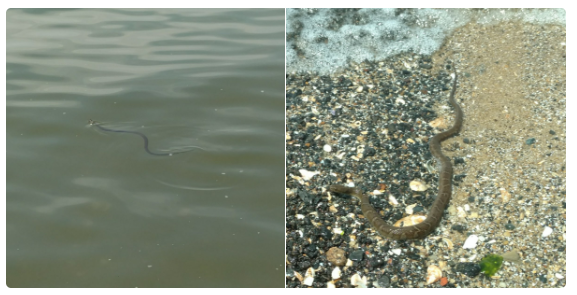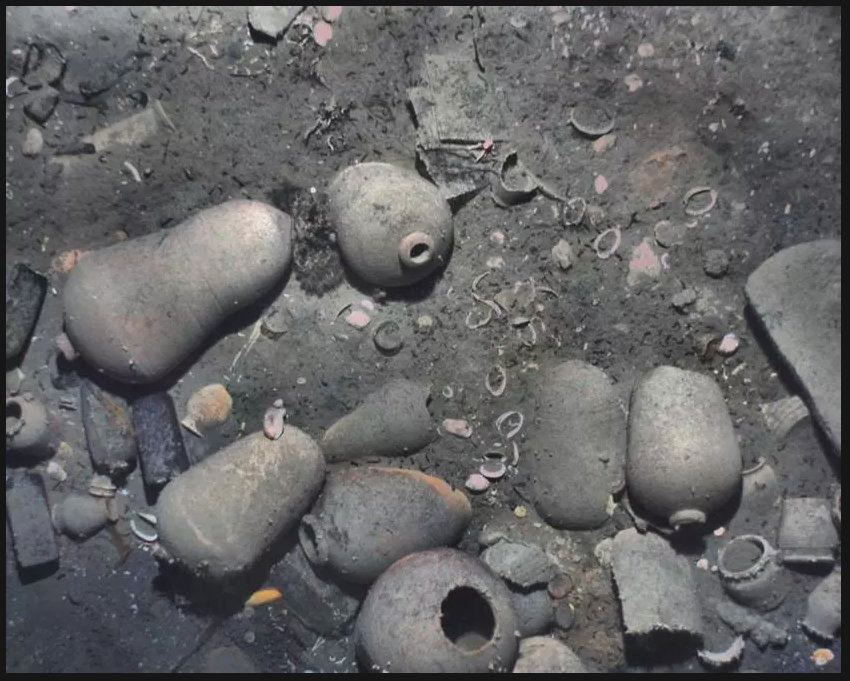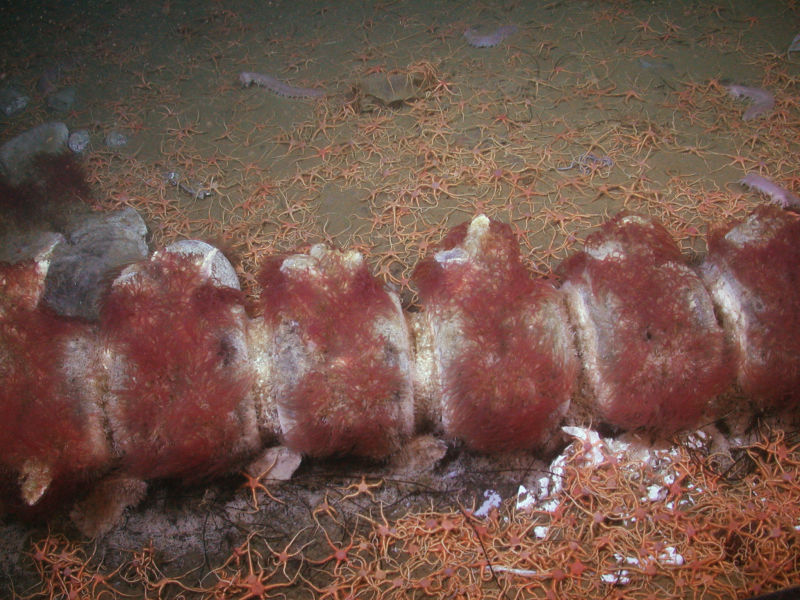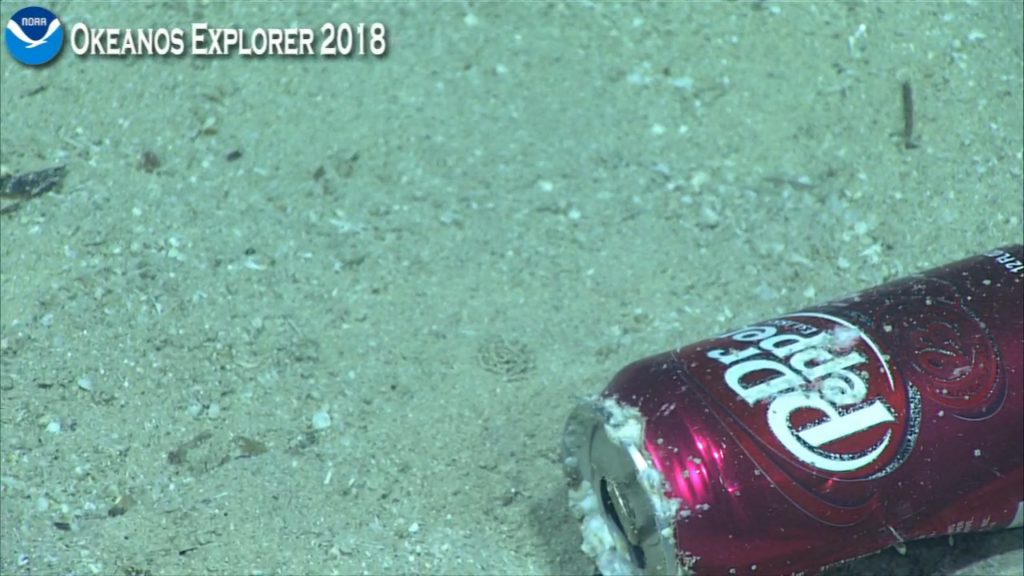

Cuttings (short and sweet): Follow science illustrator Bethann Garramon Merkle on twitter! Great Pacific Garbage Patch is sprawling with more debris than thought. By Oliver Milman, for the Guardian. In Bali fish die-off, a human hand is suspected. By Luh De Suriyana, for MongaBay. Spoils (long reads and deep dives): Mullet Mania. By Michael Patrick O’Neill, … Read More “Migrating mullet and expanding garbage patches: Thursday Afternoon Dredging, March 22, 2018” »
This blog post and photo slideshow was created during OCEANDOTCOMM, an ocean science communication event, and supported by the Louisiana Universities Marine Consortium (LUMCON) The theme of OCEANDOTCOMM was Coastal Optimism. Photos were contributed by our lead photographer, Rafeed Hussain/Ocean Conservancy, with additions from other OCEANDOTCOMM attendees, including Melissa Miller, Samantha Oester, Susan Von Thun, Solomon David, Rebecca Helm, and Alexander Havens.

In many ways, South Louisiana is seafood- a trip here isn’t complete without eating some gumbo, oysters, or crawfish. Only one state (Alaska) lands more seafood than Louisiana’s 1.2 billion pounds a year (as of 2016). As of 2008, one in 70 jobs in the whole state is tied to fishing or related industries. According to the Louisiana Seafood Marketing and Promotion Board, “when you choose Louisiana seafood, you’re ensuring that your purchase benefits an American community and a way of life.”
When we visited Terrebonne Parish, home to nearly 20 percent of all commercial fishing license holders in Louisiana, we found that fishing means more to the people of this community than food and jobs. Here in South Louisiana, fishing is a vital part of the vibrant local culture and community pride. In a region that’s been devastated by hurricanes and oil spills, fishing is also a source of something more important: hope.
Below, you’ll hear what fishing means to South Louisiana’s fishing communities through the voices of a former shrimper, the owner of a grocery store that has served the town of Chauvin for more than a century, and representatives of a local Native American tribe. You’ll also get a glimpse into this beautiful part of the world through a photo slideshow. Together, this paints a picture of communities that have overcome unimaginable struggle, but still look forward to the future, in no small part because of the riches of the sea.
Cuttings (short and sweet): Follow marine conservation biologist Julia Spaet on twitter! Nearly half of freshwater turtles are at risk of extinction. By John Platt, for Revelator. Fishing bots “going dark” raise suspicion of illegal fishing. By Scott Neuman, for NPR. Ocean sensors can track progress on climate goals. By Joellen Russell, for Nature News. Spoils (long … Read More “Endangered turtles and fish venom: Thursday Afternoon Dredging, March 15, 2018” »
I recently unveiled a new tier of Patreon rewards: 3D printed shark and ray models! For $17 per month, you will get a monthly 3D printed educational model of different shark or ray parts in the mail, and you’ll be supporting my efforts to provide these models to schools for free.
The first month’s reward comes from one of the most (in)famous sharks of all time, Carcharocles megalodon! The first 3D printed Patreon reward is a meg tooth, an exact copy of the meg tooth that has been used to educate thousands of students at UBC’s Beaty Biodiversity Museum!
Here are some things to know about Carcharocles megalodon!
Make for the Planet is back! And this time, rather than the atrium of the Ronald Reagan Building, it’ll be in beautiful, sunny, Sarawak, Borneo!

To ensure a better future for our planet, conservation experts need to work with solutions, technologies, and expertise from diverse fields to greatly improve the efficacy, speed, cost, scale, and sustainability of conservation efforts. Ocean acidification, invasive species, marine protection, overfishing, coral reef degradation – we are aware of the many problems faced by our oceans, and humankind has the ingenuity and optimism to solve them!
How can you help solve ocean conservation challenges? Participate in Make for the Planet Borneo and create solutions to conservation challenges in front of a global audience at the 5th International Marine Conservation Congress (IMCC5) in Kuching, Sarawak, Malaysia June 24-29, 2018! Team applications are open now through April 1st, 2018. Apply here!
Read More “#Make4thePlanet Borneo is coming! Team Applications are Open!” »

Happy Monday-est Monday!
Foghorn (A Call to Action!)
- This is the final week to get you abstracts in for the International Marine Conservation Congress, the premier ocean conservation conference, coming to you from Kuching, Malaysia this June! We got a cracking good symposium on human impacts in the deep sea and plenty of travel grants available for researchers in need. And, for the first time, we’ll be hosting Make for the Planet, Borneo!
Flotsam (what we’re obsessed with right now)
- An outstanding piece on exploitation in the high seas by Jeff Marlow. The High Seas Are Being Exploited. Exploration Must Keep Pace.
- This is a thing that happened:
Octonauts live in the sea. Hardware’s their specialty. While ocean grants are a struggle… their source of funding, it really is a puzzle!
Explore! Rescue! Protect! The Octonauts have an ambitious undersea mission and an equally ambitious fleet of marine vehicles. How they pay for it is a mystery. Are they backed by the federal government? The UN? Is Professor Inkling financing this venture by selling genetically engineered vegetable-fish hybrids? Is a billionaire film-maker backing the venture? One thing’s for certain, an Octonaut-level research program does not come cheap. So how much does this operation actually cost?
Actuaries! To your stations!
The Octopod
With 4 housing/laboratory units and a central command bay, the Octopod would be the largest and most sophisticated underwater research station ever operated. There’s nothing in the marine research world the even comes close. Aquarius Reef Base is currently the only working undersea research laboratory. I can’t find the initial budget to build and install Reef Base, but a modern (albeit unrealized) aquatic residential habitat comes with a $10 million startup costs. Reef Base itself has a wildly variable annual budget, with a baseline around $1 million per year. The Octopod, on the other hand, has four Octo… Pods? each of which is similar in function to Reef Base (though the whole structure more closely resembles the extremely French Galathée Underwater Laboratory).

The central command bay is both the core of the Octopod and its power supply. Not much is known about where the Octopod gets its seemingly limitless power, but if the Octonauts are anything like the US Navy, there’s a nuclear reactor in the, somewhere. Meet Nerwin. NR-1 was the USA’s only nuclear-powered, deep-diving research submarine. With room for 16 crew and scientists and a multi-month endurance, Nerwin could hand both covert and scientific missions. The NR-1 was equipped with a wheeled base, allowing it to roll across the sea floor. Unfortunately, NR-1 was a strictly off-book asset for most of its life, so we don’t really know what it cost, but the initial build estimate was $58.3 million. As the military is not often known for bringing projects in under budget, that seems like a reasonable baseline. For annual operating costs, we might as well assume the upper end of Reef Base at $3 million to start. It’s almost certainly much *much* higher.
Cost to build: $98.3 million.
Annual operating cost: $7 million.
Read More “Shiver me whiskers! What would it cost to fund the Octonauts’ undersea adventures?” »
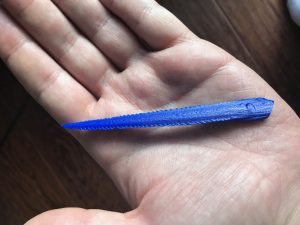
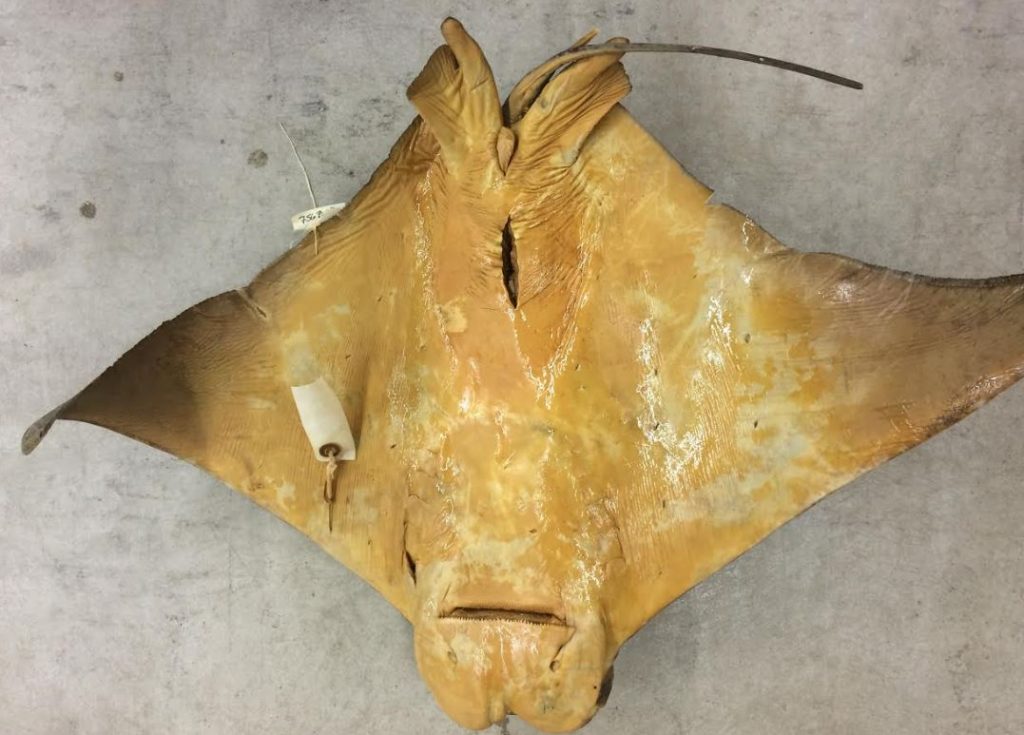
Want to support public education about sharks and rays while getting some one-of-a-kind elasmoswag? Sign up for my latest tier of Patreon rewards! Each month, you’ll receive a 3D printed educational model highlighting various aspects of shark and ray biology in the mail. These models will include: Shark teeth Components of shark jaws Stingray spines … Read More “Announcing new Patreon rewards: 3D printed shark and ray models!” »
Cuttings (short and sweet): Follow Travis Tai, a graduate student studying climate change and fisheries, on twitter! Thumbnail-sized pygmy squid discovered in Australia. By Shreya Dasgupta, for MongaBay. This octopus is 40,000 times heavier than its mate. By Liz Langley, for National Geographic. Seal poo reveals plastic’s path in the sea. Nature research highlights. Grass is … Read More “Giant penguin colonies and tiny squid: Thursday Afternoon Dredging, March 8th, 2018” »

Foghorn (A Call to Action!)
- Subscribe to the Chesapeake Bay Journal (it’s free)! The venerable grey lady of the Bay survived the EPA’s attempt to defund them. Consider sending a few dollars to the journal, too. If you’re filing MD taxes this year, you can earmark some of you return to Chesapeake Bay programs.
Flotsam (what we’re obsessed with right now)
- The secret on the ocean floor: the wild, weird origin of the modern deep-sea mining industry, complete with spies, Soviet submarines, and Howard Hughes. How much is real? How much is emergent from this first fake venture? If you only read one thing about deep-sea mining, read this.
We really misled a lot of people and it’s surprising that the story held together for so long”
- As biodiversity declines, so does public attention. We need to push back against this trend.
- After Centuries of Searching, Scientists Finally Find the Mysterious Giant Shipworm Alive!