



Welcome to Volume #5 of Dear Shark Man, an advice column inspired by a ridiculous e-mail I received. You can send your questions to me via twitter (@WhySharksMatter) or e-mail (WhySharksMatter at gmail).
Dear Shark Man,
What’s the history of the shark’s cultural image as a sneaky aggressive predator? Do other cultures see it differently?
Sincerely,
Imaginative in Irvine
Dear imaginative,
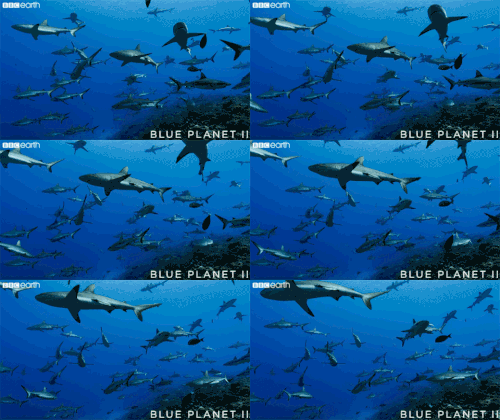
Much of the large-scale public fear of sharks we see today can be traced to the movie “Jaws” (read my Gizmodo article about this here). Shark conservation biologists actually use the term “the Jaws effect” in peer reviewed scientific literature. Terror of sharks resulting from that movie is fairly common even among people you wouldn’t expect; for example, both of my parents are outdoorsy and have post-graduate degrees, and yet both reported being afraid to go swimming in pools or lakes the summer after Jaws came out. Personally, I don’t think that modern shark b-movies like “SharkNado” or “Two-Headed Shark Attack” inspire the same level of public misunderstanding because they’re obviously silly, but others disagree.
Media coverage of shark bites also plays a major role. If someone gets bitten by a shark anywhere in the world, it’s headline news everywhere even if the bite isn’t severe enough to require more than a band-aid. In Australia, 38% of reported “shark attacks” didn’t even involve any injury at all. This is part of why I, along with many other shark scientists, have called on the popular press to avoid the inflammatory and inaccurate term “shark attack” in favor of a typology of other terms (shark sighting, shark encounter, shark bite, fatal shark bite).
Other cultures absolutely see sharks differently. Where I now live in western Canada, coastal First Nations have stories about a supernatural being called the Dogfish Woman. In some South Pacific cultures, sharks are seen as spirits of ancestors called aumakua (briefly referenced in Moana, see below), and there are even shark gods like Dakuwaqa.

Read More “Galeophobia, Shark Teeth, and Non-Expert Awareness Campaigns: Dear Shark Man, Volume 5” »




 Travis Nielsen is the founder and CEO of Azurigen Management and Consulting Solutions Inc. A STEM project management firm that specializes in linking conservation based science to business and government. He is a published scientist specializing in Marine Biology with 10 years experience in STEM, and 10 years of experience in management and leadership. He has been responsible for projects with budgets up to $500,000, working with multiple stakeholders, large public engagement mandates, and with staffs up to 100 people in locations all across the globe.