

Skip to content

Southern Fried Science

Over 15 years of ocean science and conservation online

  • Home
  • About SFS
  • Authors
  • Support SFS

Recent Posts

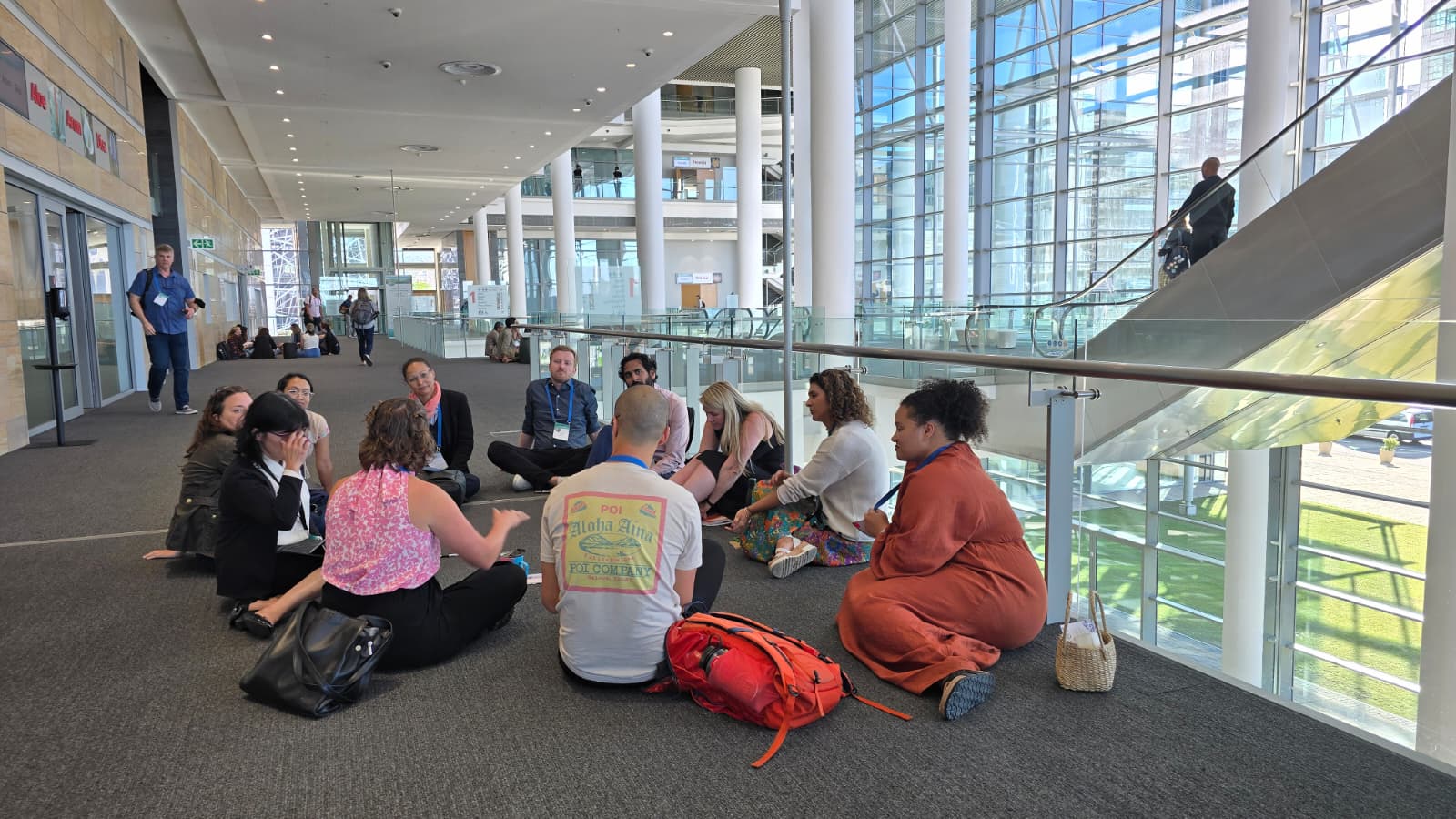
We Asked IMCC7 Attendees What Ocean Conservation Needs. Here’s What They Said.
November 5, 2026
Researching Historical Erasure on Public Lands
July 31, 2026
5 things I learned helping to reassess the global conservation status of every species of tuna and billfish
September 15, 2026
Key takeaways from my Convention on Migratory Species report on fish aggregating devices in the Mediterranean Sea
September 3, 2026
Jabberwocks and Snallygasters: teaching environmental education with monsters, mayhem, and dice.
August 31, 2026
The conservation impacts of recreational fishing
August 25, 2026

Fun Science FRIEDay – Embryonic Gene Editing

Posted on August 18, 2017 By Kersey Sturdivant
Uncategorized

The world we currently live in would have seemed like science fiction to humans in the not to distant past. Everyday more and advancements transform sci-fi dreams into reality. Most recently gene editing of human embryos has been birthed into the realm of possibility (cheesy pun intended!). In theory gene editing embryos could allow you to choose preferential traits in your soon to be human flesh-blob. That level of ability does not currently exist, but the latest developments in gene editing are still pretty astonishing.
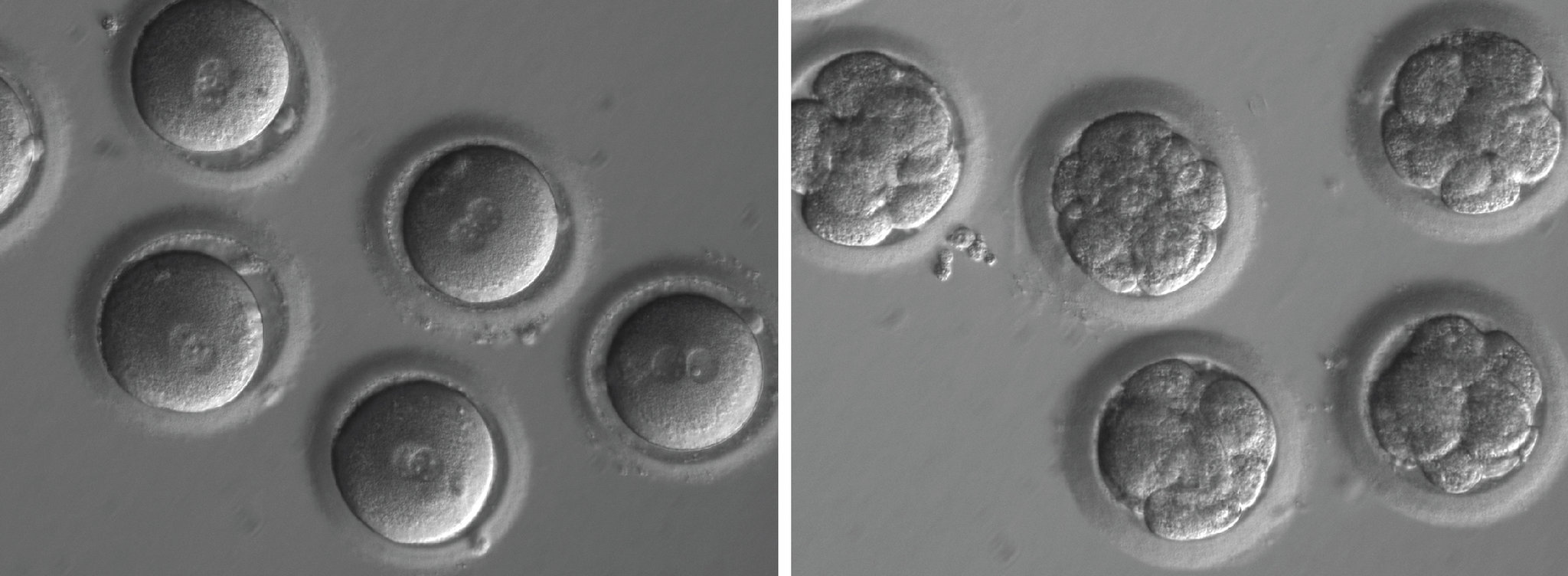
Eggs before gene editing (left), and eggs after gene editing and already undergoing cell division (right)
(Photo credit: Ma et al. 2017)

In a recent study scientists took a human embryo and edited a dangerous mutation from the genes of that embryo; human reality, meet science fiction. Scientists at Oregon Health and Science University, with colleagues in California, China and South Korea, edited embryos, fixing a mutation that causes a common heart condition that can lead to sudden death later in life. The biggest hurdles were producing embryos in which all cells, not just some, were mutation-free, while also avoiding creating unwanted extra mutations during the process. The researchers found that when gene-editing components were introduced with sperm to the egg before fertilization, the success of the process was markedly different from previous approaches. If embryos with the repaired mutation were allowed to develop into babies, they would not only be disease-free but would also not transmit the disease to their descendants.
Read More “Fun Science FRIEDay – Embryonic Gene Editing” »

There’s only one way to get these exclusive, limited-edition Jaunty Ocean Critter stickers!

Posted on August 18, 2017August 17, 2017 By Andrew Thaler
Blogging

Note: The following is a plug for my Patreon campaign. Funds raised in this campaign go towards keeping the Southern Fried Science servers running as well as research and development for Oceanography for Everyone. 


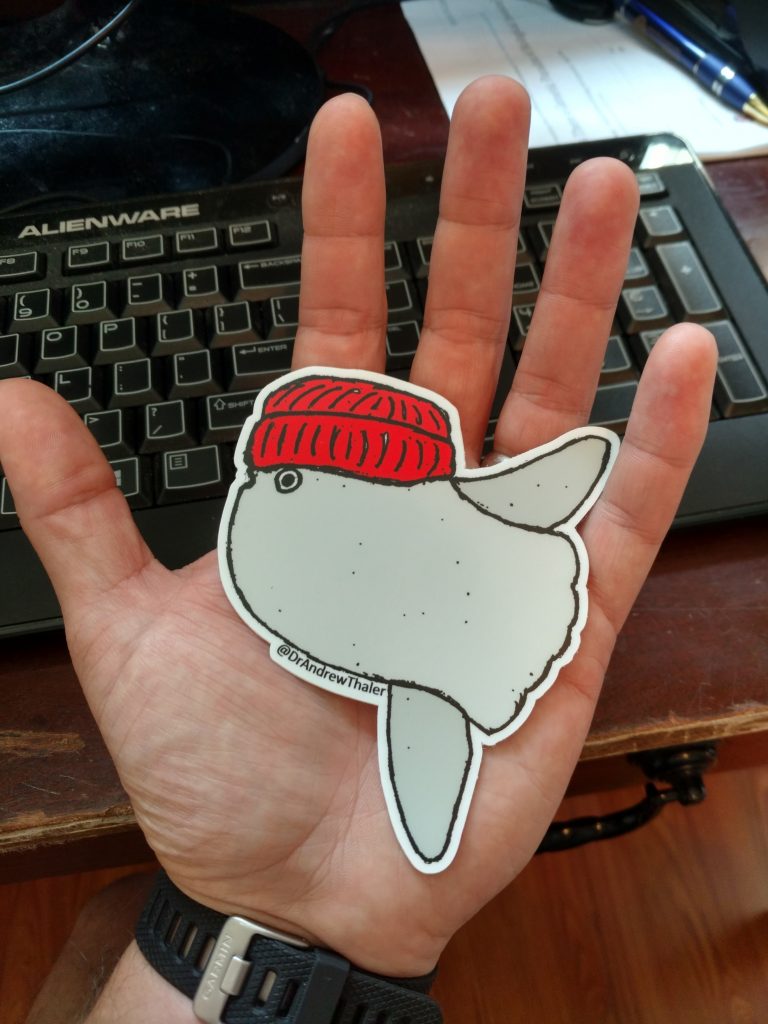
Behold the Unflappable Mola Mola!

Soon after the completion of Jacques Week 2017, I realized that I now had a collection of ocean animals wearing jaunty red cap doodles that were almost purpose made to be turned into stickers. So after a bit of research, a lot of redesigns, and a few test runs, the Jaunty Ocean Critter collection was born! Every month for the next year, I’m releasing a new, limited-edition run of Jaunty Ocean Critter stickers for your amusement, bemusement, and sea-musement. Die-cut on heavy vinyl, these stickers will hold up in the water, on your laptop, or attached to your favorite piece of oceanographic equipment. 

Read More “There’s only one way to get these exclusive, limited-edition Jaunty Ocean Critter stickers!” »

Listening for fish, glass sponges, and braking for whales: Thursday Afternoon Dredging: August 17, 2017

Posted on August 17, 2017August 17, 2017 By David Shiffman
Uncategorized

 Cuttings (short and sweet): 

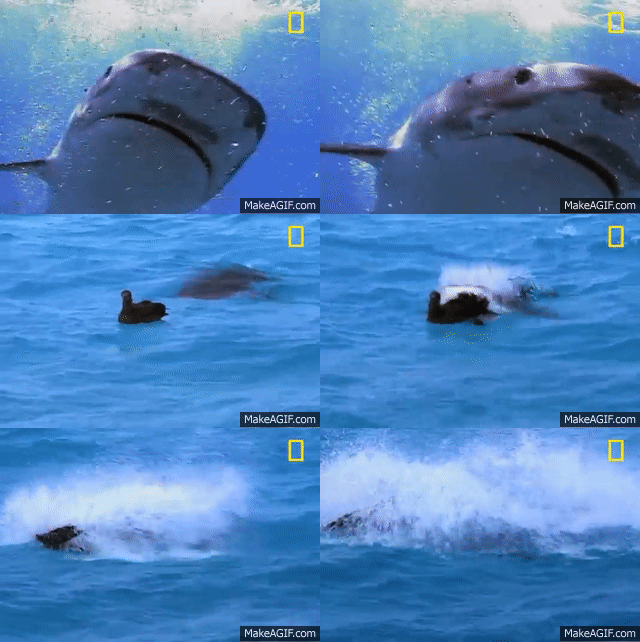
  • Watch this tiger shark take on an albatross on some of my favorite National Geographic natural history footage 
  • Follow Dr. Maria Jose Juan-Jorda, a postdoctoral researcher studying sustainable shark and tuna fisheries, on twitter!
  • To see a coelocanth. By Steve Midway, for the Fisheries Blog.
  • Scientific expedition set to explore British Columbia’s glass sponge reefs. By Larry Pynn, for the Vancouver Sun.

Read More “Listening for fish, glass sponges, and braking for whales: Thursday Afternoon Dredging: August 17, 2017” »

Background information on our land-based shark fishing paper

Posted on August 15, 2017August 15, 2017 By David Shiffman 5 Comments on Background information on our land-based shark fishing paper
Science

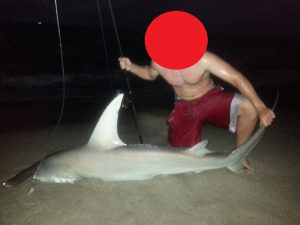
A photo used in this study showing a hammerhead shark taken completely out of the water. As with all photos used in this study, the angler’s privacy has been protecting by blurring out his face.

I have a new paper out on the conservation impacts of recreational shark fishing. The paper is called “fishing practices and representations of shark conservation issues among users of a land-based shark angling online forum,” and it is published in the journal Fisheries Research. If you don’t have institutional library access, you can read a copy of the paper here. The goal of this blog post is to provide background information on the study.

Journalists are free to quote or paraphrase information from this blog post. Additionally, I provide some suggested quotes below, and I am available for interviews about this paper (please contact me at WhySharksMatter at gmail).

Read More “Background information on our land-based shark fishing paper” »

Flesh eating sea lice, illegal eel fishing, and whale graveyards: Thursday Afternoon Dredging: August 10th, 2017

Posted on August 10, 2017August 12, 2017 By David Shiffman
Uncategorized

Cuttings (short and sweet):

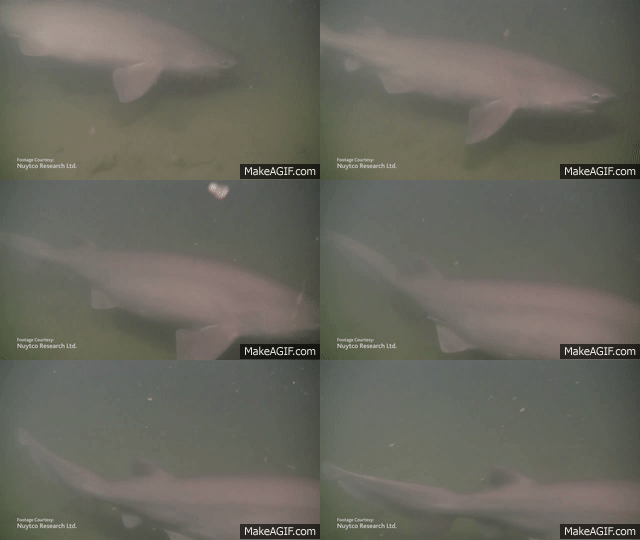
  • Watch this sixgill shark swim in the coastal waters near Vancouver, in this clip from the Vancouver Aquarium!

    Video courtesy Vancouver Aquarium
  • Follow Al Harry, Australian shark researcher, on twitter! Al has just joined, so welcome him!
  • Sea lice feast of fresh meat as teenager left bloodied. Video from the Guardian. My official comment on this story can be found here. Also, here’s a video of some similar creatures skeletonizing a whole pig in a few days.  (It is worth noting that some scientists are skeptical of this explanation of what happened to this Australian teenager.)
  • Learn about whalefalls, an important underwater habitat made up of dead whales. Video and story by Julie Takahashi, for the Houston Chronicle
  • How do you tag a jellyfish? By Diane Richards, for the Monterrey Bay Aquarium’s Conservation and Science Blog. 

    Read More “Flesh eating sea lice, illegal eel fishing, and whale graveyards: Thursday Afternoon Dredging: August 10th, 2017” »

One-eyed sea eagles, deep reefs, crispy jellyfish, and more! Monday Morning Salvage: August 7, 2017.

Posted on August 7, 2017 By Andrew Thaler
Weekly Salvage

Fog Horn (A Call to Action)

  • One week left! The deadline for comments on Marine National Monuments and National Marine Sanctuaries has been extended due to overwhelming responses. You now have until August 14, 2017 to leave a comment. Scientists, researchers, explorers, and conservationists with particular ties to the Mariana Trench Marine National Monument can sign on the this letter co-authored by me, James Cameron, and numerous researchers who’s worked has benefited from the Mariana Trench.
  • Chasing Genius: Andrew has applied for a National Geographic Chasing Genius Award to fund more development for the OpenCTD and Oceangraphy for Everyone. Please share and like the video over at NatGeo!

Flotsam (what we’re obsessed with right now)

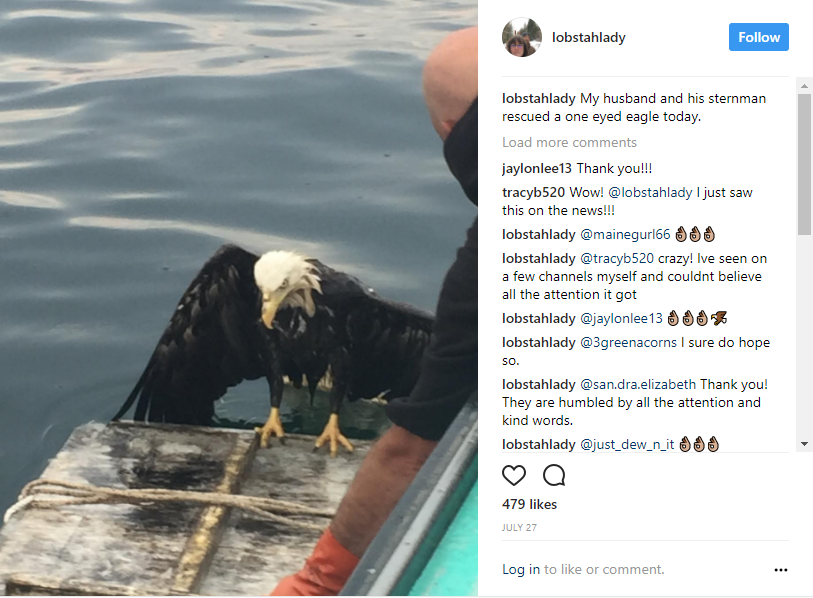
  • A Maine Lobsterman catching a one-eyed bald eagle struggling to swim has got to be a metaphor for something, right?

Read More “One-eyed sea eagles, deep reefs, crispy jellyfish, and more! Monday Morning Salvage: August 7, 2017.” »

Desert island discs – the marine conservation edition

Posted on August 4, 2017August 4, 2017 By Chris Parsons
Conservation, Open Science, Popular Culture

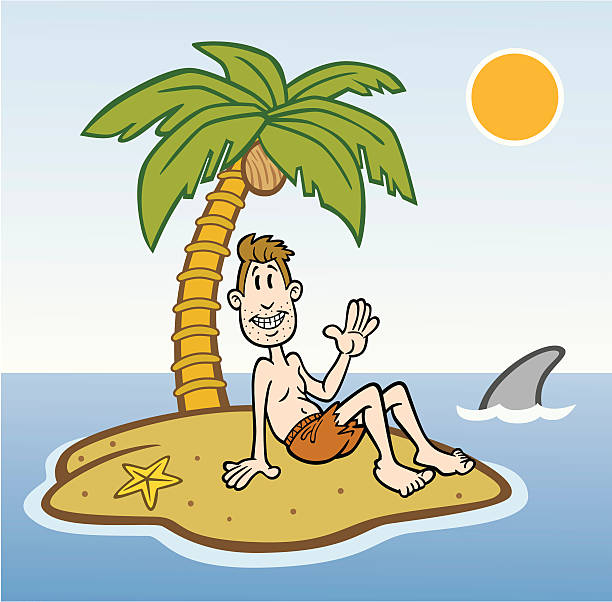
In the UK, there is a famous and long-running radio show called Desert Island Discs. On this show celebrities are asked to imagine that they are marooned on a desert island, but they have rescued 10 discs (mp3s I suppose these days…) of songs that they have rescued from their sinking ship to keep them company on the desert island.

clipart credit: istock.com

My chum – marine mammal scientist and general ocean hero – Asha De Vos recently asked for a list of key papers in marine conservation that she could pass onto students working on marine conservation issues in Sri Lanka. So I decided to write up my top ten “desert island” marine conservation papers that I think have been influential, and that all marine conservation students should read.

So after much pondering, this is my list:

Read More “Desert island discs – the marine conservation edition” »

Seals in the Thames, killing boto to catch catfish, and animal screams: Thursday Afternoon Dredging: August 3, 2017

Posted on August 3, 2017August 4, 2017 By David Shiffman
Uncategorized

We’re back after a 3 week conference attendance break!

Cuttings (short and sweet):

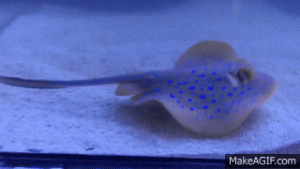
  • Watch this blue-spotted stingray swim around an Oregon aquarium!
  • Follow Dr. Kyle Newton, shark sensory ecologist, on twitter!
  • Screams heard round the world: humans can easily recognize alarm calls of other animals. By Karen Hopkin, for Scientific American.
  • Seals return to the Thames estuary is going swimmingly. By Damian Carrington, for the Guardian.
  • AUTHOR’S NOTE: One link (to a twitter thread on scientist lab superstitions) has been removed due to some culturally insensitive comments in the thread. 

Read More “Seals in the Thames, killing boto to catch catfish, and animal screams: Thursday Afternoon Dredging: August 3, 2017” »

The sorting hat of conservation

Posted on August 1, 2017 By Chris Parsons
Conservation, Popular Culture

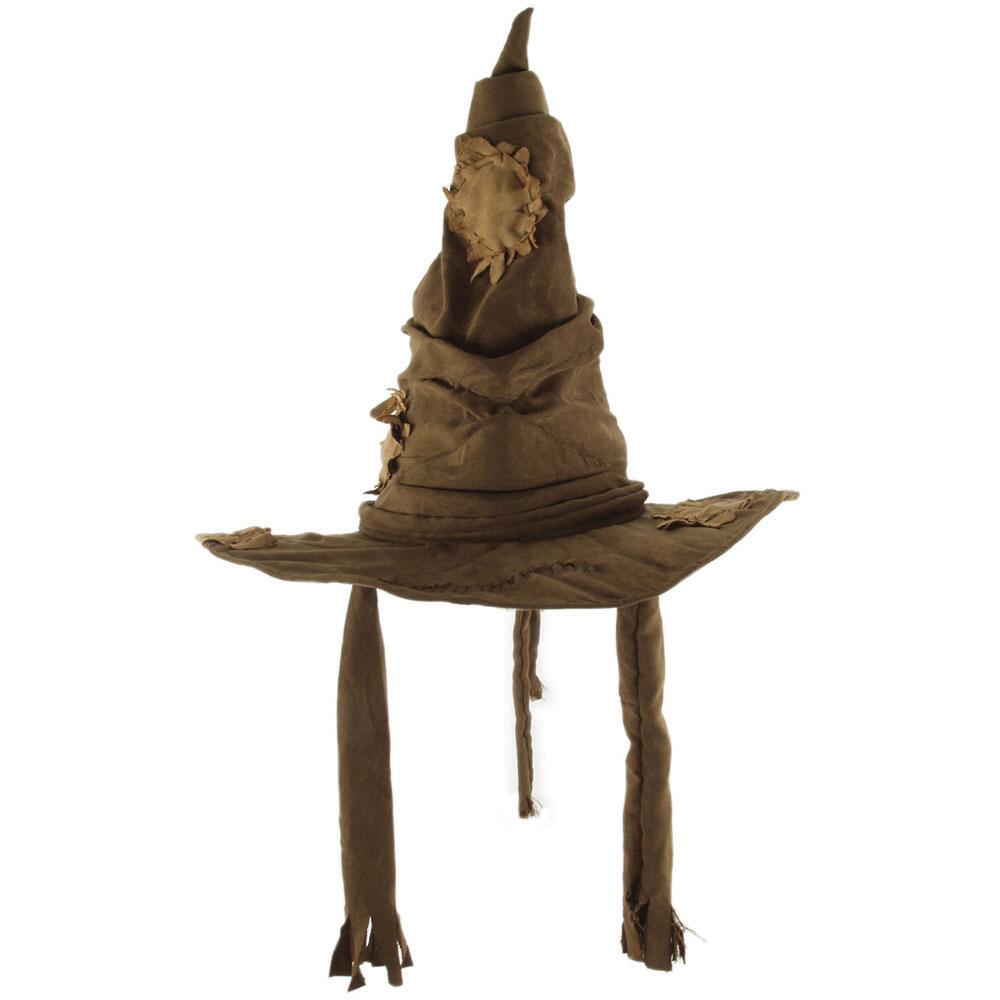
The Hogwarts Sorting Hat divides students into their respective houses in their first year at the school of witchcraft and wizardry. Each house is known for having its own “personality.” In addition to potential wizards/witches, one can also sort those involved in conservation into the four Hogwarts houses.

  • Hufflepuff – This house stands for dedication and hard work, but also patience, tolerance, fair play and kindness. Most conservationists working in NGOs, especially those related to protection of megafauna species, are Hufflepuffs. One famous Hufflepuff was Newton Scamander, a socially awkward wizard who took it upon himself to try to save endangered magical creatures, when others just saw them as pests. Most of the herbology teachers at Hogwarts were Hufflepuffs (Neville Longbottom being a notable exception).

Read More “The sorting hat of conservation” »

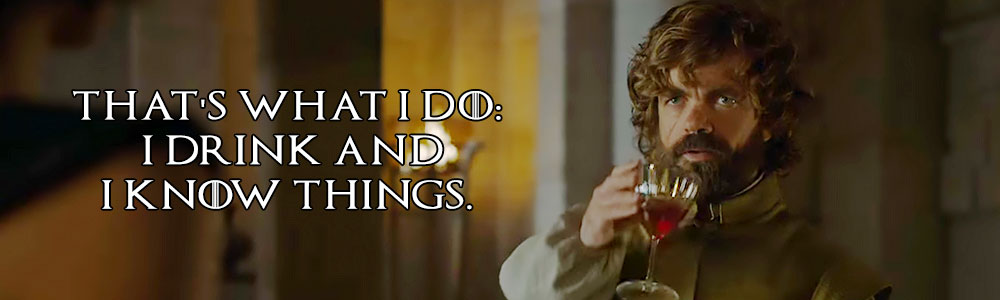
The Game of Thrones – is this real life, or is this just fantasy…?

Posted on August 1, 2017August 4, 2017 By Chris Parsons
Popular Culture

“I trust the eyes of an honest man more than ‘what everybody knows’ “

– Tyrion Lannister to Jon Snow, as Jon tries to convince everyone that he has seen the Army of the Dead coming.


In the current season of Game of Thrones, Cersei Lannister is unexpectedly sitting on the Iron Throne of Westeros after immolating most of the existing peerage in King’s Landing. Because of this purge, most of the seats in the Privy Council are empty (assuming she even means to establish one), and her inner circle consists of: the Hand of the Queen, a clever ex-Maester with no morals or ethics; the commander of the Queen’s Guard, a conscience-less zombie; and two military commanders, one a troubled brother/lover and one an ambitious wily psychopath, of uncertain loyalty.

Read More “The Game of Thrones – is this real life, or is this just fantasy…?” »

Posts pagination

Previous 1 … 61 62 63 … 277 Next

Popular Posts

Getting a sense of porpoiseJanuary 20, 2009Andrew Thaler
This is the worst academic presentation in the world ... tributeApril 23, 2015Chris Parsons
That's not a blobfish: Deep Sea Social Media is Flooded by AI SlopThat's not a blobfish: Deep Sea Social Media is Flooded by AI SlopDecember 19, 2025Andrew Thaler
Have we found the city of Atlantis?Have we found the city of Atlantis?September 1, 2026Chris Parsons
What Ocean Ramsey does is not shark science or conservation: some brief thoughts on "the Shark Whisperer" documentaryWhat Ocean Ramsey does is not shark science or conservation: some brief thoughts on "the Shark Whisperer" documentaryJuly 2, 2025David Shiffman
The 45 most influential female ecologists alive today according to twitterThe 45 most influential female ecologists alive today according to twitterFebruary 10, 2014Guest Writer
Ethical Debate: Killing sharks for science?Ethical Debate: Killing sharks for science?June 1, 2010David Shiffman
Our favorite sea monsters – Ningen (#4)Our favorite sea monsters – Ningen (#4)September 7, 2010Andrew Thaler
What is a Sand Shark?What is a Sand Shark?November 12, 2017Chuck Bangley
No, harassing a shark for fun is not ethically equivalent to scientific research that helps conserve a speciesNo, harassing a shark for fun is not ethically equivalent to scientific research that helps conserve a speciesMarch 26, 2014David Shiffman

squishy

Subscribe to our RSS Feed for updates whenever new articles are published.

We recommend Feedly for RSS management. It's like Google Reader, except it still exists.

Southern Fried Science

  • Home
  • About SFS
  • Authors
  • Support SFS


If you enjoy Southern Fried Science, consider contributing to our Patreon campaign.

Copyright © 2026 Southern Fried Science.

Theme: Oceanly Premium by ScriptsTown