Skip to content

Southern Fried Science

Over 15 years of ocean science and conservation online

  • Home
  • About SFS
  • Authors
  • Support SFS

Recent Posts

Here’s how to join my IMCC8 symposium, “Ocean Science Communication: What’s New and What’s Next?”
April 22, 2026
Deep Sea Mining Symposium Announcement
April 21, 2026
Join Me at Upwell: A Wave of Ocean Justice — Our Fourth Year!
March 24, 2026
How close did the world’s first deep-sea mining come to the dredging the world’s largest cold-water coral reef?
March 17, 2026
Here are some ocean conservation technologies that I’m excited about
February 19, 2026
Walking Backwards Into the Future: Applying Indigenous Knowledge to Deep Sea Mining
February 5, 2026

Help crowdfund shark research: bycatch reduction with the loopy leader

Posted on June 15, 2016June 15, 2016 By Guest Writer
Science

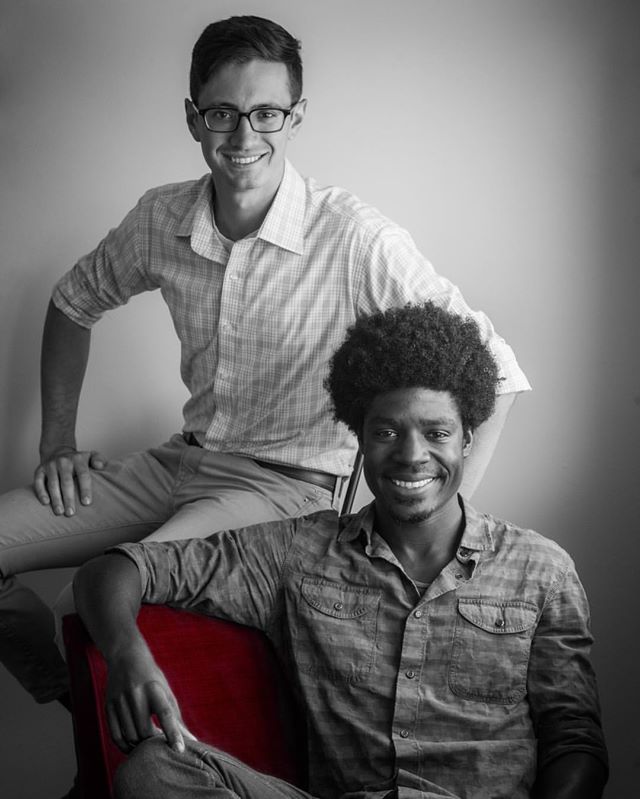
GlennDr. Glenn R. Parsons is a 30 year veteran in the battle against University Administrators, bean-counting bureaucrats, and disinterested students (i.e. he is a Professor at Ole Miss). In his spare time he conducts research work on fish physiology and ecology and has published many papers on shark biology, primarily Gulf of Mexico species. He is author of the seminal book on sharks of the Gulf of Mexico entitled “Sharks, Skates and Rays of the Gulf of Mexico” and a popular novel entitled “Cherokee Summer” that could have been on the New York Times best seller list (if only it was better written and was backed by a high-powered agent like John Grisham’s). He received his PhD from the University of South Florida, School of Marine Science, MS from the University of South Alabama and BS from the University of Alabama. He was a DISL Marine Research Fellow, a Gulf Research Council Research Fellow, and a winner of a World Wildlife Fund, Smartgear Competition (for his bycatch research).

Folks, The world has witnessed an unparalleled decline in sharks that began about 30 years ago and has continued to the present. While the explanations for this decline are varied, scientists are in agreement that “bycatch” during fishing is one of the problems. Bycatch is the un-intended capture of non-target species during fishing. For example, commercial fishing for tuna and swordfish results in the capture of many sharks. The World Wildlife Fund estimates that 50,000,000 sharks are taken as bycatch during commercial fishing. Unfortunately, many of these sharks do not survive the stress of capture (a topic that my lab has researched for many years). Fishers do not want these sharks (they are dangerous to handle and they damage fishing gear) and they would welcome new developments that would reduce or eliminate shark capture.

Read More “Help crowdfund shark research: bycatch reduction with the loopy leader” »

Help crowdfund shark research! Always chew your food – how freshwater stingrays gnaw on prey.

Posted on June 14, 2016June 14, 2016 By Guest Writer
Science

MattMatt Kolmann is a PhD candidate whose research program is at the interface of evolution, comparative anatomy, and biomechanics. He completed his Master’s degree at Florida State University with Dr. Dean Grubbs on the feeding biomechanics and fisheries ecology of cownose rays, a purported pest on commercial shellfish. During this process he developed a love of field work, and since then has collected rays and other fishes on expeditions across South and Central America with the Royal Ontario Museum. His PhD research investigates the evolution of biodiversity using South American freshwater stingrays as a model system. The number of different feeding niches these stingrays occupy is astounding, and Matt is using gene-sequencing, comparative phylogenetic methods, and biomechanical modeling to characterize the evolutionary processes underlying this biodiversity. From June 8th through the end of Shark Week, he will be raising funds to delve more deeply into the evolution of feeding behavior in freshwater rays – specifically investigating whether freshwater rays ‘chew’ tough prey like insects in a manner comparable to mammals. Follow him on twitter! 

What role does our food have in explaining where we live, what we look like, and how we behave?  I study how properties of prey – material, structural, and ecological – shape the evolution of predators.  Specifically, I am interested in how animals adapt to novel foods and diets that pose unique challenges: prey that are tough, stiff, hard, or just generally robust.  I approach these questions at the macroevolutionary (how species are related) level; biodiversity lends insight into engineering and synthetic design based on an understanding of how animals evolve using similar organic principles.

Read More “Help crowdfund shark research! Always chew your food – how freshwater stingrays gnaw on prey.” »

Help crowdfund shark research: Quick(silver?) stingrays

Posted on June 10, 2016June 10, 2016 By Guest Writer
Science

KadyKady Lyons is a Ph.D. candidate whose research focuses on the intersection of physiology, ecology and toxicology.  Her Master’s at Cal State Long Beach with Dr. Chris Lowe got her involved in elasmobranch toxicology.  She is interested in how elasmobranchs respond to anthropogenic contaminants and how contaminants can be used as another tool to study ecology.  Currently, her Ph.D. is examining how accumulation of these man-made contaminants influences round stingray growth and reproduction. As part of her Master’s work, she began to investigate mercury accumulation and body distribution of mercury, a potent neurotoxin, in elasmobranchs using the round stingray as a model species. She is continuing to work on this project and will be raising funds to finish this research as part of The Experiment’s Sharks Grant Challenge beginning June 8th and running through the Discovery Channel’s Shark Week.

Mercury concentrations in the earth’s atmosphere have significantly increased with human activities such as mining and fossil fuel burning.  Mercury can be transformed into its more dangerous form (methylmercury) and this form is what becomes concentrated in animals’ tissues.  For animals that occupy higher positions in the food web such as elasmobranchs (sharks, skates and rays), mercury can bioaccumulate to high levels due to their long life and carnivorous behavior.

Read More “Help crowdfund shark research: Quick(silver?) stingrays” »

Trading blue collars for scarlet robes, my working-class experience of academic life

Posted on June 9, 2016 By Michelle Jewell
Trading blue collars for scarlet robes, my working-class experience of academic life
Academic life, Science

More people are going to college, graduate school, and obtaining PhDs in STEM fields than ever before (Figure 1), and a growing minority of these PhD candidates are non-traditional or not white affluent males. While we celebrate this change, let us not forget that academia was built by – and for – the “traditional” student. My favourite analogy to explain this type of ingrown privilege is bicycles on USA streets. Bicycles are legally allowed to be on streets, some streets even have extra space just for bicycles, but streets were designed for automobiles. You may be allowed and, in some areas, encouraged to get on the street with your bicycle, but biking a street is going to be intrinsically more difficult than if you were driving a car.

fig1

Like Marconi and La Bamba in a city built on rock and roll, you will inevitably end up in situations that conflict with your way of life. You will not receive a warning before you stumble upon these bumps, and you will be judged by how quickly you accept traditional standards (if you can).  I remember a conversation with traditional tenured and tenure-track scientists discussing proposals for a large grant scheme. One tenure-track scientist was lamenting the process of shopping for editors for his proposal. He talked about it freely, how there were two companies that charged different rates and he was in talks with one but that company felt a conflict of interest that he had worked with another rival editing company. The rest of the traditional scientists nodded in mutual understanding. Finding good, cheap editors to improve your work is hard. My working-class ethos was busy screaming inside my head.  How can hiring someone to edit and improve written works that you will ultimately be rewarded for be so blithely acceptable? You’re not allowed to hire editors for any task throughout your training. You learn how to write from earning disappointing grades (or failing grant applications). You read more, you study written works, you develop a voice, and you try again. The results get better until you are at an appropriate level to move up another notch on the ladder, right? Not for traditionals.

Here are some more bizarre “traditional” customs you should expect if you are biking down the academic street:

Read More “Trading blue collars for scarlet robes, my working-class experience of academic life” »

Dive the Wreck of the Steamship Tahoe with OpenROV!

Posted on June 6, 2016 By Andrew Thaler
Education, Oceanography for Everyone

OpenROVOne-hundred-fifty meters hardly seems like anything at all.

Standing in the parking lot of OpenROV, I pace out 150 meters. The small sign, hanging against the wall of the battered warehouse, pointing visitors towards the entrance, is clear.

One-hundred fifty meters is less than half a lap around a standard running track. It’s the height of Old St. Paul’s Cathedral, the tallest building in the world, 700 years ago. The fastest man in the world could cover 150 meters in 14 seconds.

On land, 150 meters is barely noteworthy. Plunge into the sea and 150 meters is the wine dark deep. It is the edge of the photic zone, a world of eternal twilight. It is three times deeper than most SCUBA divers will ever venture. At 150 meters, the water pushes down with the weight of 16 atmospheres.

And, if you climb high into the Sierra Mountains and descend into the frigid alpine waters of Lake Tahoe, just off the coast of Glenbrook, Nevada, lying on a steep glacial slope at 150 meters depth is the wreck of the Steamship Tahoe.

Read More “Dive the Wreck of the Steamship Tahoe with OpenROV!” »

The Importance of Scientific Discovery and Communication for a General Science Audience

Posted on June 3, 2016June 3, 2016 By Kersey Sturdivant
Education

The impetus for this piece was an essay I wrote for iBiology a year or so ago discussing the importance of scientific discovery for a a general science audience (i.e., our science peers who are not in our respective field). I was excited to write the piece because a lot of the Science FRIEDay articles I write focus on relatively recent scientific discoveries, and this article is more of an opinion piece. So why is scientific discovery important for an audience of science peers who do not explicitly work in our specific field?

It is easy to marvel at the wonders that exist on our planet and in the surrounding universe, the known discoveries. As a natural scientist, I also appreciate the beauty in the hidden mysteries of the natural world, those processes, behaviors, and functions that we have yet to elucidate. The notion and concept of scientific discovery is romanticized as a purist’s deed. Edwin Hubble said it best, “Equipped with his five senses, man explores the universe around him and calls that adventure Science.” A scientist’s basal desire is to further the state of knowledge, but equally we crave information about the fields of knowledge that are expanding around us, of which we are not explicitly involved. We aspire to understand the “99%”, at the very least surficially. The importance of this desire explains why scientific conferences play a major role in our profession, and journals such as Science and Nature are so popular. Yes, we as scientist want to share our new discoveries, but we are also equally as intrigued about what others have accomplished; we want to know how science is progressing outside of our bubble, especially those really groundbreaking feats. These coupled characteristics are a necessary component of science. Hearing and learning about the work of others fuels one’s own scientific passions to go and do more, and can often challenge an individual to think more creatively about their own research ideas and approaches. To a general audience of our scientific peers, sharing scientific discovery temporarily satiates the yearning that scientists have about the progression of knowledge, but also can serve as motivation and inspiration.

Read More “The Importance of Scientific Discovery and Communication for a General Science Audience” »

Fun Science FRIEDay – The worlds largest sponge.

Posted on June 3, 2016 By Kersey Sturdivant
Conservation, Science

Recently a team of scientists on a deep sea expedition in the Northwestern Hawaiian Islands aboard the R/V Okeanos Explorer made a monumental discovery… pun intended. While exploring the depths of the seafloor in Papahānaumokuākea Marine National Monument, with their remotely operated vehicles (ROV) Seirios and Deep Discover, they discovered and documented the largest sponge ever observed on this planet… or any planet for that matter.

Large hexactinellid sponge found in Papahānaumokuākea Marine National Monument (Photo credit: NOAA's Office of Exploration and Research)
Large hexactinellid sponge found in Papahānaumokuākea Marine National Monument (Photo credit: NOAA’s Office of Exploration and Research)

Lateral view of a large hexactinellid sponge found in Papahānaumokuākea Marine National Monument (Photo credit: NOAA's Office of Exploration and Research)
Lateral view of a large hexactinellid sponge found in Papahānaumokuākea Marine National Monument
(Photo credit: NOAA’s Office of Exploration and Research)


Read More “Fun Science FRIEDay – The worlds largest sponge.” »

Title is the new abstract

Posted on June 1, 2016June 1, 2016 By Chris Parsons
Uncategorized

There are an increasing number of scientific articles being produced and posted at a frantic rate. How can you make your paper stand out and be memorable amongst this plethora of publications? Moreover, if your work is conservation-related, how do you ensure that the people who matter see and remember your work?

The one part of your paper all readers see and read is the title. From my own experience as an editor of scientific journals, as well as from the page-view statistics I have seen, the percentage of people that go on to read your abstract is less than a tenth of those that read the title. The percentage that read beyond the abstract to look at the whole article is a tenth of that again.

This why I have entitled this blog “Title is the new abstract“. You want to maximize the amount of information in the title of your paper.

Read More “Title is the new abstract” »

Please do not hug the dangerous wildlife …!

Posted on June 1, 2016June 1, 2016 By Chris Parsons 1 Comment on Please do not hug the dangerous wildlife …!
Uncategorized

Danger sign

This week social media was afire with news that a child fell into a gorilla enclosure at the Cincinnati Zoo, with the result that a male lowland gorilla was shot to protect the child. This is the third time a toddler has fallen into a gorilla enclosure. Comments on social media blamed the parent for not minding their child, the zoo for shooting the gorilla, and a few also blamed the zoo for not building a safer enclosure, which would prevent toddlers from being able to enter. I did not notice, however, any comments on how the public often perceives potentially dangerous wildlife – as something that is safe, and not actually life-threatening.

Read More “Please do not hug the dangerous wildlife …!” »

The decline and fall of the literature review

Posted on May 16, 2016May 16, 2016 By Chris Parsons
Academic life

I’m currently doing an annual review of environmental impacts on whales and dolphins for the International Whaling Commission, which involves assessing, reading and potentially summarizing almost everything that’s published on cetacean conservation. Every year this exercise gives me an ulcer because: (a) climate change and pollution threats are accelerating; (b) reiterated recommendations from scientists from many, many previous years have yet again gone unheeded; and (c) some endangered species get closer and closer to extinction, yet most of the funding goes to research questions whose answers we really already know rather than to practical conservation. It’s all rather depressing …

end-is-near

Read More “The decline and fall of the literature review” »

Posts pagination

Previous 1 … 74 75 76 … 272 Next

Popular Posts

What Ocean Ramsey does is not shark science or conservation: some brief thoughts on "the Shark Whisperer" documentaryWhat Ocean Ramsey does is not shark science or conservation: some brief thoughts on "the Shark Whisperer" documentaryJuly 2, 2025David Shiffman
That's not a blobfish: Deep Sea Social Media is Flooded by AI SlopThat's not a blobfish: Deep Sea Social Media is Flooded by AI SlopDecember 19, 2025Andrew Thaler
What is a Sand Shark?What is a Sand Shark?November 12, 2017Chuck Bangley
Considering writing a popular science book? Here's my adviceConsidering writing a popular science book? Here's my adviceJuly 7, 2025David Shiffman
This is not an article about epoxy river tables.This is not an article about epoxy river tables.June 4, 2024Andrew Thaler
Shark of Darkness: Wrath of Submarine is a fake documentaryShark of Darkness: Wrath of Submarine is a fake documentaryAugust 10, 2014Michelle Jewell
Shark scientists want their research to help save threatened species, but don’t know how. Our new paper can help.Shark scientists want their research to help save threatened species, but don’t know how. Our new paper can help.December 1, 2025David Shiffman
Build a dirt cheap, tough-as-nails field computer in a Pelican caseBuild a dirt cheap, tough-as-nails field computer in a Pelican caseJuly 21, 2015Andrew Thaler
Join Me at Upwell: A Wave of Ocean Justice — Our Fourth Year!Join Me at Upwell: A Wave of Ocean Justice — Our Fourth Year!March 24, 2026Angelo Villagomez
Marine Biology Career AdviceMarine Biology Career AdviceMay 30, 2025David Shiffman

squishy

Subscribe to our RSS Feed for updates whenever new articles are published.

We recommend Feedly for RSS management. It's like Google Reader, except it still exists.

Southern Fried Science

  • Home
  • About SFS
  • Authors
  • Support SFS


If you enjoy Southern Fried Science, consider contributing to our Patreon campaign.

Copyright © 2026 Southern Fried Science.

Theme: Oceanly Premium by ScriptsTown