

Skip to content

Southern Fried Science

Over 15 years of ocean science and conservation online

  • Home
  • About SFS
  • Authors
  • Support SFS

Recent Posts

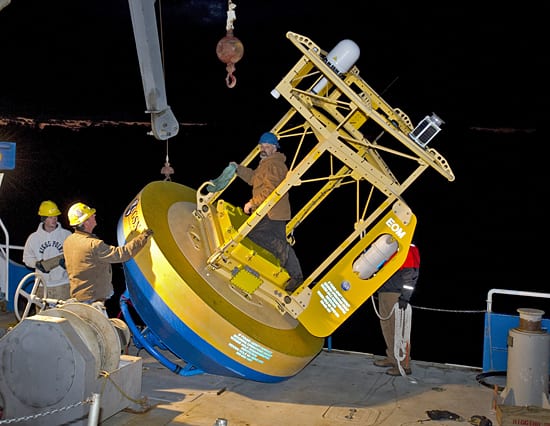
Isn’t ironic, don’t you think: dismantling the Ocean Observatories Initiative on World Oceans Day
June 9, 2026
“Why Sustainable Seafood Matters” is now available for preorder! Here’s what it’s about, and why I decided to write it.
June 8, 2026
Here’s how to join my IMCC8 symposium, “Ocean Science Communication: What’s New and What’s Next?”
April 22, 2026
Deep Sea Mining Symposium Announcement
April 21, 2026
Join Me at Upwell: A Wave of Ocean Justice — Our Fourth Year!
March 24, 2026
How close did the world’s first deep-sea mining come to the dredging the world’s largest cold-water coral reef?
March 17, 2026

No Endangered Listing for Dusky Sharks (and That’s a Good Thing)

Posted on December 16, 2014 By Chuck Bangley
Conservation

Though the fisheries news cycle has mostly been taken up by the 15-year anniversary of the Sea Around Us project (and some choice words between researchers), today also marked the official announcement of the 12-month finding on the petition to list dusky sharks on the U.S. Endangered Species Act.  Long story short, the National Marine Fisheries Service has decided that the dusky shark population in the Northwest Atlantic doesn’t need ESA protection to avoid extinction.  While it may be tempting to decry NMFS’ decision as falling short for a species that has long been a prime example of declining shark populations, what it actually means is that things are looking up for the dusky shark.  Finding that out only takes a little reading into the decision documents.

Read More “No Endangered Listing for Dusky Sharks (and That’s a Good Thing)” »

Fun Science FRIEDay – Cell Hijack!

Posted on December 12, 2014 By Kersey Sturdivant
Uncategorized

Happy Fun Science FRIEDay!!

This week we bring you work from researchers at the Massachusetts Institute of Technology (MIT), where they discovered a new method to “hijack” cells. Think about it, if we could make our own cells do our bidding, we could reprogram them to do all sorts of wonderful things for us, such as manufacture insulin, attack tumors, etc. But hijacking a cell is no easy venture. In nature viruses can be quite efficient at hijacking cells, and because of this current methods employed by researchers to hijack cells entails penetrating the cell’s wall with a virus. The biggest issue with this method is that it tends to inflict permanent damage on cell.

Image of a virus attacking a host cell. (Photo credit: dbscience3 @ https://dbscience3.wikispaces.com/Sienna)

Read More “Fun Science FRIEDay – Cell Hijack!” »

What Jaws Teaches Us About Scientists and the Future of Shark Bite Politics

Posted on December 12, 2014 By Guest Writer 1 Comment on What Jaws Teaches Us About Scientists and the Future of Shark Bite Politics
Conservation

neffDr. Christopher Neff is a Lecturer in Public Policy in the Department of Government at the University of Sydney. He completed the first PhD on the “Politics of Shark Attacks” and has been published in Marine Policy, Coastal Management and the Journal of Homosexuality. 

Jaws is a great horror movie. Personally, it’s one of my favorites. Politically, it kills me. While it has certainly inspired generations of marine biologists, researchers and social scientists (like me) since its release in 1975, it has also served as the most powerful vehicle to advance public fear of sharks in modern history. These two different implications become problematic because while sharks make for great movies, movies make for lousy public policy. When tragic shark bite incidents occur, there is a classic Jaws-esque analogy just waiting to be made. And sometimes the media circus turns into policy.

I recently wrote an article called “The Jaws Effect” for the Australian Journal of Political Science comparing policymaking in Western Australia and the movie Jaws. While, we see some of these comparisons in real-time the reason it is important to study this formally is because these moments can tell us about the tensions between politicians and scientists that lead to myth-based policies.

Read More “What Jaws Teaches Us About Scientists and the Future of Shark Bite Politics” »

Andrew’s five favorite “new” ocean blogs

Posted on December 9, 2014 By Andrew Thaler 2 Comments on Andrew’s five favorite “new” ocean blogs
Blogging, Science

Several years ago, the ocean blogosphere experienced a moment which can only be described as a Great Convergence. Numerous popular independent blogs, either seeking refuge from The Event, looking for a broader audience, or undergoing life transitions that made it impossible to maintain the high volume of new content, merged under the aegis of the Southern Fried Science/Deep Sea News aegis. For a while, the ocean blogosphere felt empty, with few giants roaming the internet depths (once one-man shows, Craig McClain now shares Deep Sea News with 8 current writers, the addition of Michelle Jewell brings Southern Fried Science up to 11). For a while the mighty Sea Monster filled the void, but they have slowed in recent months.

I miss the days when we had to check a dozen links each morning for the latest and greatest in ocean science writing. Fortunately, as often happens when ecologic niches are left empty, new species emerge to fill them. There is a new crop of excellent ocean blogs rising up from the deep. Here are five of my favorite new* ocean blogs that you should already be reading.

Read More “Andrew’s five favorite “new” ocean blogs” »

I bet James Bond never had to put up with this … why are there so many “experts” on biological issues?

Posted on December 4, 2014December 8, 2014 By Chris Parsons
Science, Uncategorized

In the film Notting Hill, the character Max (Tim McInnerny) turns around in his car to face the passengers squabbling about the route to take, tells them to shut up because he’ll decide the route, and exclaims:

“I bet James Bond never had to put up with this $%&#!”

This is something to which many biologists can sadly relate.

Thanksgiving has just finished in the US, and many scientist friends and colleagues have returned with tales of relatives (who have no science expertise) expounding to them on why scientists are wrong on a myriad of issues such as: MMR vaccines causing autism and other medical issues, the non-existence of evolution and, currently, their opinions on how to deal with Ebola.

Why is it that Americans have such a poor understanding of biology, and have so little respect for the opinions of those that are trained in the field?  You don’t hear members of the public weigh in on the nature of mesons, bosons, or string theory, and we would certainly not take their opinions seriously in a policy setting when set against the opinions of a trained physicist. So if, like James Bond, physicists and mathematicians don’t have to put up with this, why do biologists? The media often give equal credence to the opinions of the general public, with only a high school level of biology, compared to expert scientists. Even worse, policy makers with little understanding on biology weigh in with opinions on biological matters with confidence, despite a lack of training and understanding.

Read More “I bet James Bond never had to put up with this … why are there so many “experts” on biological issues?” »

Seals use signals from acoustic tags to find fish

Posted on December 4, 2014December 8, 2014 By Michelle Jewell
Blogging, Conservation, Science

michelleMichelle Jewell is a Zoologist specialized in predator/prey behaivour and the Scientific Communicator for EDNA Interactive.  She has spent the past 4 years studying the behaviour of white sharks and Cape fur seals at Geyser Rock, ‘Shark Alley’, South Africa.  

Anyone who has worked with seals knows they are crafty critters that will always find the easiest way to eat fish.  Take the rise and fall of acoustic deterrent devices in aquaculture farms that were designed to scare away seals and other predators.  They had limited success and resident predators habituated to the sound when they realized there was no immediate danger.  These devices have been shown to actually attract more predators over time, especially passing pinnipeds.

Scientists have used acoustic tags to monitor fish movements since the 1950s, and hundreds of species have been implanted with these tags (a ‘few’ studies listed here) throughout rivers, lakes, estuaries, and the ocean.  Could marine mammals associate tag signals with food and do they do this in the wild?  A recent laboratory study from St. Andrews (free to download here) answers the first half of this question, showing that grey seals Halichoerus grypus  were able to use the signals transmitted from Vemco V9–2H tags to identify boxes that contained fish.

Read More “Seals use signals from acoustic tags to find fish” »

Here lies American science

Posted on November 28, 2014December 1, 2014 By Guest Writer
Blogging

wrightAndrew Wright is a British marine biologist that has been working on the science-policy boundary around the world for over a decade. His experiences have led him to champion a better communication of science to policy makers and the lay public. His research has included a population viability analysis for the vaquita, sperm whales bioacoustics and the impacts of noise on various marine mammals. Andrew is currently working on several projects, most relating to investigating either sleeping behaviour or chronic stress in wild cetaceans. He is also spearheading efforts to bring more marketing techniques into conservation outreach.


As most of you know by now, on November 12th, the European Space Agency (ESA) landed a probe (Philae) on the surface of a comet (67P/Churyumov–Gerasimenko) as part of the Rosetta mission. However, perhaps some of you are unaware that NASA cut a strikingly similar mission (Comet Rendezvous Asteroid Flyby) due to budget constraints. NASA basically had to choose between two missions and picked the other one (the Cassini-Huygens mission to Saturn). That forgotten mission was scheduled to touch-down on the comet Kopff in 2001, and its cancellation left the ESA to grab first prize for a soft-landing on a comet.

Read More “Here lies American science” »

Fun Science FRIEDay – Beauty Sleep

Posted on November 28, 2014November 27, 2014 By Kersey Sturdivant
Blogging, Uncategorized

Happy Fun Science FRIEDay!!!

It’s the Turkey Holiday, and aside from eating and socializing, I suspect quite a many of you have also been getting lots of sleep!

Despite how little of it some of us get during our normal routine, sleep is important… right? We know that sleep has tons of benefits for the body such as allowing our muscles and bones to repair themselves, and keeping our immune system healthy. Sleep is also important for our brains, allowing for memories to be consolidated and other important functions to be performed.

Sleeping is like recharging your batteries. ^u^  (Photo credit: Chibird, http://rebloggy.com/post/cute-sleep-animation/42472951026)
Sleeping is like recharging your batteries. ^u^
(Photo credit: Chibird, http://rebloggy.com/post/cute-sleep-animation/42472951026)

Read More “Fun Science FRIEDay – Beauty Sleep” »

Ocean Things to Be Thankful For: Megalodon is Dead, but We Still Have Sharks (and Whales)

Posted on November 26, 2014 By Chuck Bangley
Conservation

This time of year, it’s appropriate to think of things to be thankful for.  This being an ocean-focused blog, I’d like to share something ocean-related that I’m thankful for, and hopefully spread a little Ocean Optimism in the process.  What I’m thankful for is that Carcharocles megalodon is extinct.  This may not seem like cause for optimism, but honestly the present-day ocean and Megalodon are better off without each other.  And while we may not have 50-foot sharks around anymore (at least not the superpredatory kind), there are actually a lot of species we know and love that have either outlasted Megalodon or are only around because the big beast isn’t around anymore.

Read More “Ocean Things to Be Thankful For: Megalodon is Dead, but We Still Have Sharks (and Whales)” »

Ocean things we’re thankful for, West Coast Edition

Posted on November 26, 2014 By Andrew Thaler
Blogging

As some of you know (especially if you follow us on OpenExplorer), Amy and I have once again made the vast, continent-spanning migration from the Pacific to Atlantic coast, this time settling down in rural Virginia. While we enjoyed our time out in the weirdly foggy, impossibly dry San Francisco Bay Area, we also learn that the southeast US is our ecological niche. Even so, we met hundreds of new and interesting people, got to play with some tremendous tech, and had a great time. So here are the top five San Francisco Bay Area ocean things we are thankful for.

1. Vallejo

Of all the cities that comprise the “Bay Area”, Vallejo, the smallest and furthest from the heart of San Francisco, feels the most maritime, by far. With a downtown only blocks from the waterfront, an expansive city park right at the edge, and an active ferry terminal for commuters, people with a nautical cut to their jib will feel right at home. Though smaller and more suburban than most Bay Area cities, it’s also a whole lot cheaper, with 2 bedroom houses renting for the cost of hot swapping* a futon in San Francisco.

Read More “Ocean things we’re thankful for, West Coast Edition” »

Posts pagination

Previous 1 … 98 99 100 … 273 Next

Popular Posts

The story of the pride flag made from NASA imagery: Bluesky's most-liked imageThe story of the pride flag made from NASA imagery: Bluesky's most-liked imageSeptember 27, 2024David Shiffman
"Why Sustainable Seafood Matters" is now available for preorder! Here's what it's about, and why I decided to write it."Why Sustainable Seafood Matters" is now available for preorder! Here's what it's about, and why I decided to write it.June 8, 2026David Shiffman
What Ocean Ramsey does is not shark science or conservation: some brief thoughts on "the Shark Whisperer" documentaryWhat Ocean Ramsey does is not shark science or conservation: some brief thoughts on "the Shark Whisperer" documentaryJuly 2, 2025David Shiffman
Tackling the least important debate in deep-sea mining: the desultory hyphenTackling the least important debate in deep-sea mining: the desultory hyphenJune 8, 2026Andrew Thaler
Shark of Darkness: Wrath of Submarine is a fake documentaryShark of Darkness: Wrath of Submarine is a fake documentaryAugust 10, 2014Michelle Jewell
Deep-sea Mining, Domestic Cats, Star Trek, and Ocean Exploration: Andrew's mid-year podcast round-up.Deep-sea Mining, Domestic Cats, Star Trek, and Ocean Exploration: Andrew's mid-year podcast round-up.June 6, 2026Andrew Thaler
What is a Sand Shark?What is a Sand Shark?November 12, 2017Chuck Bangley
I just told 850 shark scientists a hard truth: We’re not communicating shark conservation correctly.I just told 850 shark scientists a hard truth: We’re not communicating shark conservation correctly.June 1, 2026David Shiffman
That's not a blobfish: Deep Sea Social Media is Flooded by AI SlopThat's not a blobfish: Deep Sea Social Media is Flooded by AI SlopDecember 19, 2025Andrew Thaler
Why ocean science is still one of the worst-funded scientific fields worldwideWhy ocean science is still one of the worst-funded scientific fields worldwideJune 3, 2026Chris Parsons

squishy

Subscribe to our RSS Feed for updates whenever new articles are published.

We recommend Feedly for RSS management. It's like Google Reader, except it still exists.

Southern Fried Science

  • Home
  • About SFS
  • Authors
  • Support SFS


If you enjoy Southern Fried Science, consider contributing to our Patreon campaign.

Copyright © 2026 Southern Fried Science.

Theme: Oceanly Premium by ScriptsTown