


Happy Friday Everyone! We frequently link to other important marine and general science blogs, to the extent that regular readers can probably guess which science blogs we read and how often, but science isn’t everything. We decided to take a moment to tell y’all about the non-science blogs that we enjoy.
The Deep Sea Conservation Coalition (DSCC), an alliance of over 70 international organizations working to promote the conservation of deep sea biodiversity, has officially launch their blog – Save the Deep Sea. We all care about the wondrous life that exists in the deep sea – both known and unknown – and we all recognize … Read More “Saving the Deep Sea” »
Oceana has released their list of finalists for the Ocean Hero award. As always, the finalists represent people who have done some amazing things for our oceans. This year, one of the nominees for the “Junior Hero” category is Sophi Bromenshenkel, an 8 year old shark conservationist.
We are in the midst of a global extinction crisis. Biodiversity is in decline as species after species disappear. Some estimates predict that up to 50% of species will be committed to extinction by 2050. Other estimates claim the current rate of extinction may be 10,000 times the background rate. Many ecologists and conservationists have declared the current species decline the sixth great mass extinction.
A recent paper published in the journal Nature argues that our current estimates of species loss are based on a flawed model and tend to overestimate the magnitude of species decline. The paper has received plenty of attention, and has been heavily criticized by ecologists and conservation biologists. The paper is wrong, but it is wrong for the right reasons, and the criticisms it has garnered point to a gaping hole in our understanding of population dynamics.
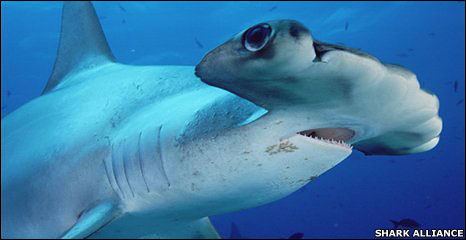
In this week’s edition of Shark Science Monday, Claudia Li of Shark Truth discusses the Happy Hearts Love Sharks wedding contest, which aims to reduce the consumption of shark fin soup at wedding banquets. If you have a question for Claudia, leave it as a comment below and I’ll make sure she gets it.
After our sustainability month, it becomes easy to ask for a plan to become more sustainable. On a national scale, this becomes demand for a blueprint or recipe for how to organize society successfully in the future along sustainability principles. The idea of a given trajectory of development goes back to Walt Rostow, who described development around the world up to 1960, ending with the emergence of a first, second, and third world. More modern theorists realize that the world is not linear, however.
The SeaMonster has posted a lengthy e-mail discussion among several key players in fisheries science regarding Ray Hilborn’s recent “Let us eat fish” Op-Ed in the New York Times. The discussion is, quite frankly, epic, and I encourage anyone interested in fish, ecology, fisheries, or seafood to give it a read. Forum on fish, food, … Read More “Forum on fish, food, and people at the SeaMonster” »
This week at the International Marine Conservation Congress, a great resource was introduced. Science to Action, an affiliate of Conservation International, released a dual volume called “A scientist’s guide to influencing decision making /a decision maker’s guide to using science”.
Read More “Science to action: A scientist’s guide to influencing decision making” »
This morning, Plymouth Marine Laboratory launched a new public service announcement about ocean acidification entitled “Connecting science, industry, policy and public”. According to the Official MPA Blog:

Depending on your view of phylogenetics, a recent publication in Nature reporting the discovery of a new kingdom-level branch on the tree of life, basal to Kingdom Fungi, is either a major revision of our current view of taxonomy or completely unsurprising and expected. While we mostly refer to the four kingdoms within Domain Eukarya as Protista, Plantae, Fungi, and Animalia, it’s understood by the scientific community that Protista is essentially a catch-all category, not a true clade, for eukaryotes that don’t quite fit into the other three groups. While this is convenient for organization, it fails to adequately express the diversity of protists. Four kingdoms is a useful system, but there’s no reason why diversity at the kingdom level couldn’t be much higher. A strict cladist could create hundreds, if not thousands of kingdoms from Protista alone.